
INTRODUCTION
In an interview to Leaders in Sport A.C.Milan CEO Gazidis laid out a blueprint to take Milan back to the top echelons of football like its glorious past. In particular he laid out 4 point strategy which consisted of Better utilization of resources with a tactical identity, mix of experience and youth, sporting science and Milan Lab 2.0. Gazidis spoke quite extensively about Data Analytics and how Milan will be utilizing it for better resource management.
But in a game like football which has so much of emotion and subjective decision making, how can a few data points and statistics help coaches and players make better decisions?
Data Analytics and Sabermetrics have gained lot of traction over the past few years with clubs in the lower leagues using it extensively for competing with the traditionally big clubs despite the unequal share of resources. With the game growing exponentially and with a lot of money involved, owners and stakeholders want to mitigate the risk of huge financial losses with informed experts in the sporting side of the game.
HISTORY
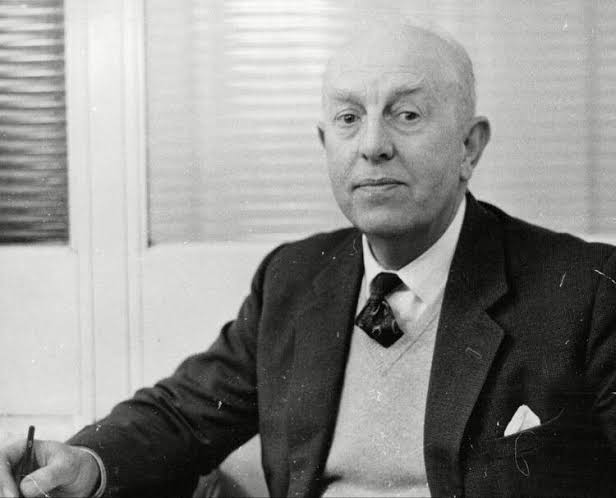
It all started in the 60’s when a former RAF commander and accountant, Charles Reep, started taking data points as the manager of his club Swindon Town. With the data collected Reep inferred that most goals were scored with less than 3 passes. This gave birth to the concept of the Long Ball tactics which is still etched into the English game.
However the real data collection and its interpretation was pioneered by sports data collection company ProZone in 1998. Their services was first availed by Derby County to have a better analysis of pre-match and post-match data.
In 2003 the book Moneyball: The art of winning an unfair game written by Michael Lewis became the real ice-breaker to all avenues of sports to use a data-crunching system to gain an advantage in games. Today almost 10 data points are collected per second in a game which amounts to a minimum of 1.4 million stats being created per match through notational analysis.
HOW DATA ANALYSIS IS USED
To have a better understanding of how data analysis is done in Football let us break it down into different areas concerning football
SCOUTING
The main aim of these scouts is to find underpriced, undervalued players who are to yet to approach their peak which is hard earned knowledge
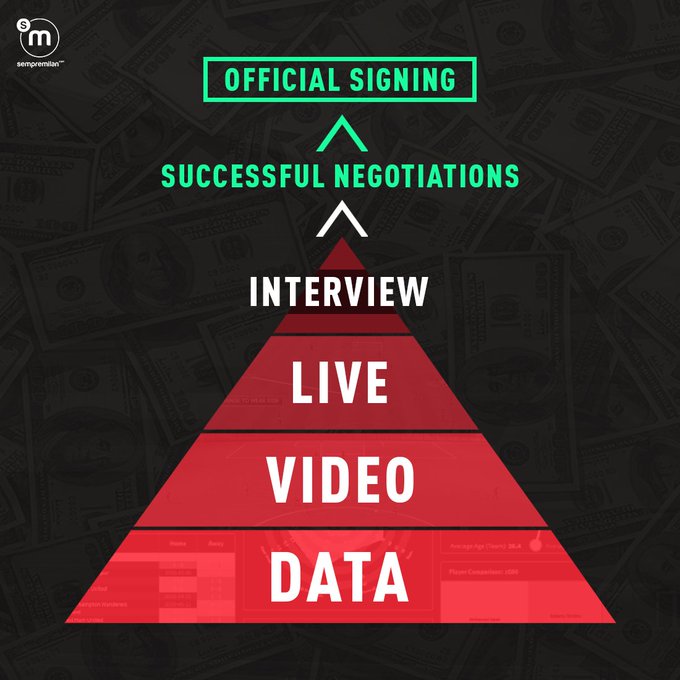
If there is any department that Data Analytics has been a game-changer it is in the Scouting and Transfer department. After consultation with the head coach Pioli, Moncada and his group of scouts and data analysts will have a prototypes ready for Pioli’s desired style of football. Once the specifications for the types are made clear, the scouting department (which includes data analysts) will log into various scouting platforms like Wyscout or Opta (To name a few popular ones) who will provide these analysts with dossiers, statistics, creative visual imagery and various videos of the player. This exercise helps the club save a huge amount of money as opposed to establishing a scouting network all over the world which would multiply costs employing different people.
Now once the data is in, the analysts and scouts sift through the mountain of data and make a shortlist. Once the shortlist is made, they watch videos and matches of these players and concise the list even further. It is then that scouts visit actual stadiums to watch the targeted player play which is either done by Moncada himself or then reported to Maldini and Massara who make the final decision in consultation with Pioli.
However as mentioned earlier Football is a subjective game played by human beings and not by programmed robots. Hence statistics cannot predict what a player may do next. But to close the gap, Data scientists have brought in a cutting-edge technology called Ghosting. Ghosting is the process of using algorithms to predict what action a particular players takes in a specific situation based on thousands of data points collected from his previous matches.
PRE-MATCH PREPARATION AND IN-GAME ANALYSIS
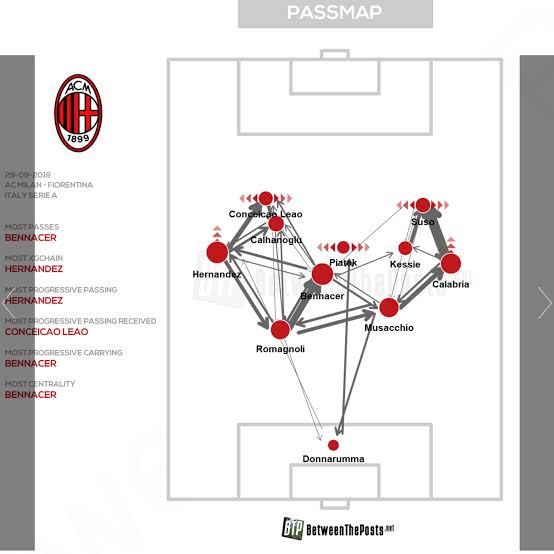
For every match the team requires specific preparation. The changes in playing systems, the technical and physical qualities vary from team to team. The preparation for a match vs. Spezia cannot be used against Inter, and if done it would could lead to mortal peril. Hence separate preparations both physically and mentally are required for which data is collected and analyzed by a team of analysts and coaching staff. The data analysts analyses the various numbers of the opposition and in a meeting with the coaching staff present it. Combined with the tactical nous of the coach a game plan to counter it is devised in these meetings. Milan, in specific being a pressing team, analyze passing patterns of the opposition side to structure their pressing.
Since each games needs specific physical preparations and new training methods could be introduced to players, the effectiveness of training routines are measured using GPS kept inside the training ground.
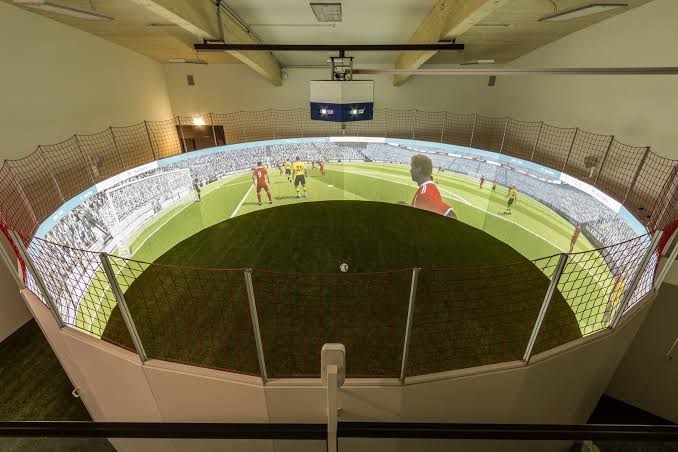
In the RB Salzburg academy the whole academy is equipped with LPM Indoor system which are motions sensors which give data like passing accuracy, touches taken and amount of time ball possession is kept. They also use the Soccerbot, which is a circular structure where the player is at the center. The structure is filled with panels which work as LED TV’s and each player is given a task to complete inside the Soccerbot. Recently they are also helping to recreate situations from the games played by the team previously. This structure help data analyst’s track information of the player and for the player himself to realize his mistakes and correct them. It helps in faster development of the player.
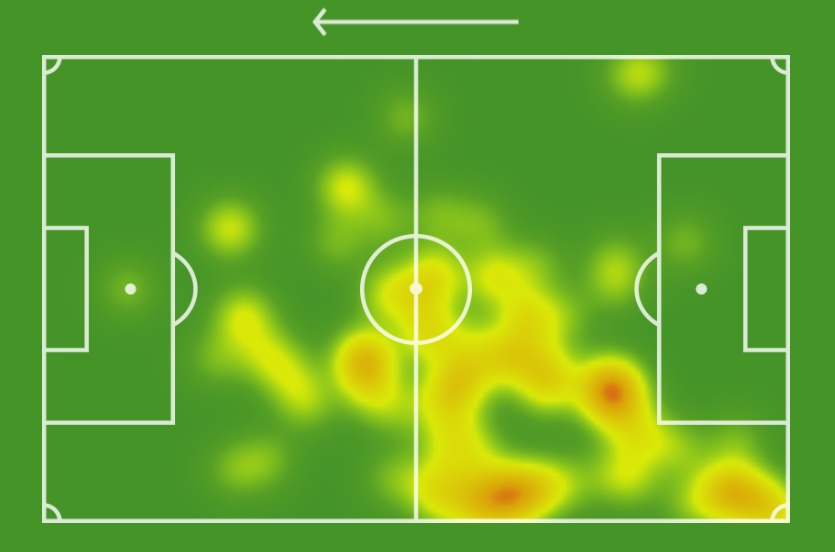
During matches we would have often seen while substitutions, Pioli’s assistant Giacomo Murelli, speaking to the player who is going to be substituted to play along with his Tablet. During the game, the stadium is equipped with various GPS and motions sensors. These help the coaching staff to obtain heat maps and which player is showing signs of tiring. All this information comes to the analyst’s and is given to the assistant via his tablet where combined with his tactical knowledge he tries to exploit and gain advantage
MEDICAL FIELD
As pioneers of Milan Lab, the use of various data analytics to keep players fit and predict injuries is not something new. Under the unconventional chiropractor John Meerseman combined with his knowledge of Kinesthetic, Milan forged a partnership with Microsoft to analyze data samples. It is of no surprise that the UCL winning team of 2007 had an average age higher than 30 and it was solely because of Milan Lab and its unique ways. While Milan Lab only exists in name with Meersseman leaving in 2010, Milan Lab showed how data analytics can be used for Sports medicine.

Fast forward to 2020, along with GPS inside the training grounds they also have an accelerometer and a gyroscope. These devices help in tracking metabolic and bio-mechanic feature of every player. This data helps to gauge the external work load i.e the amount of work done on the pitch. This helps in understanding whether players are close to injury or not. Players are at maximum risk when they play after long periods of no activity i.e after summer break or like th post lockdown period. Also running at high speeds for short bursts for time in a 3 week timeframe is a recipe for injury according to medical experts
THE SUCCESSFUL MODEL OF LIVERPOOL
In 2002, Fenway Sports group bought Baseball team Boston Red Sox. They were intrigued by Sabermetrics which was relatively a new concept in 2002. They brought Bill James as the head of research and within 2004 Boston Red Sox, who had never won the coveted World Series in the last 84 years won it. And it was no fluke win for Red Sox won it again in 2007, 2013 and 2018.
In 2010 when FSG bought Liverpool they appointed Damien Comolli as Director of Football in 2010 but he left in 2012 owing to poor performances of Liverpool. His successor was his own employee Michael Edward who went on to be Liverpool’s first Sporting director in 2016. Michael Edwards along with FSG placed emphasis on data analytics to gain a competitive edge within limited budget. They appointed 4 analysts in the form of Ian Graham, William Spearman, Tim Waskett and Dafydd Steele. Along with Klopp who was used to working in a limited budget at Dortmund (Dortmund also used data analysis with head scout Sven Mislintat a big advocate of the system) headed all decision making within the club.

Klopp is an advocate of gegenpressing which is a relentless, intense, aggressive style of football which requires players with very unique skillset. The Analysts uses various scouting platforms to search for players who possess the technical skill along with the adequate stamina and robustness that Klopp demands. Along with these traits they also examine his injury records. A special feature is that Liverpool calculate the discounted value of the player by working on the transfer fees the player has received in his career combined with his commercial value before making a bid for the player so as to not overshoot the budget set for transfers by the owners.
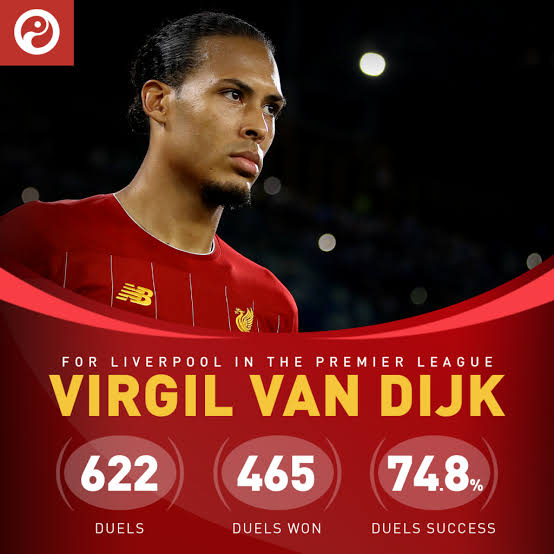
With Liverpool playing a high line they needed a defender who could had the pace to catch up if the opposition countered and a keeper who was good with reflexes and was good in 1v1 situations. This made sure that whenever a striker pierced Liverpool’s defense he had the technical skills to bury the chance. Somehow Mignolet/Karius and Mamdou Sakho was error prone and did contribute to the cause. Hence Liverpool needed alternative arrangements. The Sale of Phil Coutinho did just that. It provided very important capital for Liverpool and they invested in Virgil Van Djik and Alisson Becker. What seemed to be gross overpayment in 2 years’ time looks like bargain deals for Liverpool. Van Djik especially was a very astute defender who snuffed out attacks just like a fireman put out a simple flame before it became a major fire.
The sale of Coutinho also helped in multiple aspects. To what seemed as a tactic designed with Coutinho as the center of the attacking play, Liverpool expanded it to Salah, Mane, Firminho, Robertson and Trent Alexander. This increased unpredictability and a data metric known as Goal Variety. Goal Variety is seen as a story by the analysts and is analyzed by the experts like the number of passes it took and key passes and various other data.
Pre-match preparation was based on 3 points
- Forcing the player most low on confidence into making mistakes by pressing him aggressively
- Agitating the player who gets angry very easily and has poor disciplinary record
- Analyzing opposition players with high technical ability and cutting off supplies to the player (for eg: Kevin De-Bruyne)
Against Everton last season Liverpool took a high amount of shots from outside the box. This was because Jordan Pickford is very shot in stature and unlike keepers like Alisson or Donnarumma he cannot reach the ball if it is hit well.
To keep players motivated to perform an incentive system based on a data analytical system called Game Theory was used. It helps in designing incentive systems. Liverpool were the club that gave maximum bonuses to its players due to this system as well its success in the Champions league and Premier League.
HOW MILAN CAN USE ANALYTICS
With Data Analytics being widely used in England, Spain and Germany it is yet to find a place in Italian Football on a wide spread basis. Atlanta have slowly adapted to the number crunching tools but rest of the clubs are yet to apply it to their games. Here are a few ways Milan can apply Analytics
- Scouting: Moncada and Almstadt seem to already have analytics in place to help the club sign young players approaching their peaks. Even to sign more experienced players like Kjaer who was an unused substitute in Atlanta all this while is a shrewd piece of business. Given how Milan’s finances are yet to fall in line good investment through analytics and signings like Hauge can help the club achieve its targets despite a concise budget.
- Medical: Re-launching Milan Lab 2.0 would be a great way for Milan to protect their players and get the best out of them. This is something Gazidis has promised to do in his 4 point plan to get Milan back to the top
- In-game management: While Milan have shown significant improvement and a tactical identity mimicking ideas of Bayern Munich as per the confession of Pioli, Milan can still structure their press better and stop getting overloaded in central areas of the pitch like how we did against Rio Ave.

CONCLUSION
All things said and done, Football like every other still remains a very subjective sport based on emotions. Philip Lahm went as far as calling it modern Gladiator battles. And with Data analytics being widespread in England and Germany there are far too much numbers to deal with. Therefore it is important to sift through these mountains of data and classify it to useful and non-useful data. While classification it is prudent to use visual imagery and techniques that help people retain information faster and better. What sets apart a good analytical team from a mediocre one is how they interpret the data. Analysts who can identify the data quickly and come to qualitative decision making are the ones that top clubs employ. Everyday data analysts explore Mountains of data to find that 1% extra detail that gives an added advantage to their team. Modern management requires objective ways of quantifying and with so much data available analysts are always finding extra information aids in better decision making from the boardroom level to the pitch.
 The Milan Blog