
With more wide television broadcasting, football in the 90s was slowly starting to peak with Italian football at its zenith. Calcio 90 as it is fondly called in Italy saw Italian football producing some of the finest footballers to grace the turf. Roberto Baggio, Paolo Maldini, Franco Baresi, Paolo Cannavaro and the list goes on.
A huge chunk of this was facilitated by the competitiveness of the league with Napoli led by Diego Armando Maradona and Sampdoria led by Mancini and Vialli. Perhaps one of the greatest feats in that period for Italian football was Sampdoria beating Italian giants Napoli, Milan, Inter and Juventus to the Scudetto.
With this article we take a look at “Super Sampdoria” a meteoric rise of a team that dominated Italian football before falling.
HISTORY
Sampdoria did not exist as a club until 1945. However on 12th August 1946, 2 Genoaese clubs, Ginnastica Comunale Sampierdarenese and Ginnastica Andrea Doria merged toghether to form U.C Sampdoria.
Following years of mid-table finishes in the 60s, Sampdoria fell into financial trouble and later had to sell their players without adequate investment without investments like the unpopular sale of Bruno Mora to Juventus. Sampdoria took part in the Inter-Cities Fair’s Cup (now defunct) but couldn’t get past round of 32. And even with the arrival of Luis Suarez, Giovanni Lodetti and a young Marcelo Lippi Sampdoria was constantly flirting with relegation in the 70’s before the eventual happed in 1976.
MANTOVANI: THE SAVIOUR
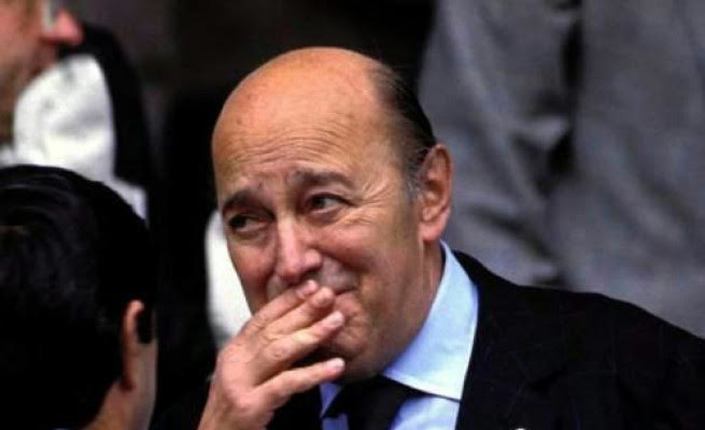
In 1977 Sampdoria was purchased by business man Paulo Mantovani who promised fans immediate promotion and the dream: A scudetto win. On his 4th managerial appointment Mantovani achieved his first promise: a promotion to Serie A under the coach Renzo Ulivieri in the 1981/82 season.
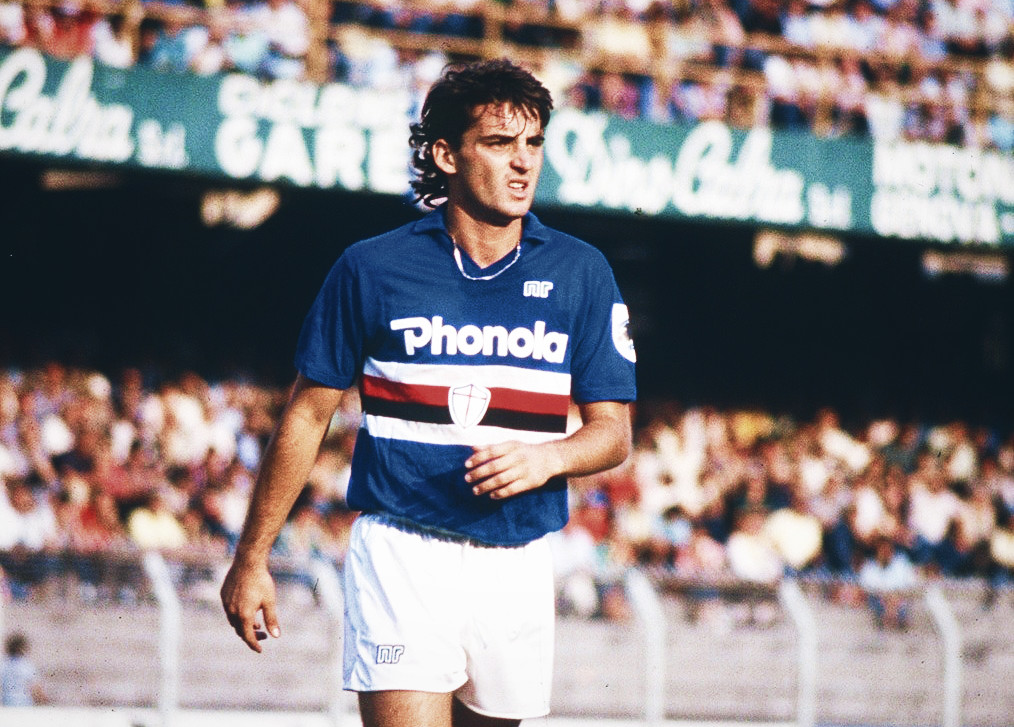
Sampdoria won the first major silverware in their 84/85 season beating AC Milan in a 2 legged final of the Coppa Italia final under the tutelage of the coach Eugenio Bersillini. With heavy investment from Mantovani, Sampdoria general manager Paolo Borea was able to bring in Liam Brady, Graeme Souness, Luca Pellegrini, Roberto Mancini, Mannini and Fausto Salsano. This brought in a perfect blend of youth and experience.
If Sampdoria fans thought this was this was the highest they could achieve they were in for a surprise.
VUJADIN BOSKOV: THE CONQUERER
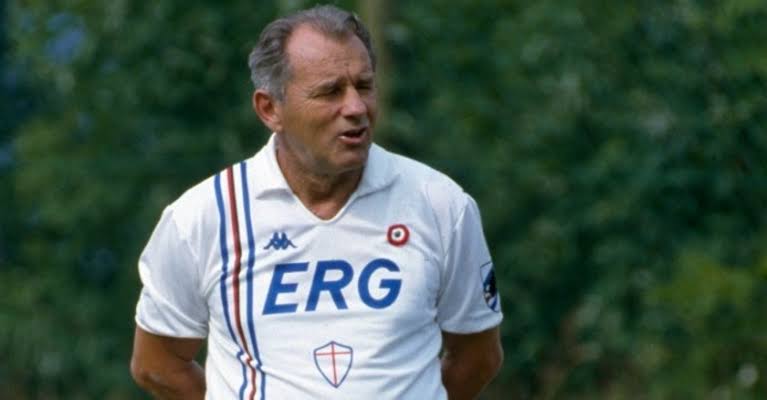
In 1986 Mantovani brought in the Ascoli trainer Vujadin Boksov and together they signed future club legends Vialli, Pagiluca, Toninho Cerezo giving the team an extra edge. The team set about winning 2 back to back Coppa Italia titles defeating Torino in 87/88 and Napoli in 88/89. This automatically qualified them for the European Cup winners’ Cup and while they lost the Cup in 89 they defeated Anderlecht 2-0 in the final in 1990 with 2 goals from Gianluca Vialli in Extra Time.
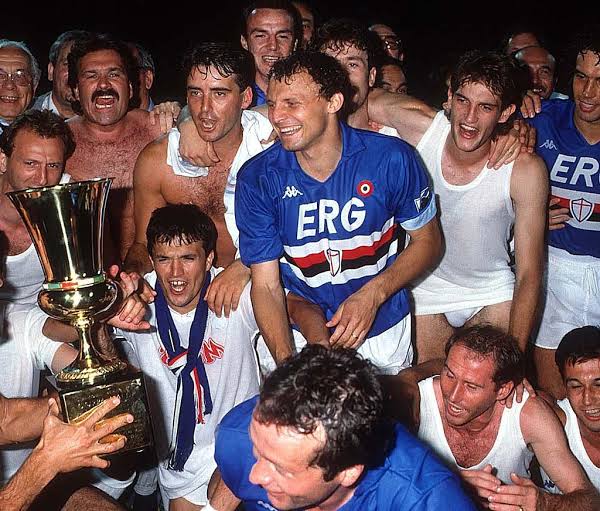
SCUDETTO AND EUROPEAN CUP FINALS
The winning habit did not end with this. Sampdoria sent shockwaves in Italian football when they won the scudetto defeating Lecce 3-0 at home and winning the league with 1 game to spare. This at a time when Inter were scudetto champions, Milan was dominating Europe, Napoli was its peak with Maradona and Juventus had invested big on Baggio and Julio Cesar. Mantovani had kept one his promises and Sampdoria which had never won gone beyond 4th finally won a scudetto
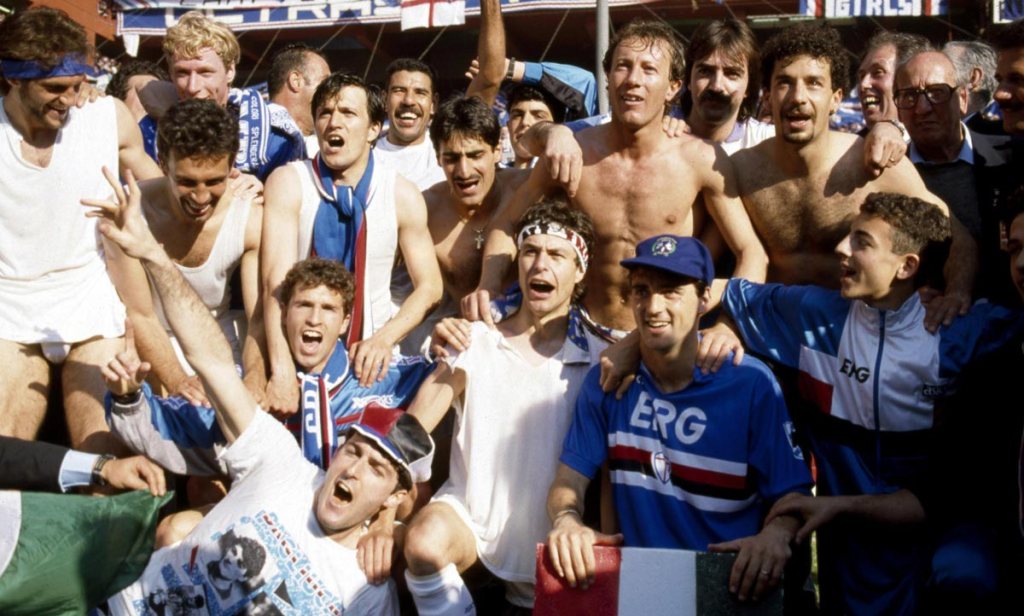
With Sampdoria winning the Scudetto they qualified to the UEFA European Cup. They defeated Rosenborg, Budapest, Red Star Belgrade, and Anderlecht and faced Cryuff’s Barcelona in the final.
END OF THE CYCLE
The 1991/92 season started with silverware for Sampdoria beating Roma in the Super Coppa but their Scudetto defense fizzed out as they finished 6th in the season. However supporters had another reason to the thrilled. Sampdoria was scheduled to play Barcelona in a UEFA European Cup Final at Wembley.
A tight match ensured with Cryuff’s Barcelona playing free flowing football while Sampdoria played a cautious game-plan and countered and while it went to extra time both teams missed golt edged chances to win it for their team. In the end, Ronald Koeman hit a free kick past Pagiluca to break Sampdoria hearts and send the European trophy for the 1st time out of 5 times to the Camp Nou
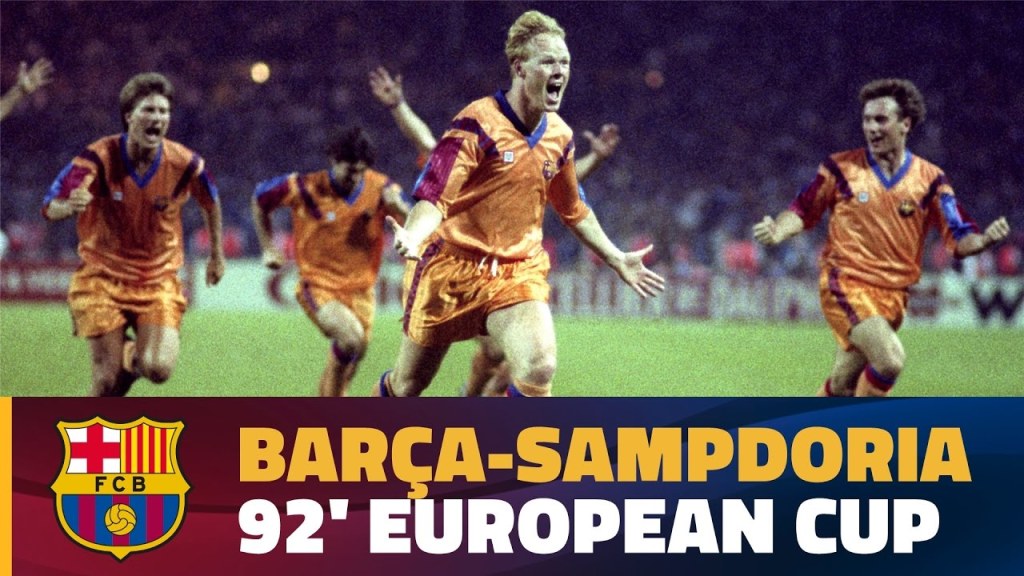
Boskov, Vialli, Pari, Cerezo all departed and Mantovani responded by signing Ruud Gullit, Alberigo Evani and David Platt. However David Mantovani passed away from long standing illness and Sampdoria won their 4th Coppa Italia as a tribute for the great man.
Sampdoria had 2 more 8th place finishes before they went into relegation and need further investment from different owners to bring the club to where we know them today.
TACTICAL ANALYSIS OF SAMPDORIA AGAINST BARCELONA
ANALYSIS
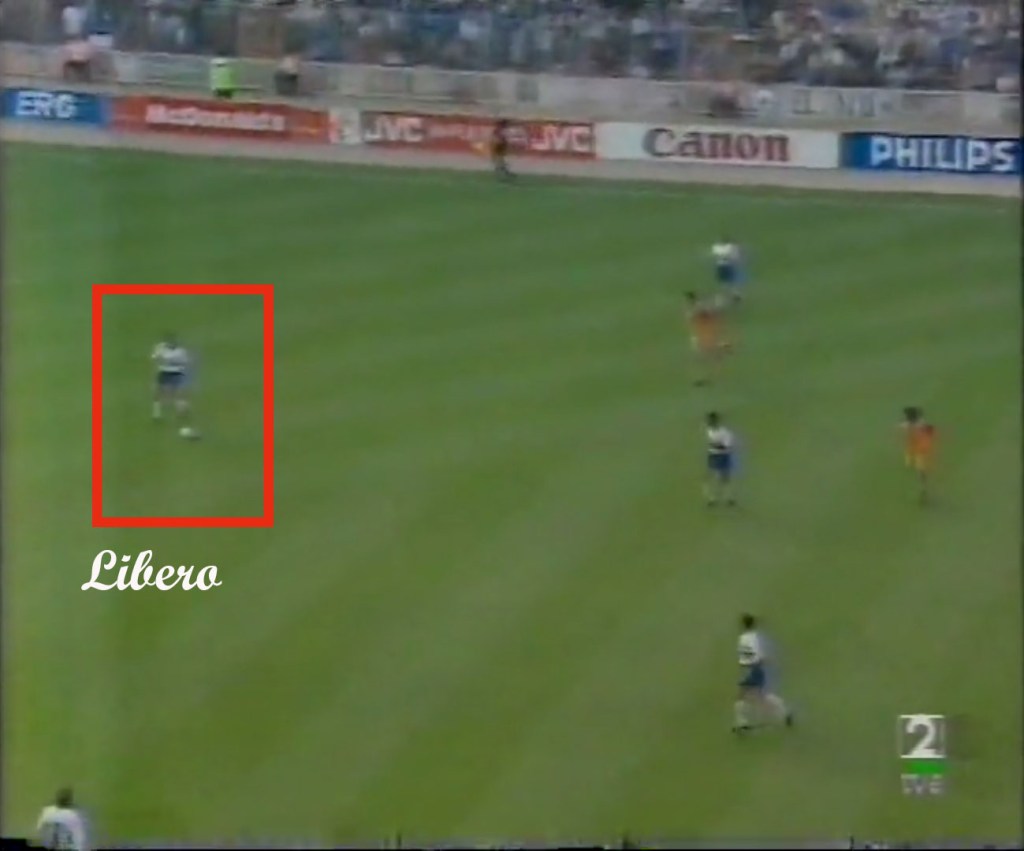
Barcelona on paper started with a 4-3-3 formation with Laudrup acting as a false 9 while Sampdoria played a 4-4-2 with Lanna as a libero and Mancini-Vialli forming a lethal strike partnership.
Barcelona on the field were practically inspired by Rinus Michels’ total football Ajax thanks to their legendary player and coach Johan Cryuff.
Barcelona played a 3-4-3 on the ball forming a midfield diamond with Guardiola acting as a deep lying playmaker while acting as a shield to make sure the team does not lose shape.
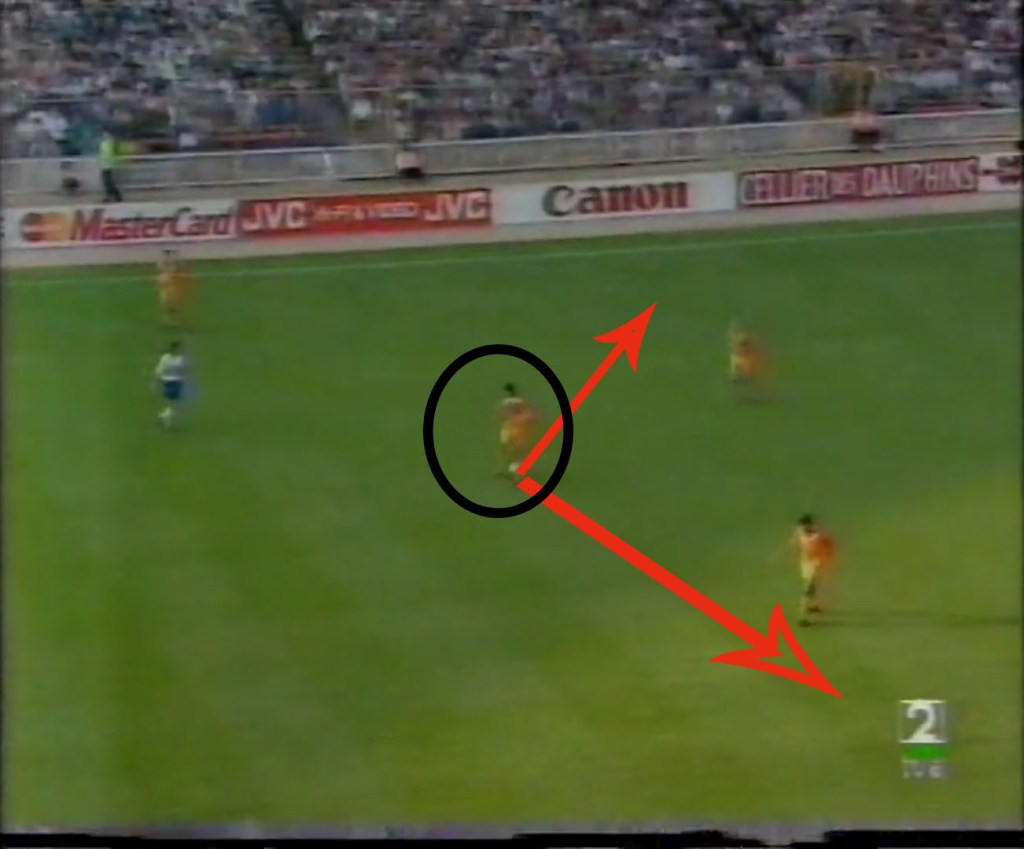
Both Guardiola and Koeman were tasked as playmakers from midfield whenever Barcelona got the ball.
Barcelona pressed high, maintained a high line and used Koeman or Guardiola to bring the ball out from the back.
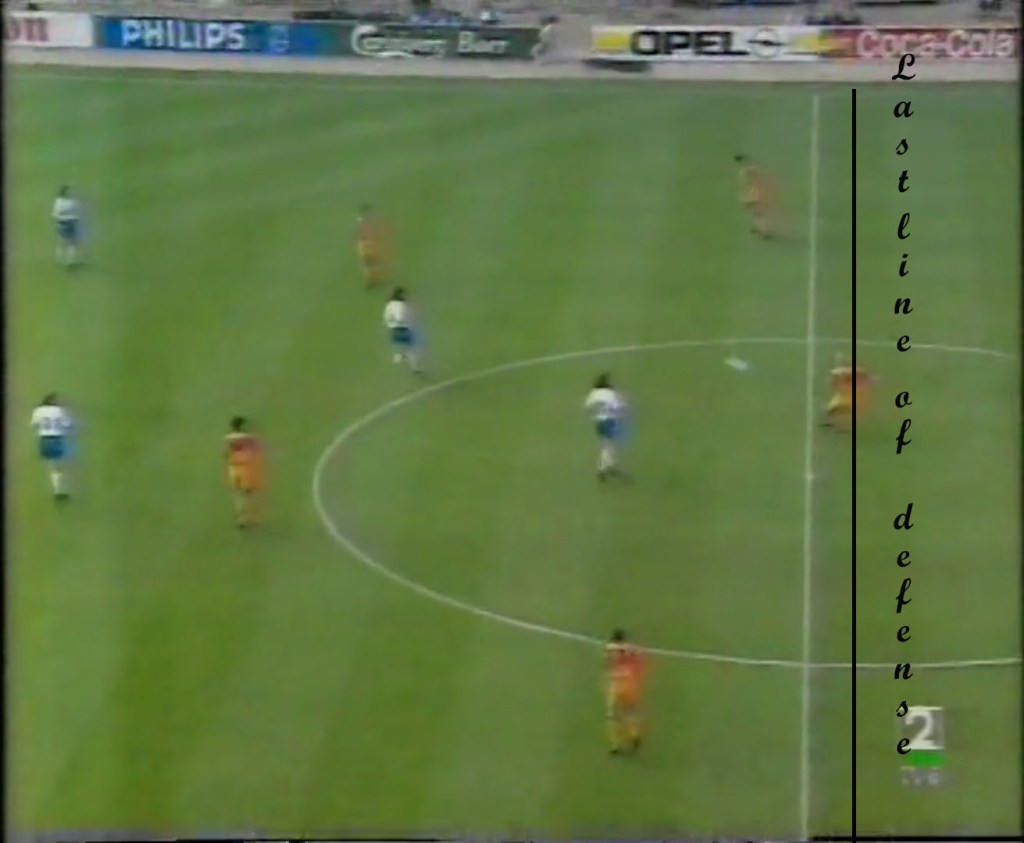
Miachel Laudrup acted as a false 9 dropping into half allowing Salinas or Stoichkov to move infield while Laudrup acted as a makeshift Trequartista.
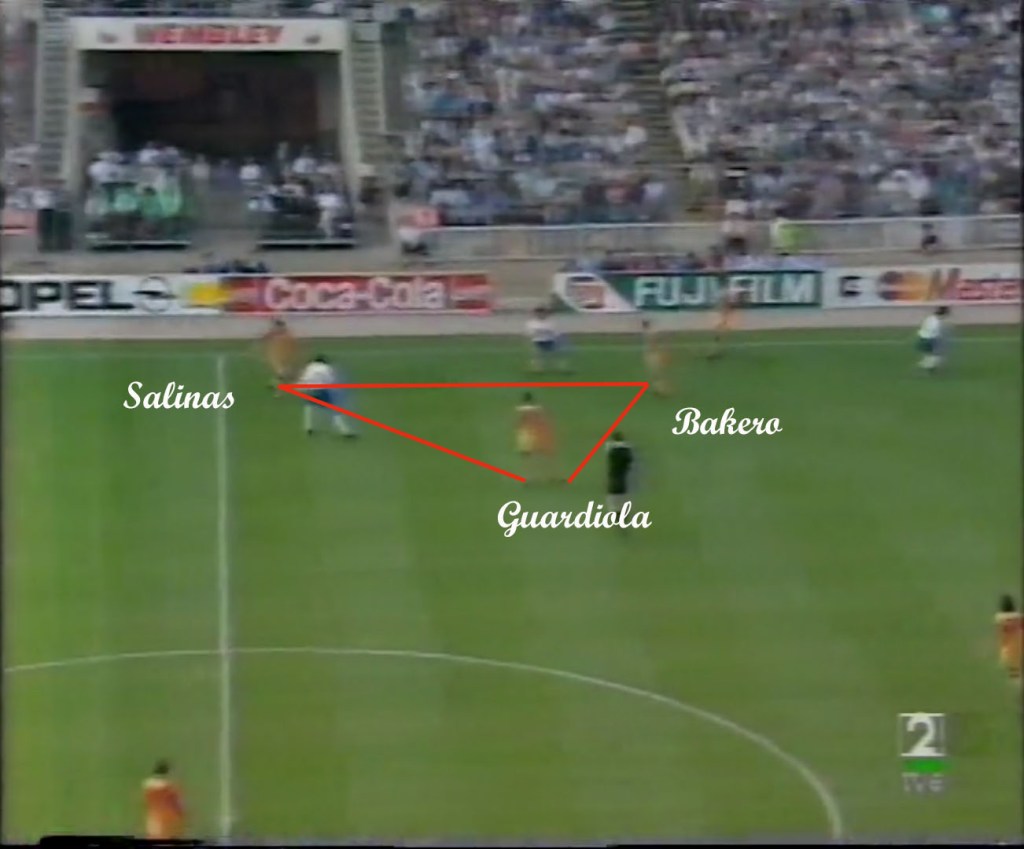
Bakero and Eusebio often floated while Juan Carlos looked to stay wide. Barcelona formed passing triangles on the wings which facilitated quicker passing out from the back.
Sampdoria meanwhile employed a variation of the catenaccio employed by majority of the teams from Italy at that period called as the Zona Mista or “The Italian way”
Sampdoria were also a threat from corners with Lombardi forcing a save of Zubizaretta

They employed a mix of man marking and zonal marking esp against a false 9 like Laudrup to negate the zonal aspect of Cryuff’s aspect.
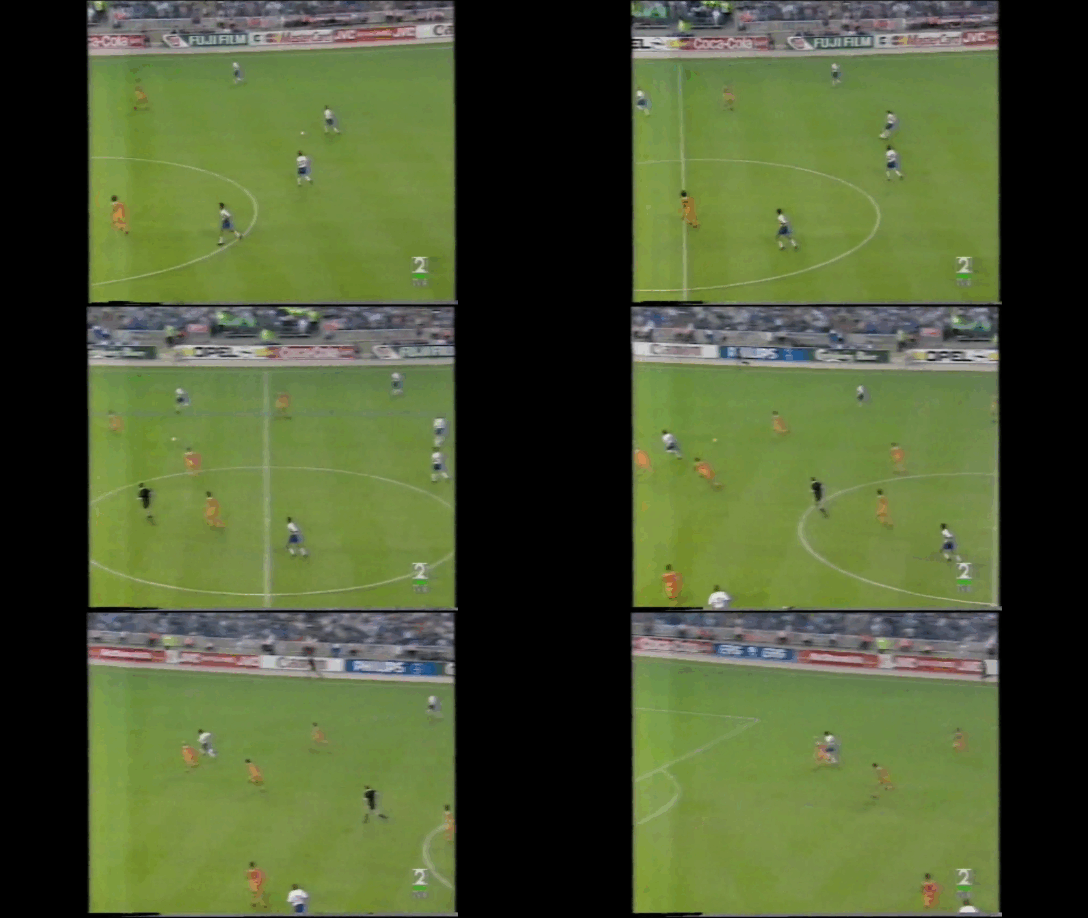
Sampdoria except Mancini and Vialli sat deeper employed a passive pressing approach and tried to suck Barcelona into their usual high line. Once they won the ball back the sweeper, Lanna would launch vertical balls into Mancini or Vialli.

However employing an aggressive press Barcelona were able to neutralize the Sampdoria’s Center backs not allowing them to hit accurate long balls by having Laudrup and/or Salinas, Stoichkov to press the CB’s

A lot of this pressing did leave space between Barcelona lines something Mancini tried to thrive in
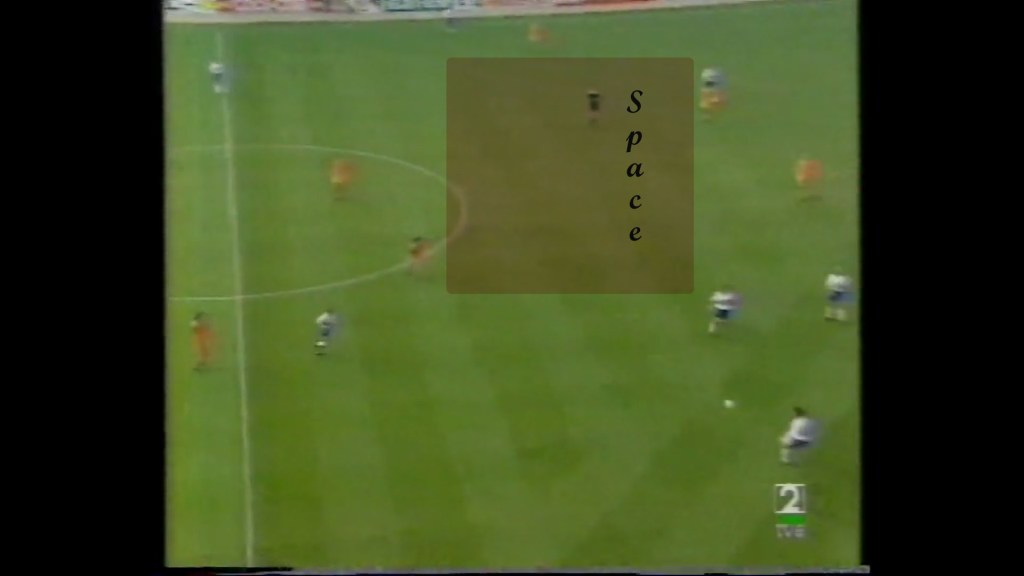
In the second half with Barcelona players more tired playing a very taxing style of football spaces started opening up and Sampdoria started counter-attacking on their left targeting Mundo putting Lombardo on a 1v1 with him
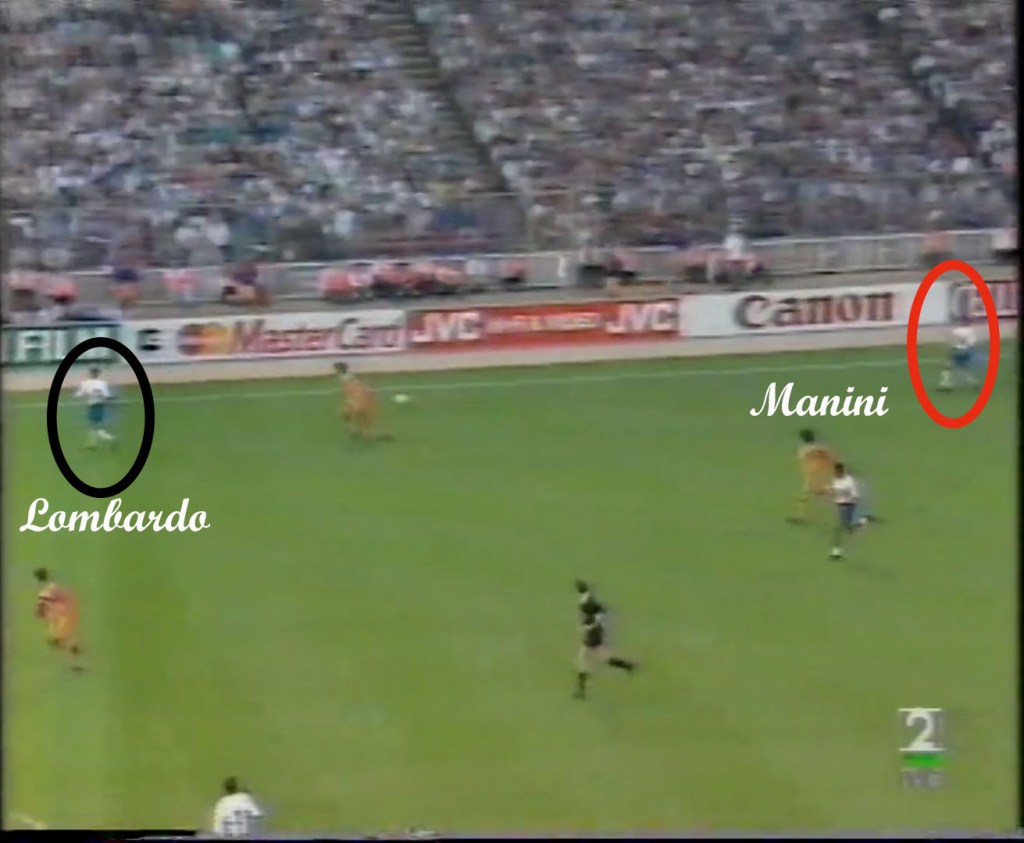
Vialli then would make infield runs to collect through balls behind the Barcelona defense hit by Pari or Mancini and run through on goal
CONCLUSION
Sampdoria was one of those teams that rode the way of the good times of Italian football. Whether Sampdoria can get back to the top of the Italian hierarchy is a different question given how the Milanese clubs and Juventus have un-matched spending power and resources but if anybody benefits from Samp’s rise its Italian Calcio.
 The Milan Blog