
News broke out that Massara had attended the convention held at the Allianz stadium to discuss Lega’s proposal of creating B-teams for clubs that are interested in doing so. As a team that has a youth team at the core of its focus, a B-team would be welcome for Milan as it would help them develop the players further than the Primavera.
So what is a B-team, how are they different from the Primavera and what are they benefits of doing so ? With this article we plan to walk you over the aforementioned features.
WHAT IS A B-TEAM
A B-team is a team that is created between a youth team and the main team in-order to achieve certain goals of the club but mainly for improving their youth players.
They would play in the lower divisions of the National leagues (Serie B, Serie C) but can never play in the same league as the main team so as to prevent foul play. So that means that if Milan create a B team, the Milan-B side can never play in Serie A as long as Milan are in Serie A.
Depending on country to country the federation will allow the team to make transfers between the Main team, the Primavera and B-team even with the transfer window being shut . Sometimes teams would send their injured players to play for the B-team to help with their recovery.
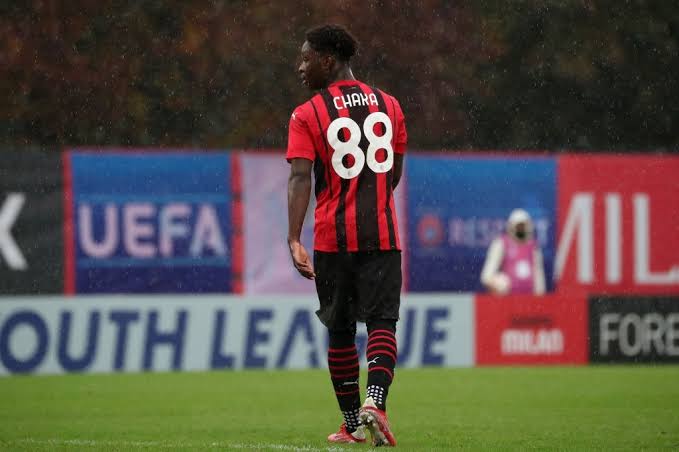
WHICH COUNTRIES ALLOW B-TEAMS IN THEIR LOWER DIVISIONS
Mostly Spain, Portugal and Germany follow this model.
Teams like Partizan Belgrade and RB Salzburg have created/bought clubs such as FC TeleOptiks and FC Liefering as their B teams to support their clubs.

WHAT ARE THE ADVANTAGES OF HAVING B-TEAM
The prime advantage and reason for creating a B-team is for the progression of Youth players. When players are a step ahead of the Primavera but still not on the level for the Main team, the best way to give them game time and prepare them for the competition is to have a B-Team.
As more and more money is getting poured in, Football has become extremely competitive, sometimes even cut-throat and it is of prime importance that, on a physical and mental level, players from the youth levels make recieve exposure.
Playing against Primavera players only exposes them to players of their age but when they make the jump to the Main team it does not prepare them physically for the competition at the Senior level.
But with the B team playing at a Serie C level, they are competing against players fo mixed ages aka players of age ranging from 18-30+. This means that the Primavera players would learn to deal with the more physical players who are more developed. This would help them go through the rigors of going though the correct physical development to reach Serie A.
Mentally it exposes them to players who are extremely competitive and therefore understand what it means to have to fight for a place in the squad and the level of physicality they will have to face in the Serie A.
Pep Guardiola made 55 appearences with the Barcelona B team (as a player) while Lionel Messi made 27 appearences. Toni Kroos played 13 games for Bayern Munich II.
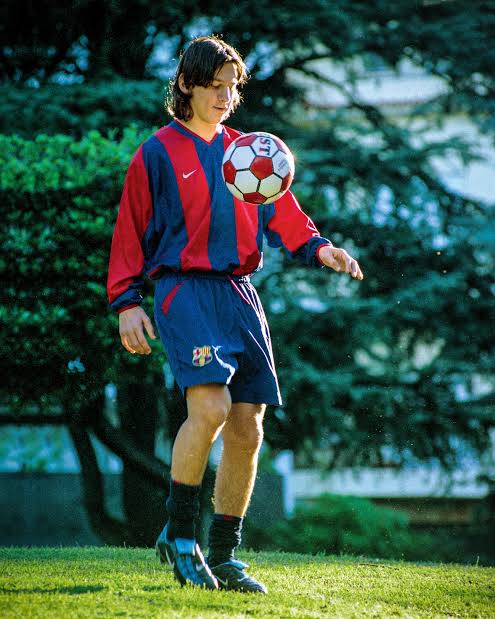
Now let’s not restrict development only to players. The competitive environemnt also gives coaches exposure. For a coach who is in the embryonic stage of his career, it helps to understand his strengths and weakness in his style of play. The best example for this is Pep Guardiola (again). Guardiola had a season with Barcelona B before he was promoted to the Senior side.

Teams can send players who are recovering from injuries train with their B-team instead of Primavera which can accelerate their recovery.
An indirect benefit maybe that while a player from the B-team may not be good for the Senior side, he can be picked up by lower division teams from Serie A and it could give the club a plusvalenza and help in the FFP calculations
DOWNSIDES OF B-TEAM
If B Teams are so good why don’t all teams do it ? The simple answer is that cost of maintaining these teams are not for all teams. The income from B-teams are very minimal and creating an extra team would mean extra salaries for the players, coach and the staff (physio etc etc).
Since these B teams are purely for youth development, not every team can bear the costs associated with it.
And while young players get exposed to mental and physical challenges in the B- team it can work both ways. A hard tackle could end up in a career-ending injury for a player who is as the beggining of his career. It could be over before it even started. Players become injury prone.

And while mental health is also a lot on focus these days, sometimes the rigors of the competition can break players and may not be able to deal with the sudden expose.
FINAL VERDICT
In the end, all walks of life resonate with the words “survival of the fittest”. The margin for error has reduced and this has increased the competition for places. Young players are very rarely given time at the highest levels and therefore youth players are expected to slot in seamlessly.

For teams like Milan who are now financially doing well after 2-3 years of sustainability measures creating a B-team would enhance their project “The Milan experience” which is keen on bring players through their academies to Milan from different corners of the globe.
 The Milan Blog