Swiss Ramble Thread

The accounts for Milan’s 2019/20 were released for Public viewing by the club (as is the policy of all Pvt Ltd and joint stock companies) and popular Football Financial Analyst, The Swiss Ramble spliced the company accounts to analyze the company’s performance in the onset of economic meltdown following the Covid-19 pandemic.

Now with this article we summarize their findings and give our verdict on Milan’s performance off the field.

To give a better understanding, I have classified all the data under various overheads

GENERAL OUTLOOK

Overall Milan’s loss before tax is reported at 192 Million for the 2019/20 season. It increased from 143M to 192M (49M increase). The increase in the loss is mainly attributed to Milan’s revenue decreasing by 56M even though Milan’s expenses have decreased.

Milan P&L a/c overview. Credits: The Swiss Ramble

Milan’s loss is the second highest loss in Italy only behind Roma who recorded 204M, Inter 102M and Juventus 90M.

In Europe Milan once again only trail behind Roma In terms of highest losses being 2nd on the list,

With this year’s balance sheet, Milan’s accumulated losses for the last 7 years have gone up to 735M in 7 years. 

Operating loss defined as the Operating Income minus Operating Expenditure (Operating income or expenses does not include player’s amortization, profit from player sales and disposal of assets related to extraordinary activies of a football club) for Milan increased from 144M in 2019 to 202M in 2020. However Milan’s Operating loss is not the highest in the league as pretty much all clubs in Serie A operate on loss

TV REVENUE

Milan suffered highest fall in Income in terms of TV broadcasting revenue. In 2018/19 season the club earned 105 Million which has reduced to 63M in 2020. This fall can be attributed to a poor showing in the league, lack of European competitions and Corona deferring payments from broadcasters. Some of the broadcasting revenue will be added to the 2020/21 season accounts.

TV revenues of different clubs in Serie, note that clubs marked in red have not published their latest accounts. Credits: The Swiss Ramble.

When seeing the big picture Juventus earned 166M, Napoli earned 121 Million and Inter earned 112 Million last season.

MATCHDAY INCOME

Match day Income refers to the revenue received by the club when a match is hosted at the San Siro. Milan’s matchday revenue reduced from 34M to 24M mainly due to Corona preventing fans from entering stadiums and Milan not participating in Europa League. Milan’s 24M was only better by Juventus (49M) and Inter (44M)
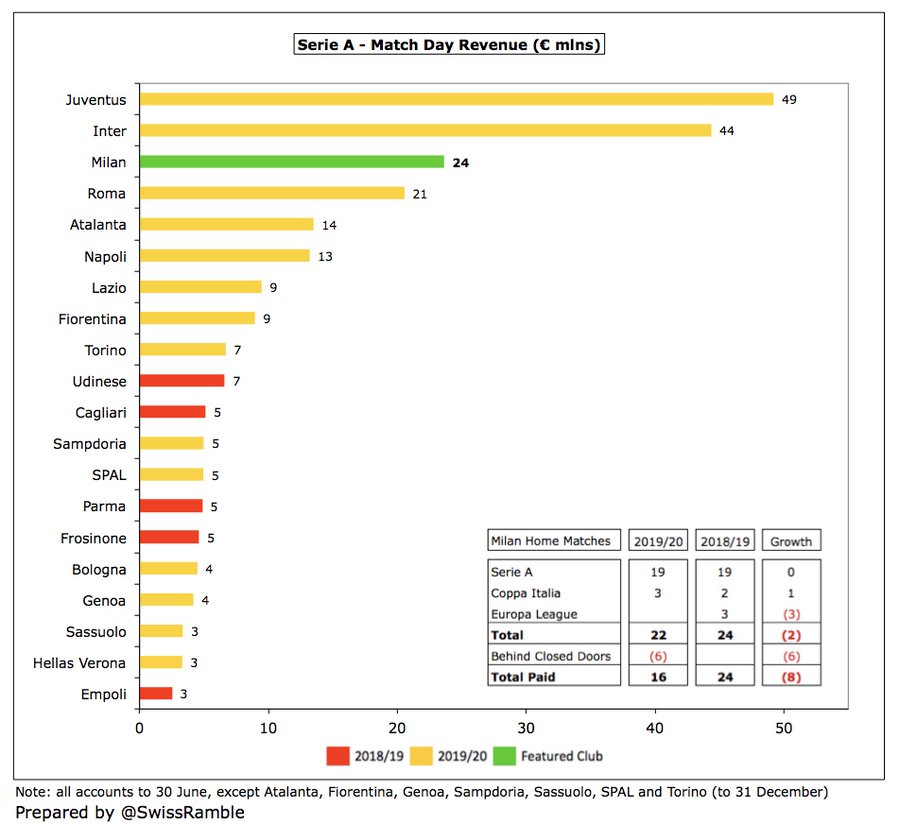
Match day income of different clubs in Serie, note that clubs marked in red have not published their latest accounts. Credits: The Swiss Ramble.

This is despite Milan having the second highest average attendance (34,078) in the league behind Inter Milan (41,558).
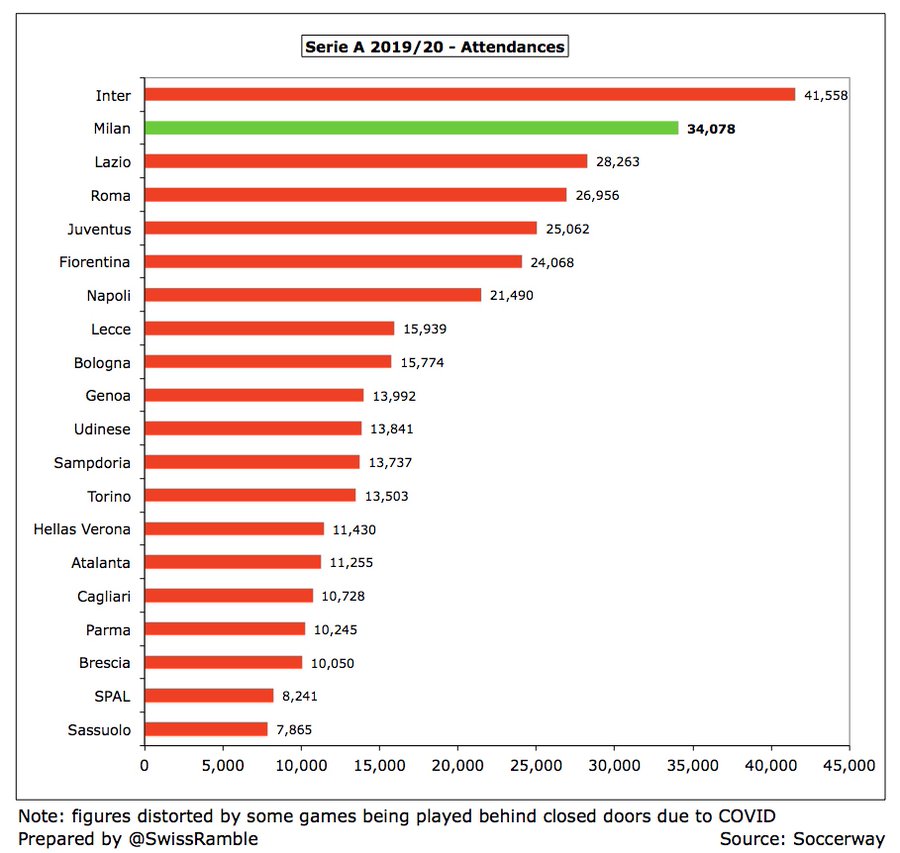
Average attendance of each club in Serie A. Credits: The Swiss Ramble

EUROPEAN PARTICIPATION

Each Team is given prize money for participating in Europe along with a share of the broadcasting revenue earned by UEFA. The share is determined by performance, historical performance in the competition.

Now this is a metric we all know the results even before the results was published. Milan’s total earnings from Europe was 0 from last season since Milan chose to sit out from Europa league and forego the minimum 15M it would have received from group stage participation.

Now a great divide can be observed in this respect of Milan with the bigger clubs. Juventus earned 87M from a Round of 16 exit in the UCL while Inter earned 57M from a group stage exit, while Atalanta earned 57M for a run towards the Quarters while Napoli earned 70M reaching the same stage.
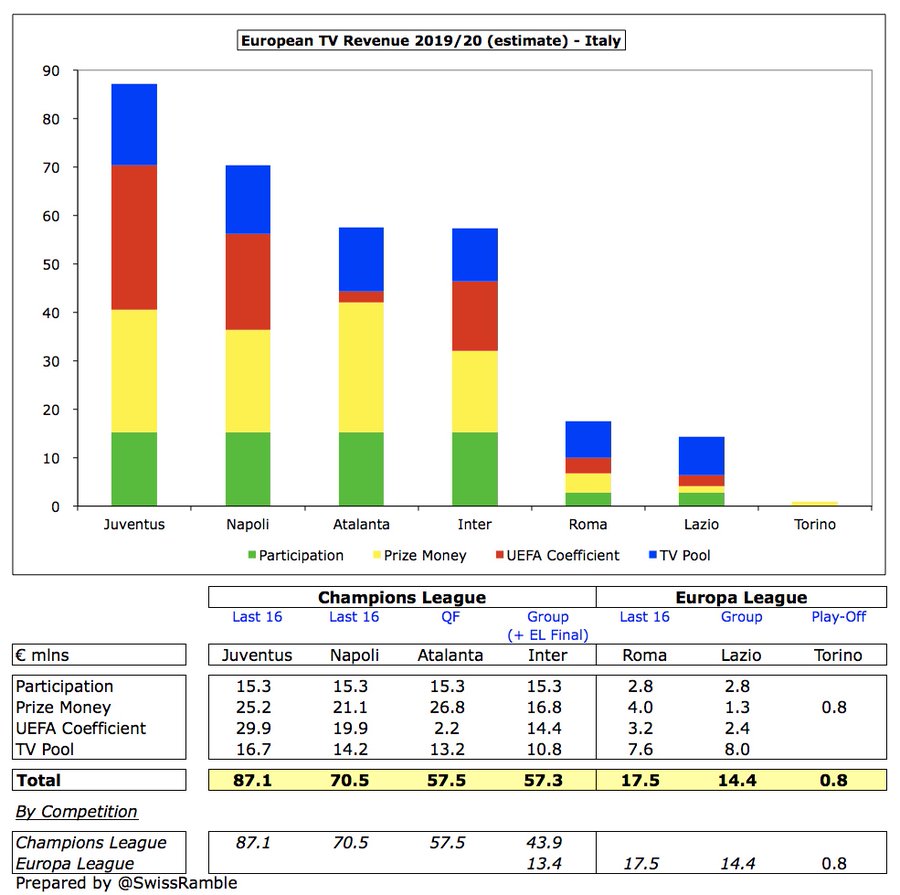
Revenue earned by Each Club in Serie A for participation. Milan made €0. Credits: Swiss Ramble

With Milan not having qualified to UEFA Champions league in the last 7 years Milan’s total prize money accumulated from European competitions is 29M (14M from 2017/18 and 15M from 2018/19). A comparison with Juventus, Roma and Napoli cannot be even thought of as consistent UEFA Champions league qualifications have earned them huge amounts of prize money+ tv pool.

TRANSFERS AND PLAYER METRICS

As a football club the main business of football clubs would revolve around dealing with football players. There are various costs and income involved with Football players and here we take a look at the performance of Milan under this overhead

Amortization, in layman’s terms, is transfer fee of a player that is spread across multiple years. It is a fictitious calculation used for accounting purposes to calculate accounting value of a player as well profit loss of a player when he is sold.

For example Hakan’s current Book Value is 2.8M. If Milan sell the player for 15M, Milan would make a profit of (15-2.8) = 12.2M

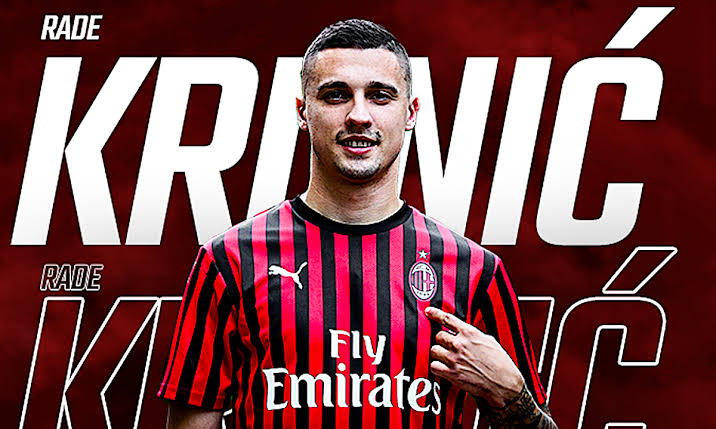
In the financial year of 2019/20, Milan’s total amortization player increased by 14M to 95M. This can be attributed to the fact that Milan spend close to 80M last season reinforcing the team for Giampaolo with purchases like Bennacer, Theo Hernandez, Leao, Duarte and Krunic. These purchases padded up along with the amortization costs of the players we bought under the Chinese by grossly overpaying.

In terms of transfer Milan made a net profit of 15 Million. The sale of Cutrone for 17M and Djalo for 3M brought in 20M profit while the sale of Piatek and Borini gave a loss of 5M. When calculated net profit is 15M.

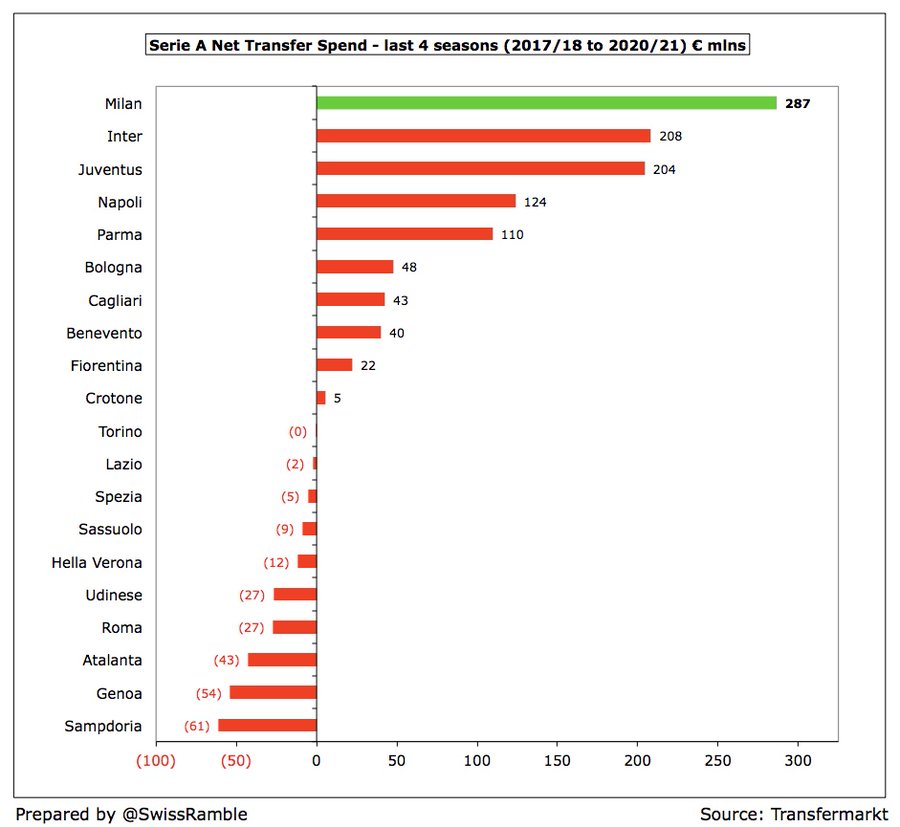
In terms of Net spend (Net spend is calculated as transfer fees paid minus transfer fees received) Milan has the highest Net spend in Serie A at 287M. This can be attributed to the terrible purchases commissioned under Mirabelli and Leonardo who squandered a lot of money meaning Milan spend 515M in the last 4 years. Compared to this the profit we have received from selling players is a paltry 72M.

While Juventus has the highest gross spend was 758M but the profit they made on player sales was 563 Million. This brought down their net spend to 195M hence showing better financial balances.

Milan’s transfer debts (transfer debt is amount owed by a club to the other club for the transfer of the player) reduced from 176M to 76M and now their net debt (amount to be paid minus amount to be received) is only 20M which is a very healthy financial indicator. Milans 76M gross debt is realtively less compared to Juve’s 301M, Roma’s 191M  and Napoli’s 141M.
Another main source of income from transfer is loan fees and Milan collected 8M last season which is second highest in Italy behind Inter (9M) thanks to Icardi’s loan to PSG.

WAGE BILL

Wage Bill is often one of the most discussed and transparent overhead in the fan base. Milan’s wage bill was described as terrible one that needed a lot of attention by incoming CEO Gazidis.

Milan’s wage bill for the 2019/20 season fell by 24M (13%) thanks to players like Montolivo, Jose Mauri, Bertolacci, Bakayoko along with Borini, Caldara, Pepe Reina and Ricardo Rodriguez being taken off the wage bill mid-season.  Despite this Milan has the 3rd highest wage bill in Serie A only behind Inter and Juventus.
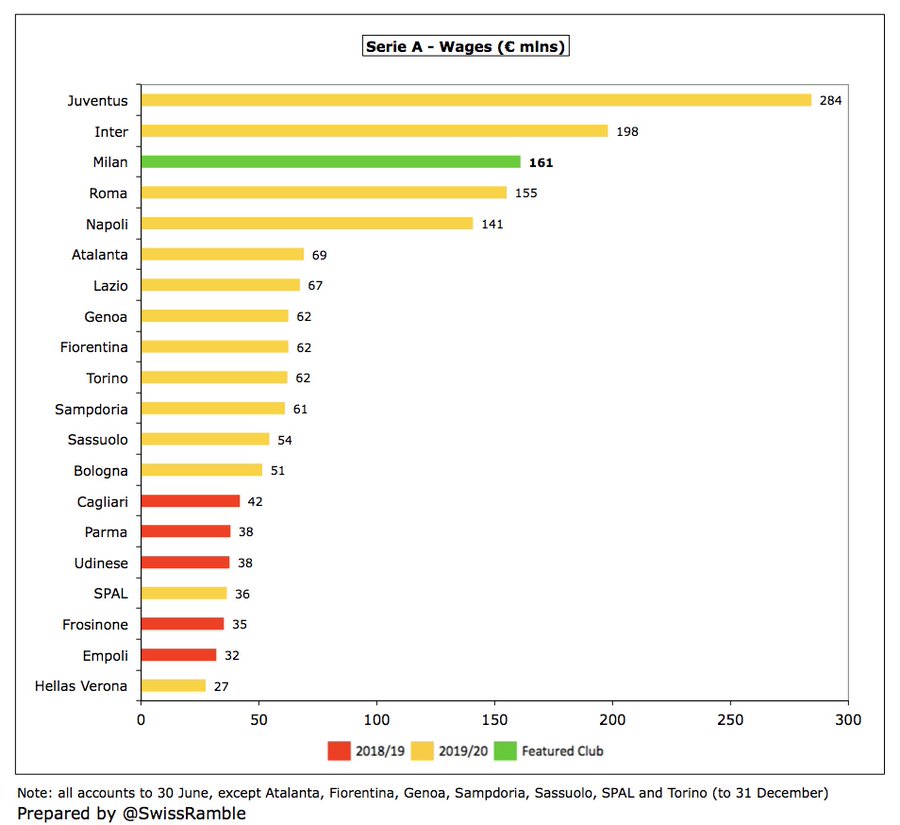
Wage Bill: Serie A

Wages to turnover ratio is a metric that is used by companies to measure the efficiency of the employees of the company. The lower the ratio the higher the efficiency. Milan’s ratio fell from 85% to 93% mainly because of overall fall in revenue. This is one avenue Milan fans will look to improve in the coming season.

COMMERCIAL REVENUE

Commercial revenue can be described as the revenue obtained by the club through various sponsorship activities and sale of merchandise.

Milan’s commercial revenue grew by a solitary 1M from the 2018/19 season. Despite Gazidis bringing in new sponsors Milan does not have quite the brand appeal of Juventus (186M) or Inter (142M) who have been qualifying for Champions league consistently and have household names such as Cristiano Ronaldo and Lukaku.
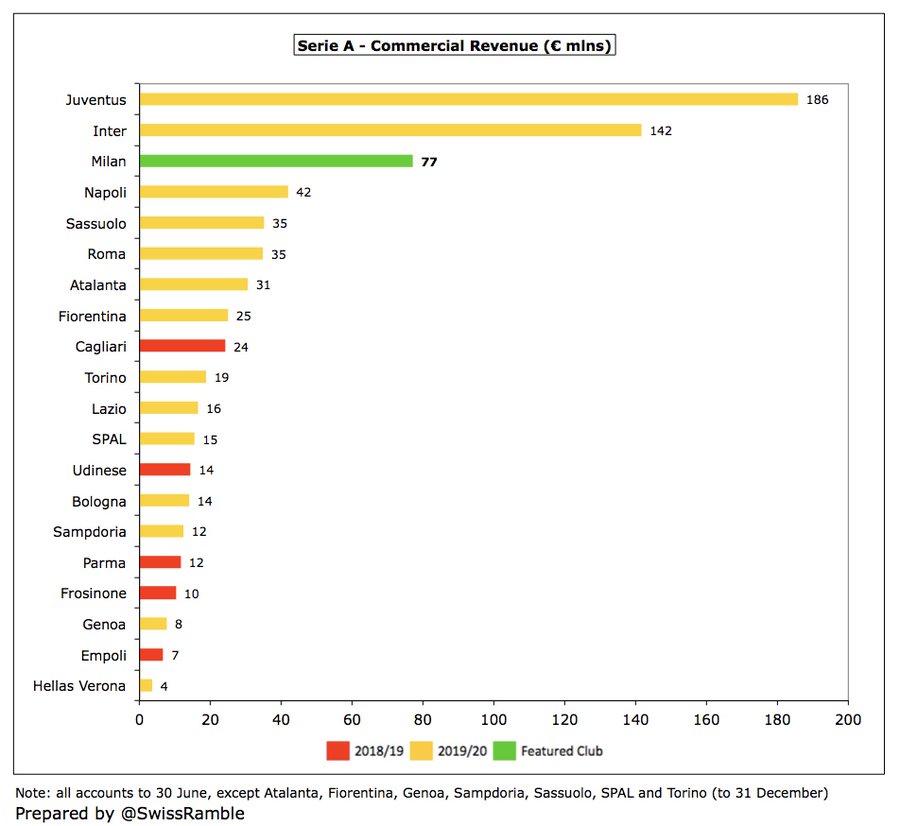
Milan’s Emirates sponsorship for their Jersey which was signed at 14M to be the exclusive sponsor has been reduced to 10M giving space for Milan to obtain sponsor on other areas of the shirt making it brim with commercial potential. It still however does not reach anywhere close to the 45M given by Jeep to Juventus.

DEBT

Debt can be described as the loan’s taken by the club through various means such as bank loans, unsecured loans (like the one taken by Yonghong Li from Elliot), loans from shareholders or bonds/debentures issued with financial institutions.

Milan’s gross debt increased by 19M from 96M to 115M due to a liquid cash loan taken with Unicredit (Unicredit is a company with links to Elliot) for future tv revenue factoring.  

Milan’s debt to various shareholders and bank loans taken by Berlusconi and the Chinese were paid off by Elliot.

Milan’s 115M debt is in no way any close to the debts of other Serie A clubs with Inter having debts close to 500M, Juve 396M and Roma 318M. (Inter have yet to publish their accounts so the debt level is still unclear).
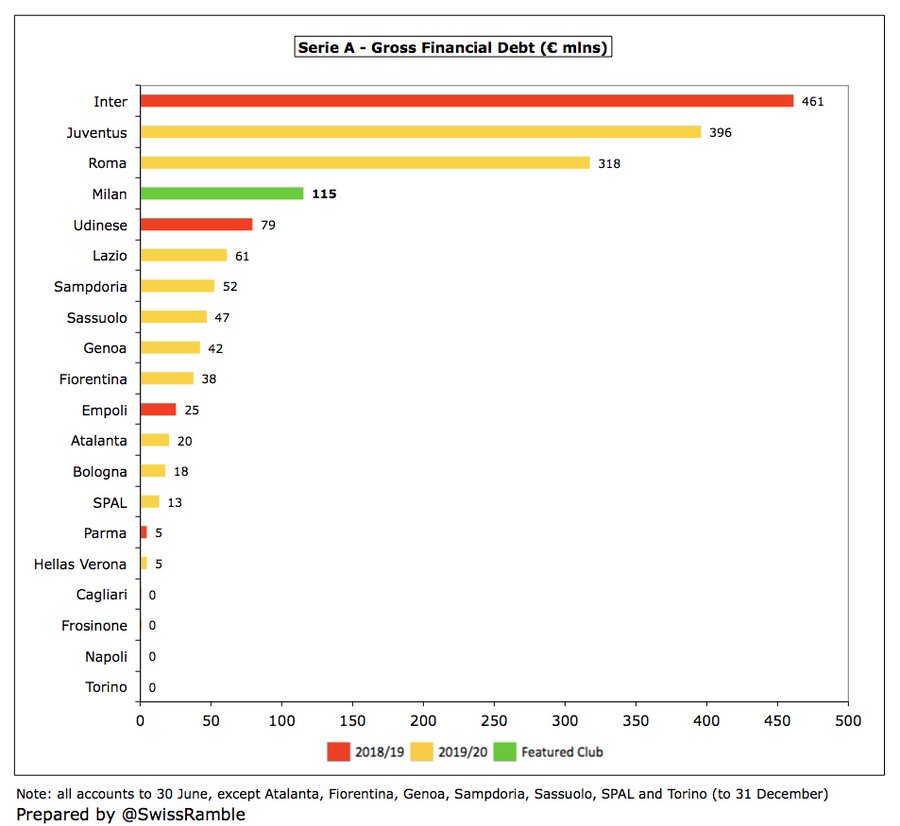
And like any other loan, clubs have to pay a certain dividend (Interest for bank loan). Milan’s net interest is only 6M while inter pays 23M, Juventus pays 15M and Roma pays 32M.

EFFECT OF COVID

Like the impact on all of our finances, Covid-19 has had an impact on Milan’s finances as well. A separate niche was assigned on the balance to consider the impact Covid-19 had on the clubs accounts.
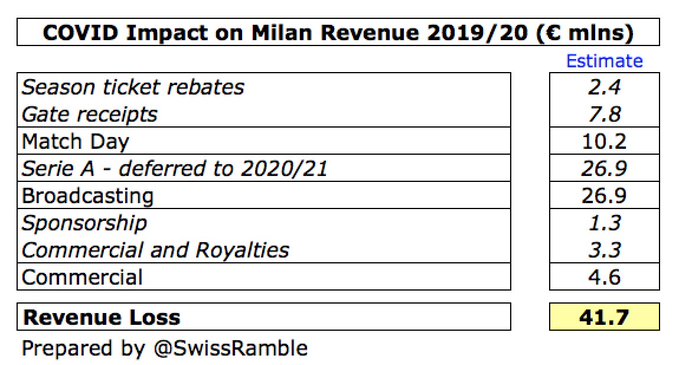
Milan have lost an estimate of 42M this season in which 26.9M is deffered (which means it will be added to the next financial year accounts because of payments received after July).

ELLIOT

A lot of fans have called into question the intentions of Elliot with regards to whether they plan to help milan achieve trophies or use them as a cash cow.

Under Ellliot Milanhave significantly improved their finances especially in terms of club debts and transfer debts.

Elliot invested close to 145M during 2019/20 season and 97M after the close of the 2019/20 season. They have in total invested close to 503M to revive Milan’s rather ailing account. It clearly shows Elliot are following the path to help Milan become financially independent.

Bringing down Milan’s gross debt from 220M under the Chinese to 115M at the end of the 19/20 season, Elliot deserve credit.

CONCLUSION

So what started off as a grim read seeing Milan having record losses at 195M, had light towards the end of the tunnel seeing some positive trends.

Milan’s expected matchday income of 34M per season is a very poor return for a club with an average attendance of 53,000 (without corona). Teams like Juventus or various EPL teams make double to what we make thanks to better stadium experiences and other commercial aspects inside the stadium. Milan and Inter’s joint project to build a new stadium is very crucial if both clubs want to compete with the financial bigwigs as well as the Premier League.

In terms of wages and transfers, Milan are still paying for the mistakes of the previous managements and will take years of corrective action. With Biglia, Reina, Suso off the wagebook a huge load off the wage bill is taken off and gives space for Milan to increase their wages to turnover ratio.

UEFA Champions league Qualification is the key to achieve financial (as well as sporting) wellbeing. Along with the Prize money, Tv Pool it brings prestige and attracts investors to invest in the club giving a boost to the commercial revenue side.

Last but not the least Milan need to be prudent with their transfer market activity. Milan would need to sell their players and replace them adequately. This for sure is a department fans wouldn’t worry about given how the 3M’s of Milan (Massara, Moncada and Maldini) have shown some cutting-edge technique to identify players and integrate them to build a winning side.
CHANGE IN RECRUITMENT POLICY

When Silvio Berlusconi took over Milan in 1986 the media tycoon had a vision for the fallen giants. He wanted Milan at the zenith of World football. With his faithful servant Adriano Galliani and extremely talented Ariedo Braida Milan set about achieving a room full of trophies under the tenure. The secret to success?  Silvio’s personal wealth. He bankrolled transfers even setting records for the world’s highest transfer fee at times. Incame future legends such Van Basten, Ruud Gullit, Frank Rjikaard, Andriy Shevchenko, Alessandro Nesta, Pippo Inzaghi and Manuel Rui Costa.

However once Silvio Berlusconi’s term ended and he couldn’t compete with the Oil money of PSG and Manchester City, the flow of cash into Milan’s coffers stopped. Milan were forced into making free transfers and signing players on frugal transfer fees. Things reached a peak where Milan were continuously out of Europe and the Curva Sud were forced into raising its now famous banner “Insert Coin and save Milan”. It all came to an end when the Chinese under mysterious owner Yonghong Li took over from Berlusconi and spend 250 Million Euros bringing in 11 players that seem to have signaled an end to the downfall but the fall was even steep. Choosing to trust a rookie director of sport and CEO the Chinese’ money was not well spent and Milan once again failed to reach Champions League.

With Chinese defaulting on their payments, it was now the turn of Elliot to come into the market and show their intentions. They chose to trust an old ally of Milan in Leonardo and an experienced hand. Elliot too took the path forged by Berlusconi and spend close to 200 Million Euros bringing in Higuain, Piatek, Paqueta, Caldara and Laxalt. But even that was not enough to save Milan as Milan missed out on Champions League Qualification.

The turn of the year 2019 had seen the arrival of a controversial figure of Ivan Gazidis.  Gazidis, CEO at Arsenal from 2010 to 2019 had quite suffered the wrath of Arsenal fans of his departure. Given Milan’s financial condition (540 Million losses in the last 6 years) Gazidis was hired to revive the economics of the clubs with balance to sporting affairs.

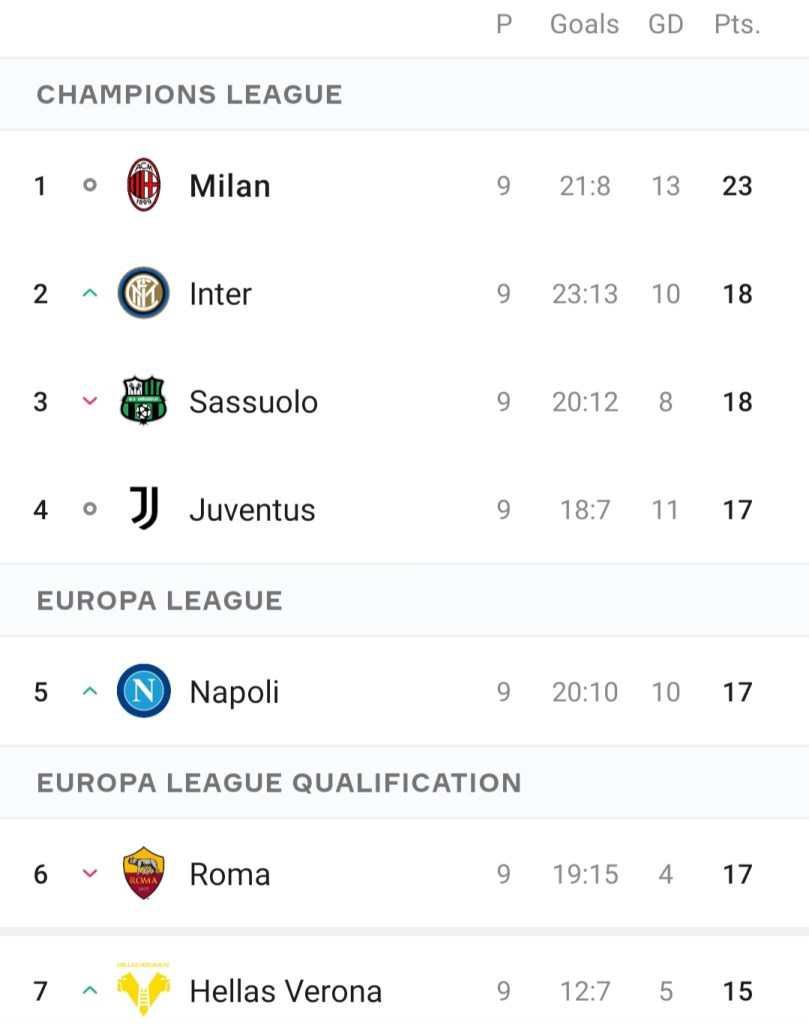
In the last 3 transfers windows Milan’s net spend has not crossed 20 Million. However the lack of spending has not affected their sporting performances with Milan sitting 1st with a 1 point lead over Inter and 7 point gap over Juventus. So how has the recruitment policy changed over the years? What aspects has changed the policy? Let us take a look at the different factors and positive changes.

FFP

This isn’t a positive or a negative change but more of a change that is not within the hands of the management. UEFA brought in the Financial Fair Play to regulate the spending of clubs. As per the rules, the clubs are only allowed to spend a fraction of the money they earn in revenue as transfer fees.

The FFP has gained a lot of criticism for its impartiality and its loophole but clubs are still bound to its laws hence exploitation of its loopholes. Milan with poor finances since a long time is in the red when it comes to FFP balance and therefore needs to be careful with spending to avoid attracting unnecessary penalties such as ban from European Competitions.

This has forced Milan to change their transfer policy to invest heavily in scouting and youth policies to adhere to the Financial Fair play rules.

TACTICAL IDENTIKIT AND VISION

Once the period of glory under Ancelotti had reached its end and Ancelotti left Milan to try his luck elsewhere, Milan struggled to stamp a tactical identity on their own team and then we saw Milan play a dour and unproductive style of football quite contrasting to their famous teams of the past.

With Pioli it all changed as he brought a clear plan to the management on how he wants to play his style of football. Intense pressing, high line quick counters and roaming no. 10. This gave the scouting department a clear vision and plan. Milan focused more on signing players that fit the system rather than individual brilliance like the Saelemaekers signing from Belgium. Saelemaekers individually does not scale much towards talented individuals but he fits the system and brings output when playing in the XI.

MODERN APPROACH TO SCOUTING

With the smaller teams unable to compete with the financial muscle power of the big clubs it was up to the smaller clubs to find a way around spending large amounts of money to bring in players relatively unknown with good scouting prowess and extensive knowledge. A good example would be of Leicester trying to replace Esteban Cambiasso after he left the club in 2015 and Leicester needed a DM but did not have a huge budget to fill the role. Leicester used their analytics team and got in a relatively unknown N’Golo kante for 9M from SM Caen. 1 PL title later, Leicester sold Kante for 32M making a 25M profit on the player.

Milan after the fiasco of Berlusconi and the Chinese could not afford to invest huge due to FFP. In came a relatively unknown Moncada who worked under Luis Campos at Monaco and was the scout who scouted future star Kylian Mbappe from AS Bondy.

With a data driven approach overseen by the expert eyes of Massra and the club legend Paolo Maldini, Milan unlike other clubs in Italy (maybe Atalanta) started making signings that saw players who were unknown or not fanciful join the club but make huge impact. Kjaer and Saelemaekers can be singled out regarding this aspect as they both cost a combined 10M but has been prime to Milan’s tactics. This season the arrival of Hauge gave further credence to Milan’s wonderful scouting team

WHAT MILAN SEEK IN THEIR PLAYERS

Milan and their sporting managers came to the realization of how Milan are out of the times in terms of play. Milan were still relying on individual brilliance and luck rather than building a system and buying players to fit the system.

Modern footballers with so much investment into sports medicine and injury prevention methods are extremely fit and fast. You could see how Liverpool power their way through opposition defence with Salah, mane and Firmino or how Bayern do not allow opposition to relax with the ball by constantly pressing them.

With Pioli aspiring to play a version of Bayern’s pressing game, Maldini and Co. knew that Milan needed players who were quick and had the miles in their legs. Out went Suso, Ricardo Rodriguez, Piatek, Biglia, Musacchio and in came Saelemaekers, Theo, Ibra and Kjaer with Rebic or Leao occupying the flank. This change ensured Milan press their opponents forcing them into an error like how Rebic pressed the Benevento player and forced him into clattering into Rebic for a penalty. Or how Theo sprang a very quick counter-attack through Sassuolo’s flank with Sassuolo defenders not able to match the sheer pace of Theo and theo finally squaring it for Saelemaekers. A prototype for the style of Milan has been formed and targets of Milan whether Kabak, Simakan, Kone, Thuram or Haaland, they all must be congruent to Pioli’s style of play rather than be individually brilliant

CONCLUSIONS

Upgrading Milan’s technical side as well as cultural aspect from big money spenders to a money-ball style of recruitment took a lot of lean years in the trophy cabinet. Ultimately the overhaul is complete, Milan are top of the table and players are slowly being attracted to the project without being offered over the top wages. Finally it may be time for Milan to reach the heights it did albeit with a different approach

Krunic- Square peg in a round hole

When Milan hired Marco Giampaolo one of his first signings was his player from Empoli, Rade Krunic. The Bosnian mezzala who had relegated with Empoli like Bennacer was a student under Giampaolo before Giampaolo before to Sampdoria. Playing a 3 man midfield in a 4-3-1-2, Giampaolo wanted midfielders that were familiar with his system and hence he signed Krunic for 8M from Empoli.

However Giampaolo didn’t last for more than 7 games and in came Pioli, who brought used Krunic until a series of recurring injuries until the lockdown.

With Pioli shifting to a 4-2-3-1/4-4-2, Krunic’s place in the side got diminished. The Milan management however decided to keep faith in the player in the summer and not sell him to get a Defensive midfielder. It now seems like a mistake.

The problem with Krunic

Before we analyze the problem of Krunic, let us understand the style of player Krunic is. Krunic is an advanced midfielder who has a decent touch and a passer. A player who can recycle possession and keep possession he can more like instigate attacks. He relies more on off the ball movement and a lot of running. He isn’t very press resistant and as seen against Celtic loses the ball if he is pressed.

Milan under Pioli play 4-2-3-1 and use a double pivot and modified #10 with 2 widemen and a lone striker at the top. Pioli uses Kessie and Bennacer as Ball-winners as well Deep-Lying playmakers when the team has possession. When Milan lose the ball, one of the double pivot initiates the press depending on the zones they have been assigned. Hakan’s job is to distribute the ball in the opposition half, position between the lines and split the lines with passes.

Now Krunic’s skillset is more suited to that of a half-winger or Mezzala as the Italians like to call it.  With no real ball winning skills and ability to affect play from deep or even physicality, Krunic cannot be played as Defensive midfielder in Milan’s double pivot. Milan tried Krunic in the Attacking midfielder slot but being very less press resistant krunic is not able to position himself well to receive the ball like Hakan or Brahim Diaz does.

With this we can infer that Krunic is not fit for Milan’s 4-2-3-1 and he is like the piece in a jigsaw that does not fit. He does not provide the adequate cover like Pioli hoped he would.

Conclusion

In terms of workrate, Krunic has always given 100% on the field. He ranked 2nd in the players with most covered distance against Lazio but distance covered does not tell us the real story of how he seemed completely zoned out and overrun by Lazio midfield.

Milan will have close to 24 games in the league to play along with Europa League and Coppa italia to play. Milan need reinforcements but given how Milan are not willing to overspend selling krunic would free up funds for Milan to make a new acquisition in the midfield department

Kessie

In 2019, If Milan fans were asked who should have been the first player to be sold, Kessie would have been on the top of many people’s list. January transfer window came along and there seemed to be interest from English clubs and Inter who were interested in a swap deal between Kessie and Vecino acc to CorSera and Corriere Dello Sport.

The management decided to keep Kessie and with other personnel changes in the squad, Pioli changed to a 4-2-3-1 formation partnering Kessie along with another Defensive midfielder in the form of Bennacer.

Today Kessie is one of the most important players to Milan’s high pressing system and has a cult following in the fan base. Kessie brings steel and drive into midfield which has been a game changer for Milan in their recent renaissance. It brings to questions what has caused this change and what is Kessie’s new role

THE EVOLUTION TO 4-2-3-1

Ever since Milan shifted to a familiar Pioli’s more familiar 4-2-3-1 changing to a 3-4-3 in attack he used in his days at Fiorentina. However Milan was used to a 4-3-3 module under previous coaches and Pioli tried to incorporate his tactics into the 4-3-3 to keep the continuity going. However his module was unsuccessful and it culminated in that 5-0 humiliating defeat to Atalanta leading to a re-think supported by Maldini and Boban with personnel supporting his principles of play. Pioli, later, in an interview to The Athletic revealed that he instructed his staff to study Hansi Flick’s Bayern Munich. Bayern plays one of the most complete game of pressing in Europe and Milan wanted to successfully incorporate that in their style of play.  

Bayern last season played in a 4-2-3-1 with the double pivot consisting of Thiago (now in Liverpool) and Goretzka. Goretzka was a physical B2B while Thiago was a quasi-deep lying playmaker forming passing triangles with center-backs helping to play the ball out of defense and then spray it forward to the forwards to build attacks/start counter-attacks.

In Milan these roles are fulfilled by Bennacer and Kessie. While Kessie is the physical B2B, Bennacer takes on the role of playing the quasi- Regista. Speaking the common language of French, Bennacer and Kessie’s good chemistry has been very pivotal in Milan’s press as well as counter-press.

ROLE OF KESSIE

With concise roles handed by Pioli, Kessie is the muscle of the team. This is not to undermine, Bennacer’s physicality but Kessie is asked to assert his physicality over the opposition’s midfield and keep a tight rein on their creative players.

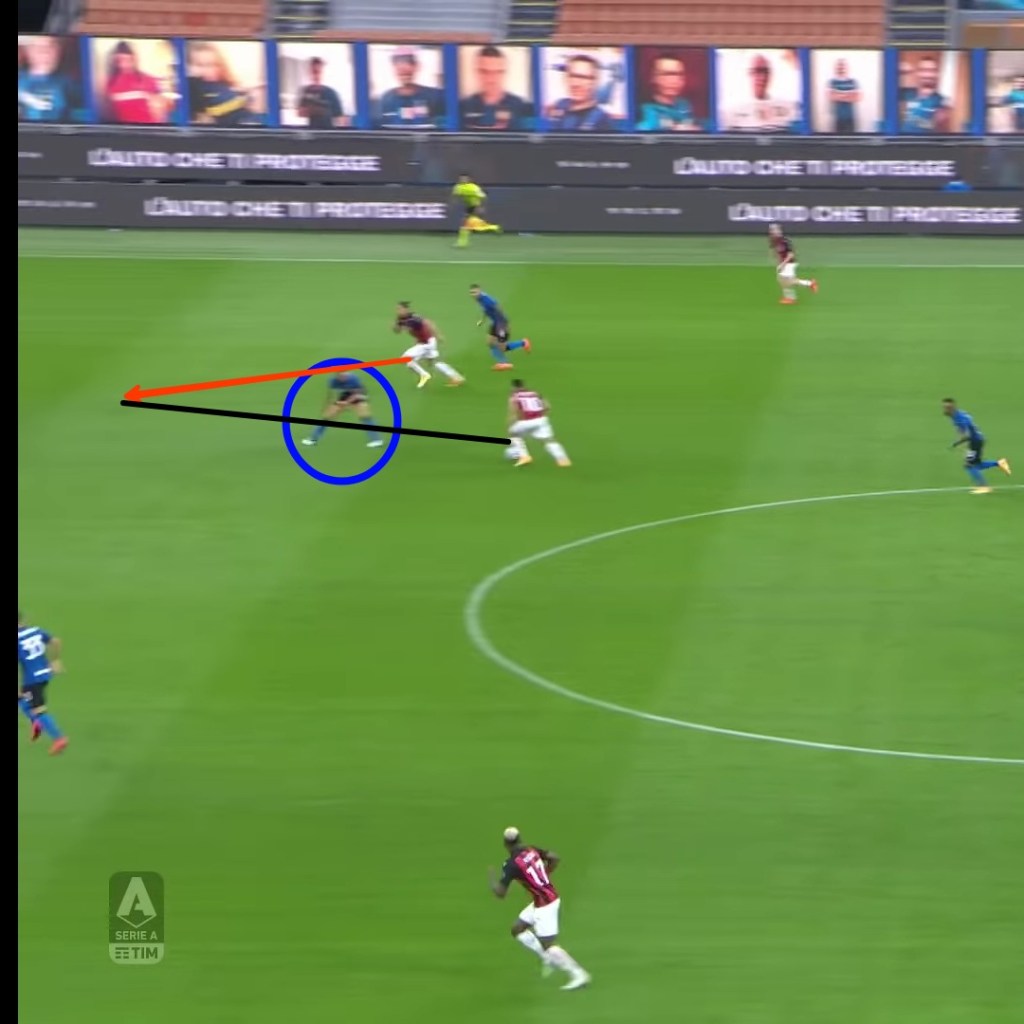
Kessie physically challenging Lukaku and winning the ball

When Milan negate the attack of the opposition and Theo Hernandez sprints forward Kessie sits back as the 3rd center back to prevent counter-attacks if Milan lose the ball.

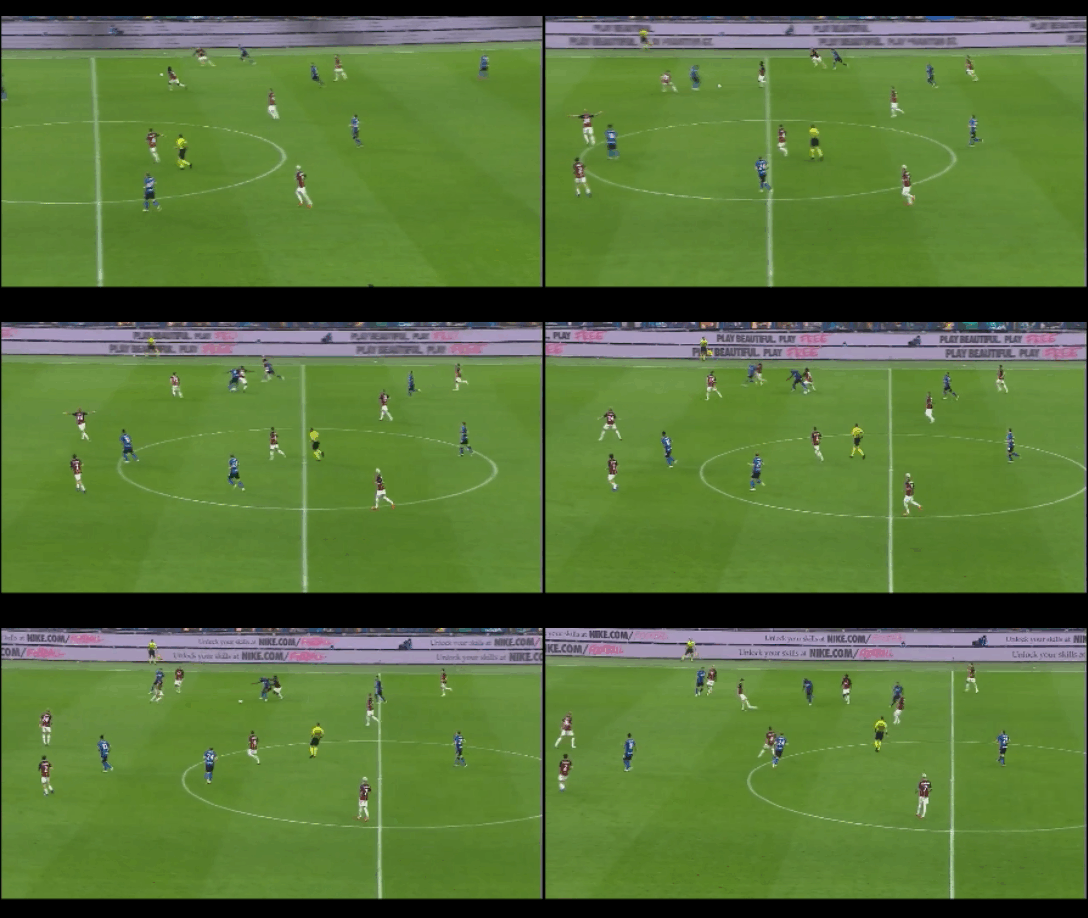
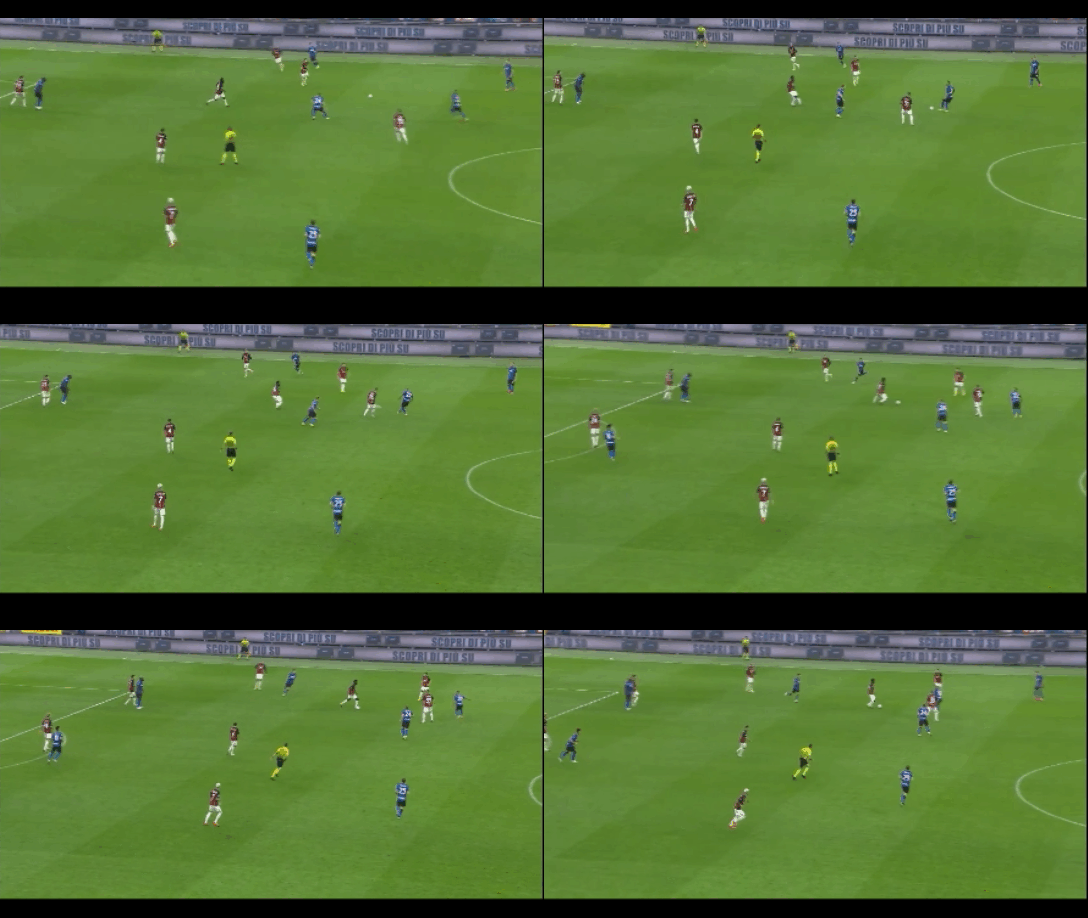
A vital part of Kessie’s role is to initiate the press. At first i.e lockdown last season Milan played a very physical press, trying to crowd out the opposition player in possession pressing in triangle formation. With more games to play this season and save energy game Milan use a more horizontal press as well as cover shadows. Cover shadows are basically cutting off passing lanes of the player in position and intercepting the passes.

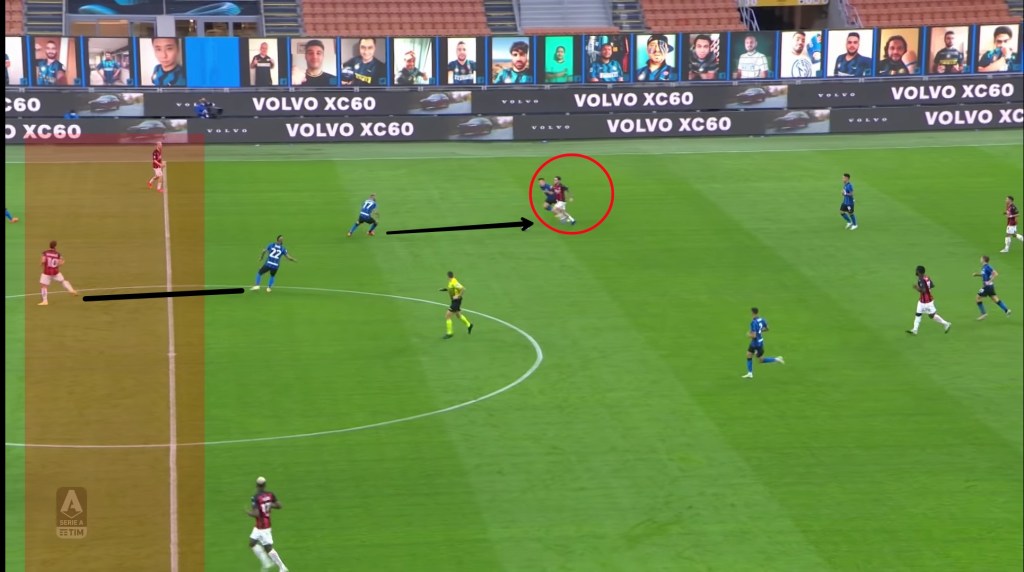
Kessie cutting off Vidal’s passing lane to Lukaku

Horizontal pressing entails pushing teams towards the wide areas of the each using the side-line as an extra man. As soon as the opposition get the ball, Kessie initiates the press and then Theo/Romagnoli along with the Rebic and Hakan push the opposition team towards the touch line either forcing the ball for a throw or force the opposition to try a risky pass and concede possession.

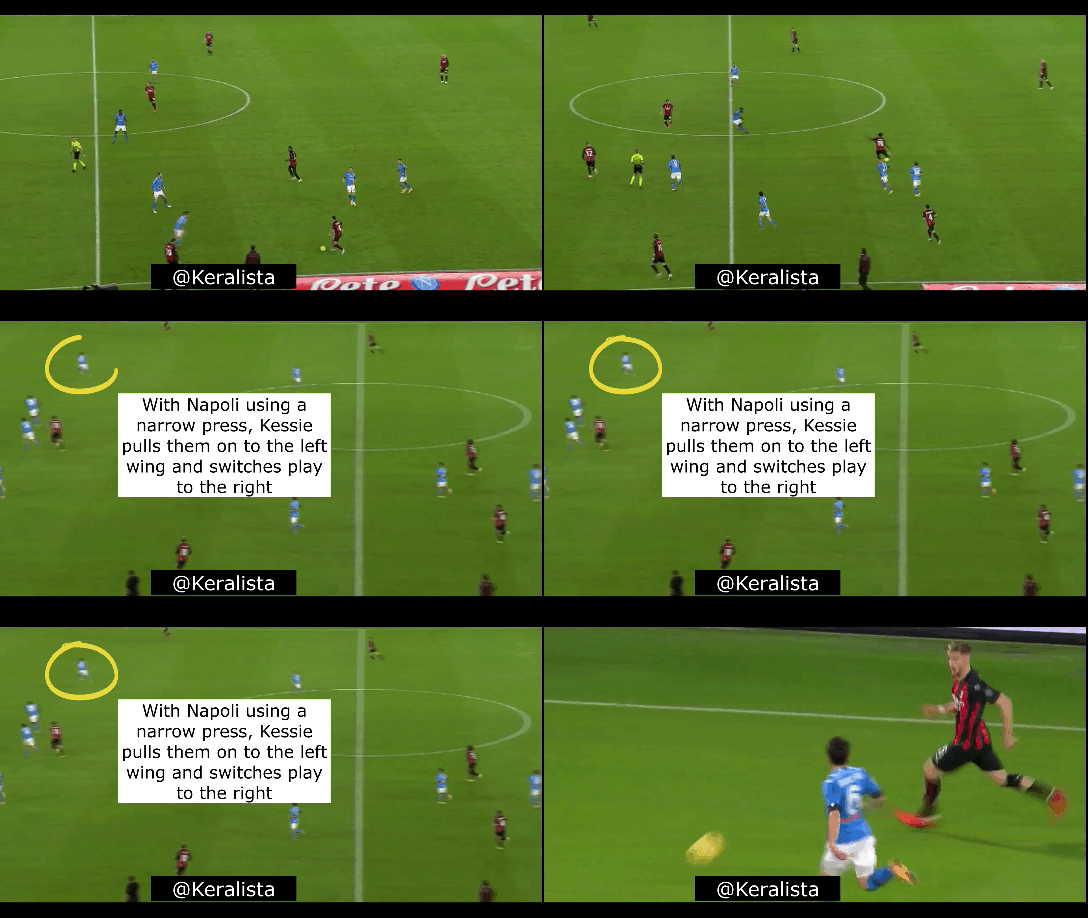
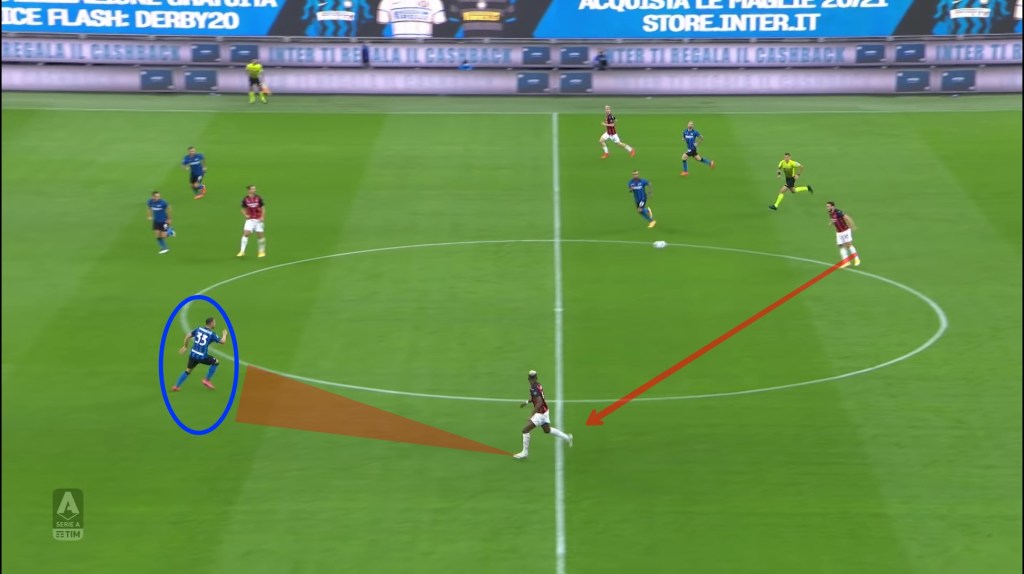
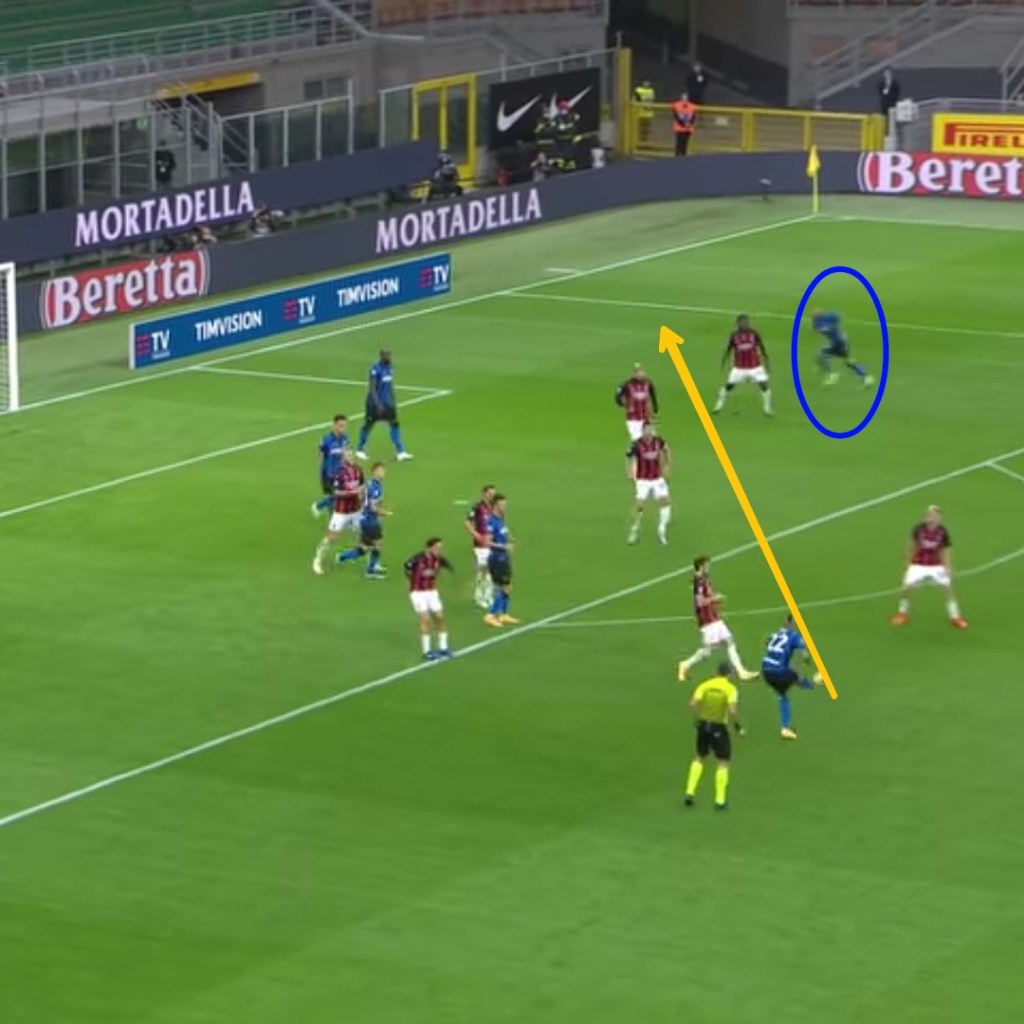
One of Milan’s main idea to build-up play is to switch play. They suck their opponents into a particular wing and then switch play to the wings to catch out the opposition. When switching play Milan use their midfield pivot very often.

Kessie switching play to Saelemaekers

CHANGE FROM PREVIOUS ROLE

When Milan played a 4-3-3, Kessie’s role was quite different to his current one. Playing as a wide midfielder in a 4-3-3 or mezalla as the Italians call it, Kessie’s role had additional responsibilities of building up play, creating chances and finish off moves.

Notice how Kessie under Gattuso is playing close to the tough line like a winger. It did not always suit his abilities

Not the best decision maker in the final third or a creative midfielder this role seemed to not utilize Kessie very well especially when he kept getting thrust into wide areas quite often with Suso expecting a cutback.

And the mistakes were galore. From his big miss against Torino to poor decisions in the final third of the pitch the mistakes piled up to sap out his confidence until Pioli switched his tactics to utilize Kessie (and Bennacer) in a better way.

That miss against Torino
Another sitter missed vs Atalanta

CONCLUSION

The transformation from Zero to Hero was indeed quite a huge one and Kessie’s tireless performances alongside Bennacer has become the solid foundation of Milan’s juggernaut in 2020.

If Milan can hold their nerve, and not fall unfortunate to injuries then the performances can take Milan to a Scudetto Title.

CHOICE OF STRIKERS

In 2020 January Milan brought in Zlatan Ibrahimovic  on a free transfer to Milan to shore up the experience in Milan’s young side. But not only has Zlatan made a psychological impact in the dressing room, he is the top scorer of Serie A in the 2020/21 edition and looks in glittering form last hitting 2 goals against Napoli in a crucial must win encounter.
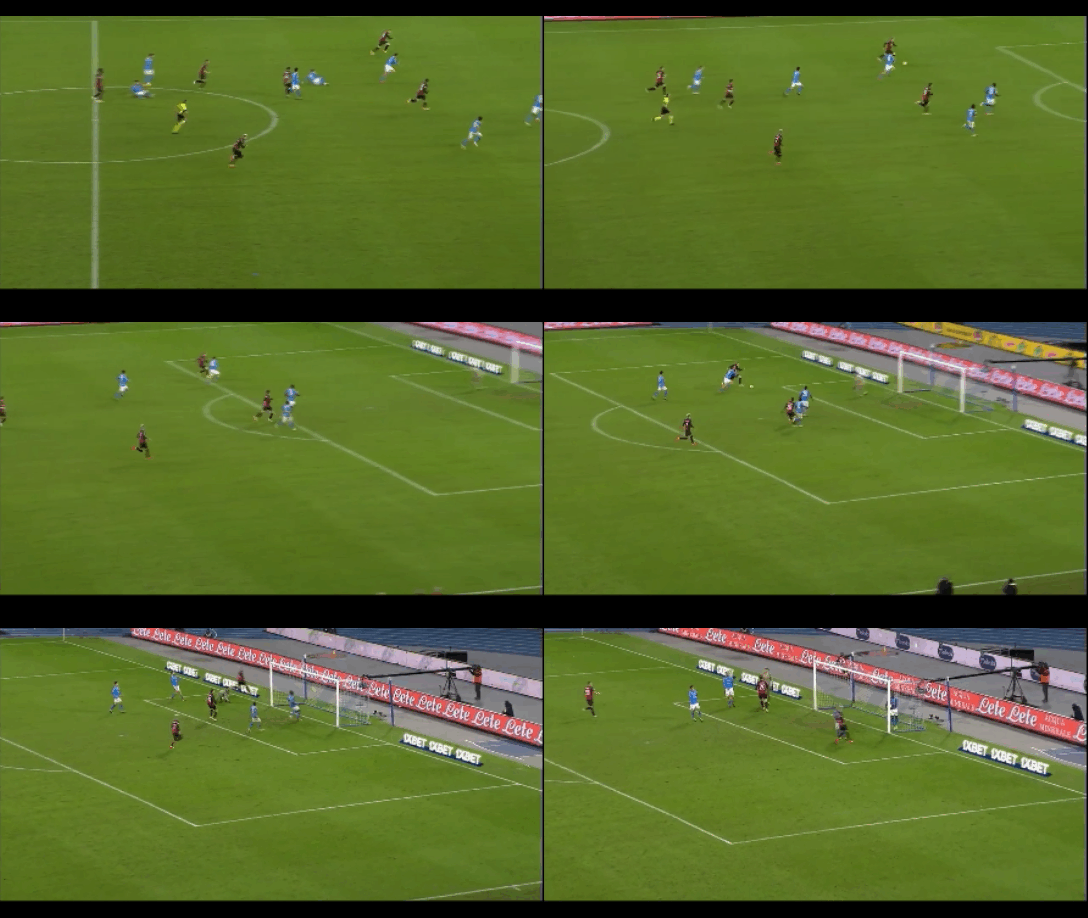
With Milan participating in 3 competitions and a spate of injuries not slowing down it certainly has shown a deficient side to Milan’s attack although they haven’t suffered in the goals department with Rebic putting in a poor shift at CF.

Considering how Milan are under the watchful eye of FFP and not financially great, a long term successor will be in the works if Milan can get through to UEFA Champions League or higher. Taking these factors into account we have prepared 4 options for Milan to explore in the current winter transfer window.

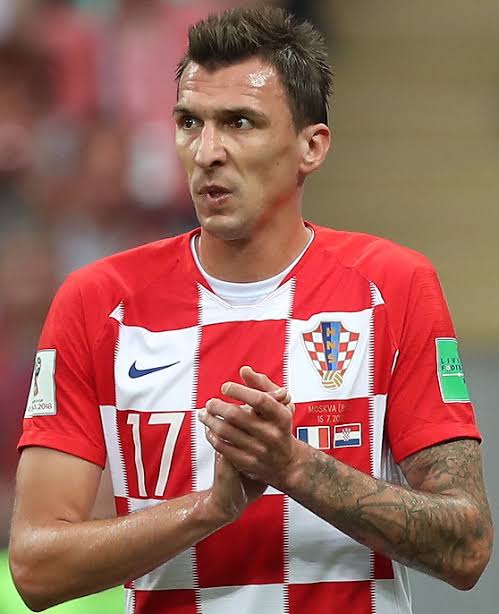
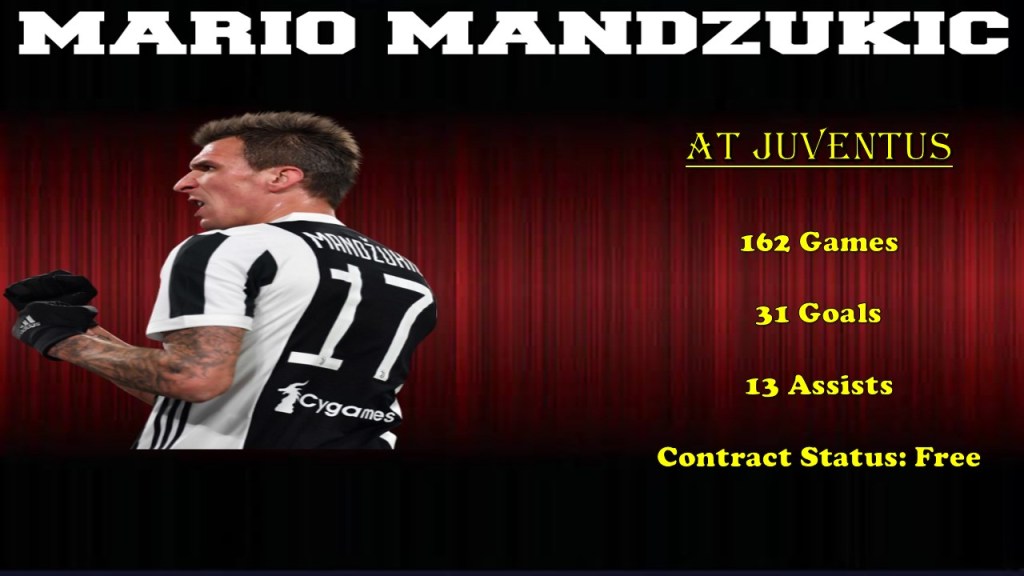
MARIO MANDZUKIC

The first option that comes to mind is that of Croatian striker Mario Mandzukic. A player who has playing style quite similar to that of Ibra, Manzukic would be a perfect deputy to the man.

Advantages

Mario Mandzukic is a 1.9 meter tall striker and a workhorse. Having played in Jupp Heyneckes Bayern and Simeone’s Atletico Mario is no alien to work rate and pressing. In juventus he played as a Left winger and a second striker behind Higuan or as the main striker ahead of Dybala. At 34 years of age, he brings an immense wealth of experience having participated in multiple champions league finals, won the Serie A and Coppa Italia. Like Ibra, his experience and winning mentality could spread to others.  His tall frame helps when opposition crowd out the center and Milan use Donna or Kjaer to ping long balls to Mario who can use his aerial ability and control them. 

With Mario being a free agent, it will not take much effort for Milan to sign him and at less cost since it does not involve a transfer fee. A 18 month loan would be perfect for Milan as it would give time for Milan to sign a younger replacement for Ibra and have him integrated into the side.
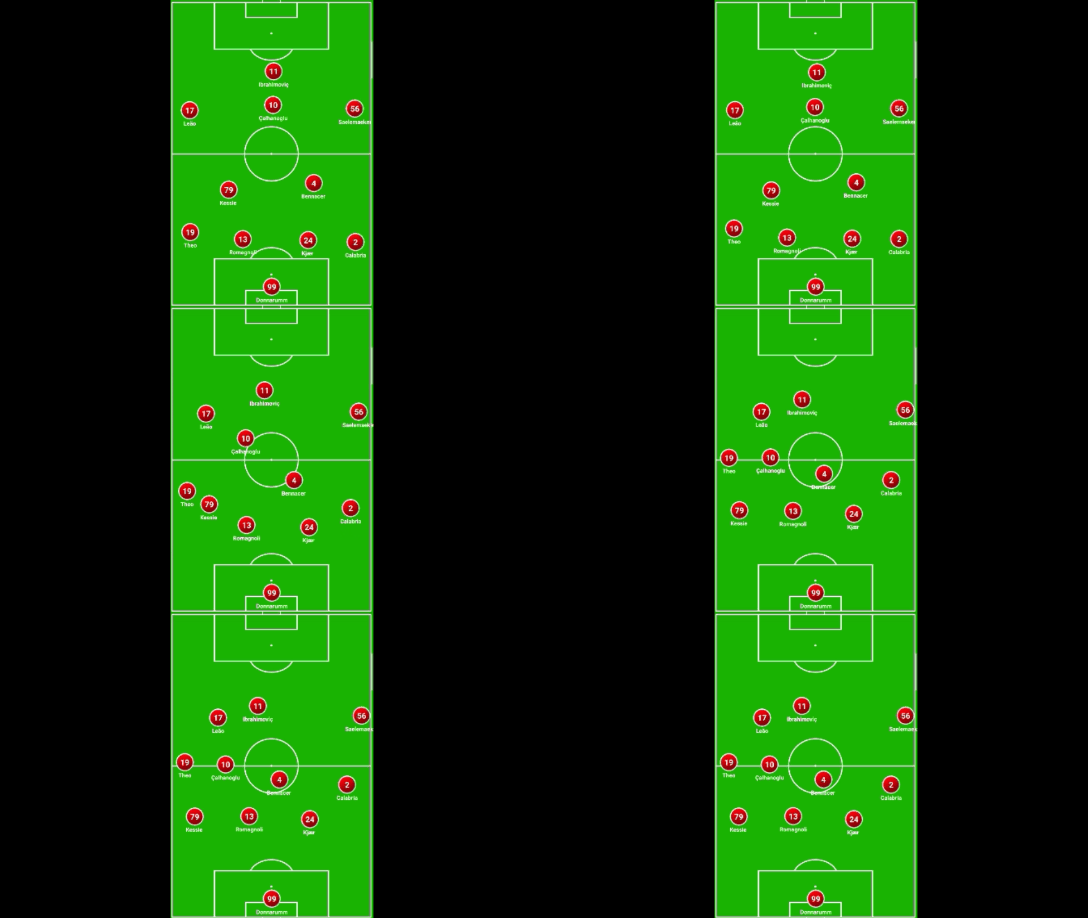
Disadvantages

But it has been close to 9 months since he has played a competitive match and this can take a toll on this match fitness. Mandzukic would need a while to get fit for matches again. And then the issue of salary, At Juventus Mandzukic earned close to 6M net which is a wage that is way off Milan’s hands. If mandzukic does not take a pay cut then he is a very tough option.

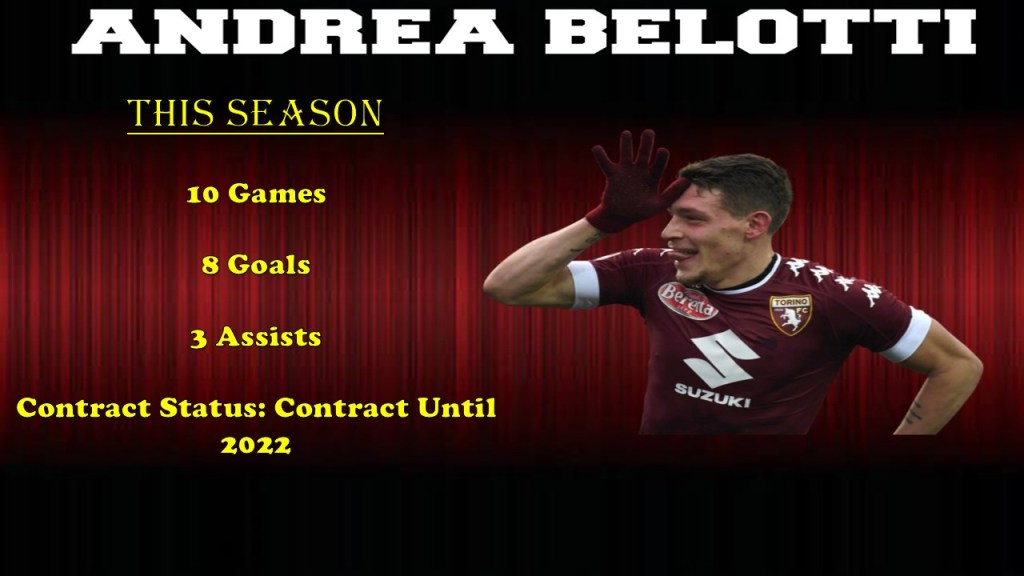
ANDREA BELOTTI

The most popular choice of all Milan fans would be Torino’s Andrea Belotti. A Milan fan since childhood Belotti to Milan has been a saga since the 2017 transfer window. Belotti however decided to stay back at Torino to facilitate his growth but now he seems to have outgrown Torino. 8 goals and 3 assists in 10 games is a good return for any striker but despite these numbers Torino are flirting with relegation. Known for being an opportunist, Maldini will never shy away from these opportunities.

Belotti stands at 1.81 metres is not the most aerially dominant like Zlatan Ibrahimovic is. He makes it up with good positioning and good timing of his leap to score jump past defenders. Over the years Belotti has shown that he can play as a center-forward who links up play between midfield and attack with layoff’s and passes. Having a very creative midfield, Belotti will have no problem linking with our wide players and will thrive on those balls with deep runs and peeling away from defenders making him very difficult to mark.

Advantages

Belotti’s contract at Torino is bound to expire in 2022 and it does not look like Belotti would want to renew and is ready for the next step in his career. Being a self-proclaimed Milanista it won’t be difficult for Milan to obtain the players consent and the player would welcome a move and would be ready to be a deputy to legend Zlatan Ibrahimovic before eventually getting ready to take over from the great man. At 27 years of age, Belotti is in the peak of his career and can give Milan another 5-6 years of his prime. Belotti presents the perfect case of a short term+ long term solution.

Disadvantages

A major disadvantage is that Belotti has not played at the highest level and is quite unproven even though he has been playing top-flight football for quite a while. However I think a few months under Ibra (if we sign belotti in January) can help Belotti make the transition well.

But the biggest problem of it all is the wall called Urban Cairo that stands between. Slapping a price tag of 100M when the player had a good initial season to drive suitors away everything went downhill for both the player and the club since. With no UCL football secured it would be difficult for Milan to make a huge investment on Belotti which could see a potential deal being pushed until summer when Belotti will only have one year left on his contract and his price will come down. A highly paid loan like that for Tonali could be an option but with only 18 months left on his contract it could make for a complicated situation.

Lastly with Torino fighting relegation it has to be seen whether Cairo will sell Belotti, one of their best players, and risk being relegated.

ARKADIUSZ MILIK

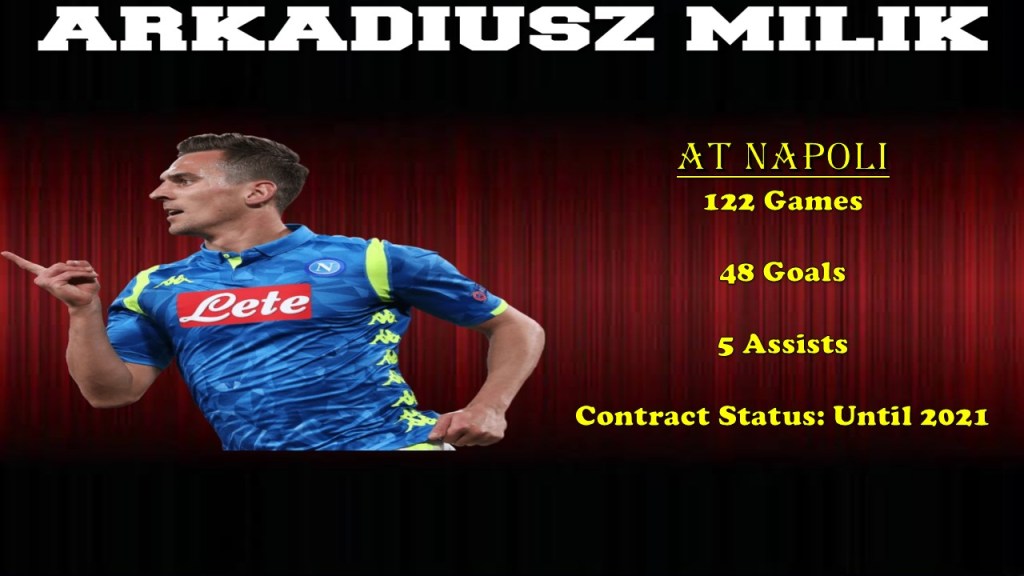
Quite a long shot but totally do-able is Arkadiusz Milik of Napoli. Out of favor at Napoli, Milik has only 6 months left on his contract. His last minute move to Roma fell apart and ever since Milik has not played ahead of Osimhen or Petagna. At 26 years Milik is yet to enter his prime of his career and could offer Milan much needed cover upfront.

Advantages

At 1.86 metres Milik is not the tallest striker or as aerially dominant as modern CF’s. Like Belotti Milik times his runs into the box and depends on good positioning for his goal.

Milik is also good with link-up play and can use his hold-up play to bring the wide players or midfielders into play as he is so used to doing at Napoli for Insigne and Mertens.

Disadvantages

Milik who had a great start to his career in Napoli was hindered by 2 ACL injuries which took away a lot of his physical attributes. Milik was never the same again and has been quite injury prone.

Like Mandzukic, Milik has not played regularly since last season and a player with previous injury history it could take quite a while for the player to get back to optimal fitness.

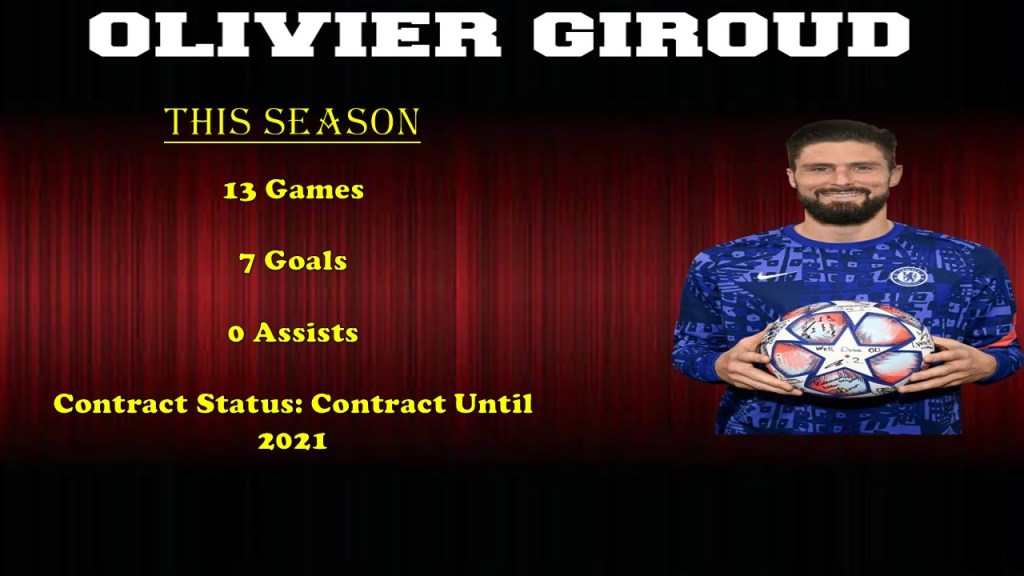
OLIVIER GIROUD

A self-proclaimed Andriy Shevchenko fan, Giroud has been pushed to 3rd choice at Chelsea behind Tammy Abraham and Timo Werner even though he chips in with important goals for Chelsea.

Advantages

A striker who has high workrate and works the channels, physically bullies defenders to make space for wide players and midfielders Olivier Giroud looks like the perfect replacement for Ibrahimovic in the short term.

Giroud also links up well with his teammates putting through balls, layoffs and has excellent hold up play. Having been a world cup, Europa League winner Giroud brings in a wealth experience and would give a boost to Milan’s scudetto as well as Europa League prospects with his goal-scoring exploits.

Disadvantages

Giroud is looking for a move out of Chelsea to be a starter elsewhere and get regular minutes. It is unclear whether Giroud would accept being on the bench as a deputy to Zlatan.  Another stumbling block is his 5M net wages which is a magnitude of salary Milan cannot pay for a deputy to Ibrahimovic.

Giroud is also a very sought out striker and Milan will have to stave off interest and present a strong project to Giroud to bring him to San Siro

Conclusion

Milan are definitely flying high at the moment and their record minus Ibrahimovic is P5 W4 D1. Impressive numbers for a team who has a different dimension with Ibrahimovic on the pitch.  But with the second half of the season coming, fatigue issues, rough patches will beckon and squad depth will go a long way to cover for Milan and grind through to the season objects

Scaling Milan’s Title Hopes

A.C.Milan’s win over Fiorentina sees those 5 points above City Rivals Inter at second spot and 6 points over defending champions Juventus in the race for the scudetto. What started out as an innocent suggestion at its embryonic stage, the idea seems to have gathered pace among fanbase: Yes, I am talking about Milan’s Scudetto hopes. Last taste of the scudetto came in 2011 and while Milan are widely known for being more of a team that favoured European trophies than Domestic league titles, a trophy such as the scudetto would send a message that MILAN IS BACK to even the most doubtful minds.

In the poetic sense, Milan were the last team to win the Scudetto before Juve’s run of 9 titles with an iron grip on. Ending this dominance and making Italy competitive again would bode well not only for Milan but for Serie A as a whole.

Juventus the team to beat

However it is too early to fuel these hopes too much as 76% of the league is yet to be played and in a long and arduous season things can change. Here is an impartial look at reasons why Milan can do the unthinkable or why it’s too early for getting hopes too high

WHY MILAN WILL WIN THE SCUDETTO

  1. Milan’s style of play: The standards of Serie A is not as once it used to be. The technicality and physicality of the league is 1 or 2 notches down when compared to other teams in Europe and Milan have benefitted from this by recruiting very shrewdly. Maldini and the scouting team have replaced earlier stalwarts like Suso, Cutrone and Piatek and brought in Saelemaekers, Leao and Diaz. This has brought in the much needed pace combined with technicality making milan too hot for the opposition to handle. Leao dancing past Lovato and D’Ambrosio is a clear indiciation of how Milan have changed when Milan never had a player of this magnitude.
  • Competitors: Traditionally Milan’s competitors for the scudetto has been Juventus and Inter Milan. Juventus after their recent shock appointment of Andrea Pirlo as Head Coach has not been the force it used to be. While Cristiano Ronaldo always gets them out of tight spots, it’s a completely different ballgame when he isn’t playing with Juventus struggling to break down teams who play low-blocks. In the blue-half of Milan, all neutrals and pundits alike expected Inter to mount a title challenge with Conte, a manager who has massive experience to take them all the way. However (until Sassuolo) Inter have not been performing upto the expectations and potential of the squad. The team is seen too dependent on Lukaku and otherwise look toothless in attack. Napoli, Atlanta and Lazio have not performed upto expectations esp Atlanta not having won a game in last 3 serie A matches

WHY A.C.MILAN MAY NOT WIN THE SCUDETTO

  1. Long way to go: As mentioned above, only 24% of the season has been completed and there is around 76% of the season to play. Juventus on paper has the best squad in Serie A in terms of technicality and depth. Dybala seems to be running through a rough patch while Juve’s midfield is not supplying enough balls to the forwards. But Juve cannot be ruled out and can come out of their slumber anytime soon. They were behind Napoli by 8 points in the 2015/16 season and completed a comeback to win the Scudetto. Andrea Pirlo may not be experienced but he was one of the best minds in the game on the pitch. However for Inter, Conte is a combustile but shrewd tactician. With a squad that has experience, Conte can turn the ship anytime around as he showed vs Sassuolo with a very good 3-0 team. Napoli, Roma, Lazio and Atalanta may not be title challengers but they sure can put up a fight and if we drop points to them it can change the complexion of the title race
Never underestimate Conte’s Inter
  • Milan’s lack of Depth: Around this time of last season, a scudetto challenge was being whispered in the blue side of Roma and for a while it looked like Lazio would take Juve to the hilt before Corona Virus plunged Italy into 3 month of Covid-19 break. This broke Lazio’s momentum and once football re-started their lack of depth was exposed. With injuries coming at fast pace all over the leagues, Lazio had no back-up’s to any of their talismanic players such as Immobile, Savic, Correa, Acerbi and fatigue took its toll with Lazio having a huge losing streak. Milan too so far have no “quality” depth in areas of the pitch and with Coppa italia starting after New Year the players’ fitness would be called into question. Against Fiorentina milan missed Leao, Ibrahimovic, Bennacer and Castillejo due to injuries, niggles and fatigue. In the long run, this could be a huge factor but with Winter transfer window coming up let’s see what Elliot and Maldini have up their sleeve
Lazio: A story to avoid
  • Lack of Experience: Unlike Juventus, except Ibrahimovic, Kjaer and perhaps Theo Hernandez very few of Milan’s players have been involved in a title challenge. Towards the end of the season, when fatigue will be at a peak, many times Milan would need to grind out wins and at these times the experience and grit of these players will be called into question. How our players respond to this will result in Milan title hopes.

Conclusion

At the end of the day, qualifying for the Champions League has always been the final goal. But now, players and pundits and Maldini has come out of challenging for a possible scudetto. A key factor could be how Milan handle the depth situation and make key signings in areas like Center-back, Striker department and a vice-kessie.

Will Milan repeat the fortunes of 2011

Qualifying to the Champions league would end years of hurt for Milan fans, winning the Scudetto would be an ever-lasting thrill in memories.

FORZA MILAN

Napoli vs Milan Analysis

Milan until 22nd November 2020 had never defeated Napoli at the San Paolo in the last 10 years. With manager Stefano Pioli and assistant Giacomo Murelli out with Covid-19, the mantle was ready for Daniele Bonera and the players to show their tactical maturity. Napoli had a big absentee in Victor Osimhen while Milan had Leao out with a knock.

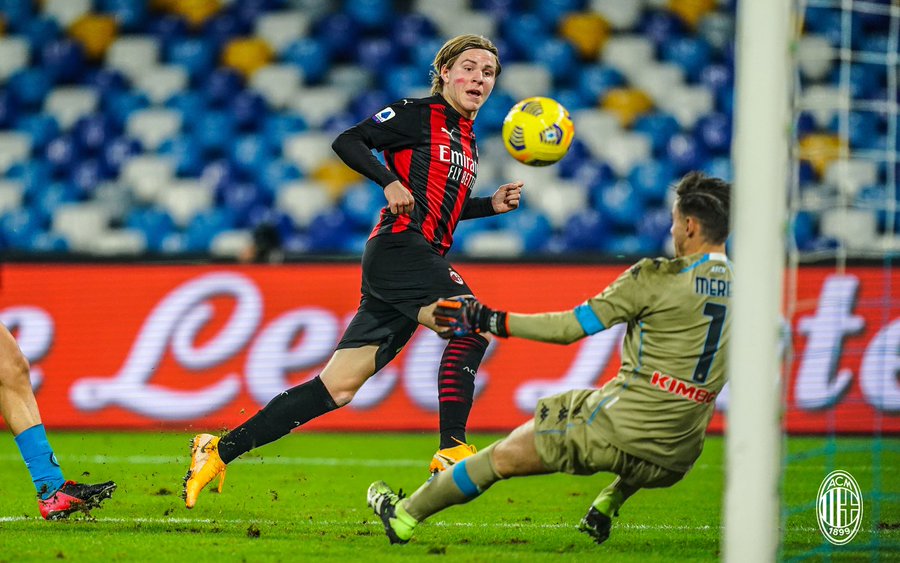
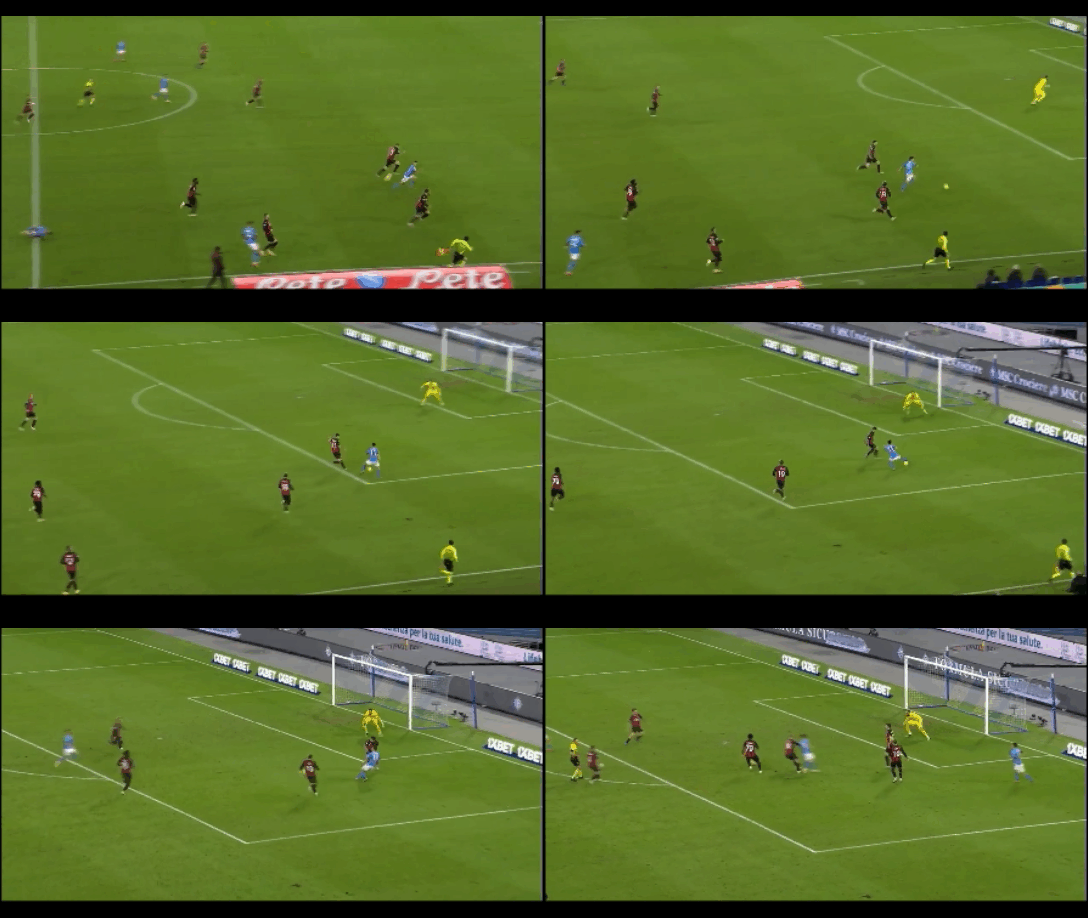
Goals from Ibrahimovic (x2) and dewbut goal from hauge completed a famous win for Milan at the San paolo against their former coach and legend Gennaro Gattuso. Let us take analyse the tactics used by the sides.

Napoli- Pressing, Build-up and defense

Napoli set up in a 4-2-3-1 under Gattuso. The double pivot was formed by Bakayoko and Fabian Ruiz while the front 3 was formed of Insigne, Politano and Lozano with Mertens upfront.

Napoli with the ball used a patient build-up method waiting for the front players to make deep runs or occupy the half spaces before making the pass. If they had won the ball back, Napoli would try and use quick passes out towards the wings with full backs making overlapping runs. Layoff’s and horizontal passing was often used by Napoli

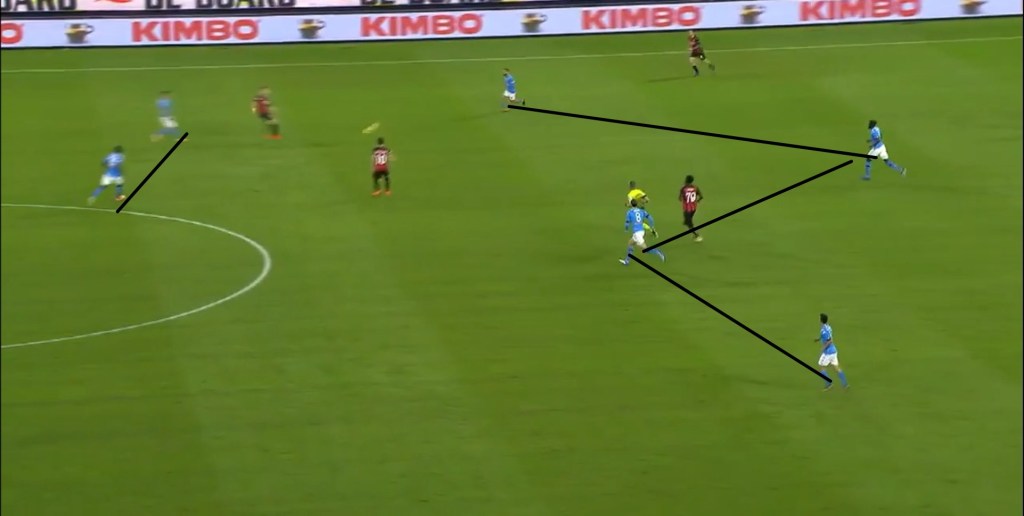
While defending Napoli used a narrow 4-4-2 formation with the front 2 i.e mertens and Politano pressing our CB Kjaer and Romagnoli.  In their own half, Napoli tried to be compact and did not allow Milan much space to carry out passing combinations.

Napoli’s narrow and compact 4-4-2 against Milan
Napoli’s narrow assymetric 4-4-2 narrow press in Milan’s half

Milan- Pressing, Build-up and defense

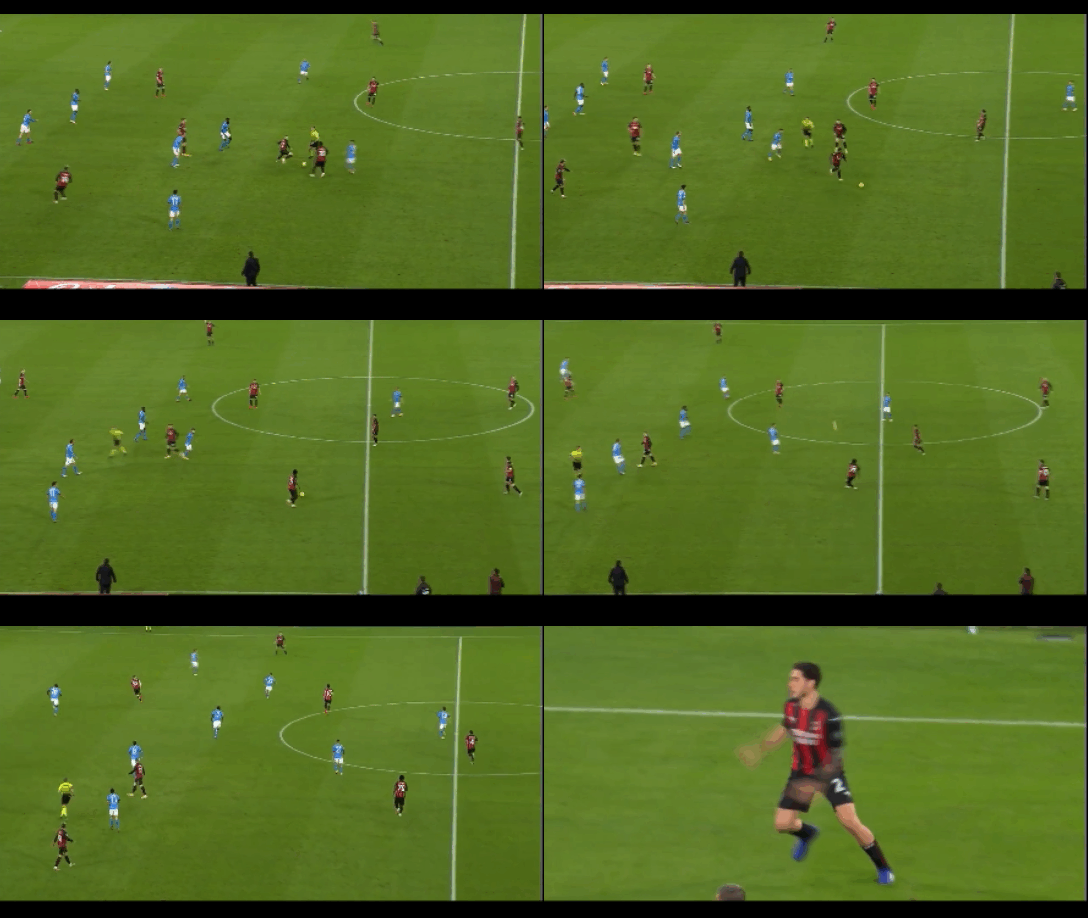
Milan meanwhile took advantage of the fact that Napoli didn’t have any tall striker upfront and tried out to play out the back. They extensively used cover shadows that pressing by cutting out passing options for the player on the ball. Anytime the ball went for a Goal kick Milan committed players forward to prevent Napoli from playing out the back.

Milan pressing Napoli high

In defense Milan played a strict and narrow 4-4-1-1 with Hakan and Ibra, pressing Kouilybaly and Manolas. The idea of Milan was to press and win the ball back and break into quick counters. With Napoli having quick players, hard-working wingers like Rebic and Saelemaekers assisted their full back to prevent an overload i.e 2v1 situations for the defenders. Keeping in mind the danger of Insigne, Calabria rarely ventured forward and Milan used Theo’s to cause problems for Di Lorenzo.

Milan quite often used switch of play by sucking the opponent to one flank and then using one of the double pivot to switch flanks.

Milan using switch of play

With Napoli playing a high line it always made Milan aware of the opportunity to counter attack and Milan used that opportunity well.

A few Points of Note

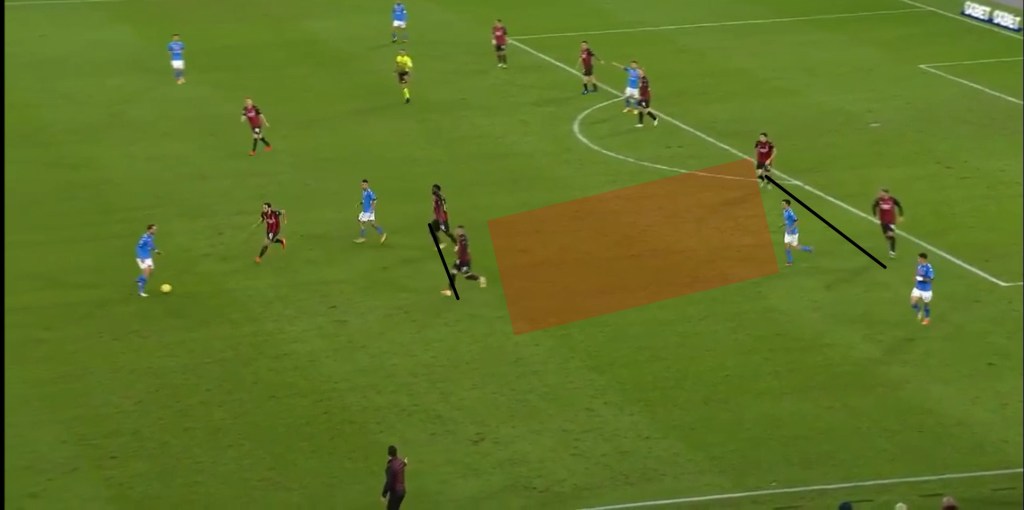
The problem of the half space

Milan when pressing from their own half, leave quite a gap between the last line of defenders and the double pivot of Kessie and Bennacer. For quite a few times, Napoli exploited this space but the final product was lacking.

A bad- day out for Alessio Romagnoli

Alessio Romagnoli had quite a day to remember. A modern day’s most potent weapon is his recovery pace i.e the ability to catch up to an attacker that has broken through the last line of defenders and is speeding towards the goal when Milan play a high line. Against Politano, Lozano and later Petagna Alessio was left behind when the attackers hit top speed. And then for the goal, Mertens turned Alessio very easily to score the goal. Time is running out for Alessio

Milan’s golden Duo at their peak again

Once again the double pivot of Bennacer and kessie dominated and bullied the midfield. Keeping no more than 10 meters between them Kessie and Bennacer form a deep midfield block in their own half while acting as a passing option during build-up play forming slick triangles to pass the ball out from the back. Against Ruiz and Yoko, Kessie and Benny passed yet another Litmus test to become a very crucial part of Milan

Rejuvenated Theo a force

Milan fans were concerned that Theo Hernandez was tailing off in the last few games but 2 weeks of rest has shown us how much of a factor fatigue has played in Theo dropping off. Milan’s epicenter of counter attacks and the creator of the first goal Theo back to his best is bracing

Hauge’s Individual brilliance

Even though Bennacer played a defense splitting pass, Hauge had to deal with Manolas, one of the best defenders in Serie A. And the Norwegian showed us his brilliance, by speeding past Manolas at first and then dummying past him by quick shifts of pace. He slowed down at first and deceived Manolas before changing pace quickly before Manolas could make a tackle and then lifted it over the keeper.

TACTICAL REVIEW: OF THE SEASON SO FAR

INTRODUCTION

So after 7 rounds of games in Serie A and 3 rounds of Europa League, Milan head into the International break atop of Serie A and second in the Europa League qualifying campaign.

Milan have so far amazed fans and pundits like going 24 undefeated since lockdown last season playing an expansive style of football mesmerizing opponents. While Milan’s unbeaten record is still intact in Serie A winning 5 and drawing 2, Milan’s unbeaten streak came to a halt at the hands of Lille in Europa League albeit Milan fielding a weaker starting 11 keeping fatigue in mind. Pioli was not the coach of choice of many fans and his appointment was met with a lot of criticism aimed at the management. However, after making a thorough research of Flick’s Bayern Milan have successfully re-created in Milan with variations keeping the principles in mind. We review the season so far attempting to understanding principles employed in tactics and the crunch the numbers

ATTACKING PHASE (WHEN MILAN HAVE THE BALL)

Milan have now scored in 26 consecutive games in Serie A, only matched by the 1993-94 side of Capello. This run is borne from a complete revolution in areas of attack under the stewardship of Pioli and Maldini. Milan had only scored 16 goals in 18 games up until Milan faced Sampdoria which was Milan’s last goalless game in Serie A.

How Milan transition from a 4-2-3-1 to a 3-4-3

Milan who had taken legendary striker Zlatan Ibrahimovic on a free transfer sold Piatek and Suso to Hertha Berlin and Sevilla respectively. With Rebic transformed and Samu Castillejo taking up the trimviate behind Zlatan, Milan shifted to their 4-2-3-1 formation Pioli preferred. With Rebic, Hakan and Samu Castillejo Milan had a dynamic forward line with pace which made sure that Milan had a certain unpredictability about them which was missing with Milan being very dependent on Suso.

And with Saelemaekers and Leao slowly eased into the side, Milan furthered its attacking credentials with Saelemaekers being the perfect system player for Milan. The summer arrivals of Diaz and Hague it added a different paradigm to Milan’s already stacked attack.

BUILD UP PLAY

Milan have various methods of building out from the back. The most direct and easiest approach is to have one of Donnarumma or the defenders lob the ball or kick it out towards Ibrahimovic who uses his vastly superior physique and hold up play to control the ball and give time for the midfielders and wide-men to make runs into advanced areas.

If the opposition team, for example are not those advance forward and like to sit deep and settle into a low block, then Milan have a more patient build-up approach to their play. Aided by one of the midfielders, Kessie or bennacer sitting back and forming a back 3, both the full backs push up to act as passing options for the center-backs bringing out the ball from the back. If the full backs are being marked tightly, then they cut back the ball back for the advanced center back to make a pass to either one of the wide attacking players occupying space.

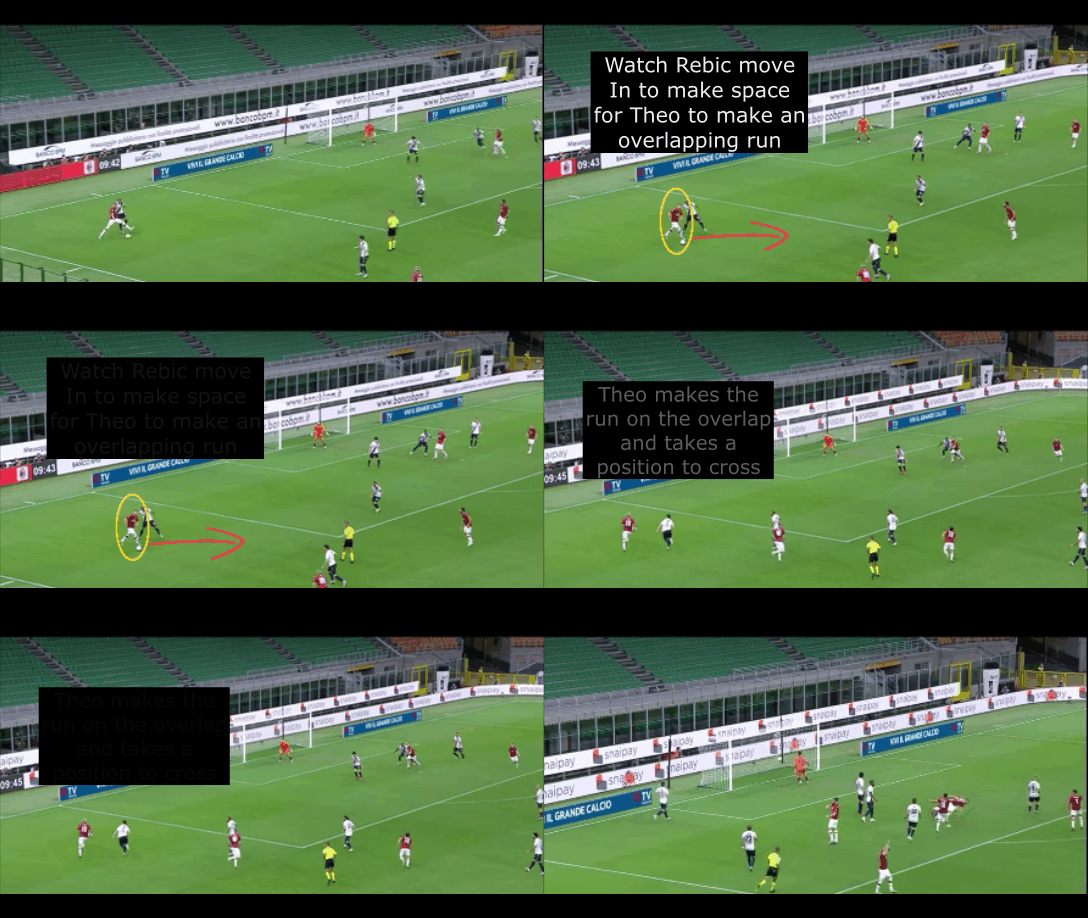
Depending upon the space in between the lines, the wide attackers would take up positions to receive the ball from the middle third to allow the full back’s to make a run. If the centre backs moved inside then it allowed the full backs to make an over-lapping run. If the attackers stayed wide or ventured wide the full backs make a run infield run (underlapping run) to make a cross into the box or shoot from outside the box. Now Milan do not have a pattern of buildup. They alternate between various areas and channels which makes Milan unpredictable.

Rebic moves infield to allow Theo to overlap to cross for Saelemaekers to score
An example of an underlapping run by Dalot

SWITCHING PLAY

Another tactic Milan uses to catch opponents off guard is switching play. Milan suck their opponents into a narrow defensive wall and quickly switch play with a quick horizontal pass or they use one of Kessie or Bennacer to switch play.

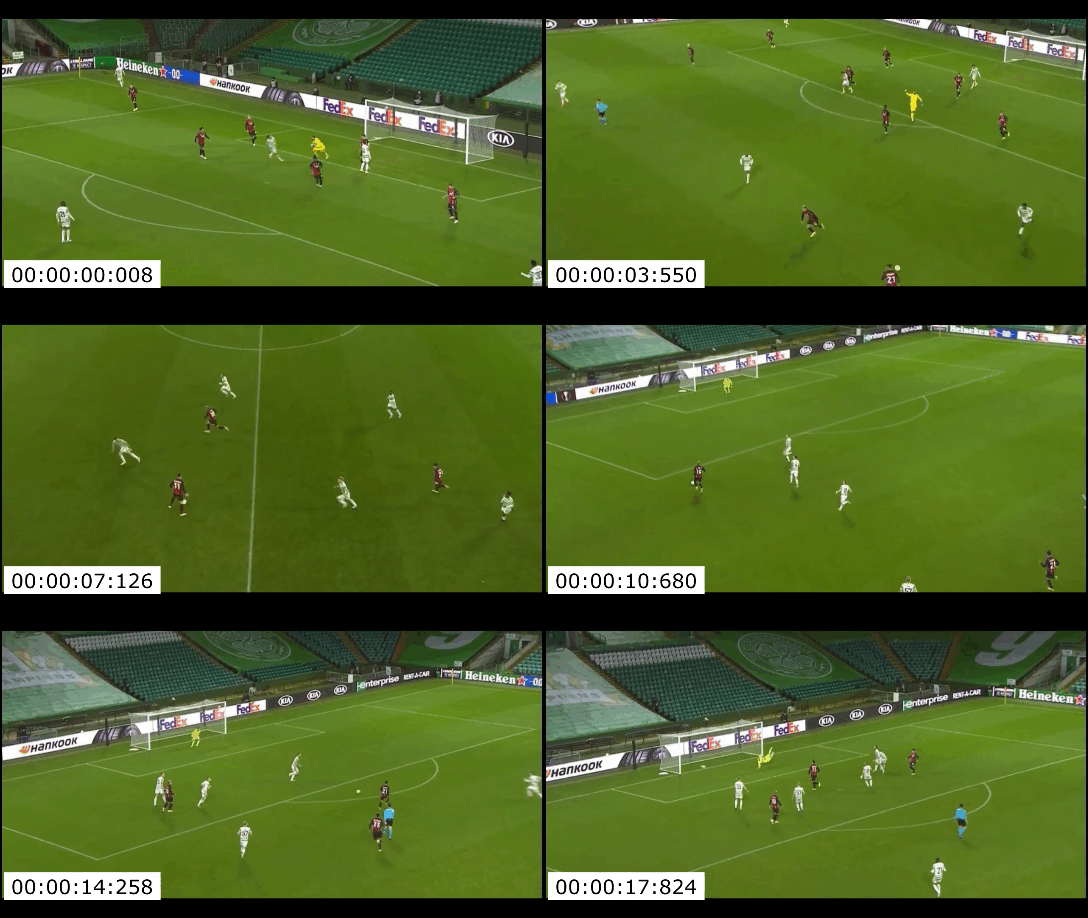
Hauge’s goal vs Celtic is a clear example of how Milan suck opponents into a side and switch play.

Milan do this by having Ibrahimovic, Hakan and one of the midfield pivot to pull players into one side of the field and then quickly change flanks and catch the opponent off guard.

A graphic representation of how players position themselves during a horizontal press.

PASSING COMBINATIONS

A very distinguishing and wonderful concept of our attacking phase are the various passing combination we pull off the pitch.

Passing combinations are instruments used to inculcate the concept of speed and precision into a team’s attack. As the adage goes, the ball travels faster than the player. Hence quick passing combination can be used to pull defenders out of position and move the ball to create chances.

Milan’s players create triangles with their passing and take the opposition out of that particular sequence of play and creating goal-scoring chances.

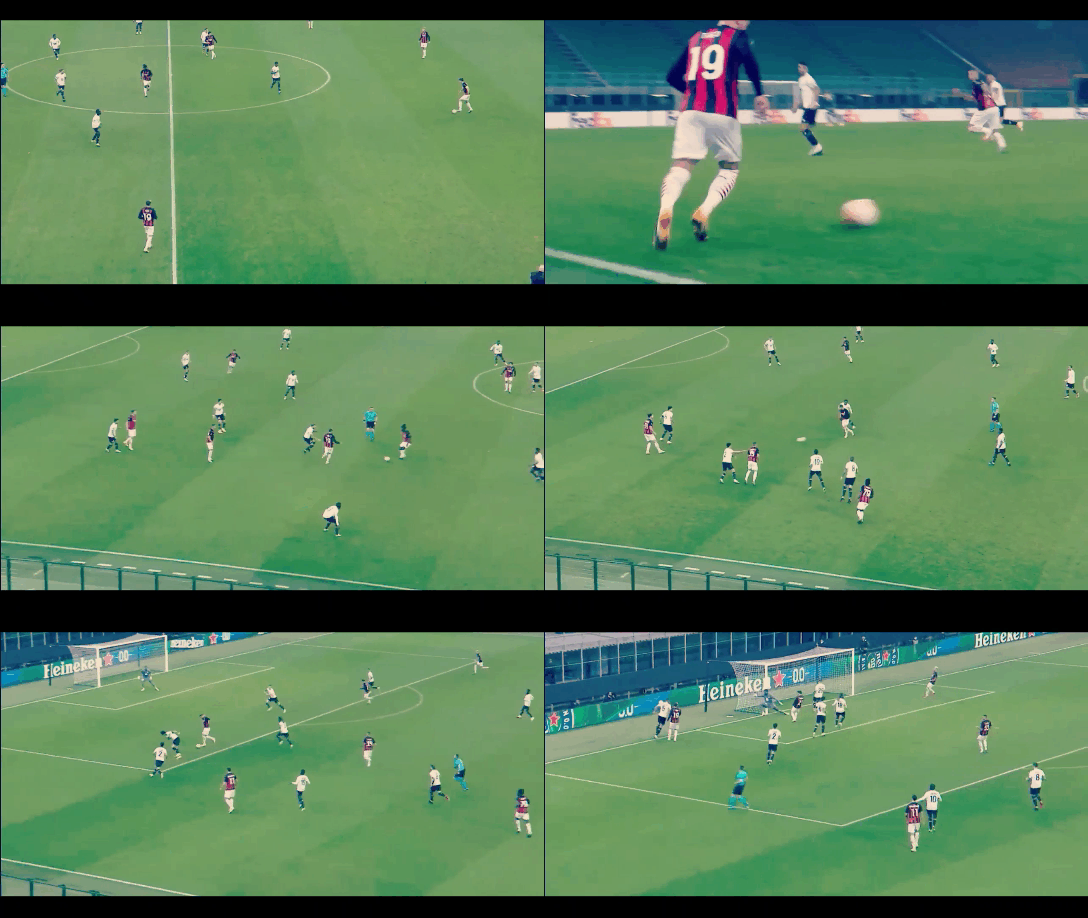
This passing combo executed between Theo, Kessie, Krunic and Ibra results in a clear cut chance for Theo

Whenever Milan advance into the middle third with the ball, the attackers move into position to form a passing triangle for quick one touch passing moving the ball and prizing open the defense.

Moving the ball quickly helps Milan to catch the opposition defense disorganized.

OFFENSIVE TRANSITION OR COUNTER ATTACKS

One of the main principles of Gegenpress is to win the ball back and quickly release it as soon as possible with quick vertical passes forward. With Milan having removed Suso, Paqueta and Piatek and adding Leao, Saelemaekers, Diaz, Rebic and Ibrahimovic, Milan have players who can not only sprint but have excellent close control and good passing/crossing skills to prey upon the disorganization in the opposition’s half. In Hakan Calhanoglu, Milan have a player capable of operating in transitions and is built for teams playing on the counter. Somebody who stays away from the press, his quick release of the ball helps in quick vertical play and maintaining the urgency of the counter attack.

Diaz goal against Celtic is a perfect example of offensive transition

KNOCKDOWNS AND CO-ORDINATED MOVEMENT

Modern Football is all about space. How we interpret the space and utilize the space. But with so much advancements in tactics and players individual abilities spaces are closed down very easily.

Football has mechanisms for counting goals and assists that are scored or created every game. But a non-quantifiable part of the game is the intelligent movement of players that creates space to open up passing lanes or space to shoot. Our forwards are very co-ordinated in terms of creating space.

Notice how Zlatan holds up the ball and Leao with his movement creates space for Kessie to shoot

Another source of chances is the hold-up play and knockdown ability of Zlatan Ibrahimovic. At 195 centimeters, Zlatan is a difficult customer for defenders to deal because of the sheer strength Zlatan brings. With balls being played into Zlatan, he can easily hold it up or knock it down into the path of an oncoming player (especially Hakan) to shoot it.

DEFENSIVE PHASE

A phase that went under sea-change under Pioli is our concepts of defending. From a reactive method of defending to a pro-active form of defending emerged and it has seen Milan give the opponents very less space to maneuver.

PRESSING

Pressing is described as closing down the opponent as soon as the team loses the ball by closing down the player in possession. The opposition player, who might have gained the ball will need a few seconds to bring the ball under control and think about his next move. The team that presses plans to catch out the disorganized player and retrieve the ball.

Notice how Milan press in this game against Roma

Pioli’s Milan also presses their opponents albeit in a different way to the press employed by Flick’s Bayern and Klopp’s Liverpool for obvious reasons of difference in quality and physicality. Milan choose to use the concept of shadow cover i.e cutting off passing lanes for the player in possession. With this in mind, Milan have certain pressing traps where they genuinely leave open a passing lane for the player to pass towards and then they press him in numbers forcing him to play an in-accurate long ball or lose the ball or sometimes go back to the keeper if that option is available.

HORIZONTAL PRESSING

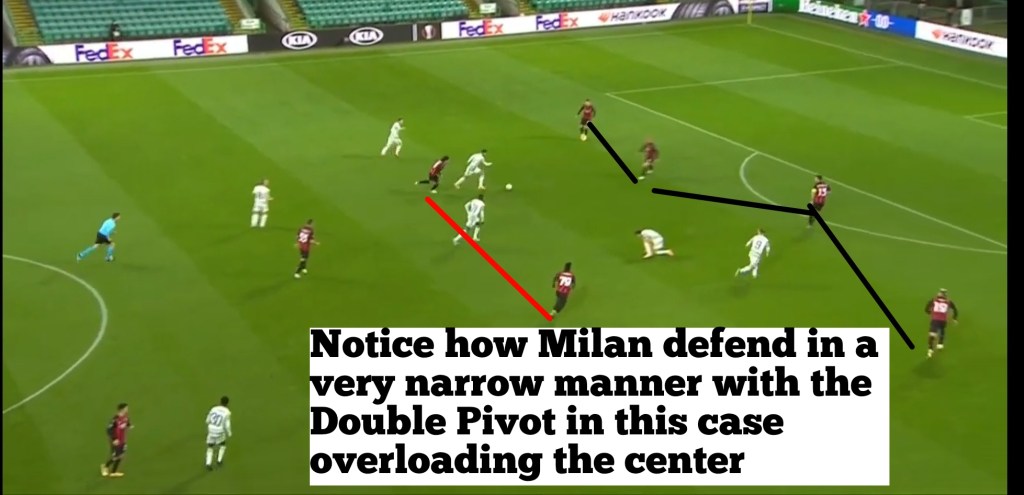
Milan employ horizontal pressing that means that they will block the center with the midfield pivot and shadow covers and force teams wide. Using the touchline as an extra man, Milan stay very narrow and restrict the team to the wide areas often forcing the team to either to switch using an in-accurate pass or force the ball into touch.
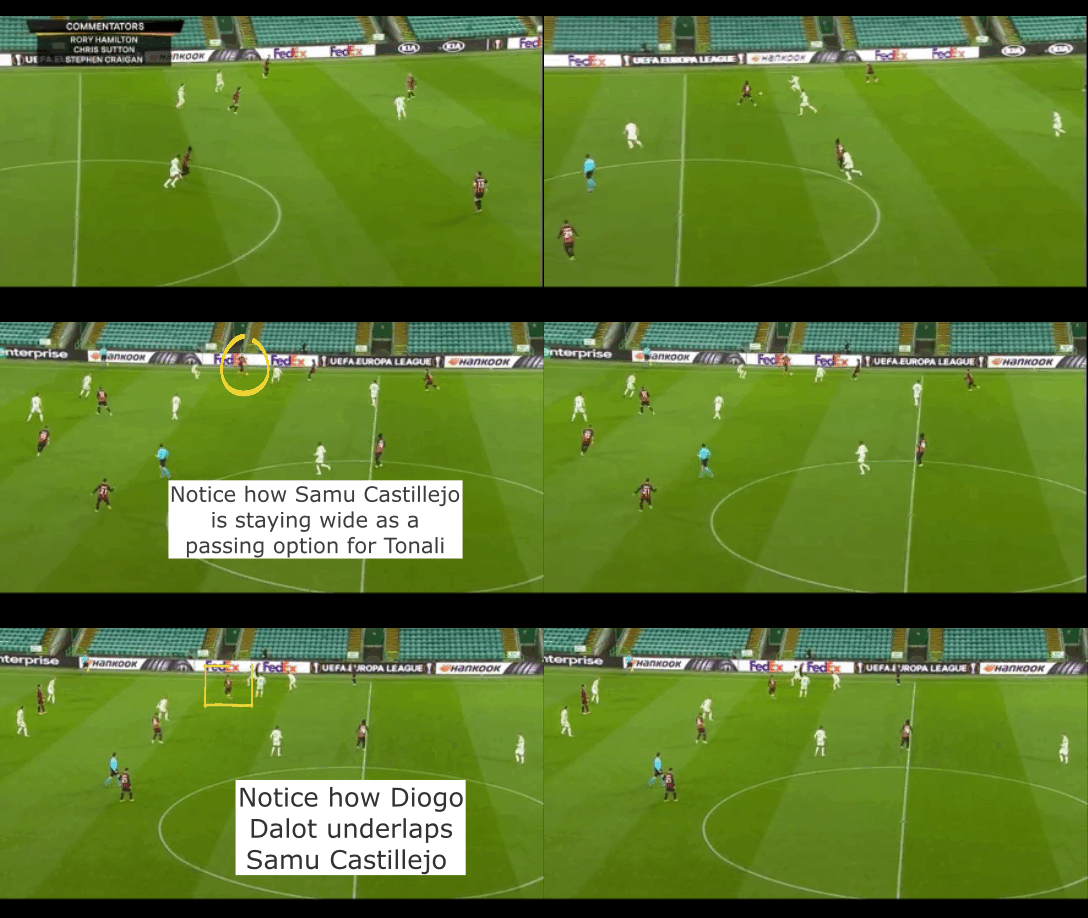
NARROW DEFENSIVE LINE

Milan as we know defend in a back 4. If the opposition, play past milan’s press as we have seen quite a few times this season, Milan re-shape themselves into a narrow 4 at the back and clutter the middle of the pitch not allowing teams to take shots. This is at the expense of teams going wide.
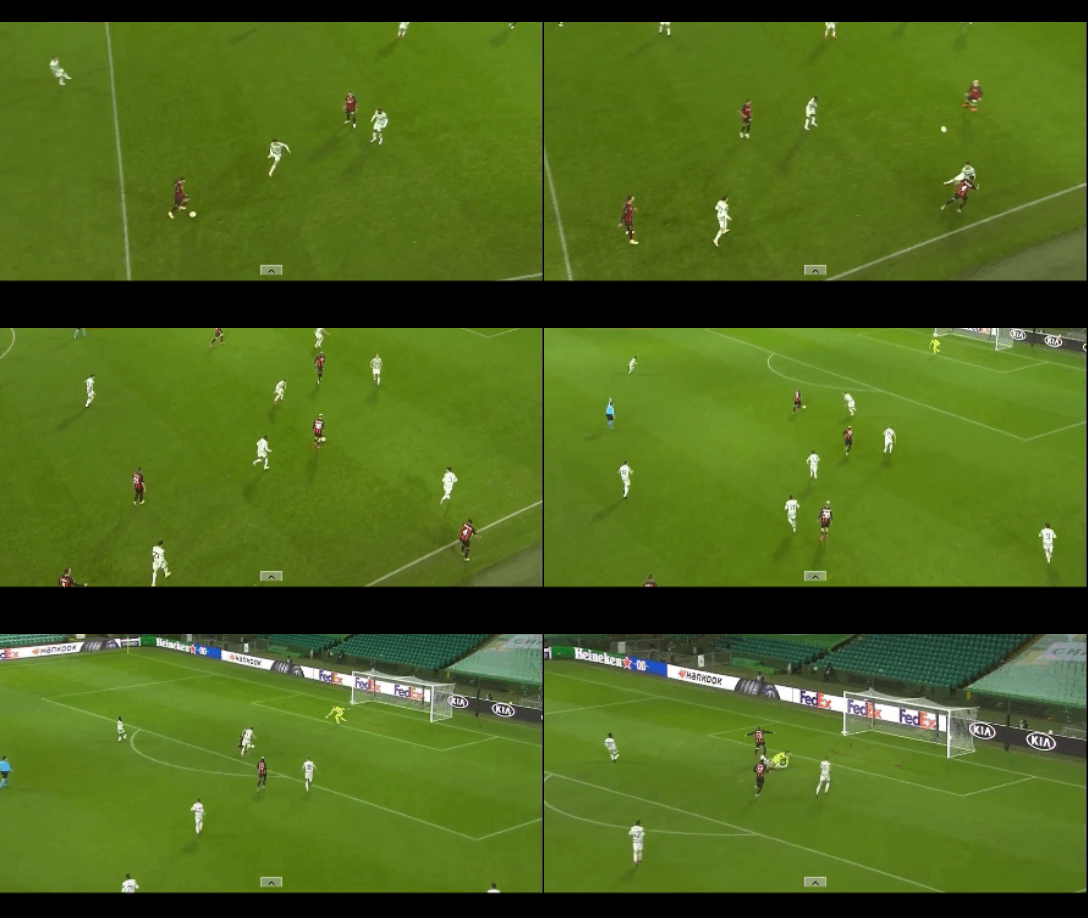
A major cog in this move is the double pivot who play very close to each other forming a narrow midfield block.

Meet the Experts

The game has grown at exponential levels now that it has become a billion dollar industry. Football as we know it is a high stakes poker game where owners invest billions in wages, transfer fees for different objectives. When investing such high numbers the risk is also high. To mitigate the risk, owners always want to ensure the best minds available are working in and out of the pitch to make educated decisions to ensure victory in all sporting and non-sporting related activities.

A.C.Milan already have their top-brass familiar to Milan fans who are praised and criticized for their decisions. But concealed from the Public eye are few people who work day-in and out to help the top-brass to make their educated guesses.

The use of data analytics in football and Milan is something Milan fans are not new to. Milan are continuing a scientific approach to their team’s preparations and we are looking at the people who help Pioli and co.

THE TEAM OF ANALYSTS

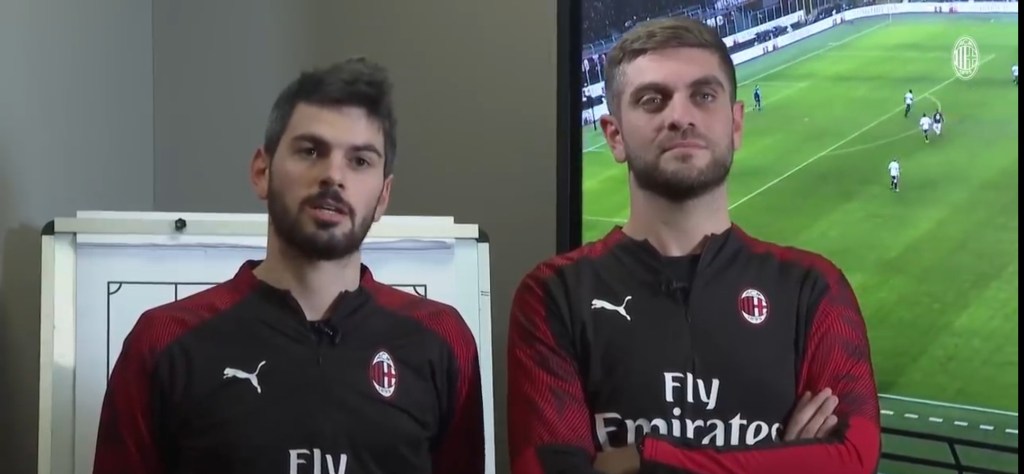
Before the arrival of Stefano Pioli as head coach of Milan, Milan employed Roberto Ferrari and Giorgio Tenca as match analysts. When Pioli came over from Fiorentina as the coach of A.C.Milan he brought over 2 more analysts in Luciano Vulcano and Gianmarco Pioli (Yes, he is the son of Stefano Pioli).

Gianmarco Pioli on the Left and Luciano Vulcano on the the Righ
Roberto Ferrari (L) and Giorgio Tenca (R)

Milan therefore have a total of 4 match analysts for helping Pioli to analyse A.C.Milan as well as the opposition.

Objectives and Tools

Pioli is an early starter and begins the day at 8:30 am every day hence the support team makes it to office by 8:00 am. Their main objectives are to study the opposition and their moves and record Milan’s training sessions to find weakness and rectify them. Often after the game, they study the game with certain points of reference and requests from Pioli to get a better idea of what went wrong and what the team got right. The best part of it all is that it is an open floor. It is not uncommon for players themselves come up to these analysts with requests and suggestions or even with enquiries that demand their opinion.

The backroom staff literally live with a computer next to them all over their professional and personal lives. They are summoned even on their off days by the players or coach to make enquiries hence they carry a tablet with them.

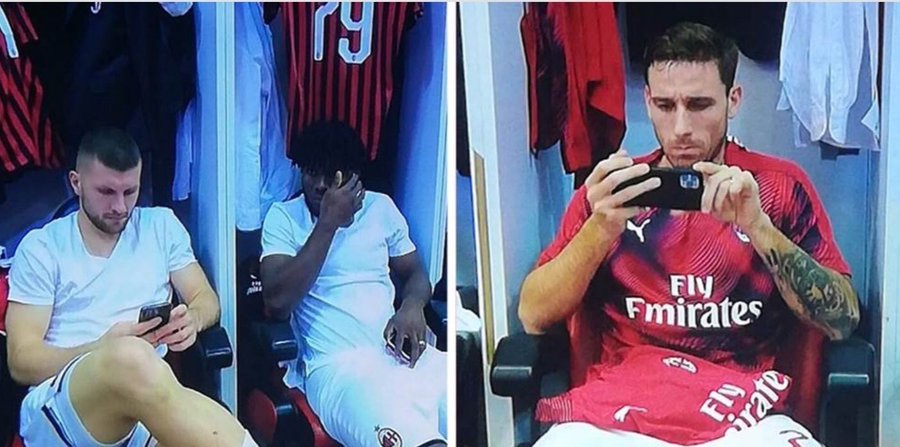
A pioneered idea by these analysts was the introduction of an application that can be installed into any smart phone. The application was installed into the phone of every player. These analysts upload videos and and statistics of the opposition and their roles in the squad from a tactical point of view. This has increased accesiblity to expert analysis. An incident that comes to mind was that of Biglia and kessie being caught checking their phones in the dressing room was by the players to view the videos uploaded by the technical team as later explained by Pioli to the press.
Players referring their phones in the dressing room to check on data uploaded by the Data Team which was mistaken as negligence by fans

Methodology of Work

All 4 analysts start working on their opponent 2 weeks before the match. For example for the match against Inter Milan, analysts would have started collecting data and analysis the week before the derby. This is done in order to let Pioli and Co. design their tactical and technical drills to capitalize on the opponent’s weakness. For the analysis they pick the last 6-7 matches played by the opposition and analyze the average positioning, behavior during transitions and try to identify patterns in play which is then examined by Pioli and devise a counter-measure to negate the opponent’s tactics. At the end of the week (last day before the match) they analyze set plays of the team.

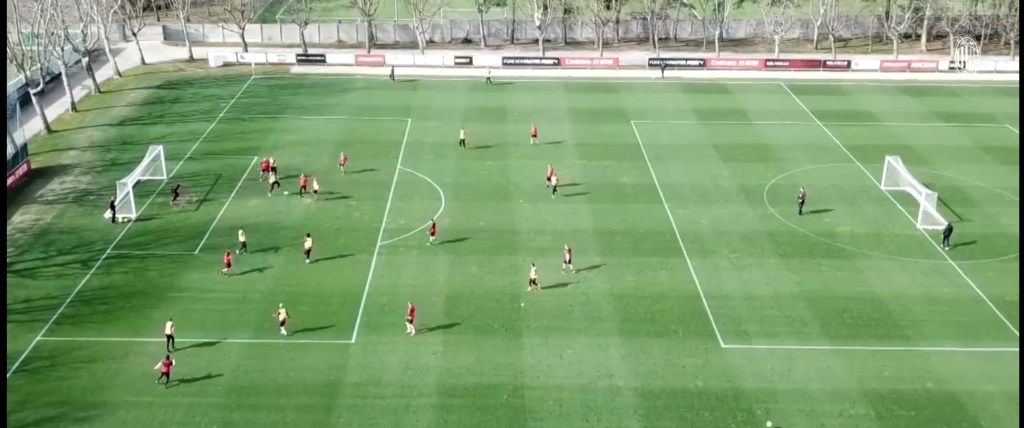
Every training session of the team is recorded using a drone which can be assembled in a matter of minutes. The drone is used from the best possible angle depending on the objective of the particular drill. For example if the drill is to practice against counters the camera would pan towards the defensive lines. This would help measuring the effectiveness of the specific drill devised during training.

View from the Drone

For the medical team, the drones are used to monitor the fluidity with which a player runs. They can use this data to assess physical capacity of a player and predict injury to a player.

Matchday

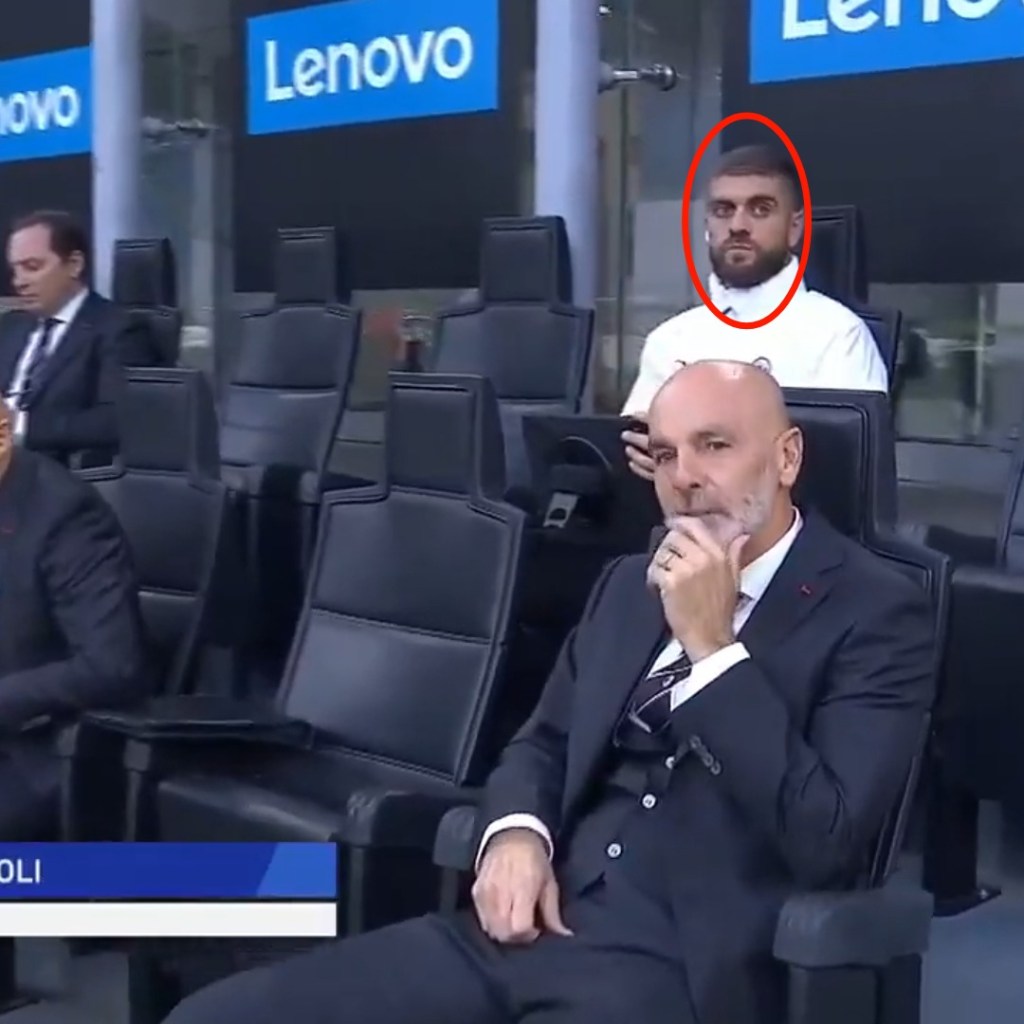
Finally when Matchday arrives the analysts spread themselves into a team of 2.  1 analyst, usually Vulcano sits in the dugout with Pioli and assistant coach Muratti while rest 3 sit inside the press box where cameras are connected to computers and laptops to analyze the games. Those sitting in the press box are able to view all 20 outfield players playing on the pitch and are able to make deductions and find out mistakes.

View from the Press Box

These experts in-turn inform the changes to be made to Vulcano and send data to his laptop who after studying the data, warns manager Stefano Pioli who then leaves the dugout to scream instructions at the players. Such a method was newly introduced by Pioli in Milan.This helped Milan develop a cutting edge technology to provide the edge in games.

Vulcano stationed behind Pioli for the Derby

The main points assessed by these analysts are Chances created and chances conceded. Once these statistics are record the analysts work back the whole move to find the point of incidence to find the move that led to it. Once the half time happens, these analysts sit with the players and have direct discussions with the players.

CONCLUSION

If any evidence for how Milan have gone along with the times are asked, the analysts will be stark evidence. Coach Pioli described a desire to adopt the methodologies of Bayern Munich and now Milan can be seen applying concepts of science into this subjective sport called football.

Inter vs Milan tactical analysis

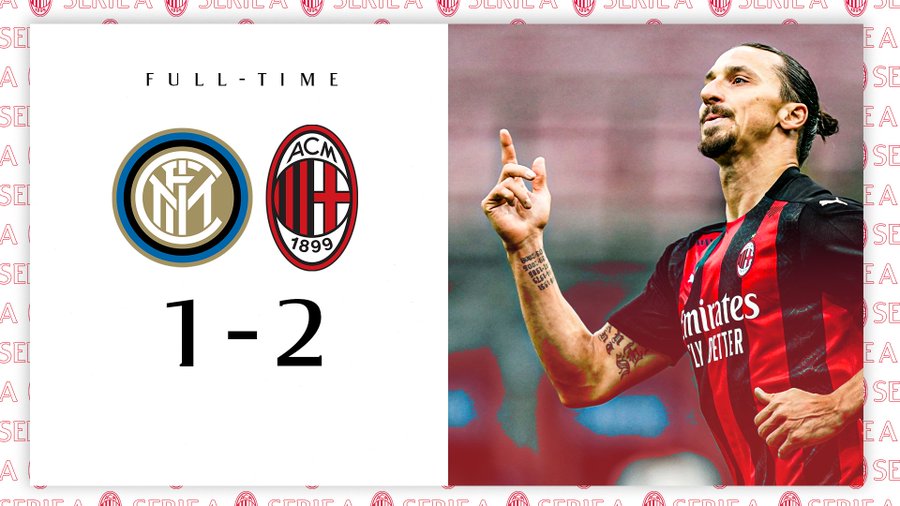
After 4 long years, Milan have defeated Inter Milan in a derby in Seria A (we beat them In Coppa Italia 2 years ago) thanks to goals from Ibrahimovic while Inter got back through Romelu Lukaku. Like the earlier encounter in February, Milan went through 2-0 ahead but unlike the full time result, Milan ran out victors after a courageous performance from the Rossoneri. A tactical battle was expected between Conte and Pioli and here are a few notes from the game

Basic Setup

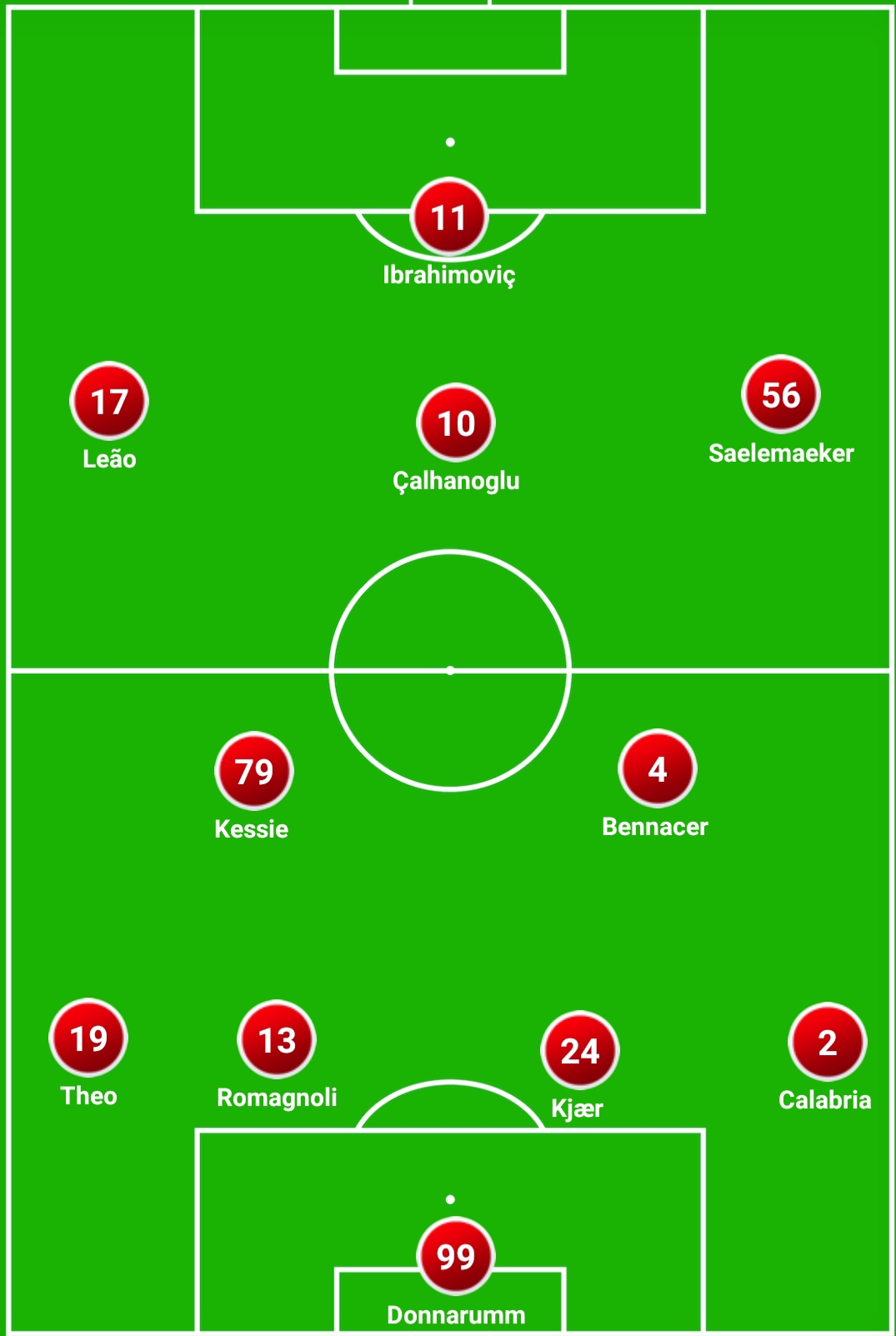
Milan as usual lined up in a 4-2-3-1 formation with Bennacer and Kessie playing as a double pivot in front of the 4 man defense with Ibrahimovic as the tip of the attack.

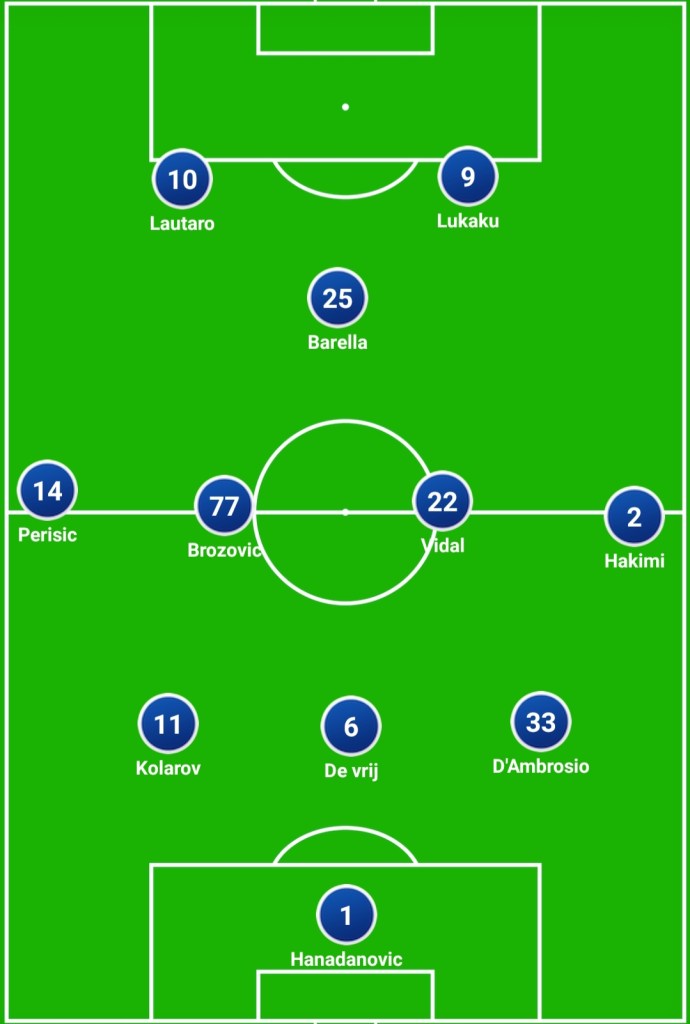
Inter lined up in their usual conte style 3 at the back. The midfield alternated between a 4 in the middle to a make-shift trequartista in Barella to Brozovic sitting back as a regista to spread play forcing Barella to take up Brozo’s post. The right wing had the dangerous Hakimi and Inter went full fire with Lautaro and Lukaku in attack.

Central overload forcing Milan to go wide

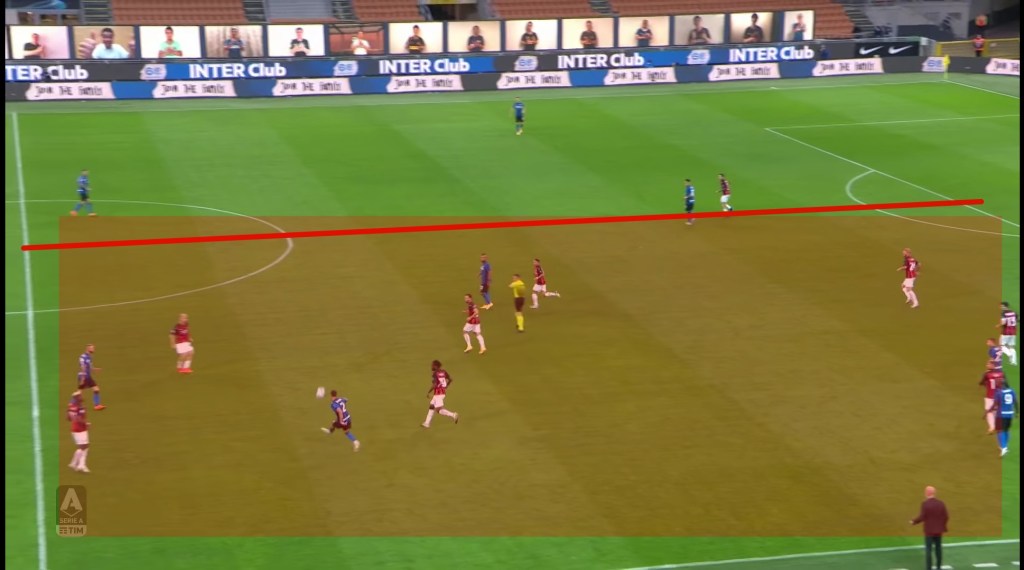
Inter Milan are usually a compact side which allows no space just like the way Conte always sets it up. They overload the centre and forces the opposition to go wide and then isolate the full backs and then press horizontally and make the full back concede possession. Inter showed their intentions of repeating this tactic to Milan in the early few minutes.

Man marking assignments

Conte prefers a man-marking style to Zonal marking system. Brozovic had Hakan, Barella had Bennacer and Vidal had Kessie. On the flanks, Perisic took on Calabria while D’Ambrosio had to deal with Leao which made Hakimi a free man to go at Theo Hernandez given how Leao lacks defensive workrate and Theo is defensively still suspect.

For Milan Kjaer took on Lautaro and Lukaku was marked by Alessio Romagnoli.

Caught out in transition: How Milan engineered their goals

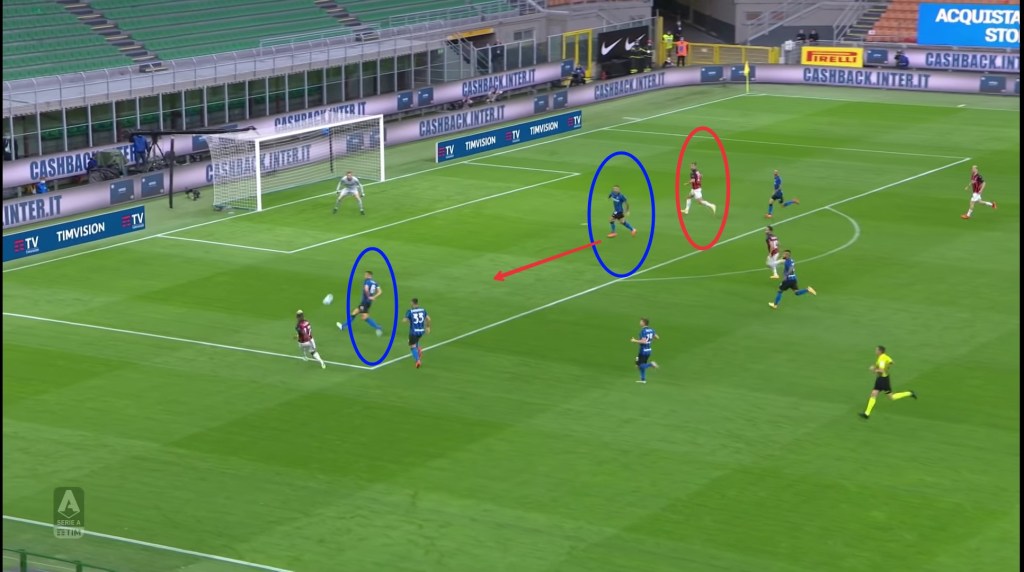
Inter have been a team that have struggled during transitions. From being priced open by Ribery in their last minute win against Fiorentina to goals conceded against Benevento, Milan and Pioli knew the weakness was swift counter attacks. As mentioned earlier, Inter look to isolate opposition full backs and win the ball back with their high press but in these cases it backfired.  After a quick layoff to Hakimi from Lukaku his pass to Barella was expertly intercepted by Bennacer who made a quick horizontal pass to Calabria.

Calabria as soon as he received the ball started an offensive transition which prompted Hakan and Saelemaekers to run in behind Perisic and Vidal and occupy the half spaces caused by the momentary disorganisation. While Perisic and Brozovic took on Calabria, his quick vertical pass released Hakan and it created a 3v2 situation for Milan taking out Vidal, Perisic and Brozo from Inter’s defensive transition.

Calabria going past perisic and Brozo. Vidal loses his man which is Hakan. This creates space behind Vidal and the last line

Hakan once again played a vertical through ball for Ibra releasing him while taking De Vrij out and created a 2v2 situation of Ibra and Leao vs Kolarov and D’Ambrosio which prompted Kolarov to foul Ibrahimovic. Milan made it 1-0 from the penalty spot.

Hakan’s vertical pass forward takes De Vrij out of the game and makes it a 2v2. Ibra and Leao vs Kolarov and D’Ambrosio

The second goal for Milan also came in an offensive transition. Calabria who dispossessed Perisic made a quick vertical short pass to Saelemaekers who turned Brozovic.

Saelemaekers turns Brozo and he spots a parallel run from Hakan

This created a temporary overload on the left wing of Milan and Vidal ran upto Saelemaekers to make up the numbers as well as stop Alexis’ run. He spotted Hakan who was unmarked in the half space left by Vidal in their disorganized moment and passed it to hakan. Hakan, a transformed player whose distribution has been top notch spread play to the left wing to Leao which brought it to a 1v1 against D’Ambrosio. D’Ambrosio who was already struggling against Leao’s pace was sent the wrong way with a feint which prompted De Vrij to come and try take Leao down. This meant Kolarov was full of indecision as to move laterally to cover de Vrij. Ibrahimovic was lurking in behind the LCB and with no full back or wing back tracking back he was free to tap in Leao’s cross. 2-0 to Milan

Hakan spreads play to Leao and this puts D’Ambrosio on a 1v1 with Leao
Leao draws De Vrij out of position forcing Kolarov to partially adjust to close to gap which allows Ibra to run in behind him

Inter’s attack and their goal

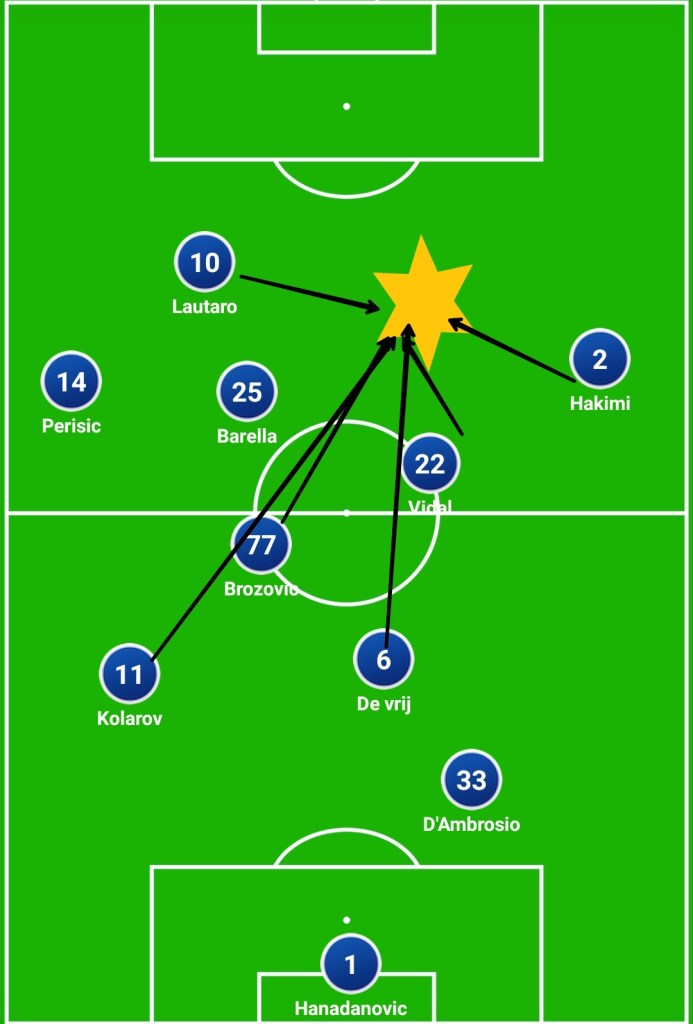
With 2-0 down Inter had to score goals and make up the deficit. Inter attack very dynamically and do not have a clear pattern of play. Teams which press high (like us) are ounished on the counter by quick passing combinations between Lukaku and Lautaro or quick through balls by Barella. Barella drops of from his advanced position and acts as a passing option for Brozovic or Vidal who bring the ball out from the back. Barella than lays it off or passes to Lukaku who using his superior physical attributes holds off the defender (in this case Alessio) and tries to have passing combination with his strike partner Lautaro or with the player wide which is normally Hakimi who push up to support the striker. If Barella was the instigator of attacks, Lukaku was the center of all of Inter’s attack. No matter how tightly he was marked he would receive the ball draw the defenders and lay it off to lautaro or Hakimi.

Lukaku (yellow star) is the centre of the pass map and Inters most creative force

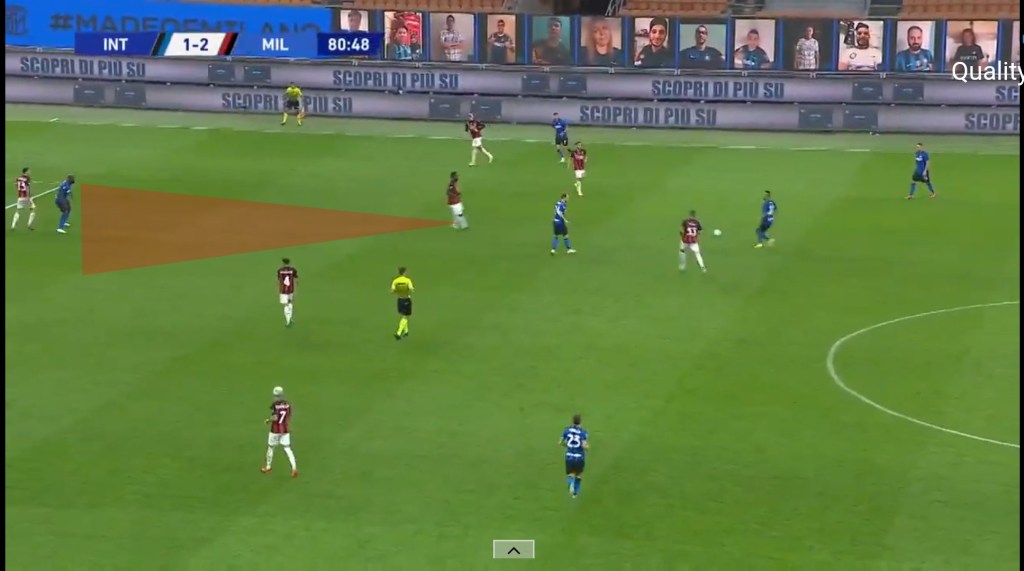
Another tactic that Inter used was to switch play quickly after sucking the opposition to a horizontal press. Once again a pass was played to Lukaku who sprayed it to Hakimi and after some passing Barella switched play to the overlapping wide center-back Kolarov who created a 2v1 situation with Calabria. He passed it to Perisic and Perisic crossed it to Lukaku for a tap in.

Inter sucked Milan into a horizontal press leaving only Calabria as the widest defender and creating a 2v1 with a quick switch pass from Barella

SECOND HALF

The role of Kessie

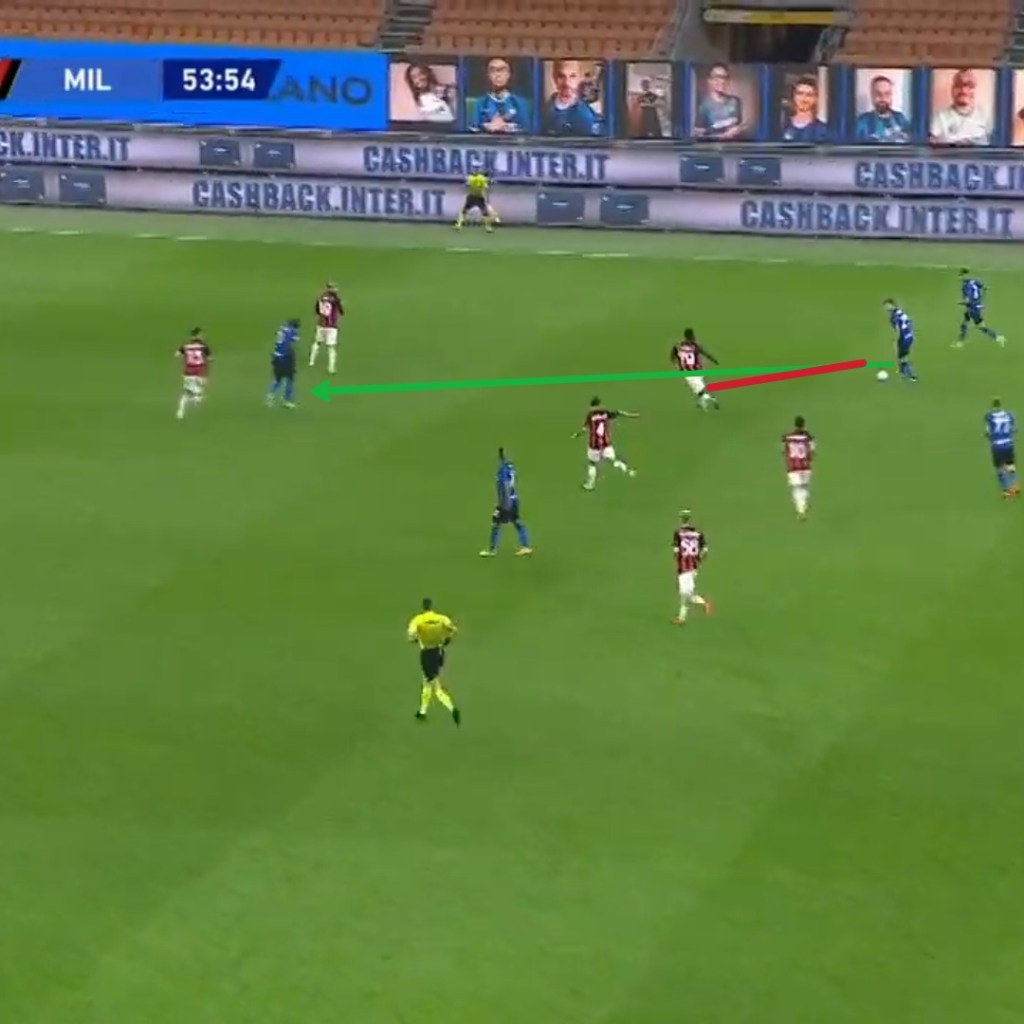
Pioli uses a mix of man-marking as well as Zonal marking. Up until the first half Kessie was tasked with keeping Vidal quiet and not let him have a free run. But with Lukaku troubling Alessio and creating a numerical advantage with Hakimi bombing forward, Pioli had to re-think his tactics. He had Bennacer continue his man-marking on Barella while Kessie was tasked with cutting off passing lanes to Lukaku.

Kessie cutting off passing lanes towards Lukaku
Kessie tackling Lukaku to win the ball back for Milan

Substitutions

Now with Kessie occupying a more defensive position and Theo being overrun on the flanks Pioli needed to protect the lead as Inter were having more momentum towards the end. So Pioli took off Leao keeping one eye for the game against Celtic and introducing Krunic. Krunic was tasked with Vidal and Brozovic (later Barella as brozo was subbed for Eriksen) and reducing Inter’s numeric advantage in the center leaving Kessie as the spare man to mark zonally the right half space which Lukaku was occupying to receive passes.

Kessie’s zonal marking helps him to cut of Barella’s pass to Lukaku

Hakimi chance

A constant threat from wide areas, Inter always look to utilize their full backs. Against Fiorentina, Lukaku laid off a pass to Alexis Sanchez who farmed the ball wide to the right wing who made a run behind Biraghi and crossed it for Lukaku to tap in. It nearly paid off again when Perisic laid off a ball to Vidal and with Milan’s defense occupying the central area in the box they didn’t spot the run of Hakimi who headed it wide.

Vidal finds Hakimi with a diagonal ball just like how Sanchez found him vs Fiorentina but Hakimi missed

Tribute to Calabria and Bennacer

There we talks of Milan needing a new Right back in the summer but management decided to stick with the academy product and he has repaid the faith in abundance. Kept Perisic invisible for large parts of the game, Milan tactfully used Calabria and his quick passing/long ball ability to instigate attack and break the lines.

Now while Kessie gets the plaudits somebody who went about quietly and dropping a top performance was bennacer. Up against an in-form Barella, Bennacer was tasked to mark him and it was quite a feisty duel. Bennacer occupied the right areas, kept a tight rein and made some important clearance

Conclusion

For initial parts of the game it seemed as it Lautaro got the better of Kjaer but the Danish wall kept Lautaro quiet. Eriksen did cause a nuisance occupying space between the lines but did not trouble much. The only constant threat for Milan was Lukaku who summoned all his ability to try and rescue his team from defeat. However Milan stuck firm and reigned victors