Data analysis: A 360° approach to its applications in football

INTRODUCTION

In an interview to Leaders in Sport A.C.Milan CEO Gazidis laid out a blueprint to take Milan back to the top echelons of football like its glorious past. In particular he laid out 4 point strategy which consisted of Better utilization of resources with a tactical identity, mix of experience and youth, sporting science and Milan Lab 2.0. Gazidis spoke quite extensively about Data Analytics and how Milan will be utilizing it for better resource management.

But in a game like football which has so much of emotion and subjective decision making, how can a few data points and statistics help coaches and players make better decisions?

Data Analytics and Sabermetrics have gained lot of traction over the past few years with clubs in the lower leagues using it extensively for competing with the traditionally big clubs despite the unequal share of resources. With the game growing exponentially and with a lot of money involved, owners and stakeholders want to mitigate the risk of huge financial losses with informed experts in the sporting side of the game.

HISTORY

It all started in the 60’s when a former RAF commander and accountant, Charles Reep, started taking data points as the manager of his club Swindon Town. With the data collected Reep inferred that most goals were scored with less than 3 passes. This gave birth to the concept of the Long Ball tactics which is still etched into the English game.
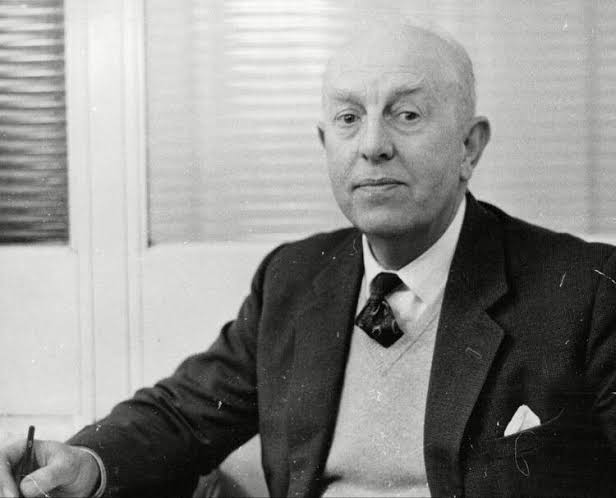
Charles Reep

However the real data collection and its interpretation was pioneered by sports data collection company ProZone in 1998. Their services was first availed by Derby County to have a better analysis of pre-match and post-match data.

In 2003 the book Moneyball: The art of winning an unfair game written by Michael Lewis became the real ice-breaker to all avenues of sports to use a data-crunching system to gain an advantage in games. Today almost 10 data points are collected per second in a game which amounts to a minimum of 1.4 million stats being created per match through notational analysis.

HOW DATA ANALYSIS IS USED

To have a better understanding of how data analysis is done in Football let us break it down into different areas concerning football

SCOUTING  

The main aim of these scouts is to find underpriced, undervalued players who are to yet to approach their peak which is hard earned knowledge

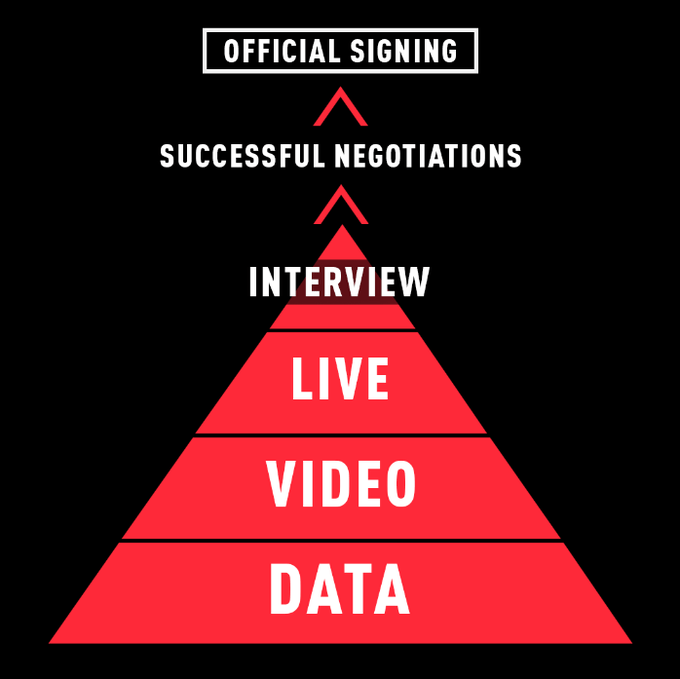
If there is any department that Data Analytics has been a game-changer it is in the Scouting and Transfer department. After consultation with the head coach Pioli, Moncada and his group of scouts and data analysts will have a prototypes ready for Pioli’s desired style of football. Once the specifications for the types are made clear, the scouting department (which includes data analysts) will log into various scouting platforms like Wyscout or Opta (To name a few popular ones) who will provide these analysts with dossiers, statistics, creative visual imagery and various videos of the player. This exercise helps the club save a huge amount of money as opposed to establishing a scouting network all over the world which would multiply costs employing different people.

Now once the data is in, the analysts and scouts sift through the mountain of data and make a shortlist. Once the shortlist is made, they watch videos and matches of these players and concise the list even further. It is then that scouts visit actual stadiums to watch the targeted player play which is either done by Moncada himself or then reported to Maldini and Massara who make the final decision in consultation with Pioli.  
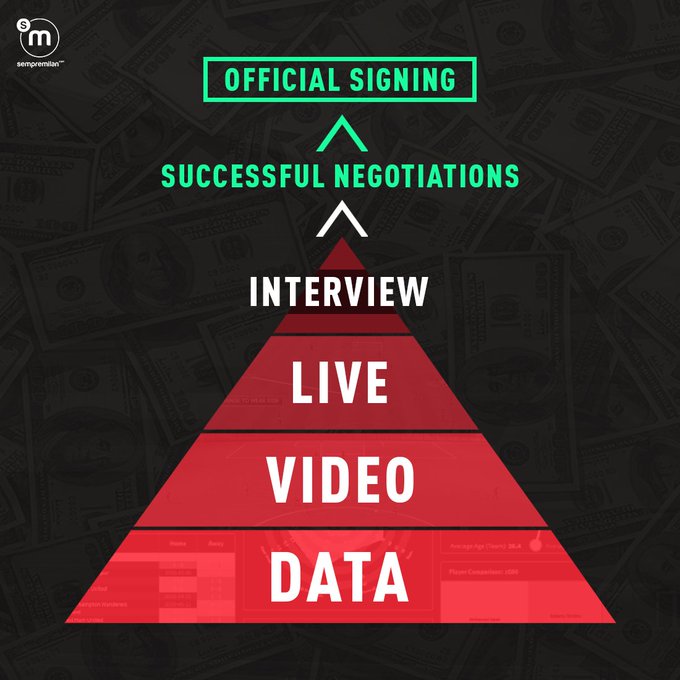
The Scouting Pyramid. Step 1 staring from data where data is downloaded and then if it all goes to plan then it leads to negotiations and signing is made

However as mentioned earlier Football is a subjective game played by human beings and not by programmed robots. Hence statistics cannot predict what a player may do next. But to close the gap, Data scientists have brought in a cutting-edge technology called Ghosting. Ghosting is the process of using algorithms to predict what action a particular players takes in a specific situation based on thousands of data points collected from his previous matches.

PRE-MATCH PREPARATION AND IN-GAME ANALYSIS

For every match the team requires specific preparation. The changes in playing systems, the technical and physical qualities vary from team to team. The preparation for a match vs. Spezia cannot be used against Inter, and if done it would could lead to mortal peril. Hence separate preparations both physically and mentally are required for which data is collected and analyzed by a team of analysts and coaching staff. The data analysts analyses the various numbers of the opposition and in a meeting with the coaching staff present it. Combined with the tactical nous of the coach a game plan to counter it is devised in these meetings. Milan, in specific being a pressing team, analyze passing patterns of the opposition side to structure their pressing.

Since each games needs specific physical preparations and new training methods could be introduced to players, the effectiveness of training routines are measured using GPS kept inside the training ground.

In the RB Salzburg academy the whole academy is equipped with LPM Indoor system which are motions sensors which give data like passing accuracy, touches taken and amount of time ball possession is kept. They also use the Soccerbot, which is a circular structure where the player is at the center. The structure is filled with panels which work as LED TV’s and each player is given a task to complete inside the Soccerbot. Recently they are also helping to recreate situations from the games played by the team previously. This structure help data analyst’s track information of the player and for the player himself to realize his mistakes and correct them. It helps in faster development of the player.
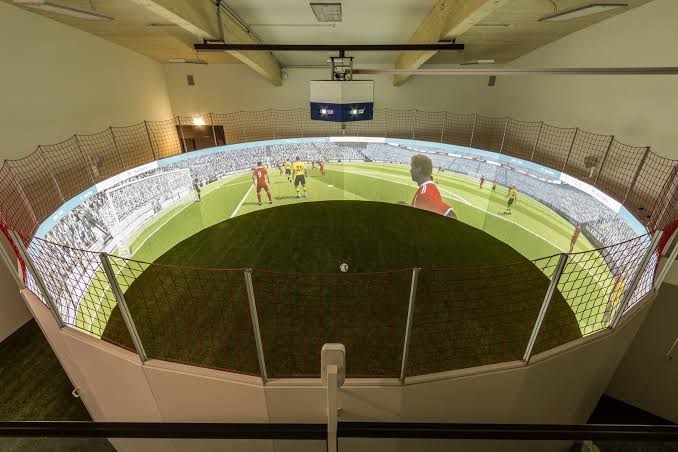
Soccerbot 360

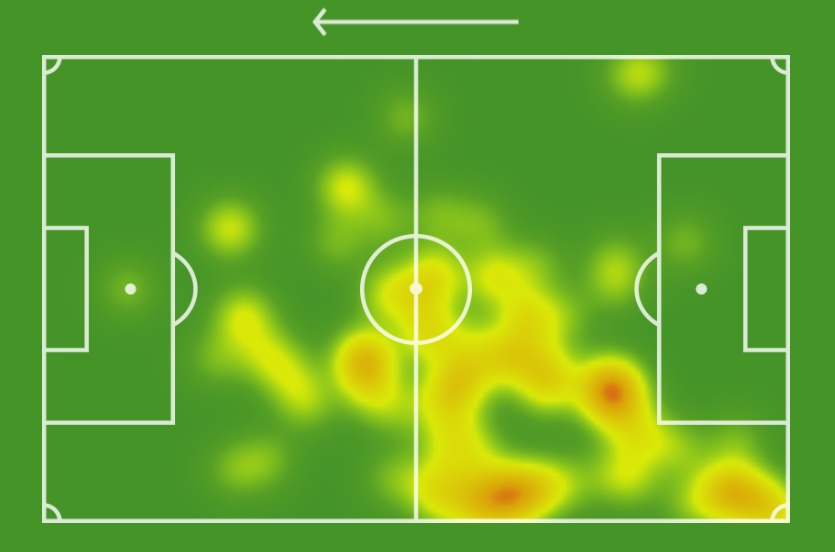
During matches we would have often seen while substitutions, Pioli’s assistant Giacomo Murelli, speaking to the player who is going to be substituted to play along with his Tablet. During the game, the stadium is equipped with various GPS and motions sensors. These help the coaching staff to obtain heat maps and which player is showing signs of tiring. All this information comes to the analyst’s and is given to the assistant via his tablet where combined with his tactical knowledge he tries to exploit and gain advantage
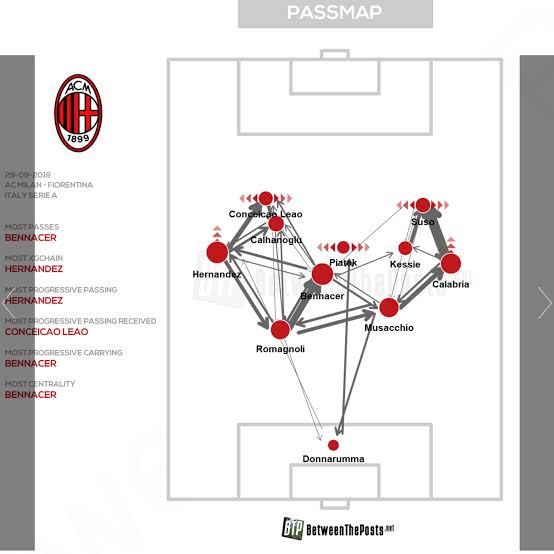
Milan’s passing map in a match vs Fiorentina in the 2017-18 season. These data help coaches to analyse patters and neutralise them
Frank Kessie’s heatmap vs Crotone

MEDICAL FIELD

As pioneers of Milan Lab, the use of various data analytics to keep players fit and predict injuries is not something new. Under the unconventional chiropractor John Meerseman combined with his knowledge of Kinesthetic, Milan forged a partnership with Microsoft to analyze data samples. It is of no surprise that the UCL winning team of 2007 had an average age higher than 30 and it was solely because of Milan Lab and its unique ways. While Milan Lab only exists in name with Meersseman leaving in 2010, Milan Lab showed how data analytics can be used for Sports medicine.
Fast forward to 2020, along with GPS inside the training grounds they also have an accelerometer and a gyroscope. These devices help in tracking metabolic and bio-mechanic feature of every player. This data helps to gauge the external work load i.e the amount of work done on the pitch. This helps in understanding whether players are close to injury or not. Players are at maximum risk when they play after long periods of no activity i.e after summer break or like th post lockdown period. Also running at high speeds for short bursts for time in a 3 week timeframe is a recipe for injury according to medical experts

THE SUCCESSFUL MODEL OF LIVERPOOL

 In 2002, Fenway Sports group bought Baseball team Boston Red Sox. They were intrigued by Sabermetrics which was relatively a new concept in 2002. They brought Bill James as the head of research and within 2004 Boston Red Sox, who had never won the coveted World Series in the last 84 years won it. And it was no fluke win for Red Sox won it again in 2007, 2013 and 2018.

In 2010 when FSG bought Liverpool they appointed Damien Comolli as Director of Football in 2010 but he left in 2012 owing to poor performances of Liverpool. His successor was his own employee Michael Edward who went on to be Liverpool’s first Sporting director in 2016. Michael Edwards along with FSG placed emphasis on data analytics to gain a competitive edge within limited budget. They appointed 4 analysts in the form of Ian Graham, William Spearman, Tim Waskett and Dafydd Steele. Along with Klopp who was used to working in a limited budget at Dortmund (Dortmund also used data analysis with head scout Sven Mislintat a big advocate of the system) headed all decision making within the club.

Ian Graham

Klopp is an advocate of gegenpressing which is a relentless, intense, aggressive style of football which requires players with very unique skillset. The Analysts uses various scouting platforms to search for players who possess the technical skill along with the adequate stamina and robustness that Klopp demands. Along with these traits they also examine his injury records. A special feature is that Liverpool calculate the discounted value of the player by working on the transfer fees the player has received in his career combined with his commercial value before making a bid for the player so as to not overshoot the budget set for transfers by the owners.

With Liverpool playing a high line they needed a defender who could had the pace to catch up if the opposition countered and a keeper who was good with reflexes and was good in 1v1 situations. This made sure that whenever a striker pierced Liverpool’s defense he had the technical skills to bury the chance. Somehow Mignolet/Karius and Mamdou Sakho was error prone and did contribute to the cause. Hence Liverpool needed alternative arrangements. The Sale of Phil Coutinho did just that. It provided very important capital for Liverpool and they invested in Virgil Van Djik and Alisson Becker. What seemed to be gross overpayment in 2 years’ time looks like bargain deals for Liverpool. Van Djik especially was a very astute defender who snuffed out attacks just like a fireman put out a simple flame before it became a major fire.
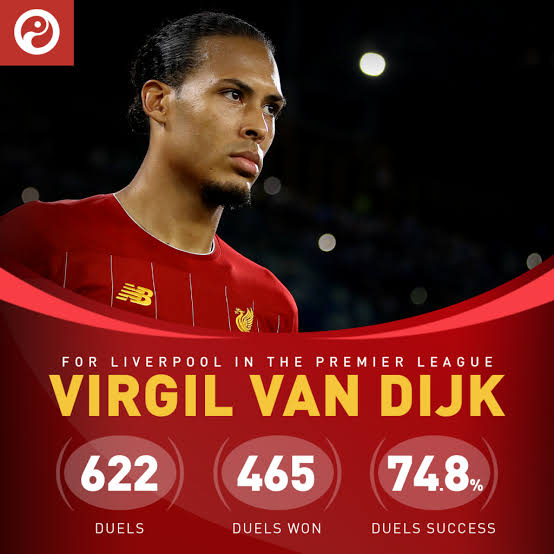
Credits: Opta

The sale of Coutinho also helped in multiple aspects. To what seemed as a tactic designed with Coutinho as the center of the attacking play, Liverpool expanded it to Salah, Mane, Firminho, Robertson and Trent Alexander. This increased unpredictability and a data metric known as Goal Variety. Goal Variety is seen as a story by the analysts and is analyzed by the experts like the number of passes it took and key passes and various other data.

Pre-match preparation was based on 3 points

  • Forcing the player most low on confidence into making mistakes by pressing him aggressively
  • Agitating the player who gets angry very easily and has poor disciplinary record
  • Analyzing opposition players with high technical ability and cutting off supplies to the player (for eg: Kevin De-Bruyne)

Against Everton last season Liverpool took a high amount of shots from outside the box. This was because Jordan Pickford is very shot in stature and unlike keepers like Alisson or Donnarumma he cannot reach the ball if it is hit well.

To keep players motivated to perform an incentive system based on a data analytical system called Game Theory was used. It helps in designing incentive systems. Liverpool were the club that gave maximum bonuses to its players due to this system as well its success in the Champions league and Premier League.

HOW MILAN CAN USE ANALYTICS

With Data Analytics being widely used in England, Spain and Germany it is yet to find a place in Italian Football on a wide spread basis. Atlanta have slowly adapted to the number crunching tools but rest of the clubs are yet to apply it to their games. Here are a few ways Milan can apply Analytics

  • Scouting: Moncada and Almstadt seem to already have analytics in place to help the club sign young players approaching their peaks. Even to sign more experienced players like Kjaer who was an unused substitute in Atlanta all this while is a shrewd piece of business. Given how Milan’s finances are yet to fall in line good investment through analytics and signings like Hauge can help the club achieve its targets despite a concise budget.
  • Medical: Re-launching Milan Lab 2.0 would be a great way for Milan to protect their players and get the best out of them. This is something Gazidis has promised to do in his 4 point plan to get Milan back to the top
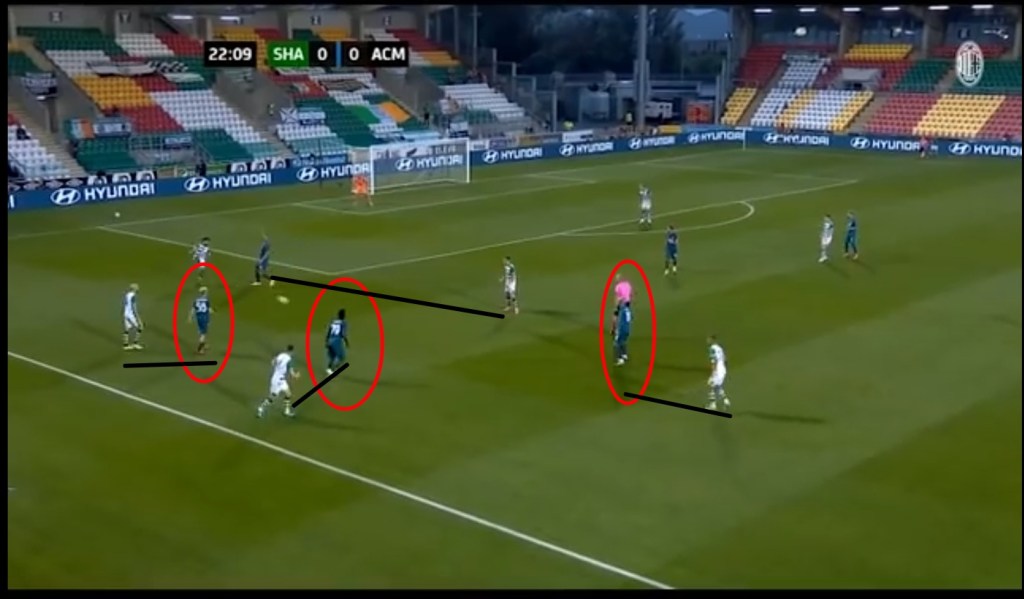
  • In-game management: While Milan have shown significant improvement and a tactical identity mimicking ideas of Bayern Munich as per the confession of Pioli, Milan can still structure their press better and stop getting overloaded in central areas of the pitch like how we did against Rio Ave.  

CONCLUSION

All things said and done, Football like every other still remains a very subjective sport based on emotions. Philip Lahm went as far as calling it modern Gladiator battles. And with Data analytics being widespread in England and Germany there are far too much numbers to deal with. Therefore it is important to sift through these mountains of data and classify it to useful and non-useful data. While classification it is prudent to use visual imagery and techniques that help people retain information faster and better. What sets apart a good analytical team from a mediocre one is how they interpret the data. Analysts who can identify the data quickly and come to qualitative decision making are the ones that top clubs employ. Everyday data analysts explore Mountains of data to find that 1% extra detail that gives an added advantage to their team. Modern management requires objective ways of quantifying and with so much data available analysts are always finding extra information aids in better decision making from the boardroom level to the pitch.
Hakan Calhanoglu: A financial look at the renewal

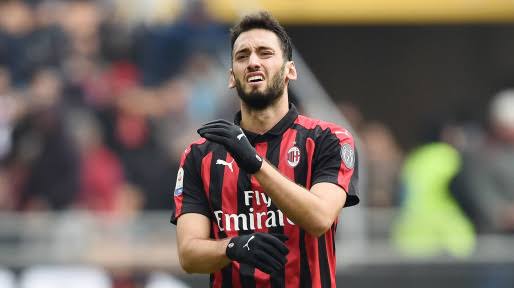
Hakan Calhanoglu was a man out of favor with fans in January and wanted him to follow Suso through the exit door. But if Milan showed a revolution post-Lockdown Hakan was the center of it all with 7 goals and 8 assists in 12 games with an involvement in almost every game we played. A suggestion at a contract renewal in June 2019 was seen as a humorous attempt by fans but fast forward to October it is seen as a very important sign of the club’s aspirations.

However as reported as by Sky, Hakan Calhanoglu has asked for a significant raise (close to 4 Million net) and Milan is scheduled to sit down with his agent, Gordon Stripic, for contract negotiations.

Hakan Calhanoglu has a contract until June 2021. However as per the free agent rules, he is allowed to speak to clubs in January 2021 and agree a pre-contract to join the club once the 2020-21 season gets over on a free. Milan, will want to avoid this situation where Hakan walks out of Milan on a bossman without bringing in any income to the coffers and Milan tasked with finding a replacement who could be as effective has Hakan is to Pioli’s plans.

Financial Impact:- Wage Impact, Amortization calculation

Financially, a 4M/season net contract would mean it will have an effect of 8M/season (4M salary+ 4M tax) to Milan’s balance sheet per year unless he stays in the club for 2 years which would then reduce the total impact to 6M/season as per the new taxation rules introduced by the government for foreign players.

Hakan Calhanoglu’s amortization per year is roughly 5.8 Million and is down to the last year of his contract. His Book value is close to 3.8M. If Milan extend his contract for 3 years then Hakan’s amortization reduces to a rough 1.2M per year.

Benefits of the Renewal

Milan are quite cornered in this situation with all the odds favouring Hakan but the player has re-iterated his desire to stay and may accept a 4M/year. 8M a year is quite an impact on Milan’s balance sheet during these tough times with corona having a huge impact on finances of all club but the benefits of renewing are two fold

  1. If Hakan continues his form and a big club comes calling and offer a good amount of money Milan can collect a huge sum of money given that his book value will be between 0M-3.8M (see above calculation) and it will help Milan re-invest in the market as well as have a positive impact on the balance sheet
  2. Reduces more amortization clearing more space for investments in the future. As shown in the above calculation, Hakan’s cost amortization (cost per year) reduces from 5.8M to 1.2M per year which frees 4.6M in squad costs waiting to be re-invested in the squad.
  3. If Milan cannot make it to the Champions league this season, having an ally like Hakan who forms the core of the squad will be useful so that Maldini and Co. can reinvest in more problematic areas like Right Wing.

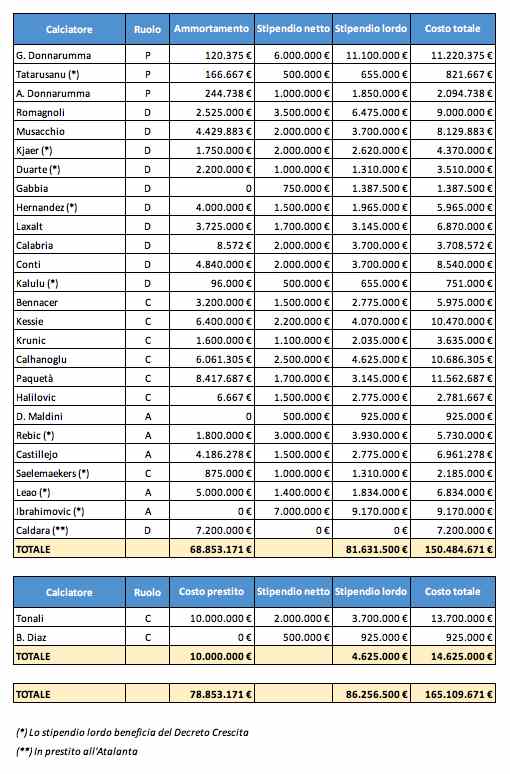
On a personal note, while Milan have saved a total of 34.2 M in gross wages (calculated from wage sheet as listed by CalcioFinanza, see down)

Milan have added close to 16M to the wage bill with new signings. With corona squeezing our budget to every penny it’s good to see how we have added players without straining on our resources. The renewals look financially feasible and with the will of the players won’t be a thing of concern.

Diogo Dalot

Diogo Dalot

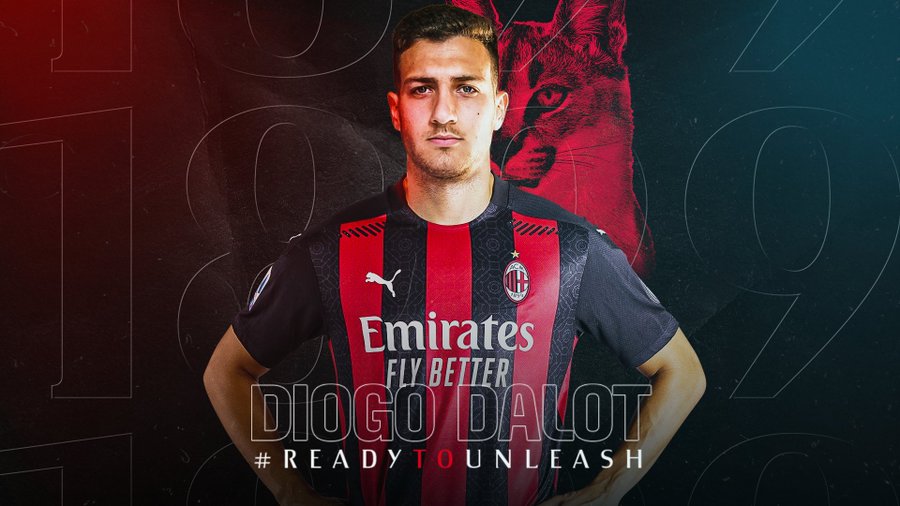
Milan have secured the services of Diogo Dalot on a dry loan the club announced through its official app. A high flying full back at Porto it surprised everyone when United paid 22 Million for his services (more than his release clause) to bring the player to United then under the stewardship. However with Jose leaving United and Dalot’s move coming a bit too early for him, he got relegated to being a third choice right back under Ole Gunnar Solskjaer with Ole preferring Aaron Wan Bissaka. Here is a small introduction the Diogo Dalot and what Milan fans can expect from him this season

Profile

Name: Diogo Dalot

Age:21

Foot: Right

Back-story

Diogo Dalot was born on 18th march 1999. He joined Porto youth as a 9 year old kid. After playing in the Porto youth academy he went on loan to Pardonese in the 14/15 season. Impressing at an early age Porto recalled him back for the 15/16 season to play for the U17 team and his impact was very high that he earned a call up to the U19 team at the age of 17.

Another promotion beckoned after impressing for the U-189 team where he was called up for the Porto B team before he made his debut for the senior team against Sporting Lisbon. He made a total of 8 appearances for Porto before joining Manchester United

Playing style

Diogo Dalot is an attacking full back who can cover as a left-back and a right back. At Porto, he played as inverted full back for 8 games at Porto. His gameplay differs when playing as a right back and a left back

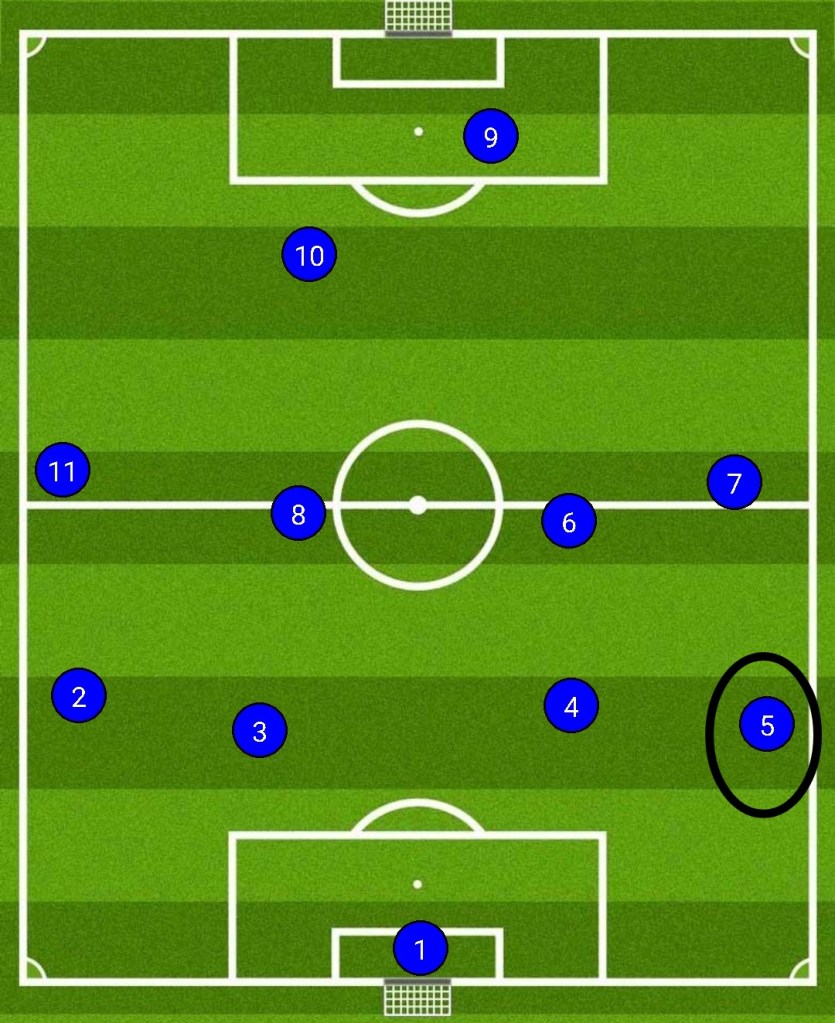
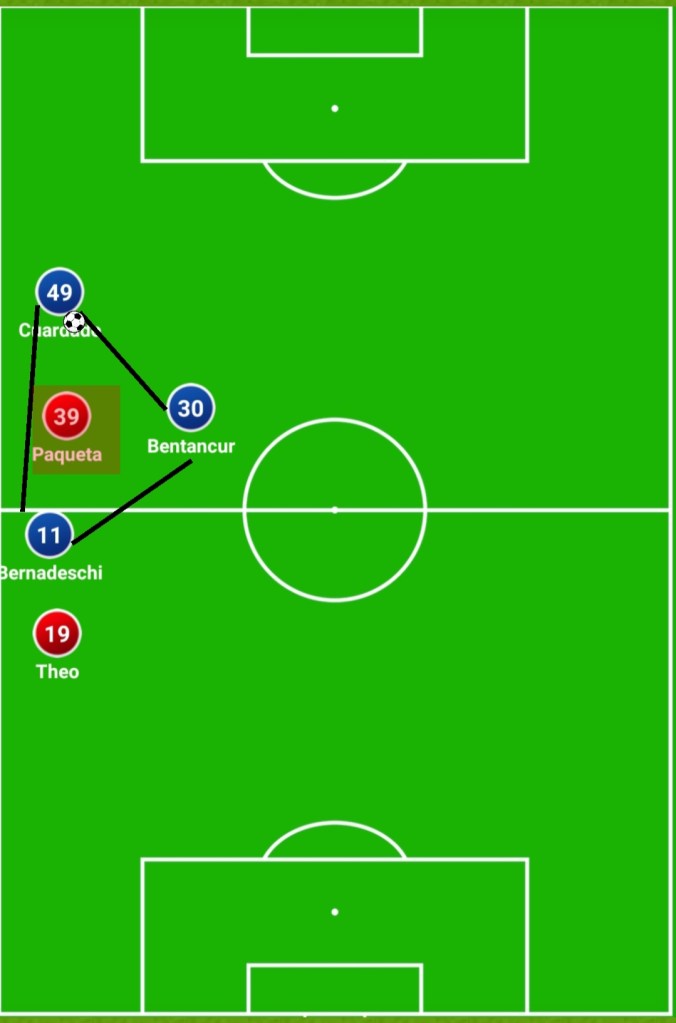
When deployed at his natural role of right back he plays as a pseudo-wingback where in-case opposition tries to overload the center and put pressure on the center backs Dalot tucks in and reduces the numerical advantage of the opposition. When in possession Dalot can play like a normal winger where he has the pace to take-on players in 1v1. He has the technical ability to create chances with his crosses and is a constant attacking threat to the opposition. His understanding with the Porto wingers is quite crucial to his performances. If the wingers prefers to push wide Dalot tucks inside and waits outside the box. If the winger is playing as an inside forward then Daloy plays out wide and tends to pull the full back out of position.

He runs into the centre to reduce numerical advantage of the centre
Dalot as a left back

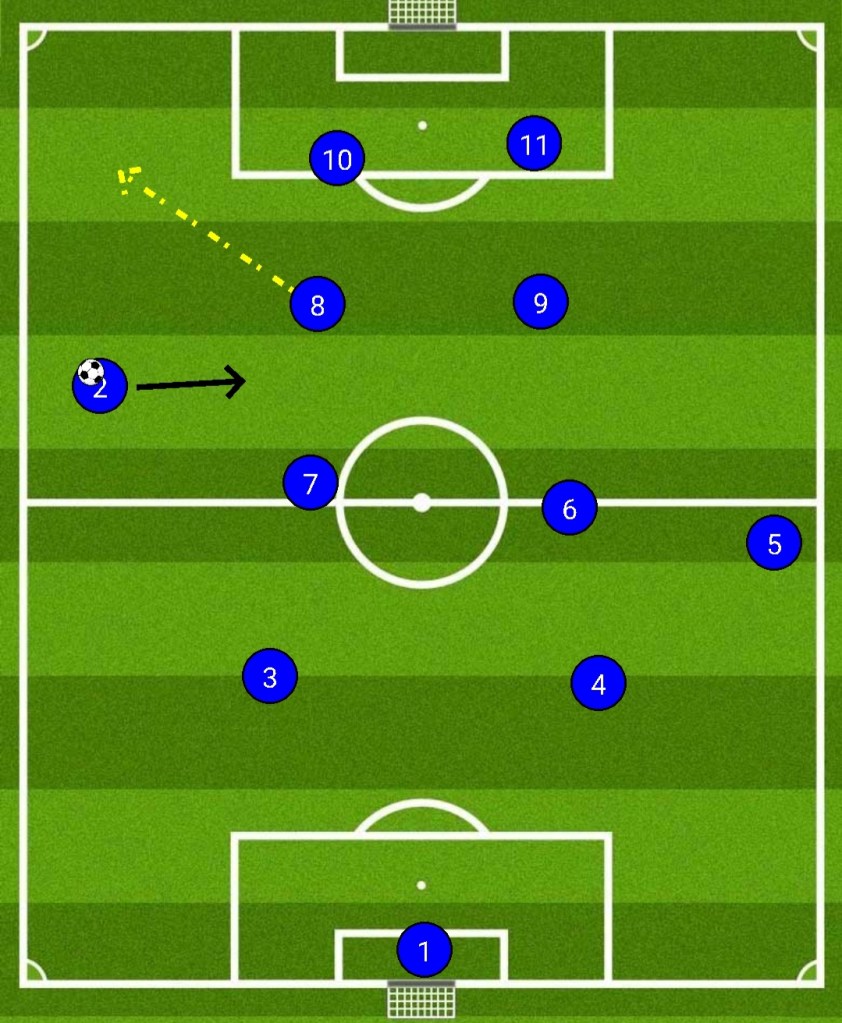
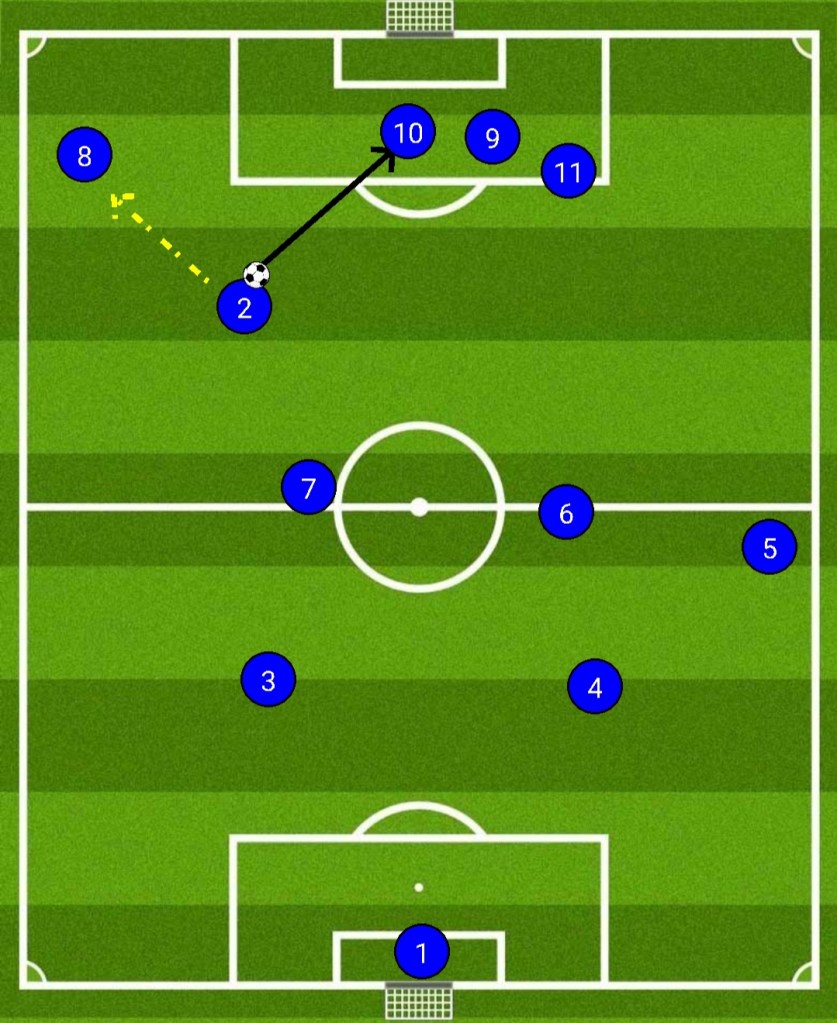
When playing as a left back, his work ethic and role while defending remains the same. It is his method of attacking that differs. Where-in he instead of cutting-inside stays wide to receive the ball from the midfielder and then cuts inside for a cross or to find the winger with a cut-back cross.

Dalot stays wide and while the left winger peels to the left wing
Dalot then has the option to cut back to the wide player or put in a cross to the center

Tactical awareness is a very strong trait of Diogo Dalot. Porto played a 4-4-2 which changed to a 4-2-2-2 and this required alternative full backs to push up to provide width. Dalot is more comfortable in teams that use zonal defending and zonal marking rather than man-to-man marking which makes him very tactically aligned to Pioli’s style of play. He rarely dives into tackles even if he gets outnumbered on the flank. Dalot also has a very sound dribbling technique and uses the outside of his boot to cross and make passes. He oftens hugs the touchline to help switch play when the opposite flank is clogged.

His ability to dive into tackles can sometimes put him into trouble. He back’s off quite often and this gives time to the opponent to advance the attack. When playing with Porto, Dalot was often seen dropping too deep and playing opposition attackers onside and Dalot needs to improve his positional sense.

Player comparison

With Dalot making very few appearances it is difficult to make a statistical analysis.

After quite a bit of research on the internet and watching Dalot play he resembles a lot like former Inter and Juventus Right back Joao Cancelo. Both standing tall at 6 feet and with the ability to burst forward with pace and join the attack Dalot has followed the path taken by his compatriot albeit he joined crosstown rivals Inter.

With an injury crisis awash at Manchester City Pep Guardiola was forced to play Cancelo as a inverted full back. Against Lyon he often started from inside and dribbled out wide allowing Sterling to make inside runs between Lyon’s compact lines. Being right footed cancelo easily slid in passes into the path of sterling which caused a few problems for Lyon.

Deal or No deal

With Laxalt joining Celtic on loan and Conti fragile as ever, a profile like Diogo Dalot is exacly what Milan needed especially since they will be plaing 3 competitions this season in a very jam packed schedule due to the corona virus

A low risk high reward signing, the loan of Diogo Dalot can see Milan try out multiple combinations in play as it gives ambidexterity to Pioli if he wants to put pressure on opposition and play 2 attack minded full backs in theo and Dalot on both flanks.

Transfer rating 6.5/10

Lucas Paqueta: Where it all went wrong

January 2019 it became official, A.C.Milan purchased Lucas Paqueta from Brazilian club Flamengo for a fee of 38.4M (souce: transfermarkt) making him one of the most expensive players in the clubs transfer history. And he started off in style flicks, tricks and defends left in splits Paqueta was “dancing” his way around defenders and initial fears of his compatibility to Italian Serie A and its demanding nature were quelled. However once Gattuso left and Milan appointed Giampaolo things started going awry. Asked as to what Giampaolo thinks of Paqueta Giampaolo answered “He needs to be less Brazilian” which surprised many. Paqueta, however, took a cheeky dig at Giampaolo on his Instagram saying he knows no other way. However fast forward to September 2020, Paqueta is on the cusp of leaving to Lyon whilst being labelled Milan’s most expensive flop.

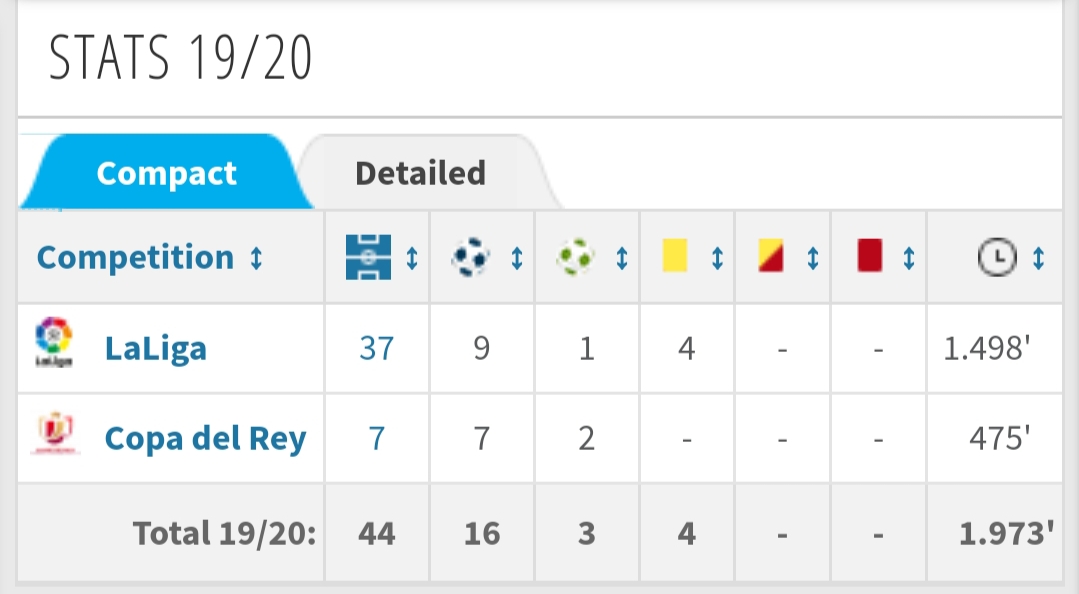
His stats for the season? Not a single goal registered for the season and only 1 assist recorded for the 1,199 minutes played in all season.

We take a look at 4 reasons why Paqueta could not take off in Milan

  • Lack of Pace and physical stature: A very important feature for all modern attacking players is to be fast both on and off the ball. The modern game has involved so much that the overall pace has increased in teams including center-backs and paqueta is not up to the paces in this horse race. A lack of speed and physicality means that his versatility is also affected. A couple of experiments by Pioli to try paqueta on the wings failed miserably as the likes of Juventus targeted him by outnumbering him and Paqueta was too slow to track back in-case he lost his man and the ball had progressed. With Milan deploying a high press high work rate high pace style of football it is no surprise to see even Saelemaekers start ahead of the Brazilian player in the order because Paqueta does not possess the physical aspects that Pioli demands with his style
How Juventus targeted Paqueta and beat him until he was hauled off at Half Time
  • Tries to overcomplicate things: Maybe owing to naivety Paqueta often overcomplicates the play when he is on the ball. With Milan employing a high press, players are often required to win the ball back quickly and pass the ball forward to try and catch opposition defenders out of position. This requires the ball to be released quickly but Paqueta in his stride tries to dribble more defenders than he can take on and often is cornered by defenders and he loses the ball. Opposition teams found this out and tried. This made him a very predictable target and opposition managers started targeting him to prevent the ball being progressed.
  • Attitude Issues?: Now this is purely speculative but there were various rumors from reliable sources like Vito Angele and Milannews that Pioli got tired of his attitude in training with the player not showing enough in training to fight for a spot in the team. It even propped Pioli to publically admit paqueta is out of his project. Once again let me reiterate, this is purely speculative and based on rumour, since we fans cannot know what happens behind the scenes but contextual clues such as pioli’s statement and rumours make it look like there may have been attitude issues.
  • New Language, Culture: Often moving out of your own country to a new place with a different language and different culture can be a daunting task for a player. And with Leonardo leaving Milan at the end of the 18/19 season paqueta did not have anybody senior to help him settle into the squad and into the locality. It may have played a factor into unsettling the player where he was asked to be excluded from playing a match due to depression.

Conclusion

A transfer to Lyon seems the best solution for Milan, paqueta and Lyon. Milan for whom paqueta does not fit into the project wanted to sell him and re-allocate the money for more burning issues such as center back and right wing. For Lyon whose sporting director is club legend and fellow Brazilian is looking to form a Brazilian core at the club with Thiago Mendes, Guimares and now Paqueta. And for paqueta moving to a club that may suit his style of play and has more Brazilians for him to be-friend

Tactical analysis

Milan faced Bodo-Glimt in the 3rd round of Europa League Qualifiers winning 3-2 to go on to face Rio Ave in the playoff on October 1st. Qualification for Europa League groups would ensure Milan 15 Million to spend in the transfer window. Here are a few thoughts and tactical notes from the match

Colombo debut

A few hours before the game Milan confirmed through their website that Zlatan Ibrahimovic tested positive for coronavirus and will be out for the match against Bodo-Glimt. With Rebic suspended and Leao still not match fit, Pioli handed a debut to Lorenzo Colombo.

Lorenzo Colombo is a striker who depends on his positioning just like a good poacher does. Unlike Zlatan Ibrahimovic Colombo does not involve in buildup play or drop back to pull defenders out of position making space for wingers to drive into. His work-rate is really impressive and presses quite well for a player in his debut and when they win the ball back he positions himself on the shoulder of the last defender waiting for balls to be fed into his game.

The Double Pivot

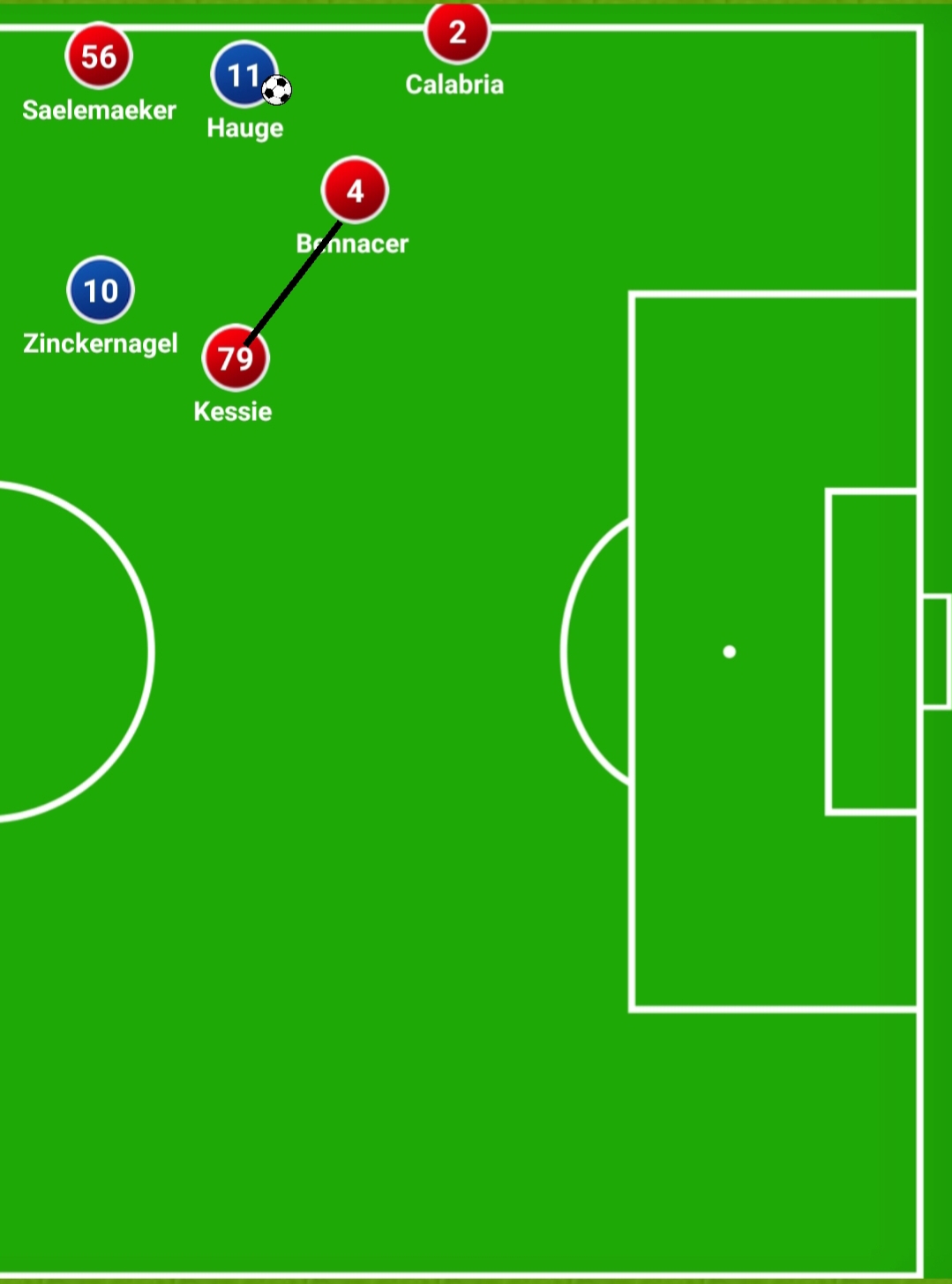
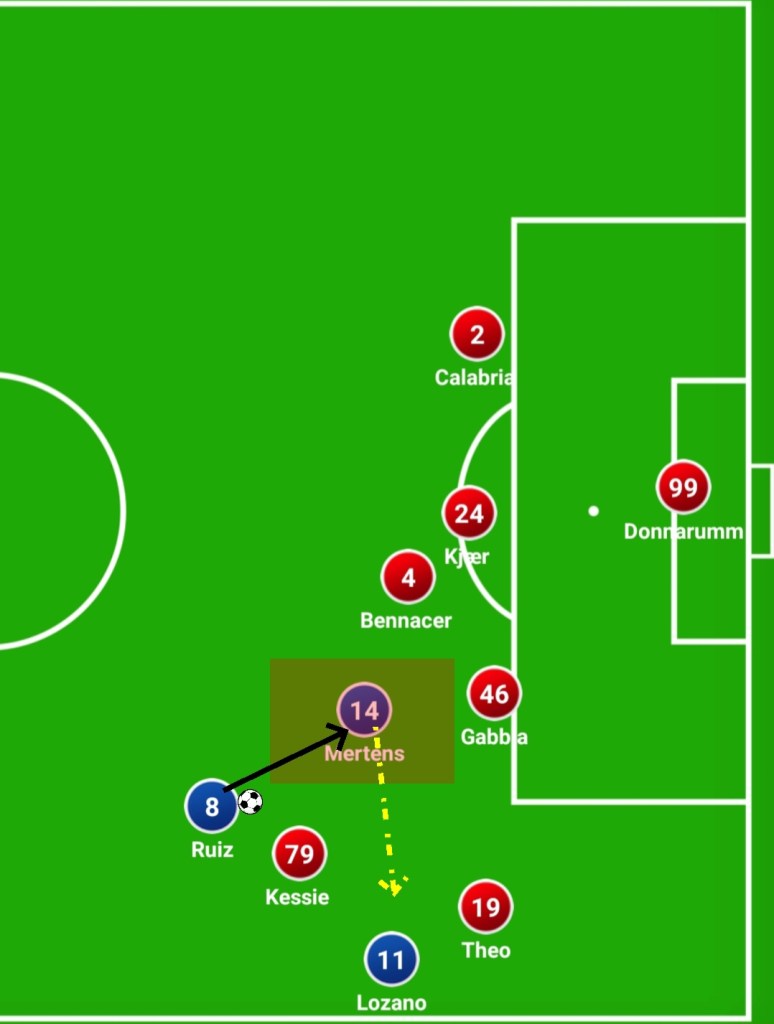
The double pivot of Kessie and Bennacer have been very important to Milan’s high press. While Kessie pushes up to press Bennacer drops back to screen the defense incase Bodo-Glimt get past Milan’s press. Bodo-Glimt were overloading Milan’s wings and this made Pioli make our double pivot move very horizontally to have a horizontal press. Whenver Gabbia or Kjaer made forward runs one of them sat back as a makeshift CB

Hakan and Saelemaekers position

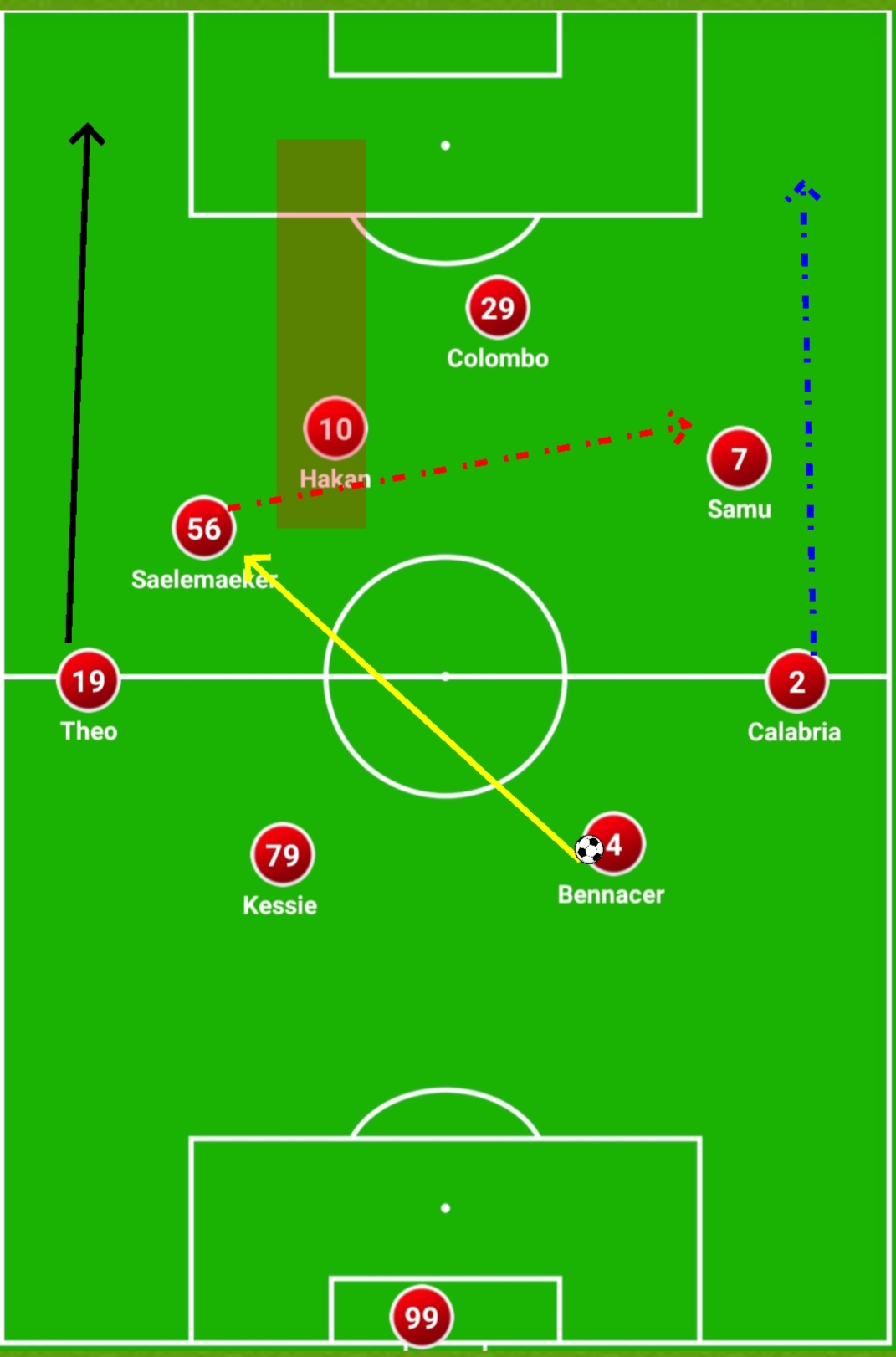
With the absence of Ibra and Colombo who does not possess movement like the big swede, Pioli had to improvise so that Bodo-Glimt dooes not isolate Colombo he had Saelemaekers plat more infield and closer to Colombo. This idea was also in view to keep numbers in the middle since Bodo seemed to have a numerical advantage in the middle and was suffocating our build up play. With Saelemaekers moving infield and Glimt playing a midfield-block, Theo Hernandez was making a lot of overlapping runs being supported by Hakan taking up the half spaces on the left flank. Once the intensity of Bodo’s pressing declined you could see Saelemaekers drifting wide. Incase Bodo would clog the left side Saelemaekers would play diagonal ball to Samu who drifts infield with Calabria overlapping him

The Pressure on Calabria

With Bodo’s most creative player playing on the left flank, their main tactic was to create a numerical advantage on the right wing and put in crosses like we saw for the first goal and towards the end of the match. They created 3v1 situations of 3v2 situations and either used their pact to get pass Calabria or passed around and by passed him quite a fair times. And with Milan still lacking proper match fitness they couldn’t keep up with Bodo-Glimt’s pacy wingers

CONCLUSION

Milan, though untidy, got over the line in the end. A neat goal from a set-piece from Hakan was the difference in the end. Milan seemed to have come up with a few corner routines and overall the confidence in our gameplay seems to be very high. All Milan need now is a few signings and match-fitness.

Zlatan

When Milan sold Zlatan Ibrahimovic to balance the books, no fan would have guessed that it was the start of Banter era. The rot was initially slow and reached its peak when Milan 2014-15 season.

A club known for its famous strikers in Van Basten, Shevchenko, Nordahl, Inzaghi A.C.Milan trialed a plethora of strikers since the departure of Zlatan. Mario Balotelli, Pazzini, Torres, Menze, Bacca, Adriano, Destro, Andre Silva, Kalinic, Cutrone, Higuain and Piatek all drew blanks in the red and black of Milan.

This forced Milan to bring back their talisman Zlatan albeit a ripe old age of 38 making skeptics believe it was a PR move but Zlatan woved even his staunchest critics by scoring 11 goals in all competitions in half a season. He has started off with 3 goals in the 2020/21 campaign and we took a look as to how Zlatan affects Milan’s gameplan and their new found style.

Pioli in his press conference spoke about his fascination of Bayern Munich and their high press tactics and even tasked his staff to learn their style and implement it.

Both Milan and Bayern emphasize their game on playing a high line and pressing the opposition albeit using different tactics. Milan prefer to cut off passing lanes of the opposition team while Bayern crowd out the player in possession. Once the ball is won back both teams play quick vertical passes to catch the opposition out of position and score. For this tactic Milan and Bayern require a focal point to receive the ball, hold up play while the advanced wingers and playmakers advance forward. This tactic requires the striker or the number 9 to have a very good technique on the ball, good physique and good holding up ability.

Bayern have this luxury in the form of Robert Lewandowski widely regarded as the best player in the world while Milan now have the youthful Zlatan Ibrahimovic.

Zlatan Ibrahimovic is the focal point of Milan’s attack. He acts as a passing option when the player on the ball (usually Hakan or Rebic) is pressed and finds space between the lines. Once he receives the ball he can easily look up and find a player who is in space and ping the ball towards the player or use his good passing ability to split the defense. He also has the ability to be an aerial menace to defenders as he showed vs Bologna and therefore is an all-round menace

That being said it is quite a surprise that Milan are yet to find a suitable deputy to the Swede given Milan could play close to 50 games this season and Zlatan turns 39 in November. We take a look on both sides of the coin as to why it could be prudent not to sign a striker or a complete folly.

WHY MILAN SHOULD NOT SIGN A STRIKER

For a brief period of time post lockdown Milan played Ante Rebic as the striker and the experiment worked. While Rebic does not have the technical quality or the holdup play Zlatan displays he can hold on his own and lead the line. He has good pace and physical to play as a no.9.

Milan also plan to use this opportunity to give more playtime to 2 promising youngsters in the form of Rafael Leao and Lorenzo Colombo. The club has put extra faith in the latter and Rafael Leao showed Milan what he could potential turn into with some smooth ball control and runs that make defenders dizzy. Leao is also tall and has an aerial threat as compared to Rebic and Colombo but he does not have the physicality or hold up play that Zlatan exhibits

The most persuasive argument for why Milan shouldn’t sign a striker is resource allocation. Milan lack in other departments such as Centre back and Right wing and with FFP always lurking Milan have only limited spending power.

WHY MILAN SHOULD A STRIKER

As mentioned Above Zlatan turns 39 this year and as limber as he can be his work rate and his clinical nature are not as once it used to be. As much as Zlatan tides over Milan this season Milan as a club suffered the last decade due to lack of long-term planning and poorly thought out ‘band-aid’ signings. IF Milan are to dispel its past decade and go back to its glory days it is necessary for Milan to create a cycle and find a proper heir to Ibrahimovic (unless Lorenzo Colombo turns to be a Robert Lewandowski with a magnificent break out season).

But who really can succeed Zlatan Ibrahimovic ? Which player has the pedigree that can match the charisma and hunger to win that the man carries even at the ripe age of 39 ?

We take a look at 5 options for Milan to consider while replacing Ibrahimovic.

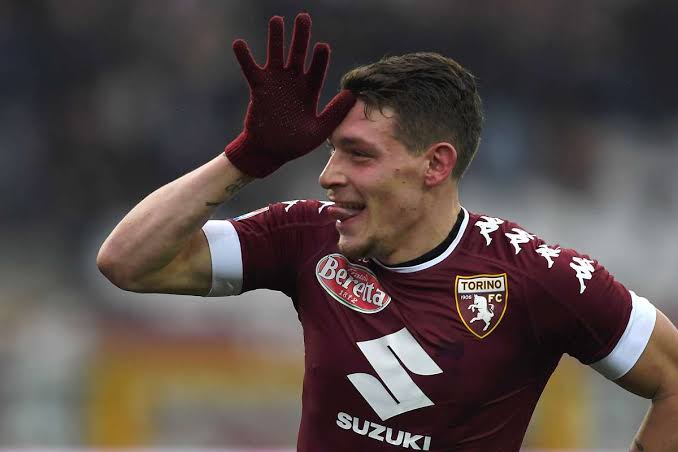
The Popular Option- Andrea Belotti

This image has an empty alt attribute; its file name is images-13.jpeg

A name still on the lips of every Milan fan since 2017 is Italian striker Andrea Belotti or Il Gallo as he is fondly remembered. Belotti had a breakthrough season in 2016/2017 where he scored 30 goals in all competitions despite being surrounded by less technical players and urged Torino president urban Cairo to extend his contract with a 100 Million release clause only applicable for foreign players.

Belotti has the ability to drop deep and link up with his teammates when they are being pressed by the opposition teams. He has the uncanny ability to get in-between the lines and finds space even in tight areas. He also has a tidy amount of key passes after dropping to link up play, something Ibra does so often.

Belotti suffered a big blow in 2017/18 season and missed games due to injury. And with Torino chopping and changing managers as well as players Belotti’s form has suffered quite a dip. He converts less number of chances when compared to his first season.

Belotti is 27 and entering the peak of his career. He would look to step up from Torino to win silverware and with Milan being his boyhood club and a big fan of Shevchenko Milan should make a lunge for him.

This image has an empty alt attribute; its file name is img_20200904_151540.jpg
Source: Transfermarkt

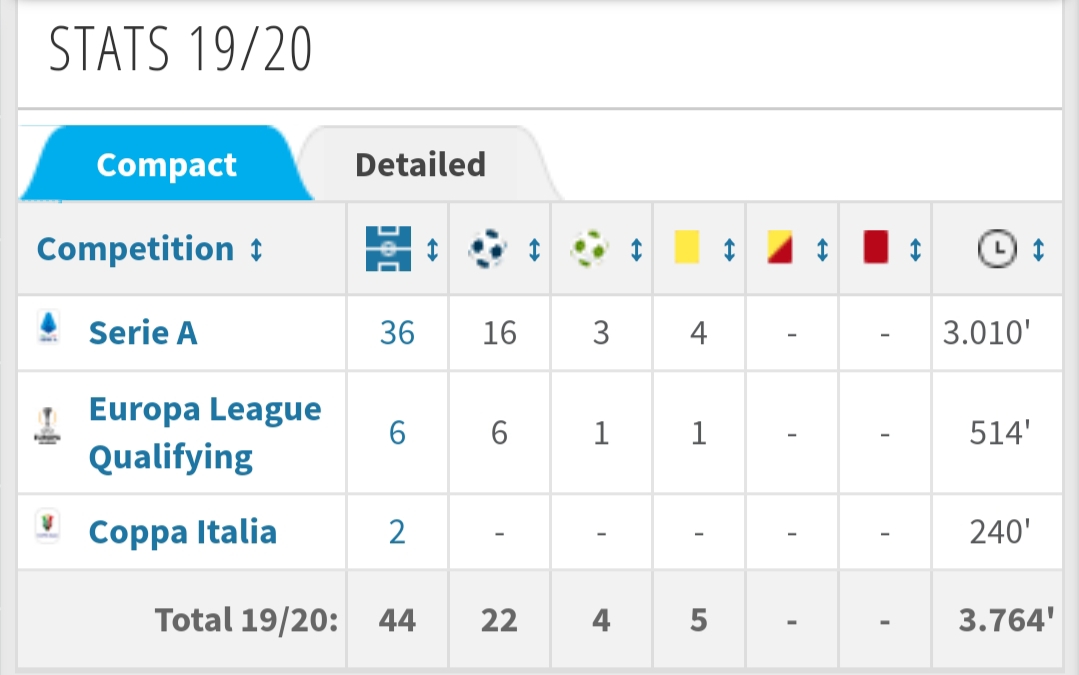
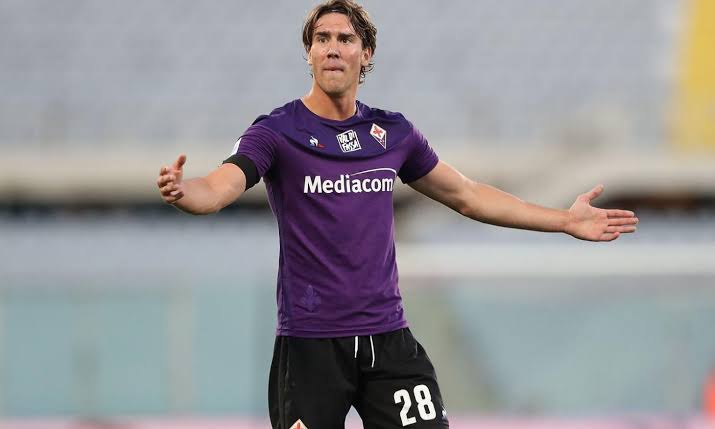
The Serie A option- Dusan Vlahovic

This image has an empty alt attribute; its file name is images-12.jpeg

A less known but constantly linked striker to Milan is Fiorentina’s Dusan Vlahovic. Signed by Fiorentina from Partizan Belgrade it is one of the most famous academies in Serbia. He broke out under Vincezo Montella and now is a steady starter under Iachini

Dusan Vlahovic played as a target man initially in the 3-5-2 with chiesa supporting him. But with Cutrone coming to Fiorentina, he was more of a supporting striker. Dusan Vlahovic is not a traditional no.9 type striker rather he moves around and with his off the ball movement creates space between the lines for wingers to run into or for Cutrone to run into. He occupies half spaces or moves wide to allow fluidity in play. This is a very strong characteristic that is shown by Zlatan Ibrahimovic. Dusan Vlahovic is also an astute dribbler and is not afraid to take on players. With his tall frame he also uses his physicality to hold up the ball

Vlahovic is only 20-years old and there are inconsistencies associated with his lack of experience showing in his game. With a huge club like Milan with high expectations, Vlahovic could be over-burdened with leading the line at Milan.

If somehow Milan could sign Vlahovic this summer and let him be an understudy to Zlatan it could help the elite mentality that Zlatan tends to transient to others.

This image has an empty alt attribute; its file name is img_20200904_151507.jpg
Source: Transfermarkt

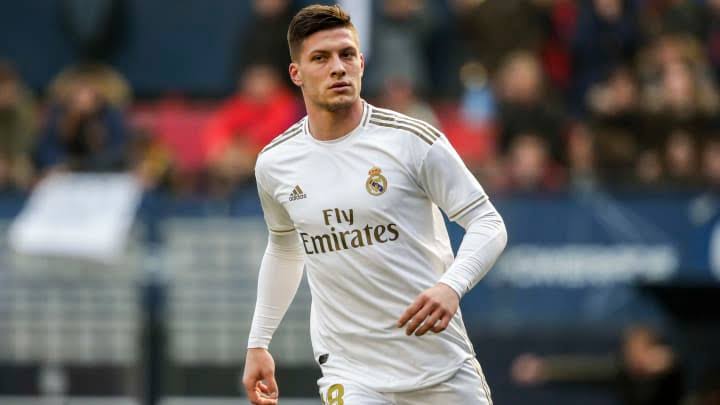
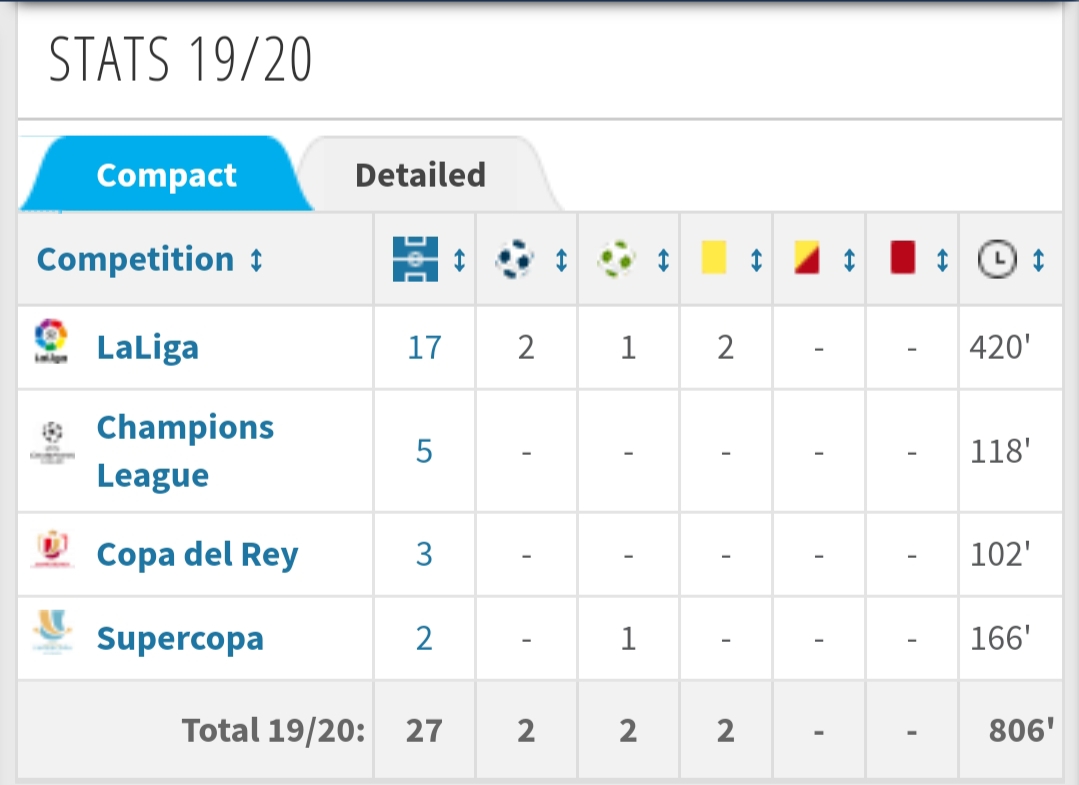
The Most rumored option- Luka Jovic

This image has an empty alt attribute; its file name is images-15.jpeg

Milan have been linked with Luka Jovic for some time since the striker fell out of favor with Zinedine Zidane.  With his agent similar to that of Ante Rebic, tabloids have been running rumors for months with Gazetta Dello reporting as recently that Milan may try for the player on dry loan

Luka Jovic is a goalscoring machine. In his last season for Frankfurt he scored 27 goals in 48 games but a bout of injuries and preference for Benzema meant he could re-create his form at Madrid. Jovic. At Frankfurt jovic would use his pace to collect vertical passes once they won the ball back or drop back into midfield to collect the ball. A very different trait of Jovic is that he always likes to ball to be played into him between the midfield and defense. Frankfurt score a lot of their goals from crosses and Jovic stays away from the press and makes late runs into the box

Jovic at Frankfurt has always operated alongside a more physical striker in the form of Seb Haller. And standing only at 181 centimetres he does not provide much of a aerial threat like Ibra  and like werner is a ball playing centre forward. It would require Pioli to tweak his tactics to accommodate him in Milan’s team

Jovic also poses a huge threat financially. He earns 5M net at Real Madrid. But his goalscoring exploits and the chance to re-unite with Rebic could see him invoke some of his goal-scoring force that made him a threat in Frankfurt

This image has an empty alt attribute; its file name is img_20200904_151523.jpg
Source: Transfermarkt

The Technical+Long Term option- Aleksander Isak

This image has an empty alt attribute; its file name is images-11.jpeg

Need a long term replacement for Ibrahimovic ?? why not sign the next Ibrahimovic which is the popular moniker given to Isak. Hailing from Sweden Alexander Isak was signed by Dortmund seeing an up-coming Zlatan. But he failed to hit his stride and was shipped out to Real Sociedad with a buy back clause. And at 20 years old, Isak has managed to slowly reach the promised heights

Isak stands at 6ft 2 inches at 20 years of age. A player that can accelerate with the ball and dribble past defenders with easy he has shown early signs that he is comfortable with the ball. Isak can also hold up the ball and draw defenders out of position with his off the ball movement. He is also a cool finisher and has had a breakthrough season

Isak is, like Vlahovic, only 20 years old and needs playing time to grow. He however has the facets to be a top striker in the years to come. He, however would come at a cost and Milan have other avenues to invest. Maybe if Milan qualify for the Champions league they could consider signing him

This image has an empty alt attribute; its file name is img_20200904_151558.jpg
Source: Transfermarkt

THE EXPERIENCED OPTION- EDINSON CAVANI

This image has an empty alt attribute; its file name is images-14.jpeg

Edinson Cavani requires no introduction to football fans. One of the most prolific strikers of the last decade he broke into top echelons of football with Napoli earning him a move to PSG. After 6 years Cavani is looking for a new challenge and having played with the great man himself knows all about Zlatan.

If there is anything Zlatan prices and tries to transient to others it is workrate. He also has excellent aerial ability along with excellent athleticism and covers a lot of distance. A proven goalscorer Cavani also knows Serie A inside out and would help continue the high performance rate that Zlatan could leave Milan

Drawback of Cavani is his his huge salary request. If anything a transfer broke down after his requests were considered excessive. Cavani is 33 years old and once again only be a short-term answer to Milan’s striker requirements. There are also questions raised about Cavani’s fitness as he featured very little games for PSG last season

Cavani’s pedigree is not to be questioned. He would bring a winning mentality but the cost could deter Milan

This image has an empty alt attribute; its file name is img_20200904_151449.jpg
Source: Transfermarkt

CONCLUSION

So we have listed 5 strikers who could replace Ibrahimovic. Who do you think would be the best fit for the role ? Do you think there is someone outside of our recommendations? Let us know in the comments section.

SWOT analysis

INTRODUCTION

As a start to the 2020/21 season Milan take on Bologna, a team they defeated 5-1 in July but in football nothing can be taken for granted. Despite going unbeaten post lockdown and having a 10-0-2 record Milan finished 6th and 12 points off the minimum target of UEFA Champions league qualification the club had set at the start of the 2019/20 season. A bad start under the Giampaolo regime and an unkind fixture list to Pioli meant Milan had a very poor start to the campaign. This means Milan have a flying start to the campaign to ensure Milan reach the heights it targets.

A S.W.O.T analysis is a tool used by multinational corporations as a strategic planning technique to identify strength weakness, Opportunities and Threats. In this article we take a season preview through a S.W.O.T analysis to objectively assess where Milan lie and where it can improve.

STRENGTHS

  • The experience of Ibrahimovic: Milan’s trump card for this season will be none other than Ibrahimovic. Performing at a high-level despite his age Ibrahimovic has been able to infuse his mentality onto his younger colleagues and has raised the bar
  • The rise of Hakan and Rebic: Both player had a mini-renaissance post the turn of 2020 and has been instrumental. Their form has complemented Ibrahimovic’s rise and has been part of annihilating opponents post lockdown
  • The Press: Milan’s shift to high aggressive press has been a revolution in Serie A. Kessie and Bennacer have been the main contributors to the press as milan look to win the ball back and counter instantly

WEAKNESS

  • Milan’s main weakness in attack is on the right side. Samu Castillejo and Saelemaekers contributed only 4 goals and 7 assists last season which is less than the numbers other productive right wingers have been able to make hence Milan seem to actively pursue Chiesa
  • In defense, there seems to be quite a few gaps between the 2nd line and last line of defense. Any team with good technical players and fast wingers can exploit these spaces and put in quick crosses. A player like Bakayoko could help neutralize this weakness
  • Milan lack depth in Centre-Back. Duarte has shown he is not up to the standards of European football while Gabbia seemed shaky against Shamrock. The pursuit of Milenkovic/Ajer is a real priority for Milan

OPPURTUNITIES

  • The 2 big title contenders have not pulled off any big moves as anticipated in the market before with Juventus even going through a mini-transition appointing Pirlo as their coach while Inter lost 2 transfers targets they had agreed personal terms. If Milan recruit sensibly and ease the signings Milan could upset the duopoly
  • Lazio and Roma too have not made the big moves in the market due to financial constraints affected by the covid-19. Lazio brought in Muriqi and Fares while Roma brought in Kumbulla and Pedro while being in talks for Milik.
  • Milan’s EL run would depend on the teams that they are drawn with in the competition. If teams with less technical ability drop from the UCL to EL knockouts then Milan can make a deep run

THREATS

  • The biggest threat for Milan is injuries. Milan have so far not made a signing upfront to be a backup to Zlatan and seem to have placed faith in Colombo and Leao. A lengthy layoff for Ibrahimovic could de-rail Milan’s season
  • Milan’s EL run will be threatened if they draw difficult opponents

Tactical Review of Shamrock Rovers vs Milan

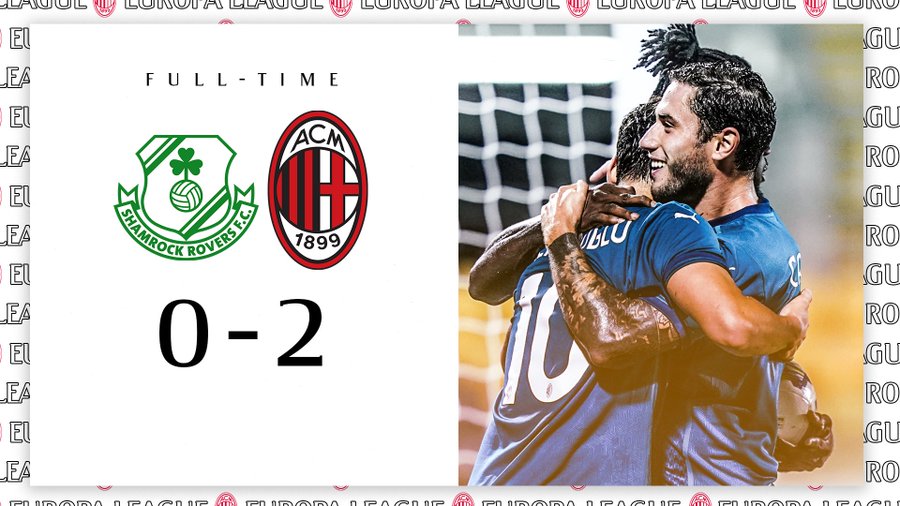
A.C.Milan played the first game of their 2020/21 season away against shamrock rovers in the 2nd round qualifiers of Europa League. Goals from Ibrahimovic and Hakan Calhanoglu gave Milan a comfortable 2-0 win. Here are a few tactical notes from the game

Formation

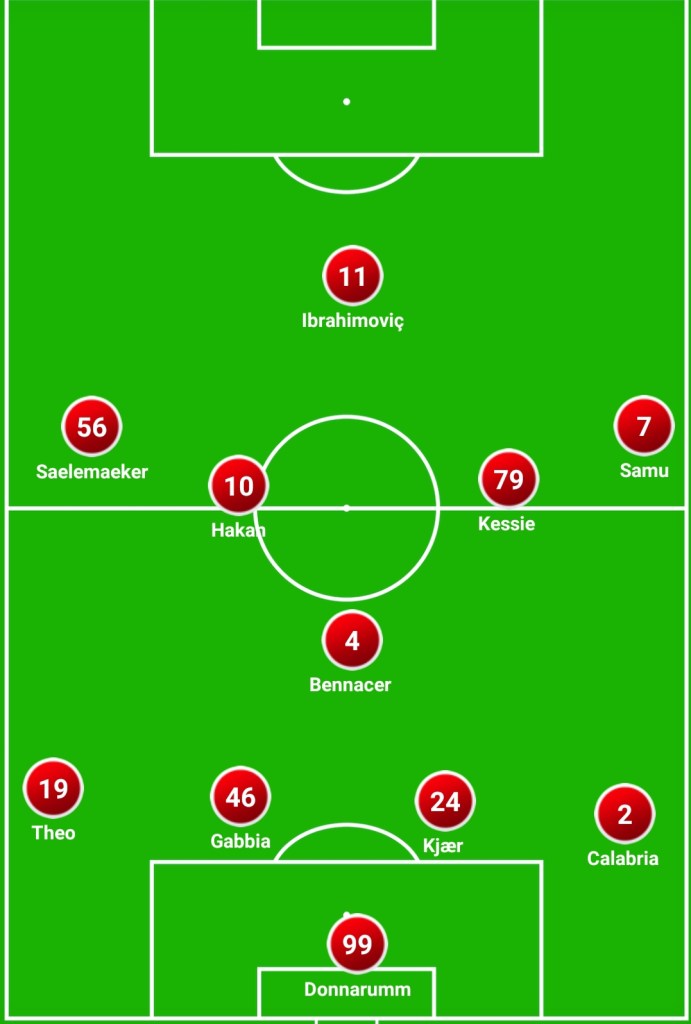
Milan usually set out in a 4-2-3-1 formation but against Shamrock it seemed a bit tweaked varying from a 4-3-3 to a 4-1-4-1. There were quite a bit of rumors in the Italian media that Pioli is looking to move towards a 4-3-3 with the arrival of Sandro Tonali. It is always clear that for Italian teams a tactical tweak is required when playing in Europe compared to Italy because of the tendency to sit back and defend in Italy higher as compared to Europe

The Double Pivot

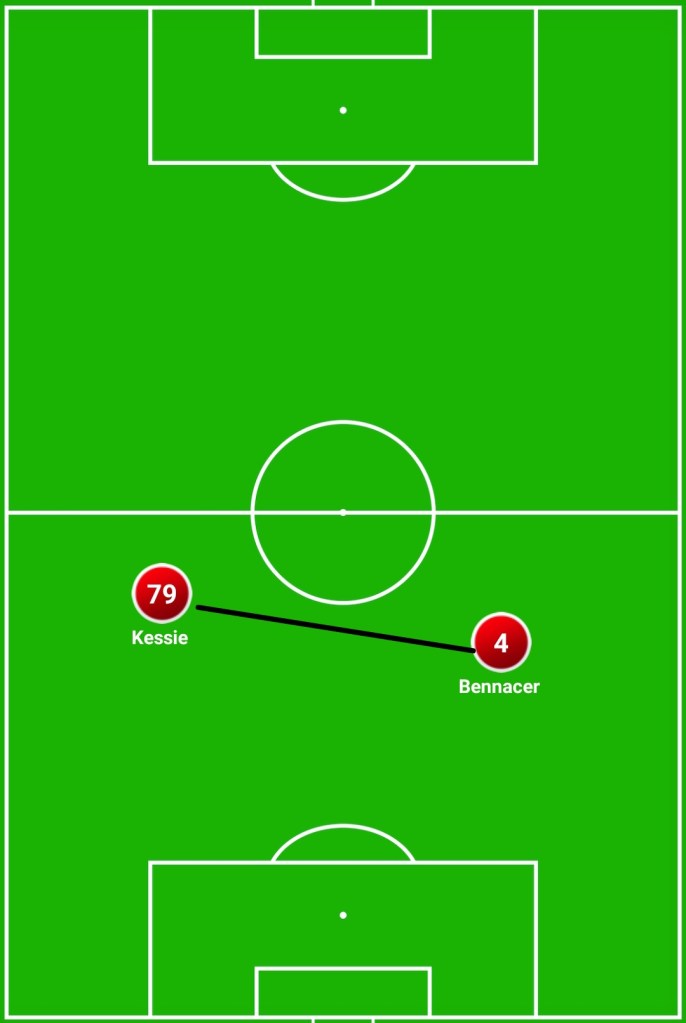
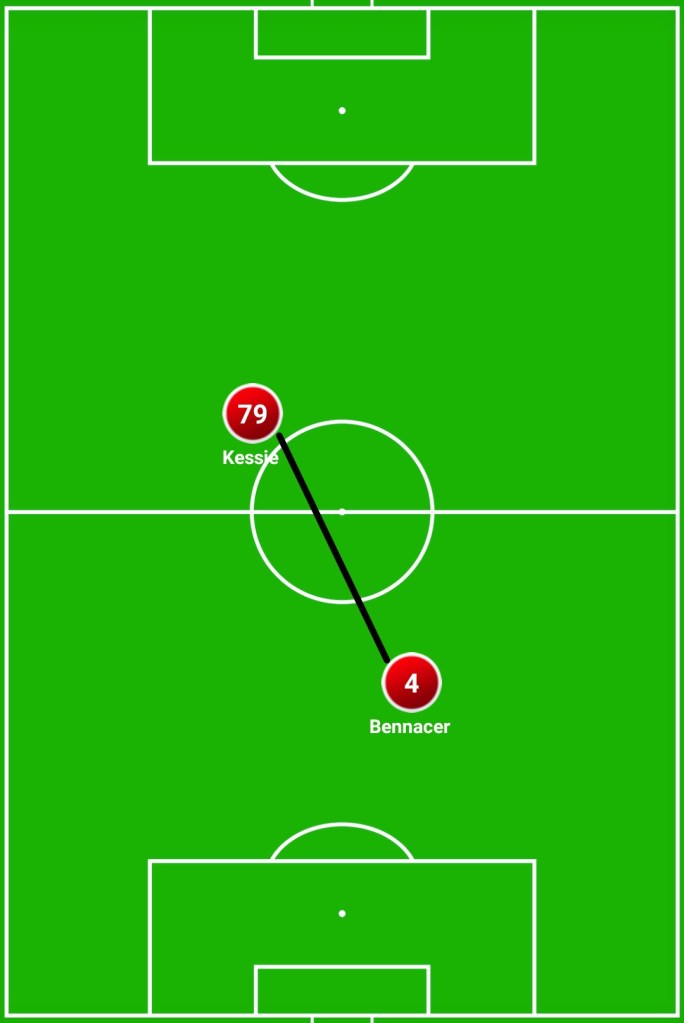
Post lockdown Bennacer and Kessie where very instrumental to Milan’s upturn in form.  It was quite natural to see them playing very horizontally close to each especially in Milan’s half not keeping more 10-15 yards of space between in them.

How the double pivot worked in normal games
How the double pivot worked y’day

However as aforementioned a formation change was present and one could see how Bennacer and Kessie were necessarily very vertical to each other. Given how Shamrock’s gameplan revolved around defending in a deep block and attacking on the counter with powerful and pacy striker Greene the vertical positioning meant the passes between the double pivot were intercepted less and milan was less exposed on the counter.

Bennacer a DLP, Kessie a B2B and Hakan a Mezzala

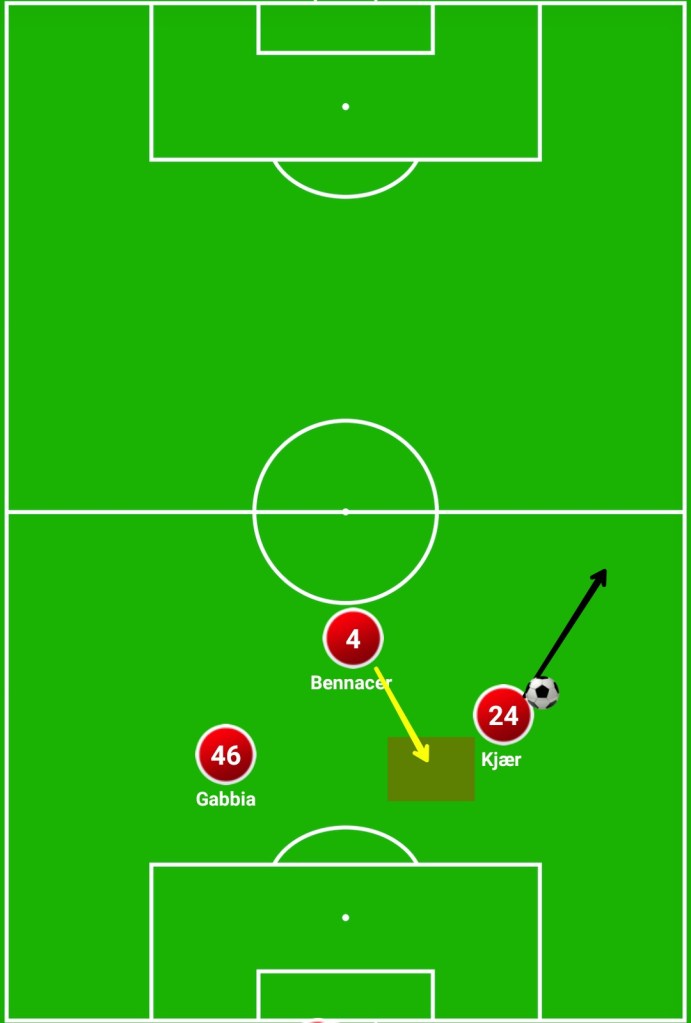
As mentioned above you had Bennacer play a deeper role while Kessie pushed up. A lot of the times you could see bennacer drop off from the midfield 2 and form a passing triangle with the 2 centre backs and bring the ball out of the defense acting as a Deep-Lying Playmaker (Regista). He was also working as a shield to the back 4 whenever Milan lost the ball and were countered. To add to the tactical setup, Bennacer sat back as a make-shift Centre back allowing Kjaer to overlap and make runs forward which suggests a few tactical tweaks

Bennacer forming a passing traingle with the CB’s
Bennacer dropping deep to play as a makeshift CB while Kjær goes forward with the ball

Kessie was the more physical presence in midfield and triggered the press whenever Milan didn’t have the ball. He was used to winning the ball back and playing quick vertical passes to the forwards

Hakan as usual started from a deeper role on the left of midfield choosing to play with Saelemaekers and theo and then join the attack as a fallback option for the forwards to pass which is very characteristic for a mezzala.

Pressing and Milan’s 1st Goal

A very important aspect of Pioli’s gameplan was the aggressive and often triangle style pressing that Milan employed. Until the first 30 minutes Milan were not pressing as aggressive as it used to against Serie A teams due to lack of competitive gametime and .

Notice how agressive Milan’s press is with shadow play. 3 players cutting off the ball carriers’ passing option

Once Milan started pressing (Kessie the initiator) Milan scored the first goal. Kessie pressing Greene and the ball went to Hakan who made an intelligent assist to Ibrahimovic .

Passing Combo’s and the Second Goal

In any pressing system as explained by Jesse Marsch, quick passing combinations are very important to advance the ball forward.

Milan were forming very neat triangles all over the pitch with their quick vertical passes and catching opposition players out of position and advancing the ball forward. A neat passing combination put Hakan Calhanoglu in  space to unleash his shot and he scored the second goal

Measured use of Theo Hernandez

To maintain defensive shape and put numbers in attack, Milan had Theo Hernandez sit back whenever Davide Calabria went forward to join the attack. Pioli preferably choses to unleash Theo more towards the 60th minute mark and afterwards when defenders are tired and cannot handle the raw pace and physicality that Theo uses

Conclusion

It is great to see Milan bring tactical tweaks to handle teams of different stature’s while keeping the essence of it all as the same. Milan were deservedly 2-0 winners and the late introduction of Diaz and Tonali who could be seen handling the ball even under pressure make it a great sight to watch and exciting future to behold.

Ciprian Tatarusanu

Ever since Pepe Reina left Milan, the club has been in search of a deputy to Donnarumma. The most popular choice was Asmir Begovic who was on loan to Milan for the second half of last season but his wage demands (2m/season net) meant the whole exercise of releasing Reina would be futile. Milan were therefore in search of a new keeper. A lot of names such as Sportiello and Consigli but in the end Milan settled for ex-Fiorentina and Lyon keeper Ciprian Tatarusanu.

Tatarusanu made his first division debut in Romanian football for Gloria Bistrita in a 1-0 win. In 2008 he joined Steau Bucharest and played there until 2014. It was Steau Bucharest that he made his Europa League debut and his Romanian First tier debut. He played a total of 133 games for the club before joining Fiorentina on a free transfer

Fiorentina signed Tatarusanu as a backup goalkeeper to Neto. He made his Serie A debut in a 1-0 loss to Parma and made his debut for Fiorentina in the Europa League including the 1-1 draw against Tottenham. However once Montella left and Paulo Souza came, Neto (who was the main goalkeeper) was sold to Juventus. This meant Tatarusanu was thr starter for the club.

After 2 seasons at the club Tatarusanu was sold to Nantes where he was the starting keeper for the 2017/18 season and appeared 37 times for Nantes in Ligue 1.

In 2019 Lyon signed Tatarusanu as a backup goalkeeper where he appeared only for 6 games.

STATS

Tatarasuanu had his best few years at Fiorentina. Once he was re-instated at the starting goalkeeper Fiorentina saw their best years in last decade under him. Tatarusanu kept a total of 15 clean sheets in 37 games. This meant that he was tied 2nd for the most amount of clean sheets with a clean sheet to match percentage of 40.5%.

He followed it up with 12 clean sheets next season only behind Sczcseney and Buffon in the topper’s charts keeping clean sheets in 34.3% of the matches he played.

PLAYING STYLE

Tatarusanu’s main advantage is his height. Standing tall at 1.98 metres (6ft 6 inches) Tatarusanu’s huge frame makes it easier for him to reach when strikers shoot at him. He also makes himself large when strikers come at him for 1v1 which reduces the gap for strikers to shoot at goal. His positioning and reaction time are astute and this makes him a very good shot-stopper

However despite his height the keeper can be seen making mistakes during set pieces. His judgment is a little lacking when corners or free kicks are floated into the box.

Conclusion

As a backup keeper Tatarusanu will be an apt backup to Donnarumma. With Milan potentially playing 50 games this season a backup keeper to rotate could help donnarumma from fatigue.

Transfer rating 6.5/10

Sandro Tonali Insight: Scouting report, player comparison, transfer rating and more

INTRODUCTION

A transfer that was on the wish list of every Milan fan was Sandro Tonali. A self-proclaimed life-long fan of Milan, his style of play and similar looks to that of Pirlo made Tonali on the top of that wish list. A move to Inter Milan seemed all but sealed but Inter’s reluctance and Conte’s requirement for more experience in the middle made Milan act quickly and within 72 hours Milan closed the deal to bring Tonali home for a formula of 10M loan+ 15M loan+ 10M bonuses with 15% future sell on fee.

BACKSTORY

Tonali made his senior debut for Brescia at the age of 17 coming on as a substitute in a Serie B match on 26 August 2017. He finished that season with 2 goals and 2 assists making 19 league appearances.

In the 2018-2019 season Tonali was part of the Brescia team that won Serie B and gained direct promotion to Serie A. He made his Serie A debut against Cagilari in the 2019/20 season and played a total of 35 matches this season.

Tonali has never hidden his support for A.C.Milan and has always been vocal of his support for legend Gattuso. A letter written by Tonali  surfaced in social media where Tonali asks for an A.C.Milan jersey and is already quite popular among the fans

The letter as a child to Santa

Brescia president Cellino said “We have received offer in January from Barcelona for Tonali. Manchester United made a bid for him before Milan, but once Milan came forward the player went crazy and asked to join Milan because it’s the team he supported since he was a child.”

PLAYING STYLE

Tonali for Corini’s Brescia played as a regista in a 4-3-1-2 which could be a 4-1-2-1-2 at times. He would sit in front of the defense and dictate play with quick balls forward to start attacks. However Mancini used him as a mezzala since they already have a regista in the form of Jorginho in the Azzuri setup. Tonali has the skillset to play both roles to perfection. He carries out Corini’s game plan while putting his own imprint into the game.

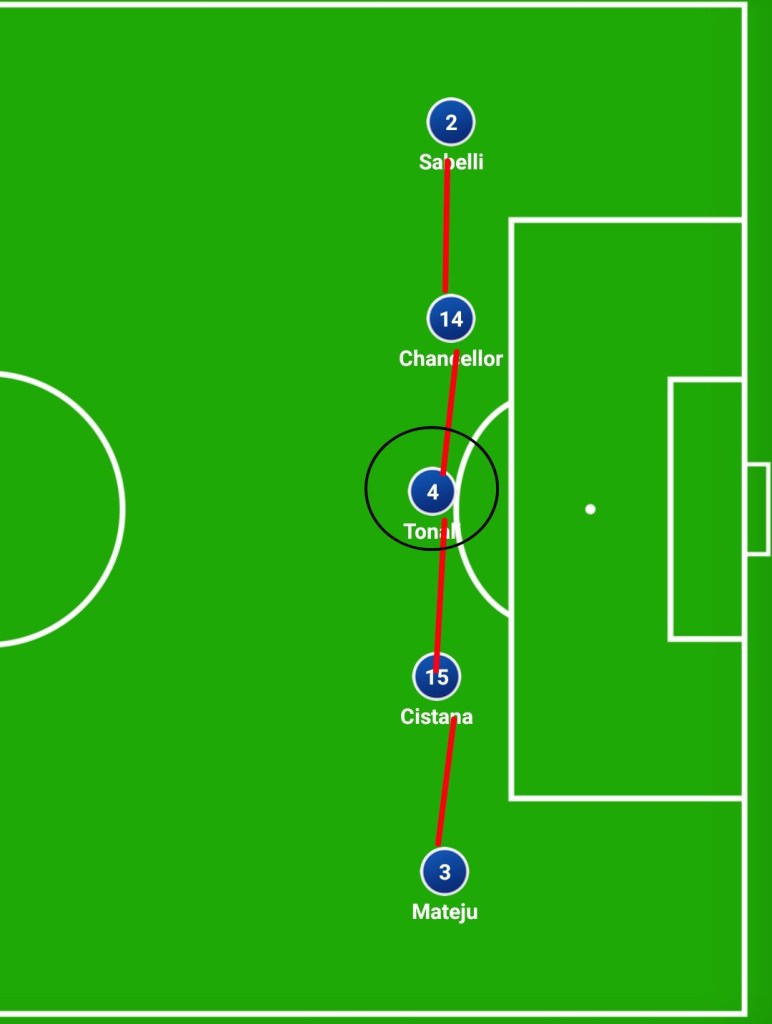
Tonali’s main role in the team is to be initiator of build-up’s for the team. He acts as a single point of reference by positioning himself between the first 2 lines of reference and forms an asymmetrical triangle while receiving passes. Now while defenders pass out from the back full backs push up for Brescia acting as passing options for Tonali. Usually when he receives the ball from one of the defenders he uses his dribbling skills to power through the lines of defense or use his passing skills to put forward through balls.

Note how Tonali positions himself between the 2 lines of press to form a triangle between him and the 2 Centre backs while the full backs push up as passing options

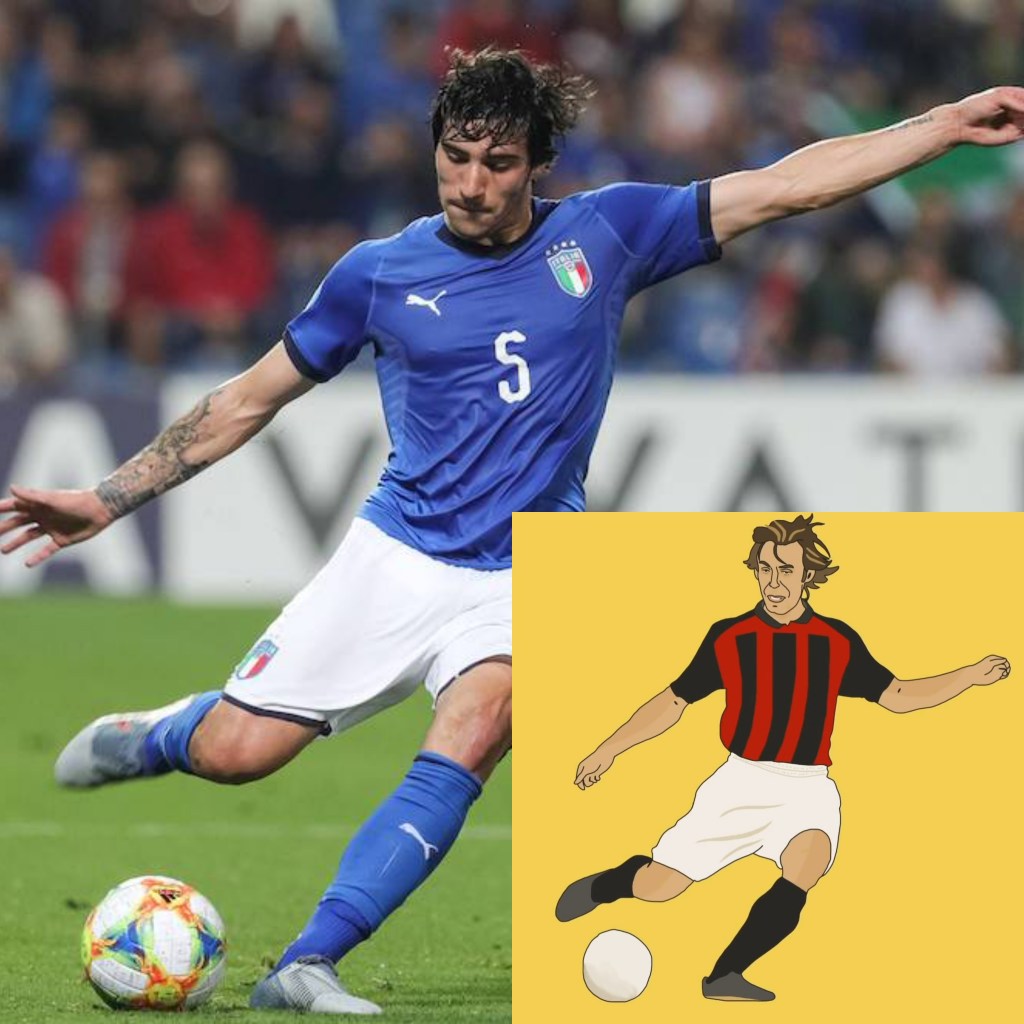
A distinguishing aspect of Pirlo’s passing was his unique body orientation that helped him angle in passes between defenders. Tonali has imbibed some of this technique in his stride which has gained him comparisons to Pirlo and a lot of praise from the Maestro himself.

Notice the unique body orientation of Pirlo and Tonali. It helps to angle in passes despite difficult positioning.

Now with Brescia not being a technically gifted side Corini had him play in front of his defense as a shield. When the attack progressed into Brescia’s final third Tonali would position himself between Brescia’s 2 CB’s creating an erasatz 5 at the back.

Tonali forming a 5 at the back

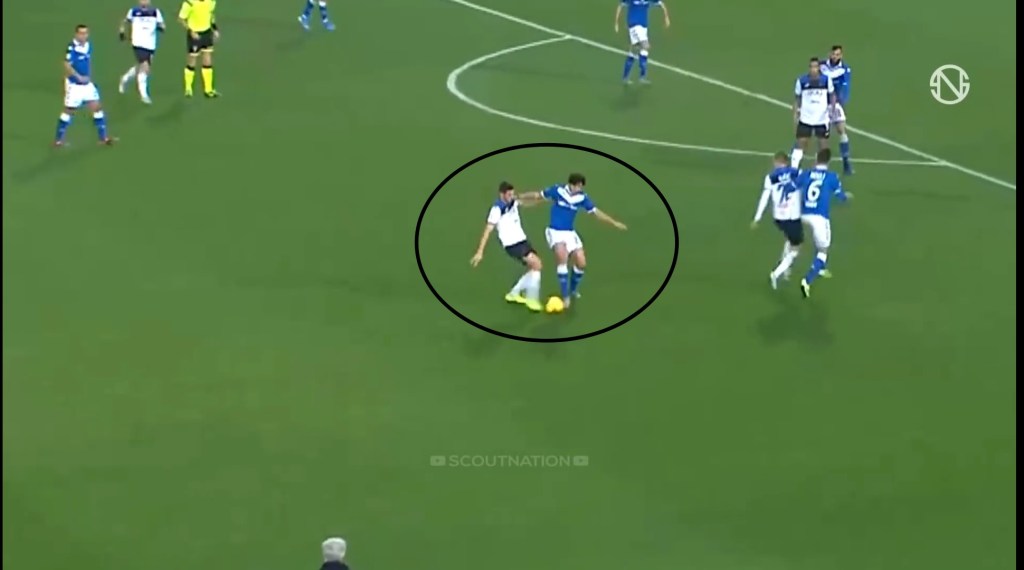
Sandrino’s main defensive abilities lies in his unique ability to read the game as he is able to read the opponents mind. This gives him quite a number of opportunities to intercept passes and put his foot into tackles. Tonali does not dive into tackles but he does have a knacker habit of giving fouls away in dangerous zones of the pitch. His pro-active sense of defending has drawn comparisons to Milan legend Gennaro Gattuso who was a wrecking ball on the pitch.
Tonali anticipates the movement of his opponent and makes a tackle
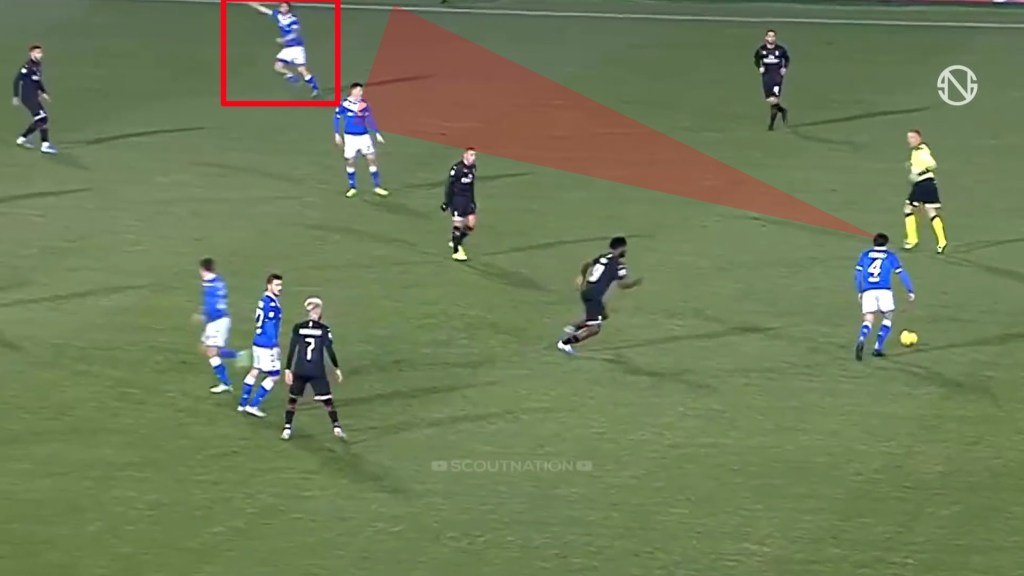
He also knows how to read play well. Here Tonali (circled in red) reads a pass. And intercepts it and continues his run and provides an assist.
Once Brescia win the ball back, he would position himself in a pocket of space closest to ball carrier. Being the crux of Brescia’s build up Tonali tries to keep the distance between him and his teammate in possession to very small lengths so as to not turnover posession.

Tonali keeping the distance between him and his ball playing teammate short so as to be a simple passing option.

Once the ball is on his feet, he scans the pitch for his teammates to try and gauge who are not being marked and who could spark off a goal-scoring chance. A very important aspect of this is his proximity to his teammates.

Tonali must be aware of his teammates pro’s and con’s before he could come up with the appropriate passing choice. Tonali who was a wide range of passing in his armory does not shy away from going long. Tonali also can float in balls inside the box from wide areas but wastefulness has been a big problem of Brescia’s relegation season. Tonali however being the regista can mostly be seen occupying central areas of the pitch or occupying half spaces between the lines of defense of the opposition. Another weapon in his arsenal is his unusual acceleration. He can be seen participating in Brescia’s counter-attacks with their forward players. He can also be seen holding players off by shielding them and has a fair amount of physicality to show he has some brawn and not all brains.

Tonali scans the full length of the pitch and and sees Torregrossa unmarked and calling for the ball and makes an angled ball.

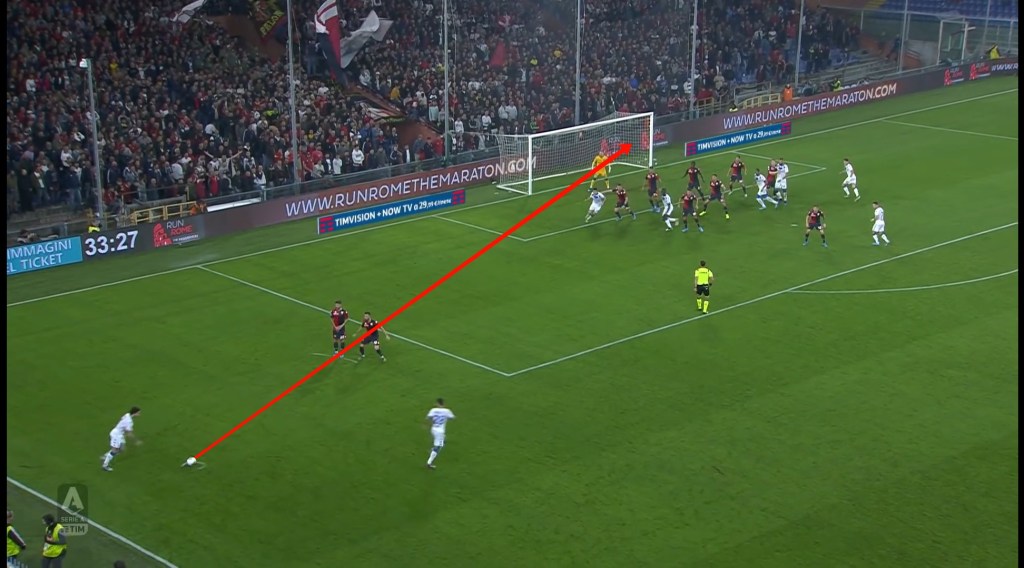
Tonali also is the designated set piece taker of the team. His only goal in Serie A came from a curving free-kick from an acute angle. He is also the designated corner taker but somehow Bresica have spurned goal scoring opportunities.

His only Goal this season came off a curved free-kick against Genoa

STATISTICAL COMPARISON

A player with similar nature of Tonali at Milan is Bennacer. Signed from relegated Empoli, Bennacer has been Milan’s dynamo in the middle and hence we decided to compare Tonali and Bennacer

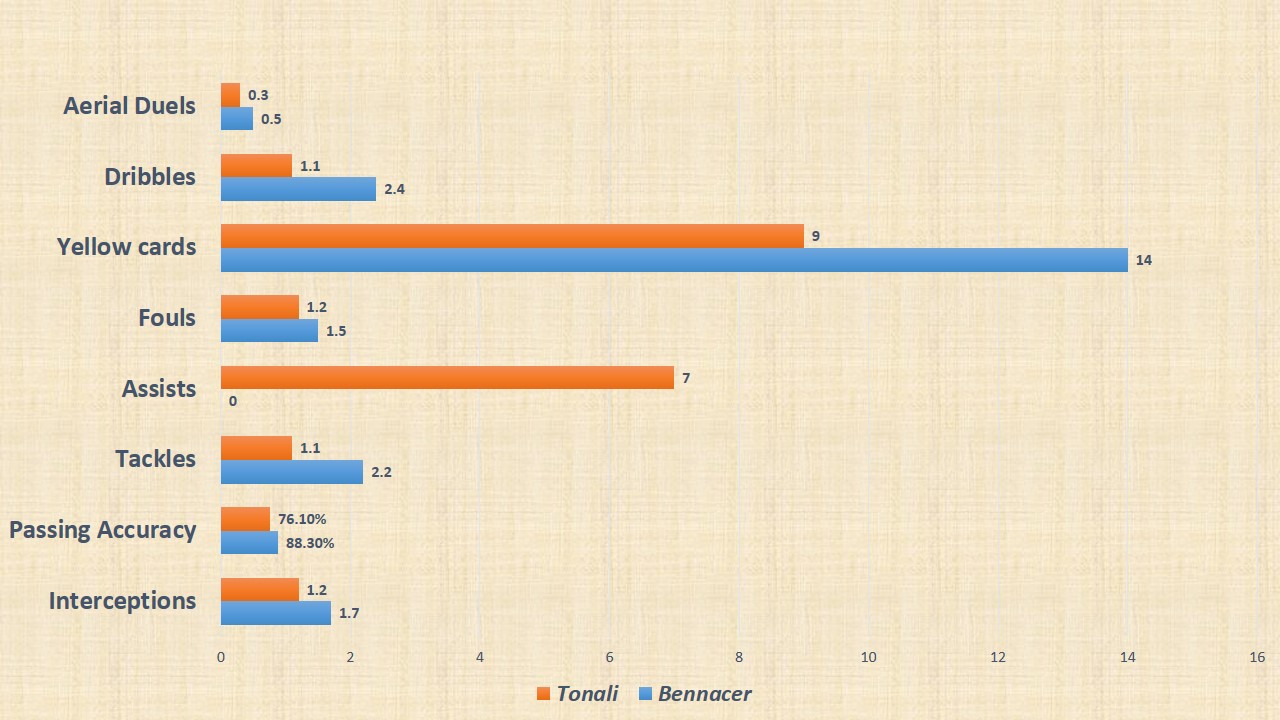
Bennacer has played a total of 31 matches while Tonali played 35 matches. In terms of interceptions Bennacer has the upper hand over Tonali with Bennacer having 1.7 interceptions per game while Tonali only managing 1.2 interceptions.

Bennacer has a higher passing accuracy with 88.3% with Tonali only managing 76.1%. This could be down to Tonali managing far more riskier passes as he plays as the single pivot in the midfield and is tasked with buildup while bennacer has more technically competent players around him.

Bennacer attempted 3.6 tackles on an average every game winning 2.2 every game while Tonali has won 1.1 out of 2.2 tackles. Perhaps this could point to the reason as to why Bennacer has 14 yellow cards while Tonali has only 4

In terms of assists and productivity Bennacer has 0 assists while Tonali stands out with 7 mostly due to his added feature of taking setpieces

Considering all factors Bennacer seems to be edging Tonali to the starting spot but rest assured the youngster will give Bennacer a run for his money.

DEAL OR NO DEAL

Midfield depth has been something Milan fans have missed since the start of ‘banter’ era. From having a midfield of Poli, De Jong. Montolivo, Muntari, Milan are looking increasingly going towards Kessie, Bennacer, Tonali and perhaps Bakayoko.

It is a serious show of ambition by the management and ownership when making such marquee signins were Milan’s piece de resistance. Tonali, a lifelong Milan fan is only 20 years old. With  Donnarumma, Alessio Romagnoli, Tonali they looks like forming the heart of Italy’s dreams. Along with Bennacer, Theo Hernandez and Rafael Leao, his signing ensures Milan have a bright future.  

His skillset would ensure the creativity burden would not just rest on the shoulders of Castillejo, Hakan and Rebic and Milan have someone to break the line from midfield. Also a set-piece specialist would ensure Milan score more goals, something that has plagued them before the corona induced break

What makes it sweeter from Milan fans is that the transfer was snatched from crosstown rivals Inter Milan. A “ 6 pointer” transfer. Cellino’s words of his undying love for the club and his grinta has already given him a cult status among the fans

TRANSFER RATING: 8.5/10