A thrilling semi-final encounter battle was ensured between Barcelona and Inter, with both teams going punch for punch. A clash of styles was on the cards as both teams were fighting for gold. Here is a small analysis of the game.
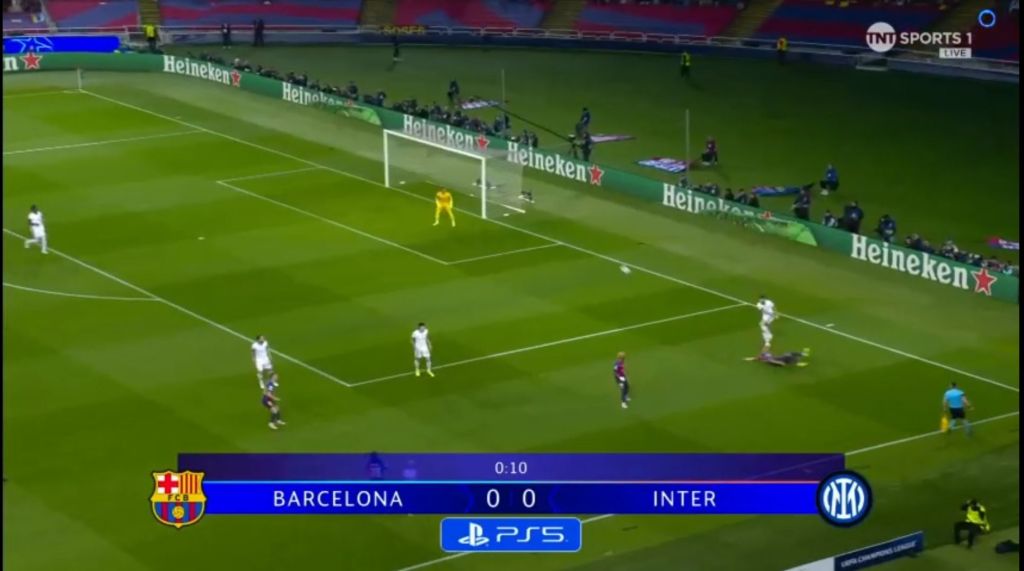
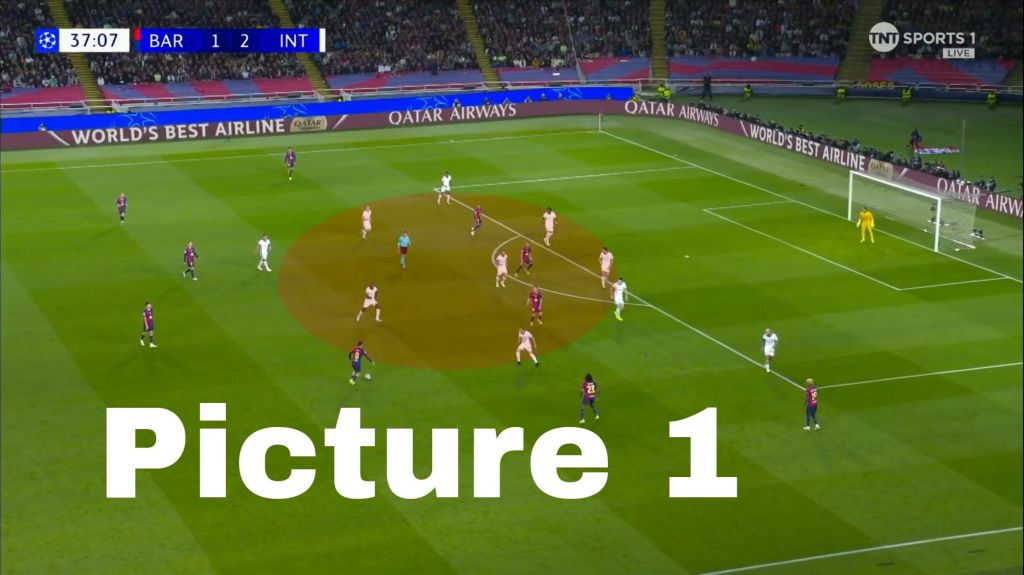
Inzaghi loves to bait the opposition into pressing. It didn’t take even 1 minute for Inter to do it as Inter baited Flicks team to try and pin them down to their left flank but a long ball to Martinez and a switch to Dumfries who made marauding down the Right flank paired with a clever finish meant Inter was leading 1-0 even before 1 minute on the clock.
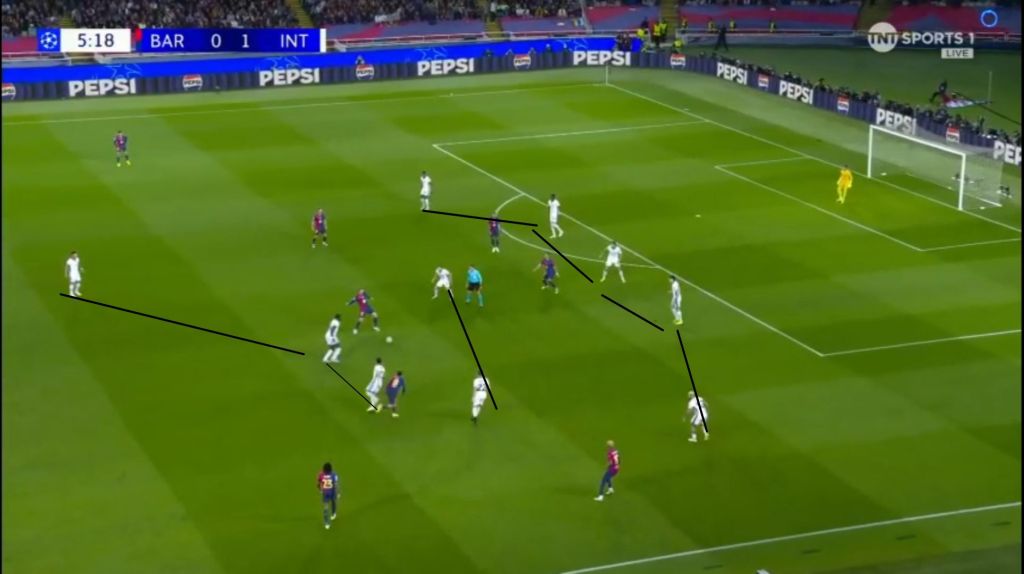
How Inter suck Barcelona into the press and then play out from the back
Inter conveniently settled into a 5-3-2 structure ceding possession and forcing Barcelona to break them down while using Wingbacks as a counter-attacking strategy
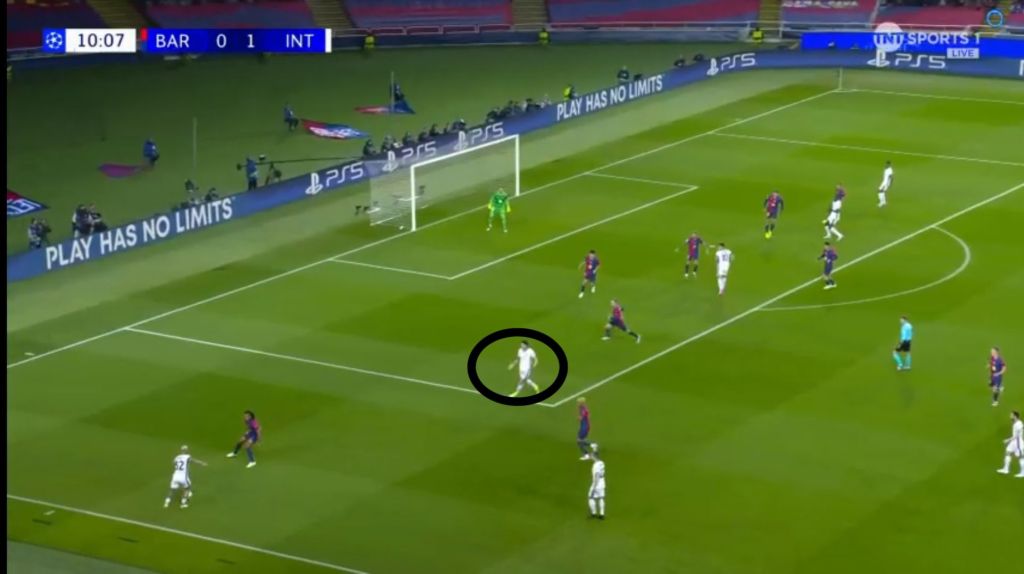
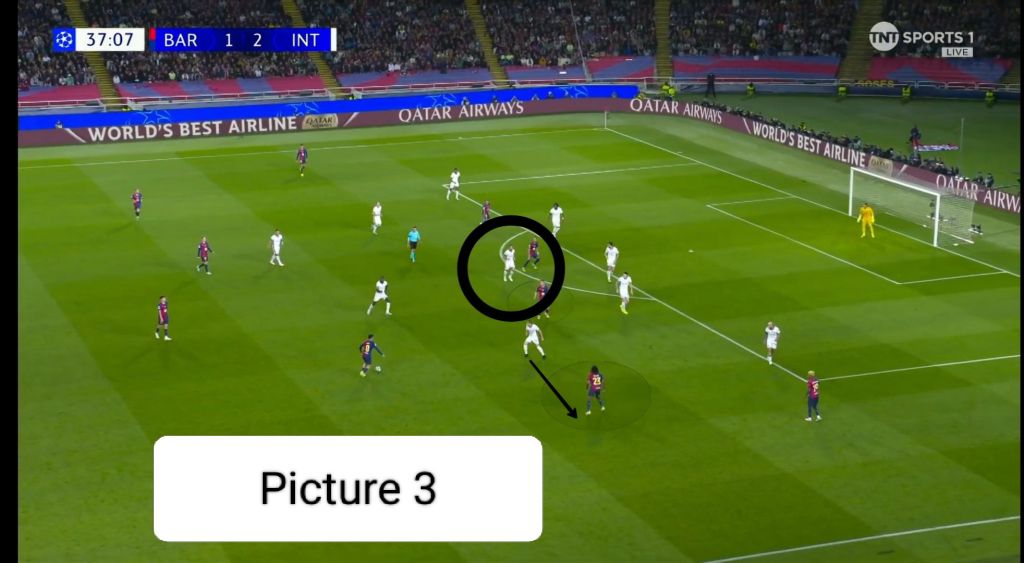
Inter, when they attacked, allowed Bastoni to underlap Wingback. Di Marco exploits the half-spaces created by the full-back vacating the space to mark Di Marco
Bastoni making an under-lapping run
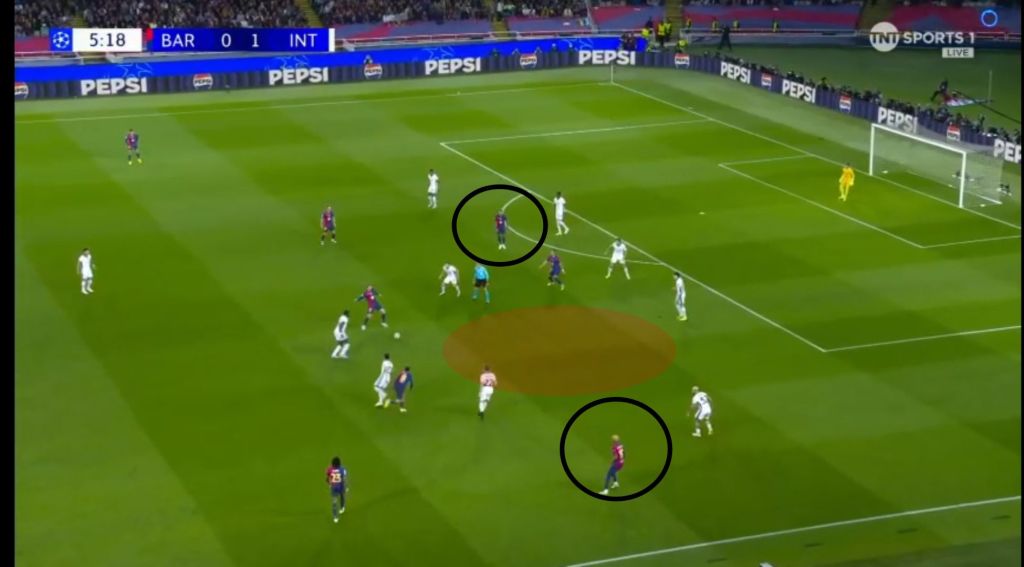
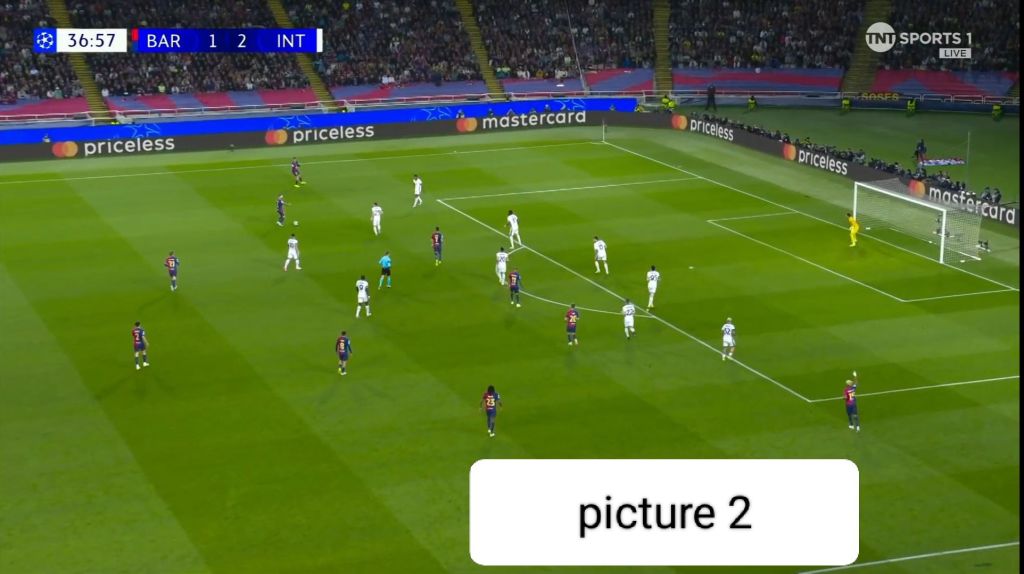
Barcelona, meanwhile, were trying to create space inside Inside Inter’s block with manoeuvres and switches of play. In this play, Rafinha moves up from the left flank to the Right half-spaces, and this draws an Inter defender while Yamal stays wide Right, creating space for Pedri to make a 3rd man run.
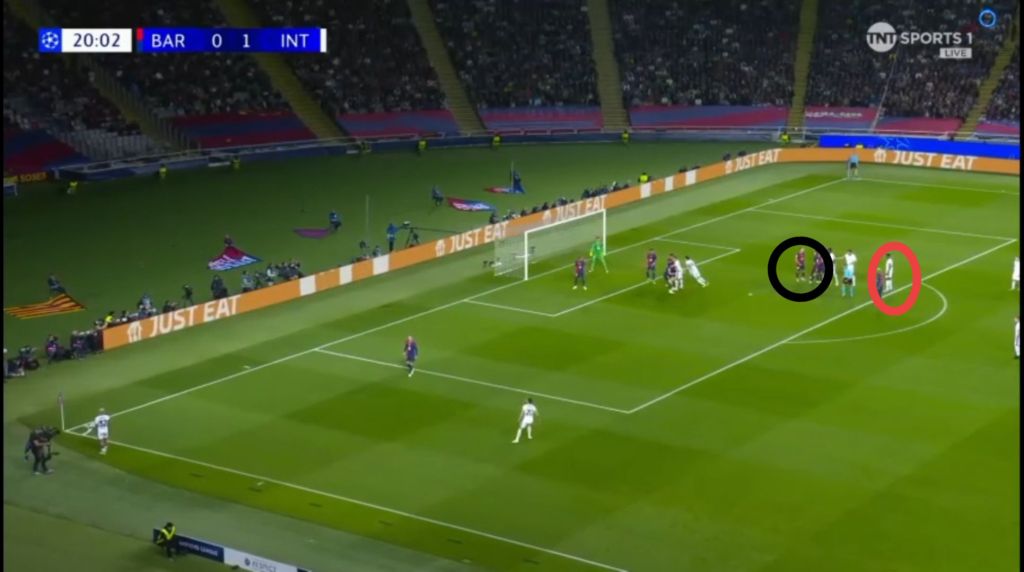
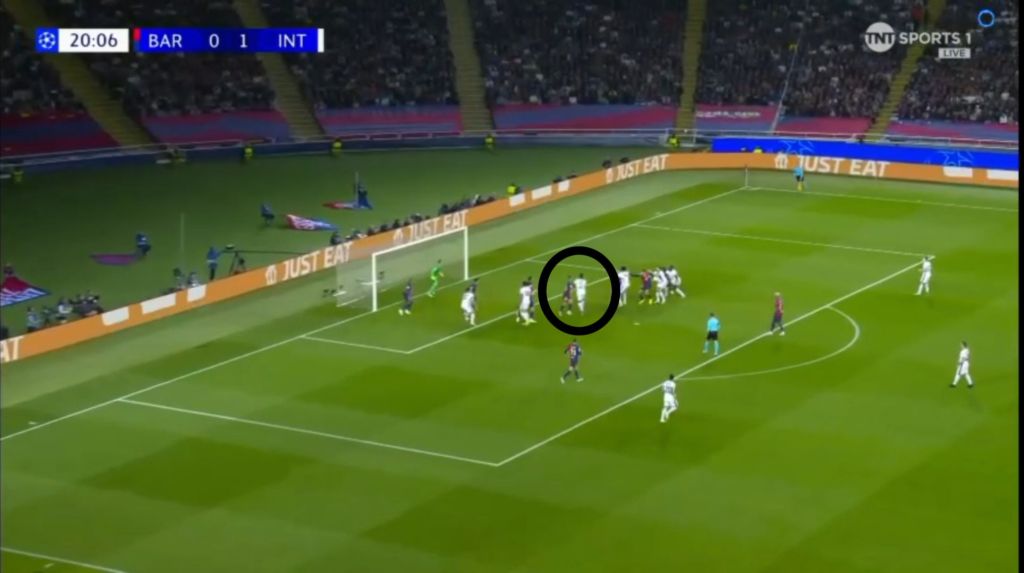
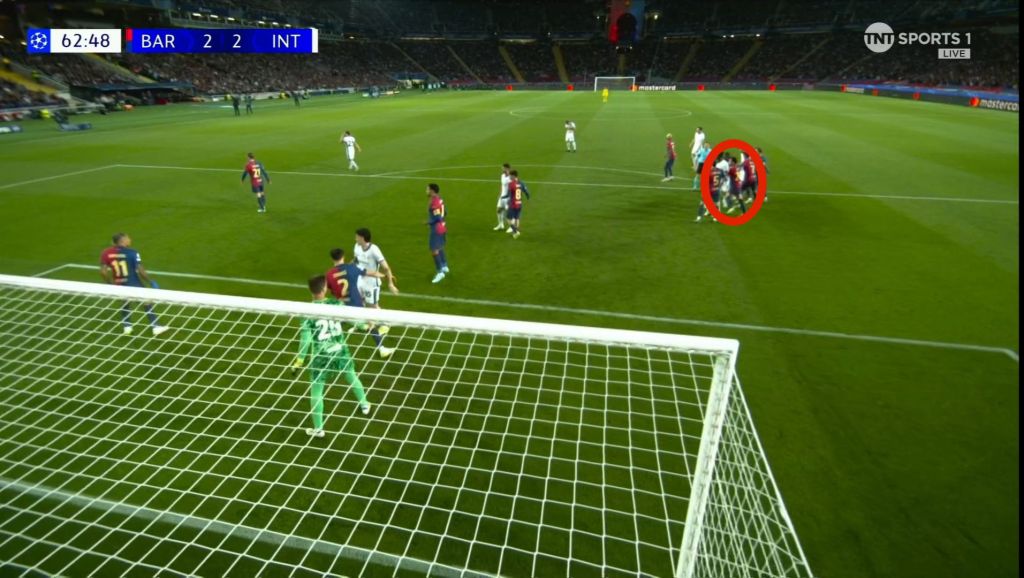
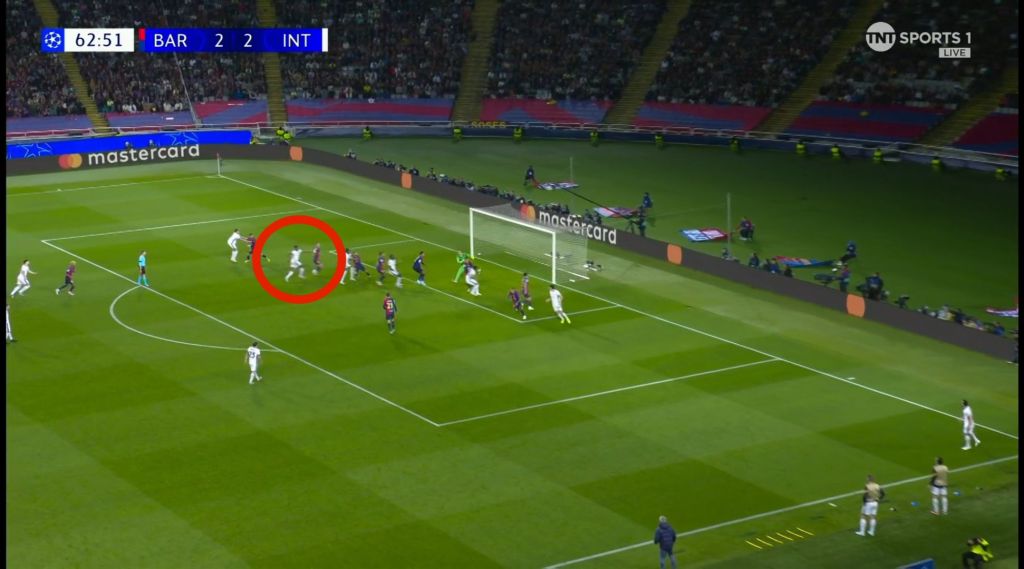
Inter, however, struck again from set-piece thanks to Dumfries. Barcelona used a hybrid marking set-up where some players were given man-marking assignments. One near the near post was zonal marking. Olmo was used as a zonal marker while Dumfries was stationed as a phase 2 player. Once the corner was in motion, the ball, which was played into the far post, was headed into the space between the zonal markers Barcelona players and the man markers. Dumfries, with an acrobatic finish, was unmarked, and Olmo failed to mark him and prevent the shot.
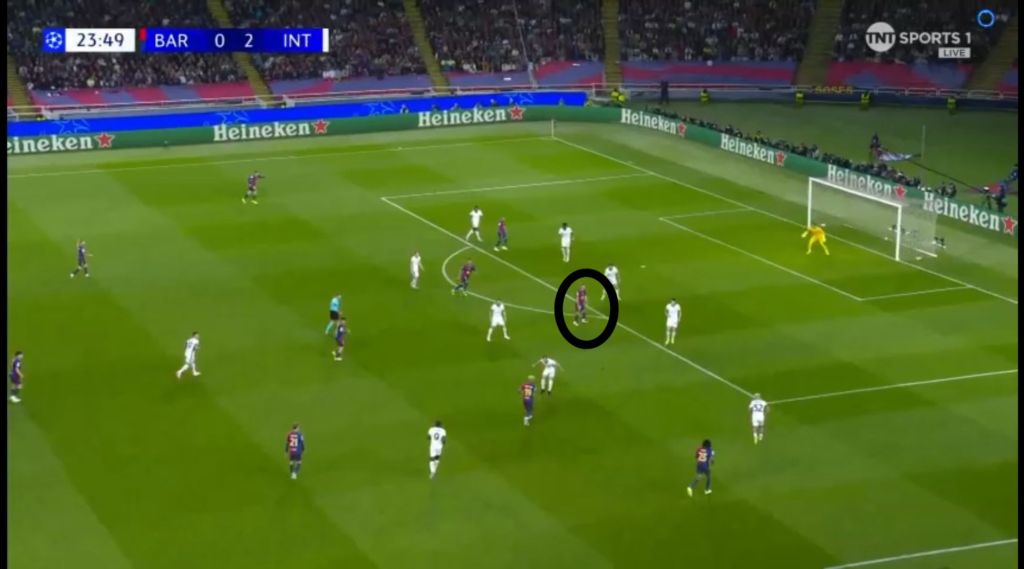
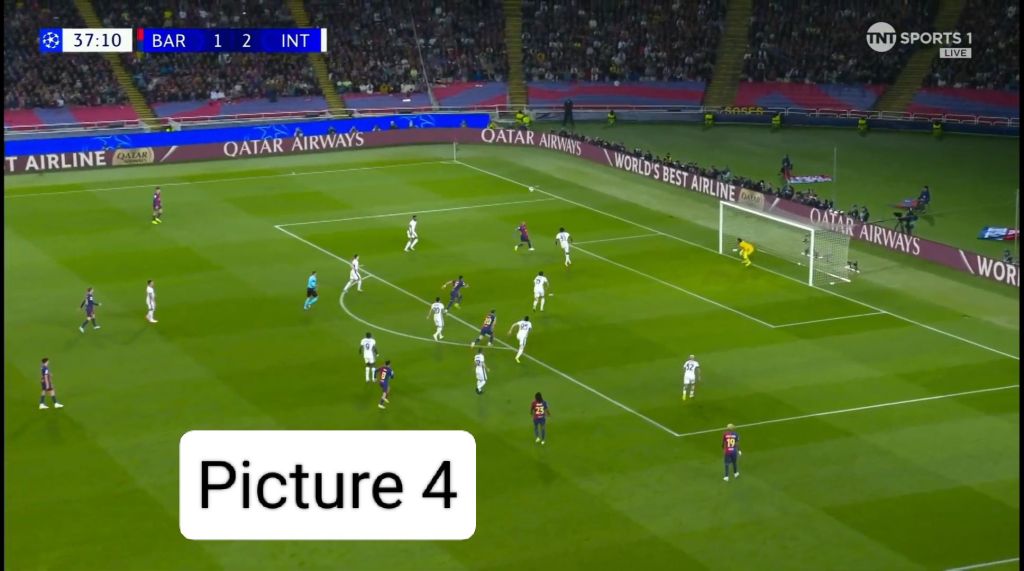
Yamal, with a messi-esque piece of individual brilliance, brought Barca back into the game at 2-1. But the space for him to receive the ball and dribble was created thanks to Kounde peeling wide and dragging Di Marco while Ferran Torres pinned Acerbi back.
Barcelona continued the barrage of attacks vs Inter while Inter were happy to risk by sitting back and absorbing pressure. Flick placed Yamal very wide to stretch Inter and create gaps.
Once again, Barcelona pierced Inter’s defence. Inter clogged the centre of the pitch. Barcelona moved the ball to the left flank, and Inter’s midfield shifted accordingly. Barcelona switched through Frenkie to Pedri, and Kounde peeled wide again, pulling Mkhitaryan towards him, which left Olmo unmarked, and Hakan ran to mark him. This created vertical passing lanes for Pedri, who, however, decided to lob the ball above. While Acerbi had his eye on Ferran before the ball was made, Torres un-marked himself by moving down but as soon as Raphinha’s cushioned header beyond Acerbi was collected Ferran outpaced Acerbi quite easily
Inter took the lead from a set-piece again from a Dumfries header. Once again, the ball was towards the far post, but unlike the earlier corner, players made dummy runs towards the near post, which meant Dumfries was free to power to the back post with a watch Dani Olmo and head the ball in.
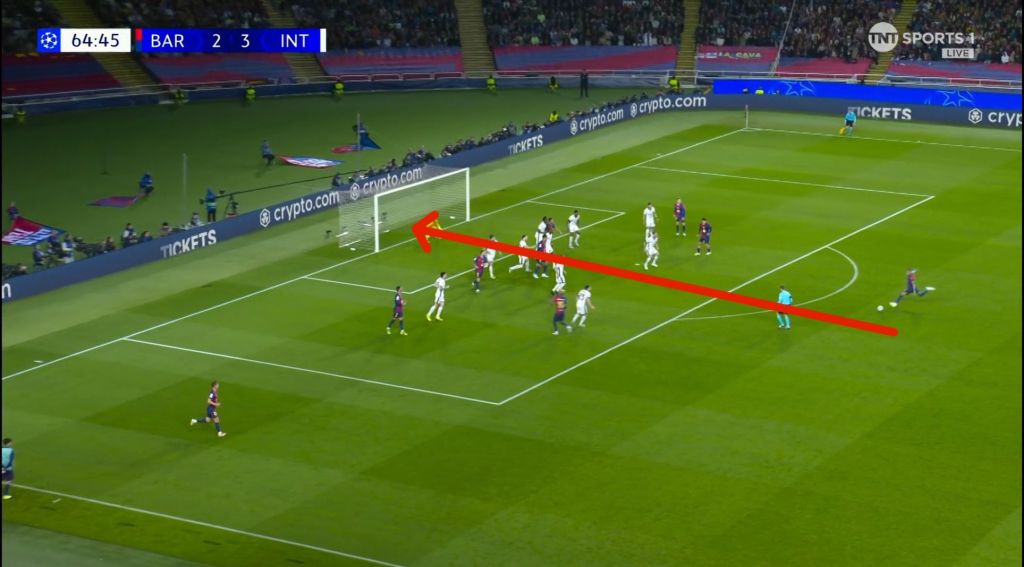
Barcelona, however, didn’t let Inter’s advantage fester with their own set piece. With Inter players pre-occupied with their markers, it cleared the path without obstruction for Raphinha to shoot.
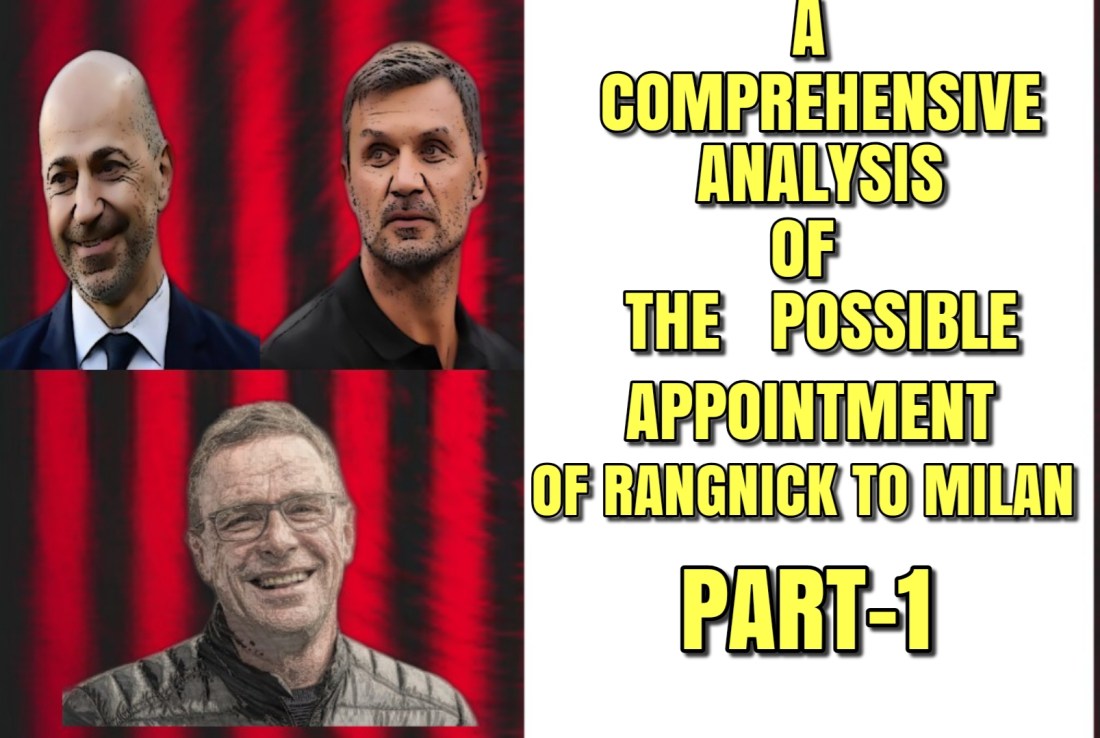
Much has been said about Rangnick and his possible arrival to take the hotseat at Milan. Gazidis flatly denied when asked in December, Maldini and Boban showed their displeasure at his appointment and Rangnick himself spoke of contacts with the top brass of Milan but no agreement reached.
The fanbase has been divided over this decision. While some are excited about the prospect of Rangnick joining Milan, the expense it comes at, that of the the sacking of Paolo Maldini, makes Milan fans emotional as Paolo stands for everything that has been Milan and it’s splendour.
Therefore I believe a comprehensive analysis is needed to understand Milan’s situation and why Elliot seem to press for Rangnick.
The Singer Family
A CHRONOLOGICAL ORDER OF EVENTS
To understand the extent of the crisis we face it because imperative to construct a chronology to grasp it.
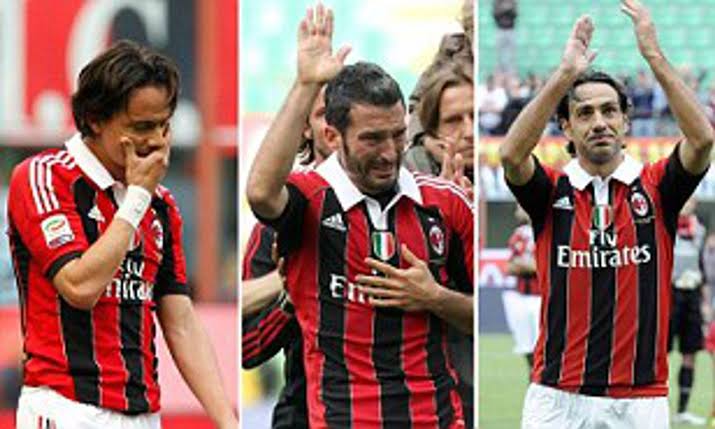
1. The 2012 mass exodus: 2012 represent a power shift in Serie A and the start of the era for Juve. Milan finished second in Serie A and Antonio Conte’s Juve side finished with the scudetto. To balance the book Milan sold it’s 2 best players for €63M to the latest Billionaire i.e PSG from France. This was followed by the mass retirement/end of contract for Milan’s old guard. Nesta, Seedorf, Inzaghi, Zambrotta, Gattuso all his farewell to the San Siro at the end of the season.
Inzaghi, Zambrotta and Nesta paying respect to the fans that had come to support them
2. The Lean years: With Zlatan and Silva sold and legends retiring, a dearth of talent possessed Milan. While Milan signed Balotelli, Matri, Constant, Acerbi and Bakaye Traore it never bridged the gap left by the legends of the club. This followed with little or no investment from Milan’s patron Silvio Berlusconi. All of Milan’s success in the previous years came with the investments of Berlusconi but post 2012 he did not invest into any areas of Milan and hence the well dried and Milan were making losses and debts for the club thanks in part to a damaged Italian economy.
3. Free agents and inflated wages: With no money invested by Silvio and club plunged into losses, the management was forced to sign players who were at the end of their contracts or bossman’s. This inflated Milan’s wage bill grossly (free agents are signed at higher wages than what they used to earn as the demand for the player s higher than a normal transfer) and it led to taking a toll on our already crippled finances
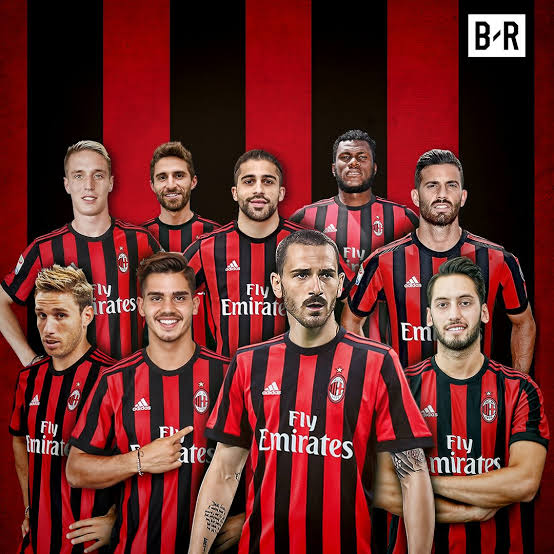
4. The Sale of Milan and Fasobelli Disaster class: Finally in 2017, Silvio sold Milan to much unknown Chinese man YongHong Li. He in turn appointed Fassone as the CEO and Mirabelli as the Sporting Director. Milan spend 250M in that transfermarket which is now a memory in every Milanisti’s head. They brought in a totak of 11 players and negotiated the renewal of prodigy goalkeer Donnarumma with super-agent Mino Raiola in a very protracted saga. However a season with high hopes ended in despair as all of Milan’s new signings went bust. The club reached the Europa league thanks to a mini-revival under Gattuso but still missed the intended Champions league mark by a huge point margin.
Milan’s €250M transfermarket. Credits: BR football
5. Leonardo adding salt to the wounds: The Chinese failed to cough up the €32M money it owed to money lender and Vulture fund Elliot. As a result they took over Milan and appointed Leonardo as the Director. Milan beat a ban on it from playing in Europe by UEFA and with only one month left in the market Leonardo’s experience was expected to come forth. He negotiated a player swap with Juventus for the departing Bonucci for Caldara, signed Higuain on a highly paid loan with option to buy, signed Castillejo, Bakayoko on a loan and Laxalt as a backup for the Strinic who was diagnosed with a heart ailment. However come December, Higuain jumped ship to Chelsea and Milan got in super striker Ktystoff Piatek and the next brazilian sensation Lucas Paqueta. However Milan still did not reach the top 4 spots and Leonardo left the club with Elliot changing its course.
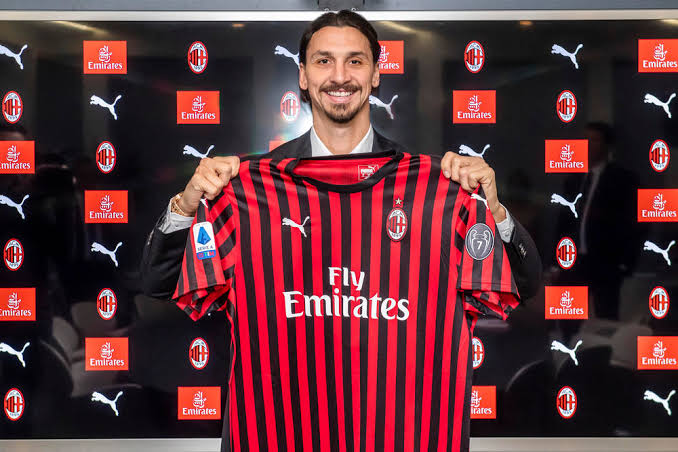
6. Current season: With Leonardo leaving, Maldini took over the role of Director and brought in his old teammate Zvominir Boban to Milan. Toghether Maldini and Boban conducted some shrewd business. They brought in Theo Hernandez, Bennacer, Lēao, Rébic, Duarte and Krunic. However their appointmet of Marco Giampaolo as a coach didn’t last longer than 7 games and was sacked with Pioli brought in as a temporary fix. Milan then saw its worst result in 23 years when they got trashed by Atalanta and were threatened getting into a relegation fight. This forced the club to bring back it’s legend Zlatan Ibrahimoviç, albeit 7 years older than when he left and Simon Kjær for the defence. This brought and upturn in fortunes and Milan are now actively fighting for European football next season until the season was brough to a halt due to the corona pandemic. In the same winter market that saw Zlatan return to Milan, Milan sold it’s misfiring striker Ktystoff Piatek, injury prone Caldara and the ever polarising Suso. Milan also loaned out players Reina and Rodriguez making a gain of a total €35M in salaries and trasnfer fees.
THE FINANCES OF THE CLUB
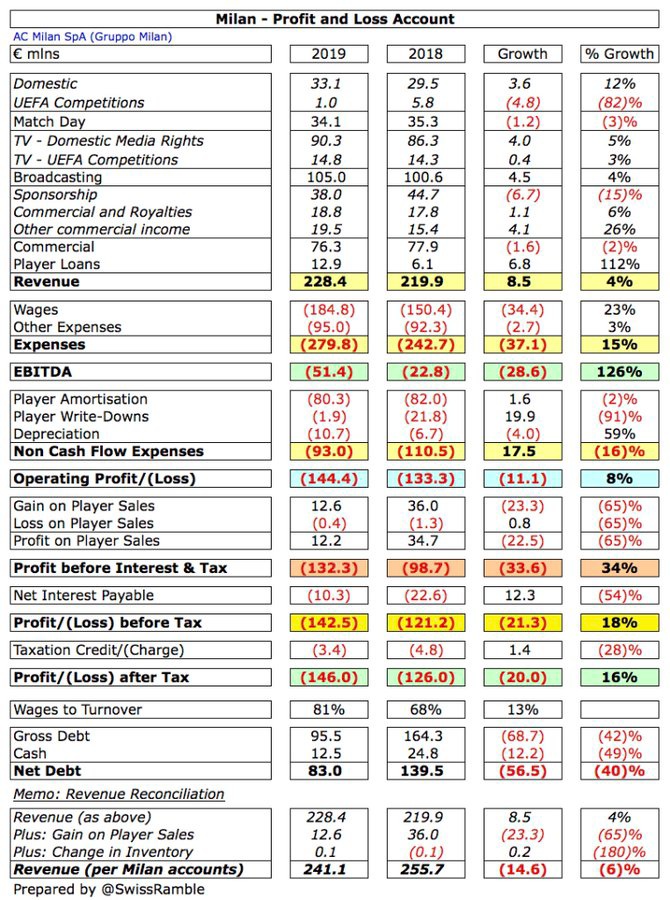
In the footballing calendar the dates July 1st to June 30th constitute a financial year. All finances of the club are prepared acoording to this calendar. I thank Swiss Ramble (@SwissRamble) for their amazing work to collect Milan’s financial details for the season 2018-19 which incidentally is our best season post 2012-13 in terms of sporting achievements.
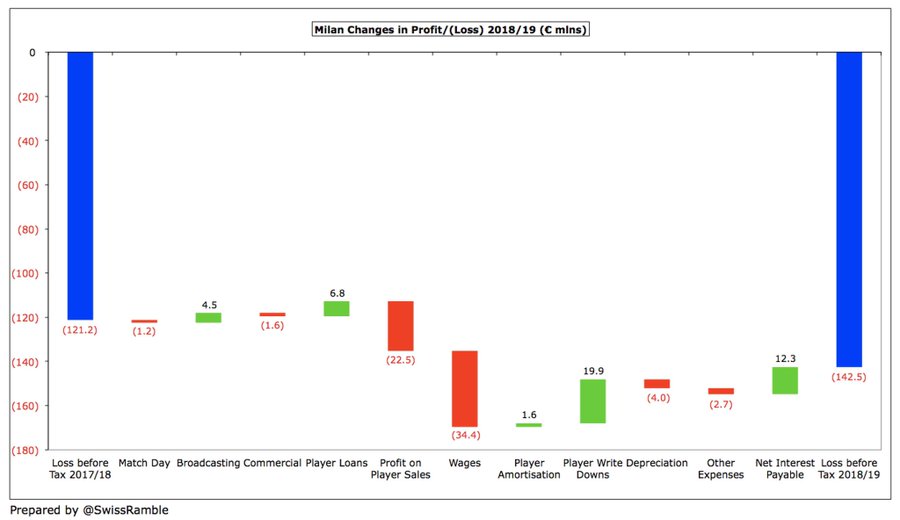
– Milan’s loss after tax widened 20M from the previous season (17-18) to €146M. The worst in Serie A.
– The major contributor towards our expenditure is our over-inflated wage bill which rose to €185M (inc.€34M)
Our major expenses Credits:@SwissRamble
– This brings our total losses (before tax) upto €543M in the last 6 years.
– Major cause of these losses could attribute to poor player recruitment over the years along with bad sales. The total profit for Milan in last 5 years is only €55M while Juve have made €417M, Roma made €391M and even Inter made €185M
– Milan have only made €29M from participating in European compeition while Juventus has made €451M, Roma has made €255M and Napoli made €188M
– Milan’s total revenue of €228M is behind Juventus’ €494M, Inter’s €370M and Roma’s €236M. In terms of loss Milan have the highest loss in Serie A, €100M more than Juventus and Inter.
Milan compared to rest of the Serie A. Credits:(@SwissRamble)
– In 2004, Milan were ranked 3rd in the money leagues (Clubs making most revenue) , but now have dropped to 21st in the rankings.
A close look at these metrics can give us a fair understanding as to why Scaroni chose to say “Why are Milan not doing well? Milan have €200m revenue and Real Madrid €700m. It means they can buy better players and pay them more.” It is the imperative need of the hour that Milan start making money again do that a sort of balance can be restored for it to reach the top of the money leagues again.
THE TRYST WITH THE UEFA FINANCIAL FAIR PLAY
File Image
With clubs recklessly overspending money to get player, UEFA has to step in to restore balance and ensure a level playing field. They brought out the Financial Fair Play (FFP). The financial fair play which covers pages and pages of rules of information requires teams to spend money in the mercato based on its earnings. The spending should be in propotionate to the revenue the club earns and and the capital gain it makes on player sales along with the profit/loss it makes in a 3 year period. This rule works as per the law of *seperate legal entity* i.e it sees the club seperate from the owners of this club. This means thag FFP has limited owner spending for the club.
As I have pointed to Milans financial’s in the earlier part, Milan’s losses are very huge and FFP is not very supportive of our club’s violation of the rules. Milan were initially banned for the violation of the FFP rules during the period 2014-2017 for 1 year but it was successfully appealed by Elliot in the Court of Arbitration for Sport. Milan were allowed to play Europa admist a heavy fine. Milan were once again found to have violated the FFP for the period 2015-2018 and in tandem with UEFA agreed to sit out the 2019-20 Europa league to wipe the slate clean.
Now the objective of the owners will be to enter an agreement with UEFA called the settlement agreement to prevent repeated violations and appeal at the CAS. The settlement agreement would see Milan come under imposition of a lot of restrictions as dictated by UEFA. One of the restrictions would be to cut down the clubs losses to €30M and squad size restrictions in case of playing in Europa League. (Number of players allowed to play in EL will be less).
With the arrival of the COViD-19 pandemic UEFA has suspended FFP montitoing of clubs for the 2019-20 season. However this does not mean that FFP will be suspended entirely either.
This brings an end to Part-1 of this length analysis.





 The Milan Blog