In a midweek game against 20th placed S.P.A.L, Milan drew 2-2 in a game of extreme luck. Whether this draw will be decisive to Milan’s chances for Europe next season will be seen as Milan face Lazio, Juventus and Napoli in 3 consecutive games which could challenge their resilience and quality.Here are my thoughts and tactical analysis related to yesterday’s game.
1st Half
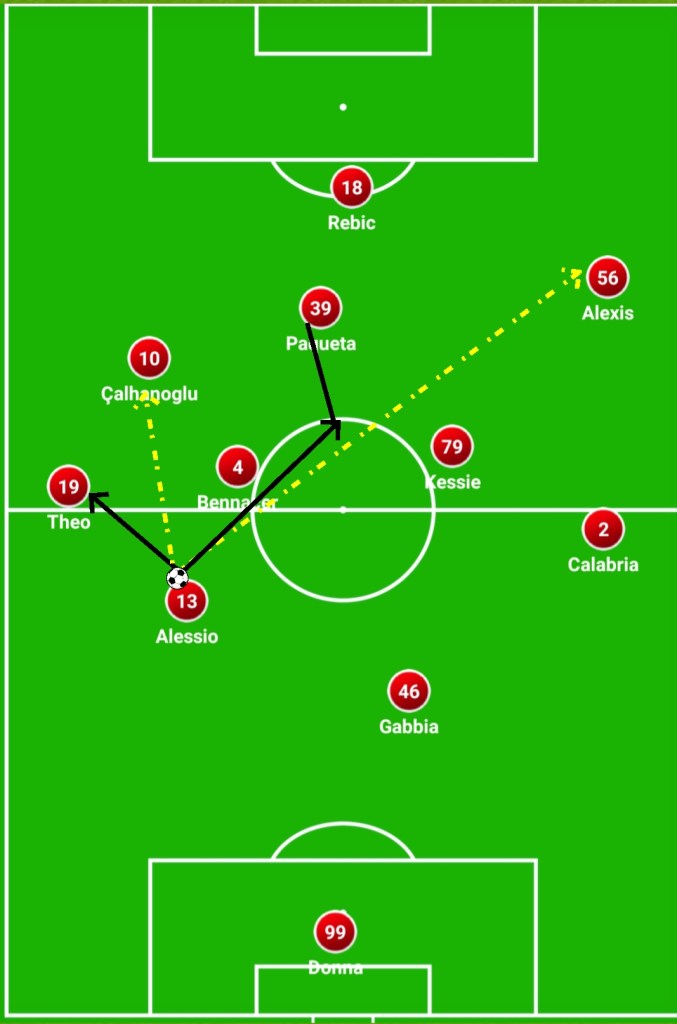
Milan played a more lineup often varying between 3-4-2-1 and 2-4-3-1 with Calabria pushing really high up from his original position. Milan chose to bring the ball out from the back through Alessio Romagnoli who had different option such as wide pass to Theo Hernandez or a Diagonal ball to Alexis Saelemaeckers and at time you could see paqueta (who had a free role) dropping deep to collect the ball and pass it to Hakan who occupied the half space created by Paqueta’s movement.
Spal on the other hand played a 4-4-2 out of posession. While in the ball they were quite content playing horizontal passes between the centre back which drew our players out of position inorder to pass and then played a quick vertical pass to either a striker dropping deep or a D’Alessandro who was free on S.P.A.L’s right wing.
Milan conceded a goal from a poorly defended corner in the 13 the minutes and this made Milan come out and be extra agressive to quickly tie the scores.
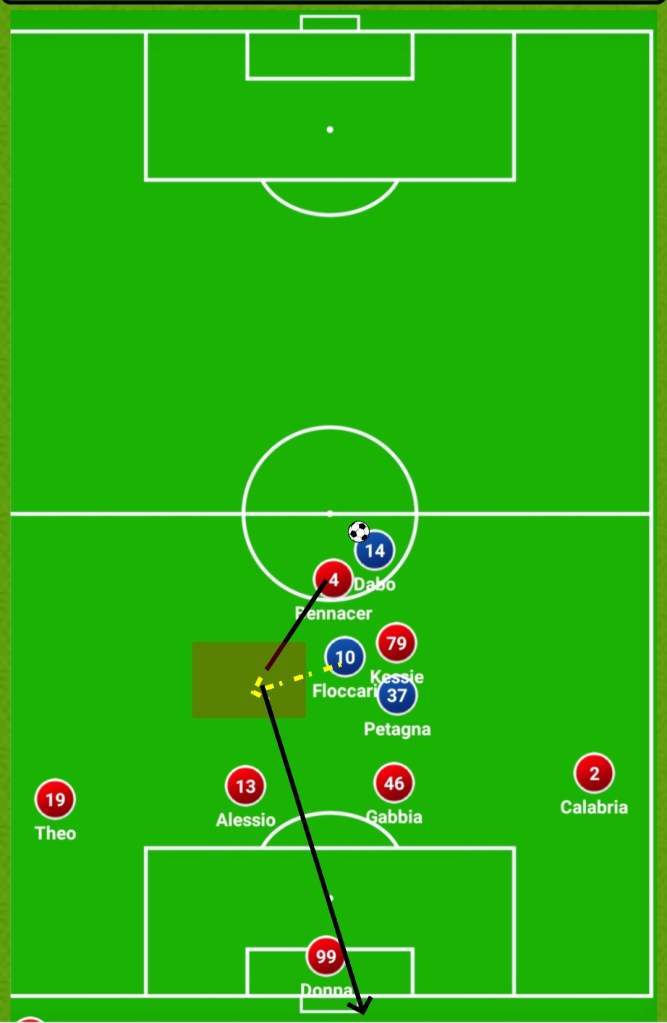
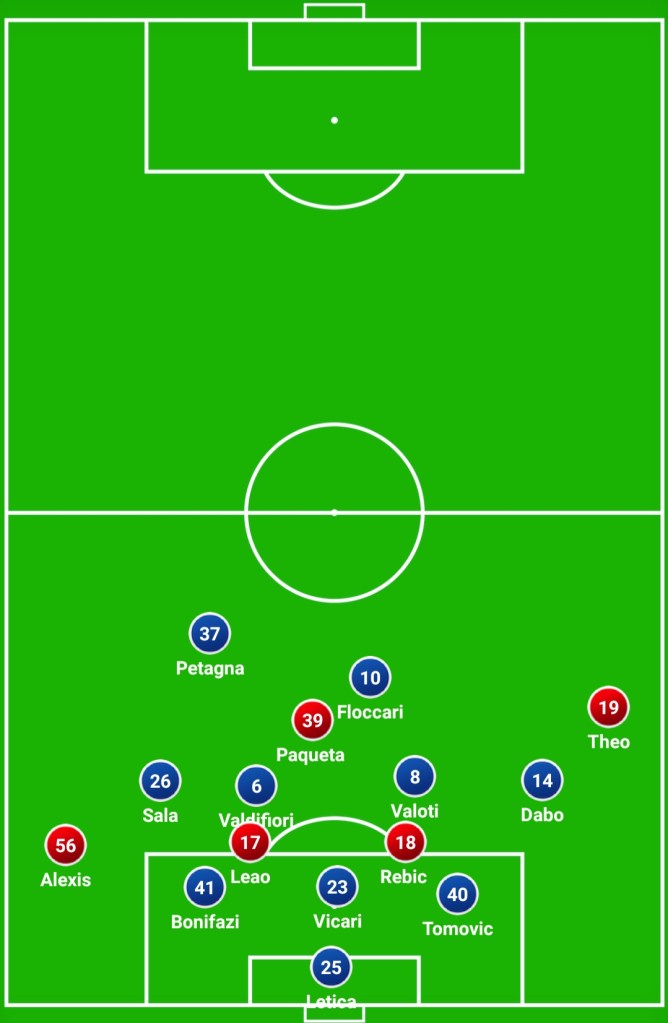
S.P.A.L’s second goal came courtesy of a worldie from Flocarri. Bennacer committed to an aerial dual with Dabo who won the header. While bennacer was pulled out of position it caused a half space which flocarri ran into and shot to score his goal. Petagna kept Gabbia busy but Floccari made his shot before Alessio could commit a challenge. A top class goal.
SPAL’s second goal
And then S.P.A.L’s D’Alessandro made a studs high challenge on Theo and was sent off. And S.P.A.L quickly dropped into a deep block and was happy to not keep posession and give it to Milan as they were clearly out of ideas.
An opening came via a Hakan Çalhanoglu goal When Rebic shifted outwide against a narrow S.P.A.L defence and crossed for Hakan to score but it was ruled out as Rebic was offside.
2nd Half
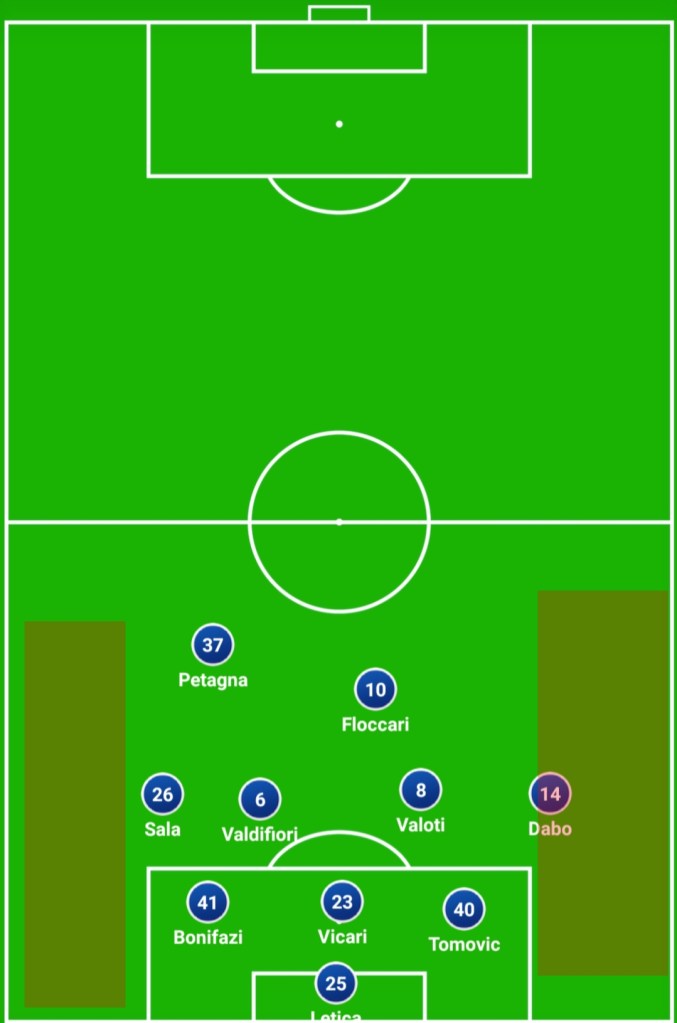
S.P.A.L set up in the second half typical of a lower table team trying to defend a lead. They sat into a deep block chose to play it narrow and concede posession without committing any player forward especially with a man down.
S.P.A.L’s deep block
Milan countered the deep block with a change of their own by bringing on Leão for Calabria and shifting a 2 striker formation. Both strikers played close to the centre backs and tried to exploit the gaps between the centre back who got stretched at times. But S.P.A.L were resilient. With no pace and lack of technique Milan were forced to shoot from distance or crossing into the box.
I believe that Pioli missed a trick seeing that Milan were forced to play crossed into the box as they were not able to bypass the deep block, to bring in Milan’s recognised no.9 Zlatan whose height would have come to use when putting in crosses to head them in.
All in all Milan had 39 shots off which only 9 were on target. Yesterday’s performances were a stark reminder of how Milan have failed to break down teams that defend deep and lack quality to come up with alternatives when faced with a low block. A revolution under Ralf Rangnick seems inevitable if true
Earlier today we reported via Milannews.it that Milan are the only club with no debts in the club. At a time when the coronavirus has taken a toll on business all over it is indeed a very big victory for the owners and the management of the club despite Milan bring close to accumulating a €100am loss to close this season.
What does it mean ? And what are its implications ? Let us take a look.
MEANING
To Finance everyday activities as well as tranafers, football clubs need a lot of money (as much as €10M) every week in terms of wages and bills and this needs to be in liquid form (Liquid cash includes proper cash and not in the form of assets or commodities like land or things). So therefore club has various factors routes like taking a bank loan or issuing bonds/debentures. As per accounting terms these are liablities for the club as Milan have to pay a certain interest along with the prinicpal amount taken
IMPLICATIONS
While taking over, Elliot had a total debt of €150M accumulated via the previous managements. Elliot paid all the people Milan owed money towards and brought down the debt to 0. In the current situation Elliot are completely financing activities of the club.
A company with 0 debts shows a company with healthy finances and strong owners which makes it attractive for getting new investors (sponsorships) on board. Sponsors would want to invest in companies where they have a good brand image which Milan aleeady have.
With the new stadium agreement obtained from the council and clean finances it would help Elliot to sell the company, as it is their modus operandi, to a more illustrious investor. Names like Arnault and a Qautari funds have been sounding in the Italian press and Elliot will look to sell the club.
A clean balance sheet with no debts would be a bargaining point for Milan with UEFA to get releaxations in terms of their settlent agreement.
Milan picked up a crucial win in their quest to attain Europe against Roma who saw their last hopes for a place in Champions league extinguished. Goals from Ante Rebic and Hakan Çalhanoglu helped Milan defeat their rivals 2-0. A most professional and enduring performance from the Rossoneri against a quality Roma side who ran out of legs towards the end. Here are a few key points and tactical notes from the game.
1st HALF
Both teams started in a 4-2-3-1 formation and transitioning into a 3-2-4-1 in attack and 4-4-1-1 in defence.
Milan in their 3-2-4-1 while in posessionRoma in their 3-2-4-1
Milan defended deeper than they did against Lecce due to the threat of Roma’s technical attackers and pace. But they were still keeping a rather high line.
Milan defending in a 4-4-1-1 with Rebic free to press the defenders in posession while Milan tried to cut off passing lanes
Roma were using a 4-4-2 in defence and chose to cut out passing lanes often forcing Theo to drop deeper to collect the ball or Kjær to put in long balls over the first 2 lines of press
Roma pressing high and therefore kjær is forced to put long balls
The first chance of the match fell for Dzeko who headed the ball wide. A ricochet helped the ball into Kluivert who was unmarked as Conti had strayed forwaed to press Pellegrini. Kluivert ran towards the box and was being marked by Kjær when spinnazola made an overlapping run and Kjær was drawn out to the possiblity of Kluivert passing to spinnazola. Kluivert saw the space open up and put a ball in for Dzeko who headed it wide.
Dzeko’s chance
Milan’s best chance of the half came via a missed header of Hakan. Roma tried to restrict Milan towards the right wing, but after some good work by rebic he found bona in space who had Hakan behind him. Bona spinned and found Theo who was in acres of space towards the centre.
Meanwhile Hakan made a run into the bix, and when theos cross came in Mancini failed to mark Hakan as he was distracted by Rebic’s movement and Hakan was free to head the ball out for a goal kick.
A drab first half as both team cancelled out each other quite well. Chances were kept to minimum and it was about who can score first and endure longer.
2nd Half
With Roma becoming more tired playing only their second game after the pandemic break, their fitness was called into question. Pioli took this opportunity to take out an ineffective Bonaventura and a cautioned Samu Castillejo for Alexis Saelemaeckers and Lucas Paqueta.
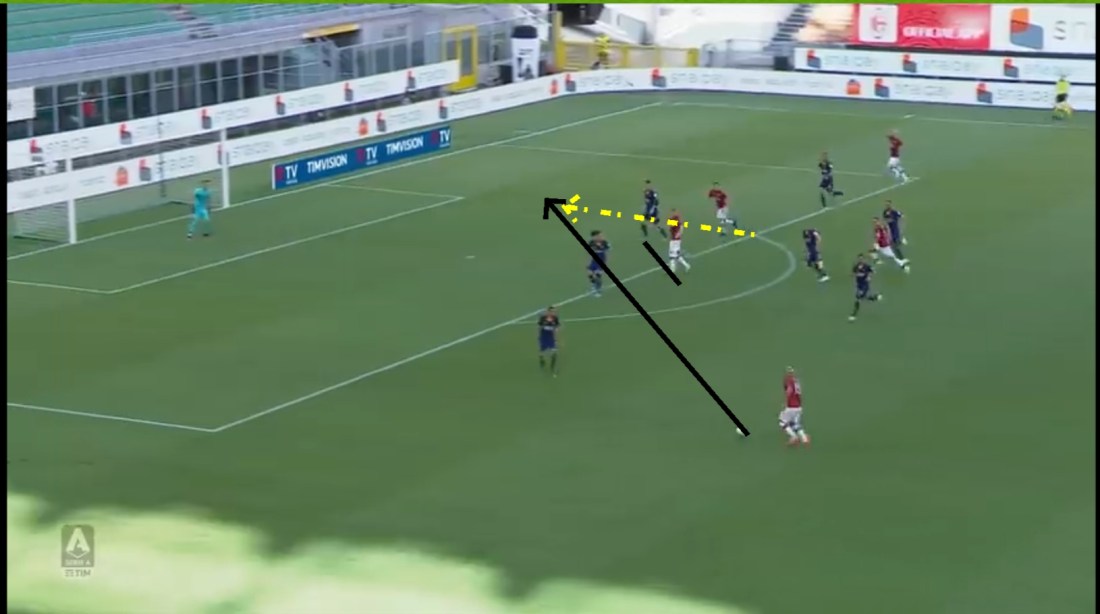
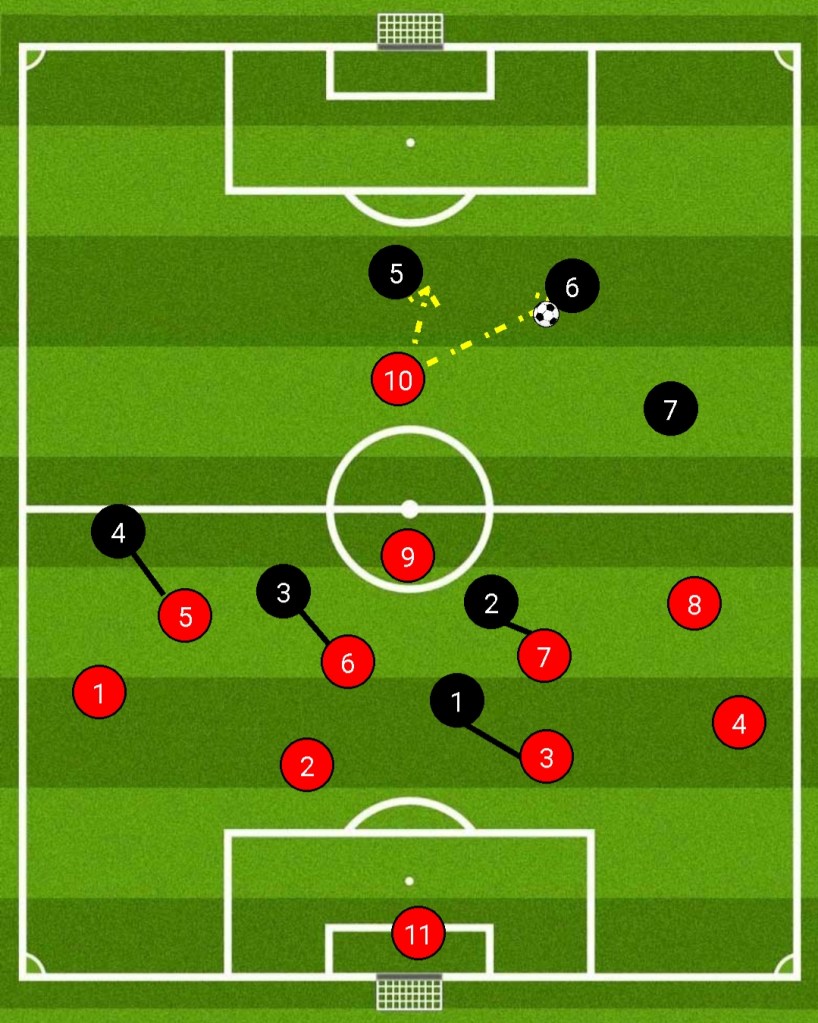
With Theo bringing the ball to the wing (no.3) he forms passing combo with Hakan (player no.1) and Lucas Paqueta (player no.3) who occuppies the half space. And when he is covered he puts a diagonal ball towards Saelemaeckers (player no.4)
The anticipation and work rate Rebic showed for the first goal was excellent as he intercepted a rather tired pass from Zappacosta and held off a defender before making a horizontal pass for Paqueta to advance and then put in a cross. The second goal was also good combination play by Hakan to draw the defender and then release Theo down the wing.
Roma did try to mount a comeback with Kalinic coming and trying to play the Dzeko role but it was too late and Roma didn’t have the legs in them . Overall it was a good match and a good win for Milan who play Spal on Wednesday
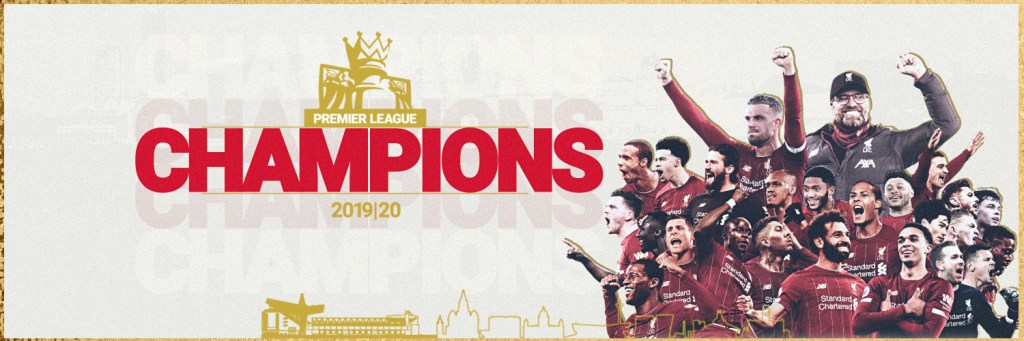
After 30 years of waiting, Liverpool won the English Premier League (previously English First Division) ending a drought in the domdestic division. There was no doubt since December about how Liverpool was the team to catch up for the title and they won it with 7 games left in the league. A record not achieved by any teams before.
But if you were to ask Liverpool in 2015 whether Liverpool would win a league in 4 years’ time even the most optimistic Liverpool fans would have taken a long hard thought before delivering their verdict. What changed for Liverpool after losing out on a title race to City in 2014 ? Liverpool fans would say it was the coming off Jurgen Klopp to Liverpool.
A.C.Milan’s last major trophy came via the Scudetto win in 2011 and ever since then the decline has been so steep that we have seen droves of managerial changes and millions being invested in resurrecting the club. When quizzed about the club’s approach by Gazetta Dello Sport Gazidis had to say this “Liverpool spent nine years in a situation similar to ours. When Klopp arrived, he said he would make the sceptics believe; no one believed it at the beginning, not even the fans. Today, we can see what Liverpool are. Soon, you will see what Milan are.”
So what features can Milan take from Liverpool and apply it on their blueprints ? With this article we take a look at the various lessons Milan can inculcate from Liverpool as well as the similarities being brought about with the appointment of Rangnick starting with a tactical analysis.
TACTICAL ANALYSIS
History
In 1983 when legendary coach Valeriy Lobanovskyi and his all-conquering Dynamo Kyiv came to a small town in Germany called Wuttenberg to play a friendly against a local team Viktoria Backnang their coach was none other than Ralf Rangnick. Along with Helmut Gross who were 10 years apart both Gross and Rangnick were fascinated with Zonal marking and ball oriented defending which were first brought about by teams in USSR (now Russia) and occasionally came up through Ernst Happel. So when the ball went out for a throw in during one of Kyiv’s practice matches Rangnick stopped to count the number of players per each side, sure that Dynamo Kyiv had inserted an extra man in between the match. What Rangnick saw was intense pressing which was then successfully interpreted and applied by Milan’s very own Arriggo Sacchi. At a time when catenaccio was still rife in Italy, Sacchi discovered and applied Zonal Marking and Ball-oriented defending while taking advantage of the offside rule present at the time. While Helmut Gross was the brain behind Gegenpress, Ralf Rangnick was the general who introduced change in German football a time when they refused to accept pressing. Now German teams are the harbingers of the press and counter press tactics popularly known as Gegenpress.
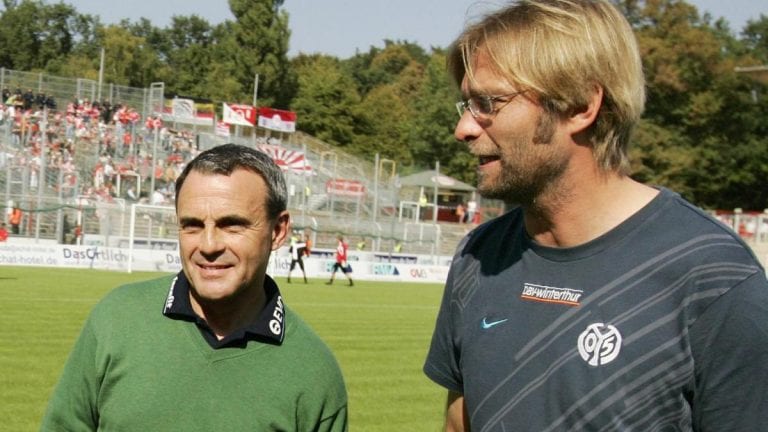
Fast Forward to 1995, Mainz appointed a relatively unknown figure called Wolfgang Frank as their coach when they were struggling in the second division. Frank was another staunch follower of Milan coach Arrigo Sacchi and he started applying Sacchi’s style of play in Mainz. Mainz’s Centre back was none other than modern day genius Jurgen Klopp who would imbibe these tactics and applying with varying degrees at Dortmund and Liverpool
Wolfgang Frank with Klopp
Gegenpress (Defensive Transition)
Gegenpress is all about intense physical pressing when the team loses possession of the ball. When either one of Klopp or Rangnick’s team loses the ball they press the opposition player in possession of the player and force him to either concede possession or make an inaccurate pass forward. They tend to take advantage of the momentary disorganization while turnover of possession happens.
The player who has won the ball back might have spent energy in winning the ball back and hence would be tired momentarily and hence when pressed could be forced into a mistake. A mistake could also arise from the time taken to touch the ball and get into control and once again pressing works. Let us look at the similar facets employed by Rangnick and Klopp
Triangle Pressing
Now let us look at how teams Klopp’s and Rangnick’s team press for the ball.
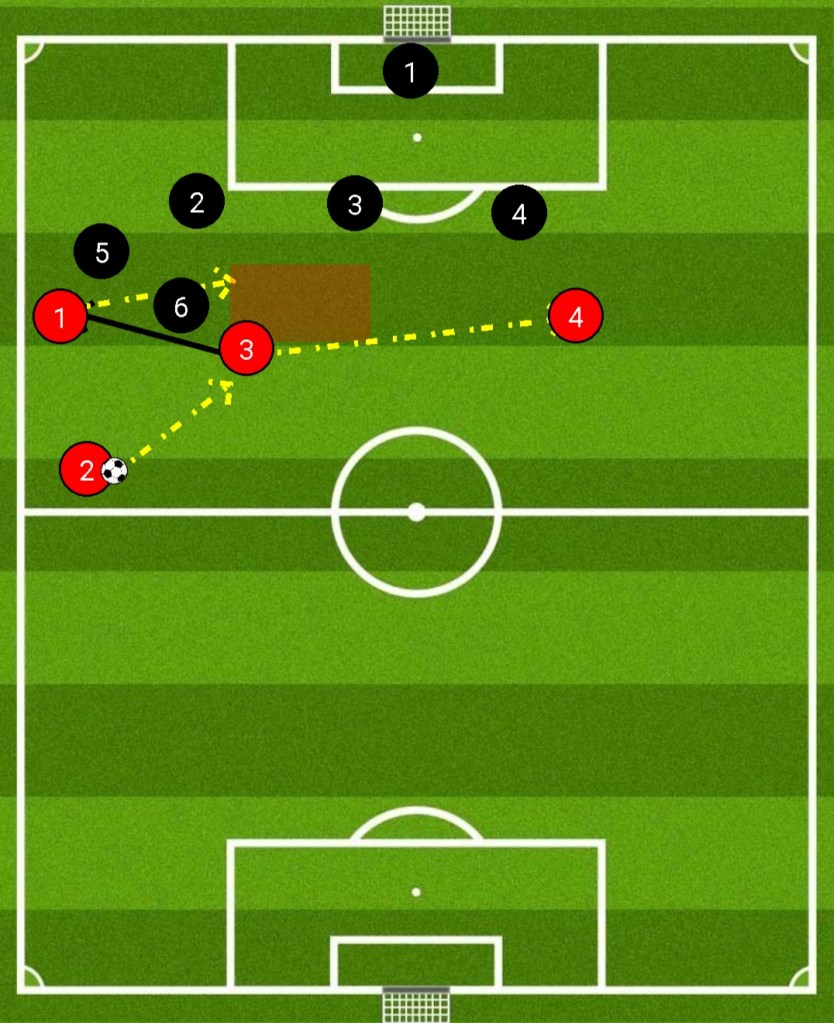
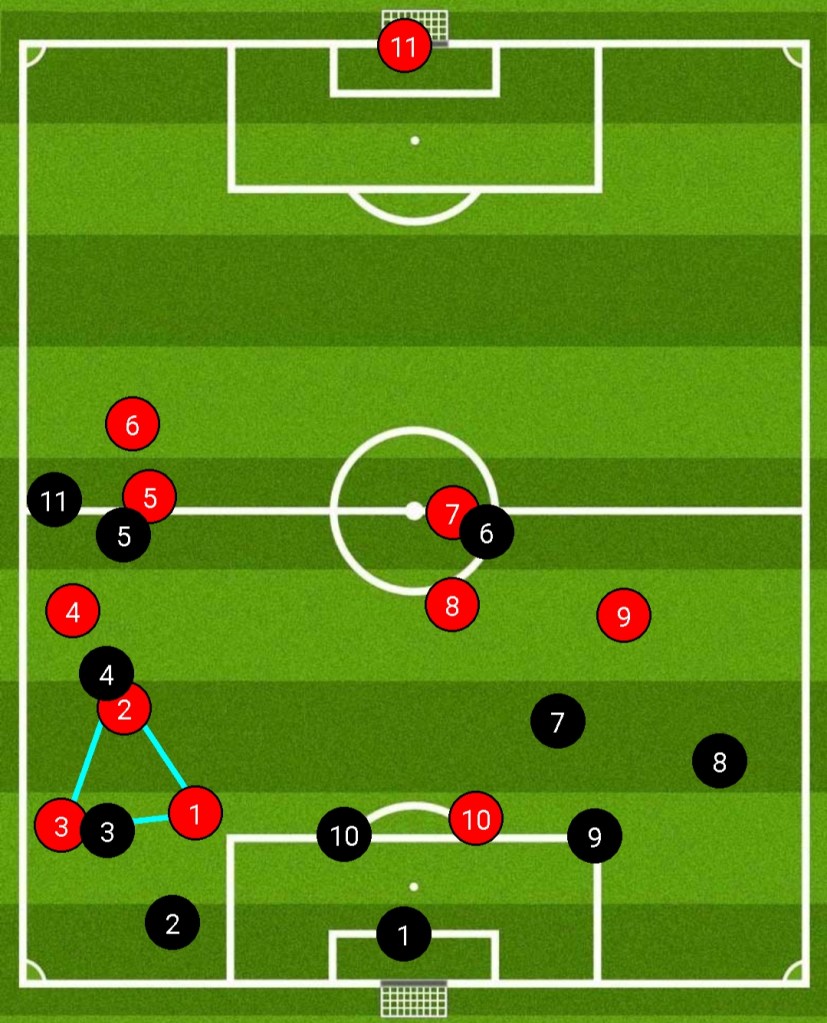
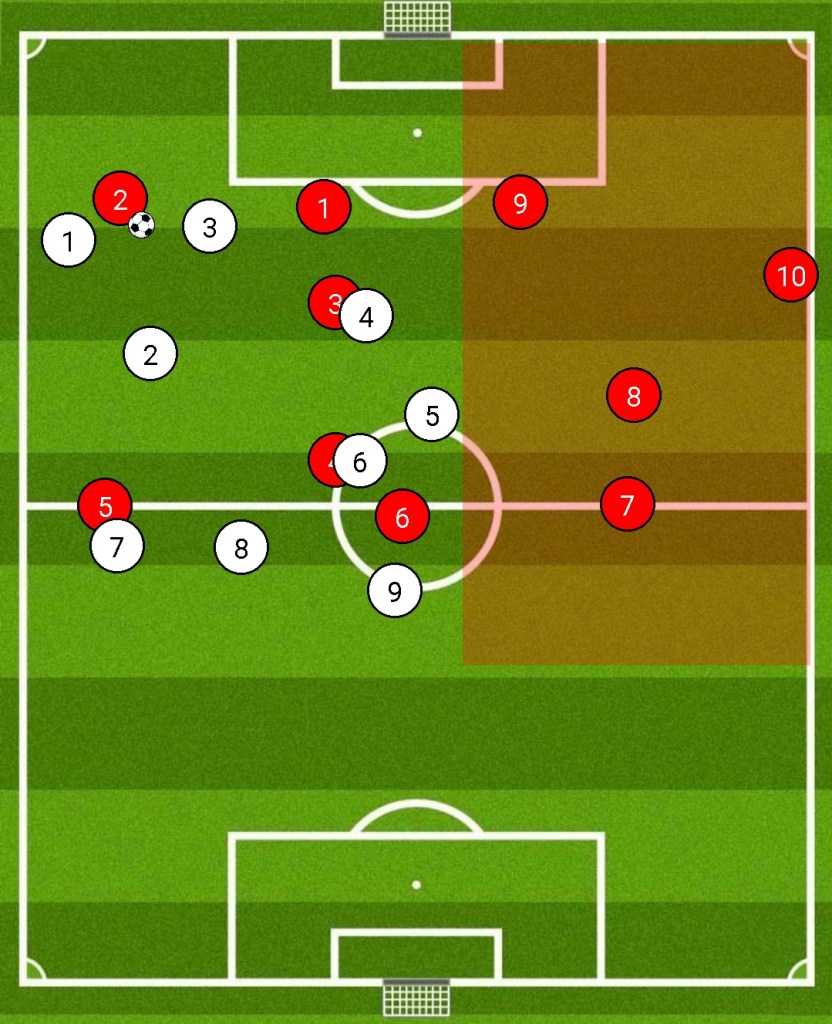
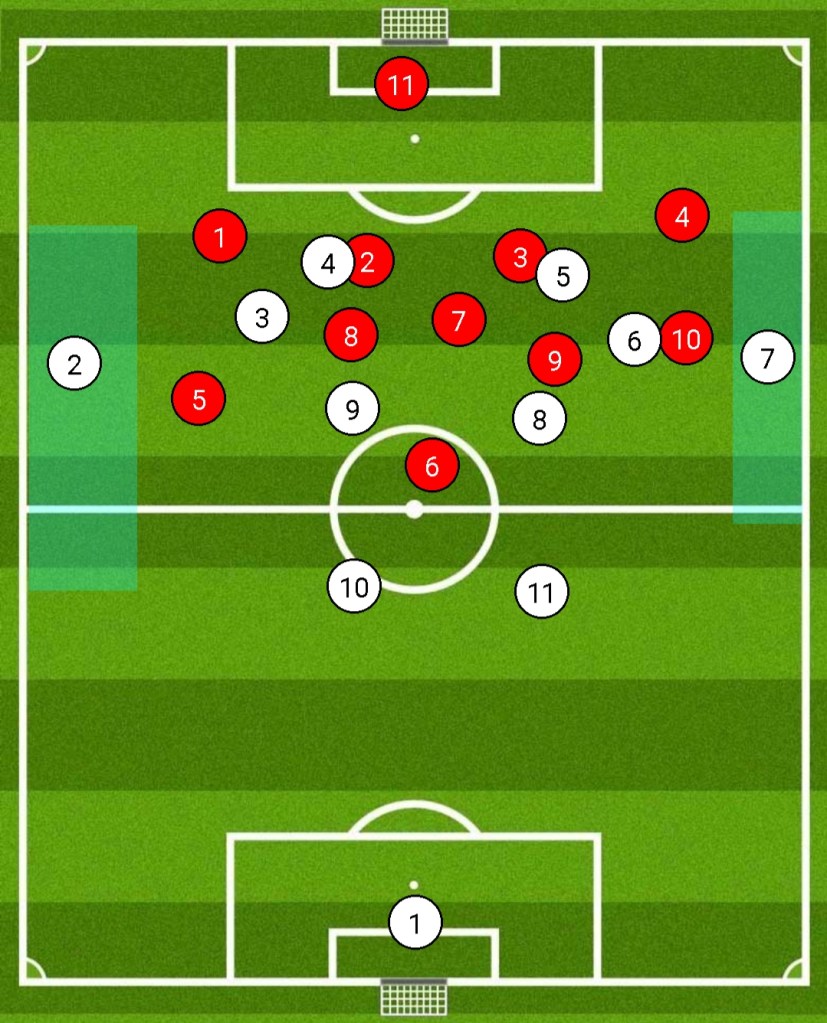
This picture was of a match between Liverpool and Arsenal at Anfield (jersey numbers are not in order). In this particular press which happens at Arsenal’s left flank and consequently Liverpool’s’ right flank you can see how player no.3 who is in possession of the ball is being pressed by player no.3 of Liverpool while player no.1 and 2 cut off the passing lanes for the Arsenal player. By taking up these formations they form a smart triangle.
In Rangnick’s time at Hoffenheim, which was the only time he played a 4-3-3 (otherwise preferred 4-4-2 or 4-2-2-2) Rangnick used aggressive play to press the player in the center of the pitch by forcing the opposition to play in the center whose mechanism we will look in the coming sections.
Horizontal Pressing
Klopp has been Guardiola’s Kryptonite in the premier league and the main reason for this is how Klopp has been flexible with his press and forcing Manchester city out of their comfort zones.
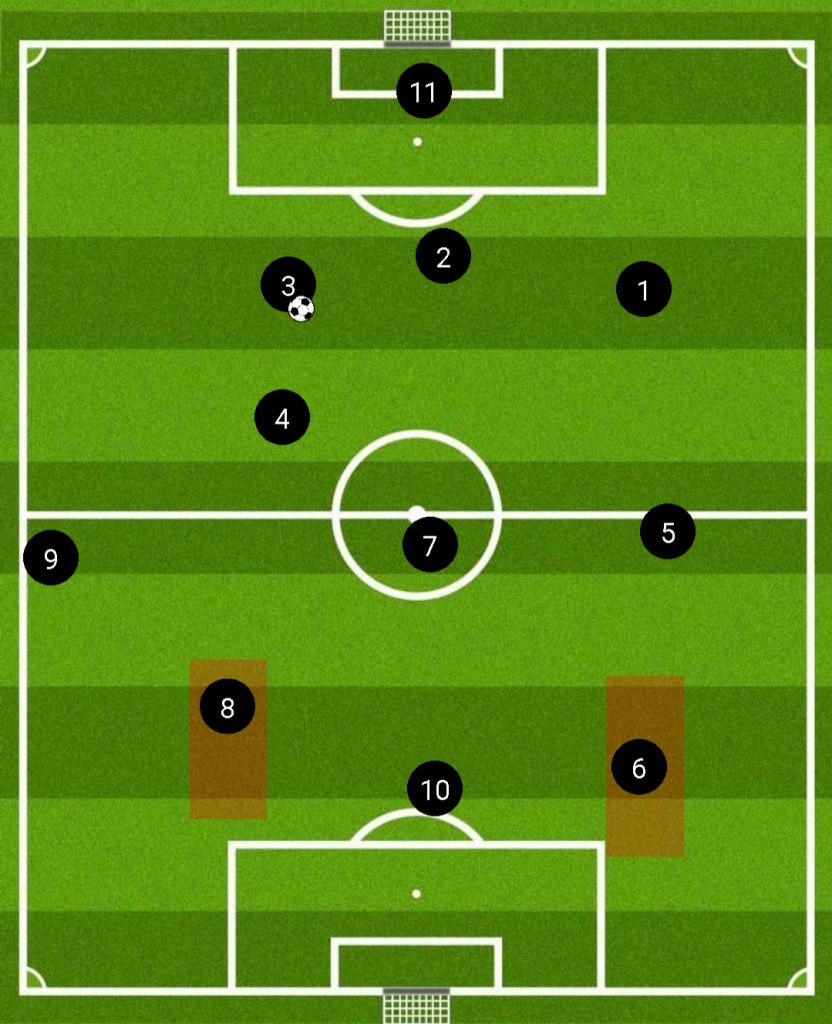
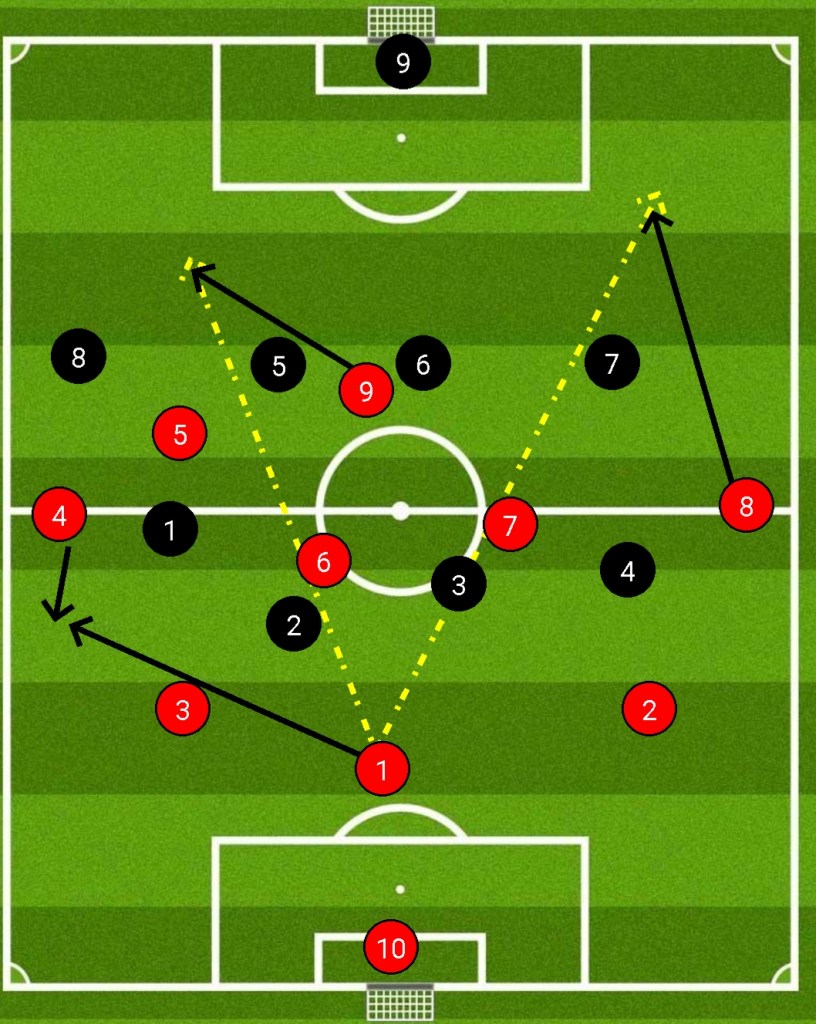
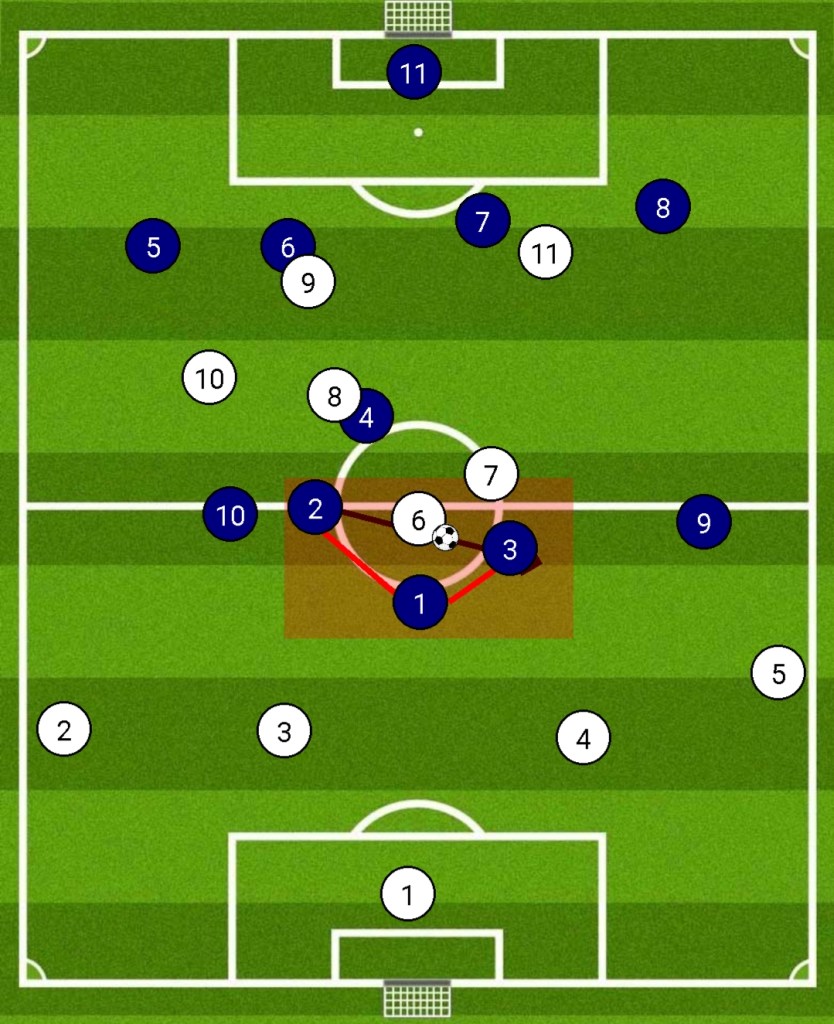
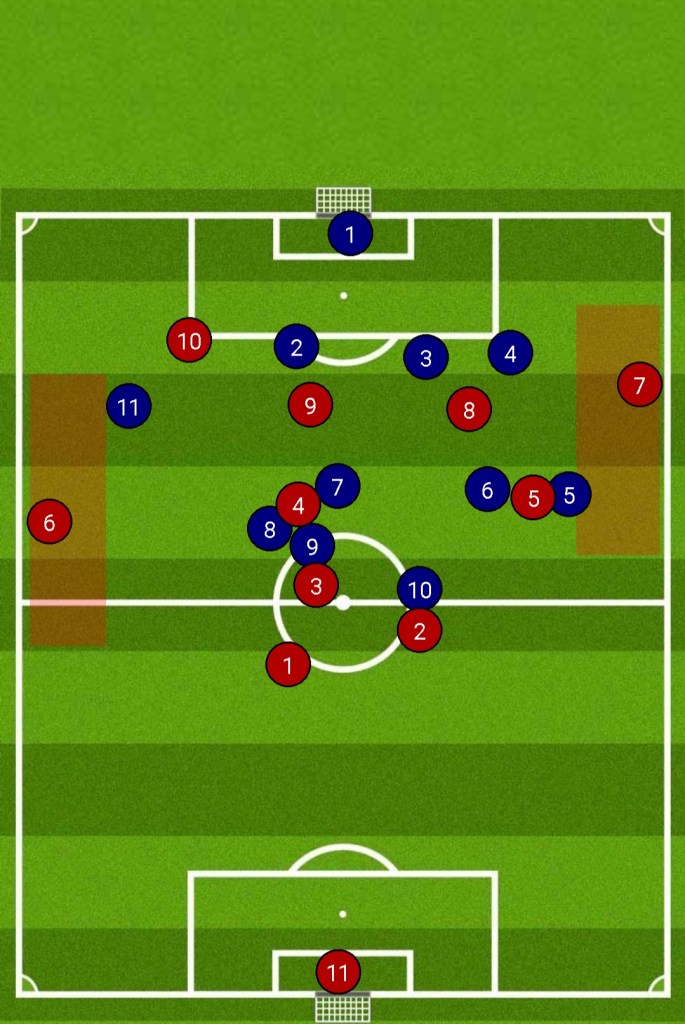
In Liverpool’s 4-3 win over city at Anfield and in their subsequent champions league quarter finals, Klopp had his last line of defenders (player no. 8,7,6,5) move horizontally whenever the ball was with the full backs while his second line of defence (no.9,10) moved vertically and cut off all passing lanes for Walker (player no.1 in blue). This, while he was being pressed by firminho (player no.2 in red) and Mane (player no 1 in red). Walker had no other option either to go back to Ederson or play a risky long ball towards the centre of midfield to a waiting sterling or de bruyne which could see him concede possession. If Walker tried to switch play to Citys’s left back (player no.4) he would be cut off by Liverpool’s no.4. If Manchester city tries to go through the middle then their midfielders (Can, Chamberlain and Milner) would form a narrow wall in the center. In Liverpool’s Champions league QF win over city they used this tactic against Laporte who was a makeshift Left back who isn’t as comfortable on the ball as Mendy or a regular left back.
You can see how Ralf albeit using a 3-5-2 formation in his brief time at Leipzig uses the horizontal press Klopp uses at Liverpool.
Pressing Triggers
Klopp and Rangnick uses certain pressing triggers as they cannot wait, especially against more quality sides, to win the ball back. So they uses certain contextual clues or “pressing triggers” as it is called to force the opponent into making mistakes and winning the ball back
In the same game Liverpool won 4-3 vs Manchester city, they took advantage of Fernandinho who is less technical than De Bruyne and Davild Silva in the midfield. In this sequence above you can see how Walker (player no.4) who was player a square pass by City’s defender (player no.5) triggered a press. Walker in turn is being pressed by Mane (player no.11) of Liverpool while Firminho presses player no.5 to cut off his passing options of passing to Ederson or the centre back. Fernandinho then makes himself available and when he receives the ball he gets pressed up by Player no.6. and loses possession as de Bruyne and David Silva are too advanced to ease Fernandinho off the press.
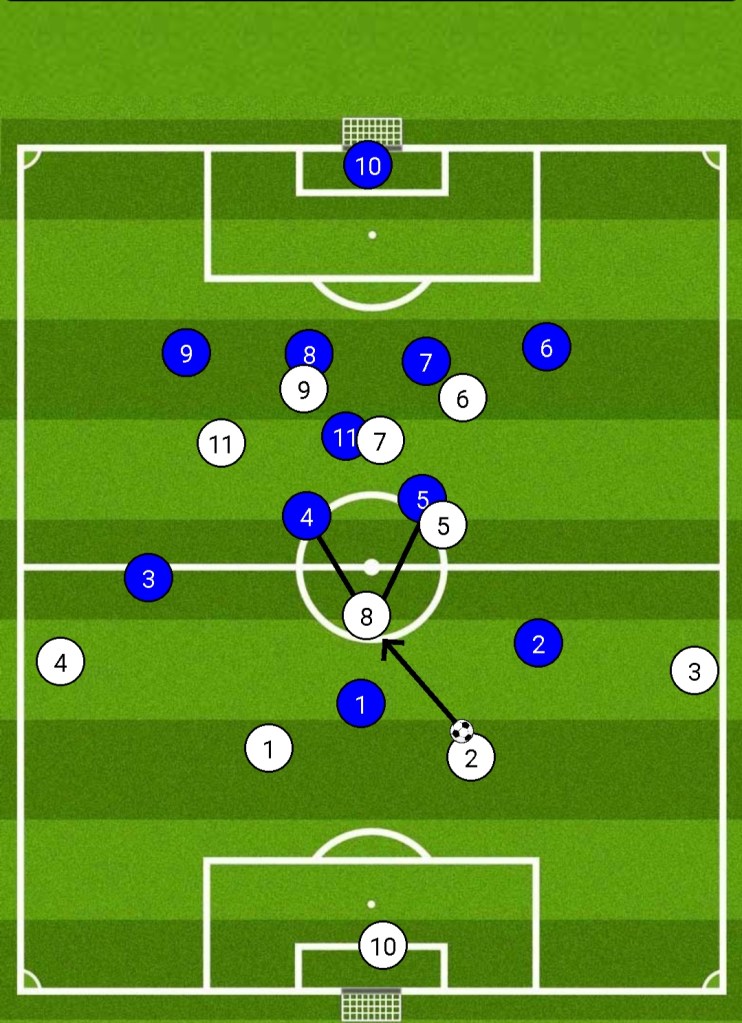
A similar situation can be seen here with Rangnicks team Hoffenheim. When the opposition played square passes between the centre back’s (no.1 & 2) Hoffenheims’s forward players press forward and block all passing lanes to the wings and force the centre backs to pass to the central midfielder in the middle (player no.8) who in turn is counter-pressed by Hoffenheim players no.4 and 5 and a turnover of possession occurs.
ATTACKING PHASE
As explained earlier Gegenpress is taking advantage of momentary disorganization of the oppositions and finding gaps. Rangnick emphasizes it with his 10 second rule, where he believes the best time to score a goal is within 10 seconds of winning the ball back from the opposition.
Overlapping FBs
In Liverpool’s champions league semifinal vs Barcelona, Klopp had his wide midfielders tuck inside inside and a central overload. This made Barcelona players to stay central in order to cover all passing lanes available to the players present in the centre. Klopp then had his full backs push up the flanks and make overlapping runs and always finding the space.
Ralf Rangnick also uses a similar approach. In his days as Leipzig manager where he used a 4-2-2-2 formation he had his wide midfielders tuck inside and create a hexagon in the centre creating a central overload. This was exploited by overlapping full backs.
However in terms of Build-up and attacking play there are some significant differences. While Rangnick prefers a 2 striker approach and have his wide midfielders tuck in, Klopp has Firminho play as a false 9. Firminho plays in the Centre and has him dropping off into midfield allowing Salah and Mane to make deep runs. Sometimes Firminho even pulls a defender out of positions causing momentary gaps in defense which will exploited by the wingers making runs with midfielders making quick vertical passes.
Klopp also uses horitzontal passes in buildup play to spread the play out wide to his advancing full backs. Rangnick however prefers to play narrow and uses quick interplay to advance forward. He believes that horizontal passes are a waste of time in his reference to his 10 second rule.
While there are a few differences in their methodology the crux of both their ideologies are essentially all about Gegenpress. While Rangnick was the first advocate of Gegenpress, Klopp made it a global phenomenon with his success at Liverpool and Dortmund.
TECHNOLOGY
When Liverpool were in the search for a new manager after sacking Brendan Rodgers due to a dismal run, Liverpool turned to Jurgen Klopp who was known for his exploits with Borussia Dorrtmund. But his career had taken a hit, after his last season at Dortmund where he was fighting relegation in December but salvaged the season with a 7th placed finish. So when the Liverpool board was going through various names for the coaching spot, Research executive Ian Graham put in a case for Jurgen Klopp. With the use of data science and stats he argued that Klopp’s Dortmund the previous season had created far more chances than his opponents but were unlucky not to convert them into goals which were not a direct consequence of Klopp’s efficiencies.
Ian Graham: Director of Research
With the help of Ian Graham, Klopp effectively used data science to achieve success with Liverpool and create a system. Often in Gegenpress when teams press high it is a very risky and aggressive approach which can be exploited with midfielders who have top technical abilities. Hence, the need for smart pressing which can be helped with data science. With the help of Data science Klopp and Graham studied the structures of the opposition before games and adjusted their pressing style (as explained in the tactics section).
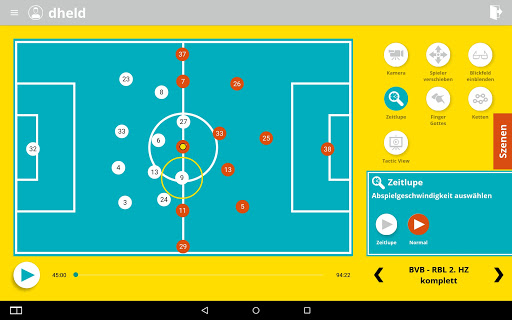
Rangnick at Leipzig also speaks about the use of modern technologies. In a previous article we discussed about Soccerbot 360, a system which helps Leipzig to replay whole games in animation mode often helping players revisit certain moments of the game to revise the mistakes and correct them. Soccerbot also is a mini labortary collecting data of matches and helping the analysts and coaches at Leipzig to come up with counter-tactics for their opponents.
Analytical side of Soccerbot
With Ralf Rangnick almost sure as the next coach of next Milan it is expected that he brings data science and modern techniques to our club which is in a huge need of an upgrade
TRANSFERS
Before Klopp’s arrival Liverpool’s transfers was a mess. They sold Luis Suarez to Barcelona for 81 Million to Barcelona and never replaced him. They invested in players such as controversial striker Mario Balotelli, misfiring Christian Benteke, Benifica’s Lazar Markovic. Even under Kenny Dalglish Liverpool made a few busts in the form of Andy Carroll, Stewart Downing and Charlie Adams. With Jurgen Klopp at the Helm and Ian Graham supplying him with mountains of data he collected of over 100,000 players it was easier for them to sign players and Jurgen Klopp has hardly put a foot wrong. Mane, Robertson, Van Djik, Salah have all been crucial parts of the Liverpool team’s success in the last 2 years.
It is no co-incidence that majority of Klopp’s and Liverpools purchases are players developed under the watch of Rangnick. Sadio Mane, Firminho, Naby Keita are all players that have been trained under Gegenpress in Red Bull teams or Hoffenheim. With Milan spending nearly 500M in the last 3 seasons and yet struggling to make it out of the rut they seem to be in, it is the need of the hour that somebody who knows business steps in to make more smarter purchases.
FINANCES
While is it difficult for Milan to emulate Liverpool financially given the marketability and massive TV deal of the English Premier League there are a few pointers Milan can take from Liverpool. One of the main sources of revenue for a club is match day ticket sales and Liverpool under the FSG ownership own 100% rights of Anfield. In the year 2018-19 Liverpool made 91 Million euros from stadium alone. And without rent to be paid to the municipality 91 million represents a pure profit for the club. This is against the 34 million made by Milan in the same period. And since Milan don’t own the stadium they pay 15M rent to the Milan municipality (doesn’t include maintenance costs which are extra) has proved to be a financial burden for the club. Perhaps this explains clearly as to why both Milan clubs want to move out of San Siro with an agreement with the municipality ready.
Liverpool bought Filipe Coutinho for 13M in 2013 and he was a central part of Liverpool’s title push in the 2013/14 season. Later he became an integral part of Liverpool around which Klopp built his team around him. Later in 2017 summer Barcelona saw Coutinho as a replacement for their legend Andres Iniesta. In 2018, Coutinho departed Liverpoool to Barcelona for a fee of 145M. it represented a capital gain of 132M and it helped liveprpool reinvest without being affected by Financial fair Play. Milan on the other hand have only made 55M profit in the last 5 years from player sales. Player sales represent quick way of making gains for clubs and selling players is something Milan should learn to do in an era where Milan are no longer under the financial might of patron Berlusconi and financial fair play of UEFA.
CONCLUSION
In a bid to recreate the Liverpool model Milan engaged in month long negotiations with Ralf Rangnick and seem to have finally got their man. But to revive a fallen giant is no easy task but an expert at rebuilding sides Ralf would relish the challenge of excelling in the very club his mentor and inspiration Arrigo Sacchi did. Klopp has shown the way how intelligent investment combined with good man management can reap rewards. What worked for Klopp was how the Liverpool board placed their faith in him and did not sack him the moment things seem to go bad. A genius like Rangnick deserves the same patience at Milan too.
In the January transfer window Milan was bereft of any patience for injury ridden Caldara and decided to send him back to Atalanta where he initially made a name for himself. This made Milan one man short in terms of defensive cover and with duarte out until March they decided to dip their hand in the transfer market and find a more experienced partner for Alessio Romagnoli.
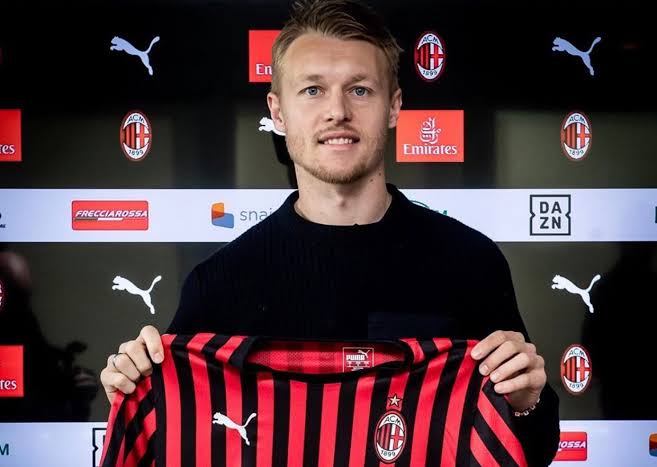
Simon Kjær was a player of Sevilla on loan to Atalanta. Having worked with Massara in their stint toghether at Roma, Massara convinced Kjær to join Milan on a 6 month loan. We look at 4 reasons why keeping Simon Kjær would be beneficial for Milan
1. Tall, Physical and Pacy
Simon Kjær has a height of 6ft 3 inches (191 cm) which makes him a very difficult player to deal in 1v1. His long legs make it extremely difficult to side step him and aerially he brings in a presence musacchio or even bonucci couldn’t. Against Juventus he showed his more agile side of the game by sprinting across the pitch and take away the ball from Bernadeschi and preventing a goal-scoring opportunity. These features helped Pioli to successfully push up his defence to a high line and press his opponents.
Kjær sprints across to beat bernadeschi to the ball
2. Good Long ball skills
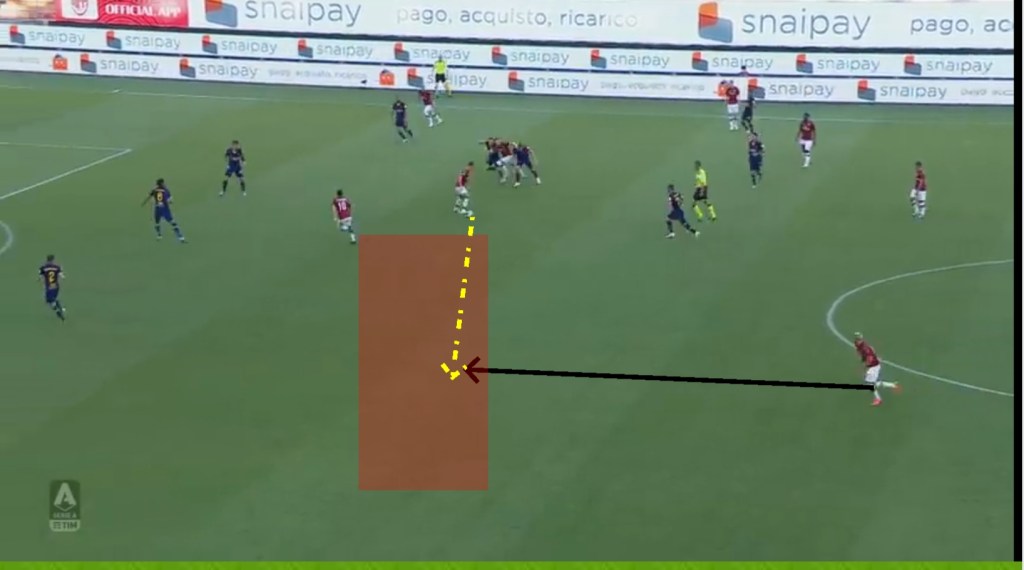
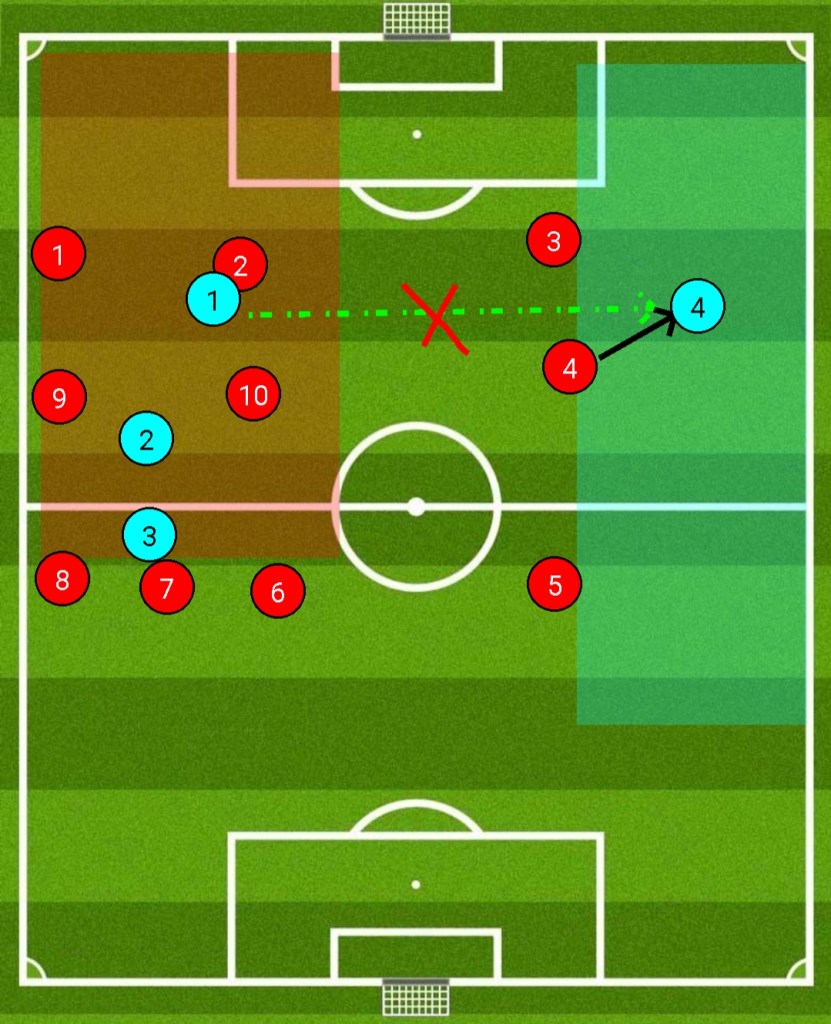
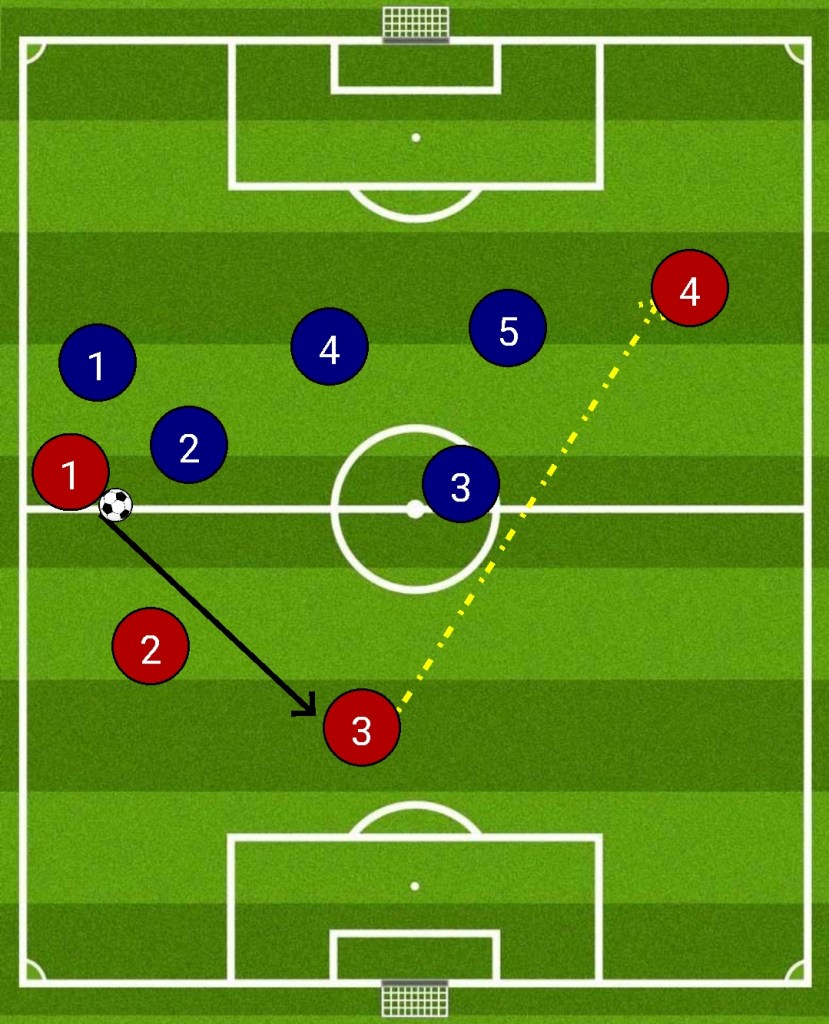
In a particular sequence of play, Milan had the ball out to Theo on the left wing to charge forward but was pressed by rigoni and 2 other Lecce players. Theo quickly passed back to the calm Kjær who quickly punted out a brilliant long ball to samu Castillejo on the right wing effectively switching the play and catching Lecce disorganised in defence. It was not the first time that Kjær has been good with the ball.
You can see how Theo (no.1) passes the ball back to Kjær when pressed who immediately passes it to Castillejo (no.4)
3. Low Buyout clause
Theo’s buyout clause comes at a mere €2.5M which in today’s market circumstance would be a top bargain. A player of his quality and experience can give another 2-3 years of prime and can even provide good cover in case of injuries to other players.
4. Fit for Rangnick’s tactics
All said and done Kjær with his skillset and his physical attributes would be tailor made to suit Rangnicks agressive style of press. Rangnick, a master of bargains, would definetly not be overlooking the chance to sign the Dane at €2.5M given his wealth of experience in serie A.
Technology has been a constant part of our evolution. From the invention of the cartwheel to missions manned by men to the moon technology has advanced us forward in a better understanding of the universe.
In Football technology has been introduced into almost every facet of the game. We have Video Assistant Refree to review refree decisions, goal line technology to understand whether the ball crossed the line, video analysis used for scouting, data sciences to objectively measure performances of players and medical advancements to treat injuries and prevent them.
In these fast moving times, coaches are hired and fired on his ability to bring the best out of players and players would be sold or moved on to other clubs if they do not reach the levels of potentials expected. The answer to this problem was answered with technology at its epicentre. Enter Soccerbot 360
When quizzed about soccerbot Ralf Rangmick said this “a machine that simulates previous games and allows players to relive key moments of matches. It’s PlayStation football, but with your feet. The players enjoy it so much we have a hard time getting some of them to stop.”
With this article we dive in-depth into Soccerbot 360 and how it has helped RB Leipzig develop better technique and cognitive abilities. We have also provided you a YouTube link at the end of the video that shows how Soccerbot works which helps in giving a 360° analysis on this technology.
What Is Soccerbot 360 ?
Soccerbot 360 is a simulation device that helps coaches and training staff to design innovative football training techniques. It is a highly innovative and flexible tool to unlock potential trapped inside players. From a coaching perspective, the 3 dimensiomal nature and various tools help coaches to have a tactical analysis of the player.
The Workings Of Soccerbot 360
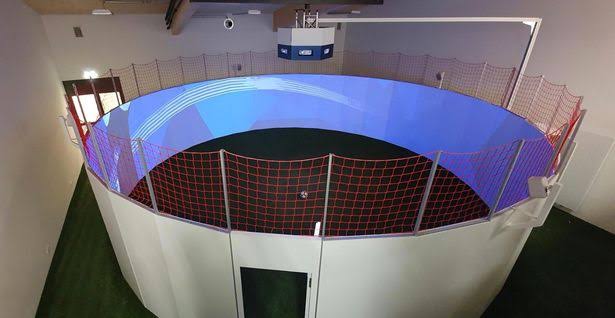
Soccerbot is a circular structure which has a diameter of 10 metres.
The circle is made up of segments where video projections are made.
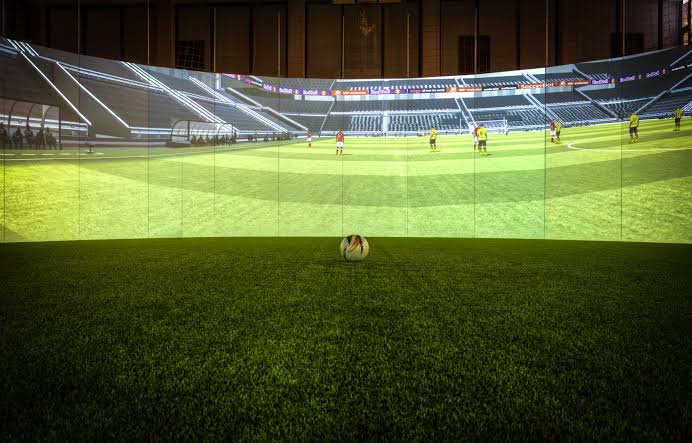
A visual inside the soccerbot
Due to its circular nature the football would bounce back from the panel to the player waiting in the centre. The structure is equipped with motion sensors and high speed cameras. This helps the coach and his training staff to collect data regarding the player. They allow them to understand which foot the player used to complete the training assignment. The inbuilt system analyses the processing time the and ball contorlling foot. Some of the drills inside the Soccerbot include “Find and hit the shown target” or “Hit as fast as possible a flashing square”.
The Advantage of Soccerbot
I am sure by now we have understood a fair deal of how Soccerbot helps coaches to analyse a player. But with recent advancement and tweaks the machine has increased in utility
Cognitive skills
Cognitive skills (mental aspect of processing and acquiring knowledge) is the core aspect of a players development. The Soccerbot with their various training drills helosnto develop the mental abilities of players in a simulated environment that is similar to real life situations. With the settings in Soccerbot the results produced by the players are objectively mesured by the coaches and training staff and gives them an idea on how to improve. The Soccerbot helps to re-live the game played by Leipzig in the Bundesliga. This is then used by the coach to recreate sequences from the game to help players to make better decisions. Another aspect of the device is that it helps to regulate stress levels (hard, extra hard etc) between different difficulty levels which once again improves decision making when players are under pressure.
In Game Analysis and Benchmarking
The Soccerbot 360 has a lab like standardised conditions to make tests and collect data. It helps in understanding the strentgh and weakness of players.
The Soccerbot also helps to collect stats and movement profile like heat maps. This also gives coaches of tactical failures and game analysis on how they were beaten (incase).
Conclusive remarks
Technology offers the chance to what is said to be as “reducing the margin for errors”. Of course no system is fool proof as we have seen with goal line technology and VAR a few days but it helps make more educated judgements.
A device like the Soccerbot would definetly upstart a “more scientific, less error prone” approach since Milan have been in a crisis in terms of quality. With Ralf Rangnick said to be the next coach of Milan one can hope that these methods can catapult Milan onto the right side of things
A global sport like football is constantly analysed and evaluvated by executives, beaurocrats, experts and even fans. Fans talk about players, playing skills, coaching, tactics, training and evenutally the results obtained by their clubs.
But as Jose Mourinho explained in one of his stints as a panel experts for Sky sports, the fans only see the icing and cherry on top of the cake. There is hours and hours of work that goes into the preparation of players to play week in week out and very often the medical team could be described as a very “unnderrated” part of these preparations.
Very often, the season of a club could be affected by injury to its key player and it could even mean they miss out silverware for the season. So physical assessment of players is pivotal for the club.
Milan was a pioneer in the field of sports medicine. The now world famous Milan lab extended the life of many players well into the 40’s and helped Milan to a lot of silverware with its innovative methods.
In this article, we will look at the now famous Milan Lab, the brains behind Milan lab and its decline in the last decade.
BIRTH OF MILAN LAB
Milan spend a massive €30M in the January transfer market on Fernando Redondo, the creative genius of Madrid. The Argentinian player was nicknamed El prinicpe by Madrid fans and had helped the club to 2 Uefa Champions League. A regista with pace and style Redondo was in the peak of his career when milan shelled out such a big sum. Madrid fans protesred the sale but the deal was already concluded But it didn’t take long for it all to fall apart. Redondo injured himself while walking on a treadmill. It took Milan fans a total of 837 days to see him again. Milan’s €30M went down the drain and they never wanted it to repeat again.
Fernando Redondo: The €30M loss
Back in the 1980’s Legendary Ukranian coach Valeriy Lobanovskyi teamed up with chiropractor Anatoly Zelenstov (doctors who specialise in muscle treatment) to analyse players physically and conduct various scientific tests and analysis to ensure players were fit for Lobanovskyi’s intense football. Milan decided to take the same route by investing in sports medicine.
JEAN-PIERRE MEERSSEMAN, THE SUCCESS OF MILAN LAB AND MILANS SUCCESS ON THE FIELD
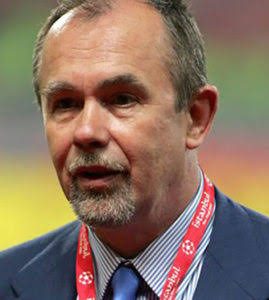
To successfully duplicate Dynamo Kyiv’s work Milan needed a doctor who could sucessfuly reproduce the work of Zelenstov. Milan found such a doctor in Jean- Pierre Meerrseman, a Belgian doctor who also had specialised in psychology and Kinesiology (scientific study of human or non-human body movement). A doctor used to unconvential methods and defying medical practices and with his help, they started the famous Milan lab in 2002. A centre which had cutting edge technology to predict and manage players injruies.
As the saying goes “Prevention is better than Cure”, the motto of Milan Lab was to be ahead of the times by scientifically analysing samples and preventing injuries. This was done through a very intricate system of data collection and algorithms. Every 15 days players were tested with various physical exercises and this data was analysed by doctors and mathematicians. This data through various formulas developed by software engineers in partnership with Microsoft helped prevent injuries. “You could do an analysis of a simple jump, put it into the system and predict with a 70 per cent accuracy whether the player is going to get hurt or not,” Meersseman said. Meersseman used data science to have a complete analysis from every possible angle instead of individual inputs from each specialists. By 2013, Milan Lab performed 1.2 million phsycial tests on Milan players. If players were injured , they were given special care under Meersseman
A famous anecdote of his prowess was one of his very first cases after being appointed at Milan. Clarence Seedorf was constantly troubled by groin injuries and it has led him to decline and be written off by Inter. Meersseman conducted a thorough search of Seedorf and removed his wisdom tooth after which the pain vanished and helped Seedorf re-inventing himself and becoming a legend in the red and black colours.
Jean-Pierre Meersseman: The genius behind the Lab
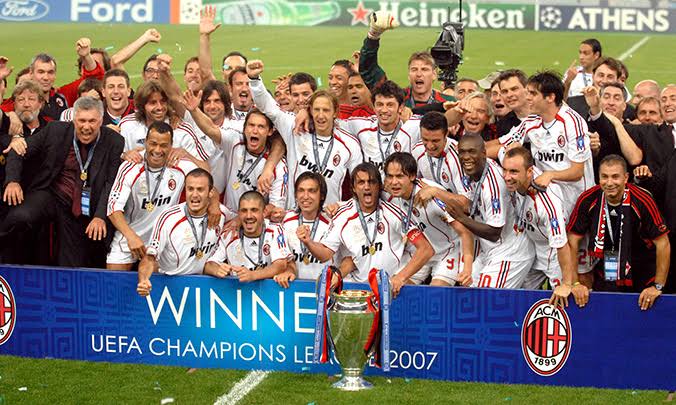
Infact Milan players were ageless under Meersseman so much that Maldini and Costacurta went on to play till the age of 40. The Milan squad that won the UEFA Champions league is to date the oldest ever squad to win the trophy and Maldini is the oldest captain to lift it. Coincidentally Meersseman’s appointment clashed with that of Carlo Ancelotti’s appointment as head coach of Rossoneri. Toghether with a mountain of talent and cutting edge technology and data science they forged a winning team. Milan between 2000 and 2010 went onto win 2 uefa champions league, A coppa Italia and a scudetto.
The oldest squad to win the Champions League ever all thanks to the Milan Lab
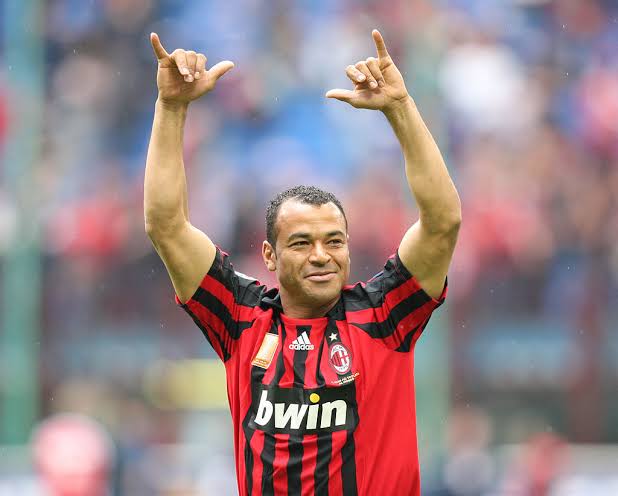
Meersseman was also given power to sign players by the top management. With his extremely analytical ability he was able to sign many players above the age of 30 at low costs since players above 30 was considered to be on the decline or close to retirement. A famous example is Cafu who joined Milan from Roma was 32 years old. With the help of Milan Lab, Cafu was able to give Milan 5 more years at the top.
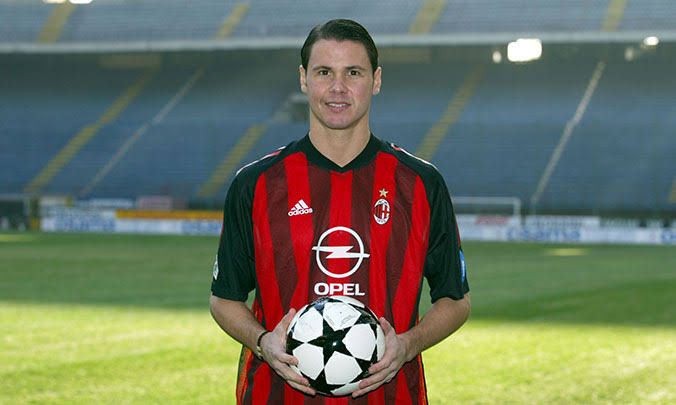
A product of Milan Lab: Cafu
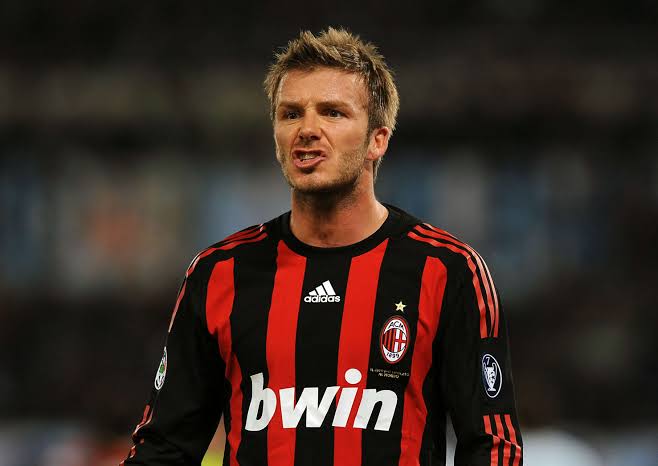
A equally famous anecdote would be that of David Beckham when he joined Milan on loan in 2008. Meersseman adviced him that he could play until 38 and Beckham took his advice. He was always given power to Veto transfers and one hugely popular one would be of Aly Cisshokho’s transfer being cancelled last minute after Milan Lab found irregularities with his teeth.
Another successful product of the lab: David Beckham
Meersseman said “You can drive a car without a dashboard, without any information, and that’s what’s happening in football. There are excellent drivers, excellent cars, but if you have your dashboard, it makes it just a little easier.” Here he spoke about how it is important to have champion players and a champion coach but with data science and analysis it give you that extra mile on pitch.
THE DECLINE
So where did it all go wrong ? The fall began when Carlo Ancelotti left Milan in 2009 to join Chelsea. Milan then invested in young Allegri and despite Allegri winning the scudetto, Milan had already started suffering losses. This led to huge budget cuts and Milan lab was cancelled.
“For instance I had the players eating carbohydrates within 20 minutes after a game. Being in Italy it would be spaghetti. A cook would come in the locker room. It was a hassle to do but it worked. Then they cut it out. They cut here. They cut there. And all of a sudden it doesn’t work. These days I mainly check the players when they come in and go out” Meersseman said in 2013.
Although Milan lab retains its name, it pales in comparison to the one under Meersseman’s Lab. The cutting-edge technology no more exsists and Milan have suffered many more losses like that of Redondo in Conti and Caldara.
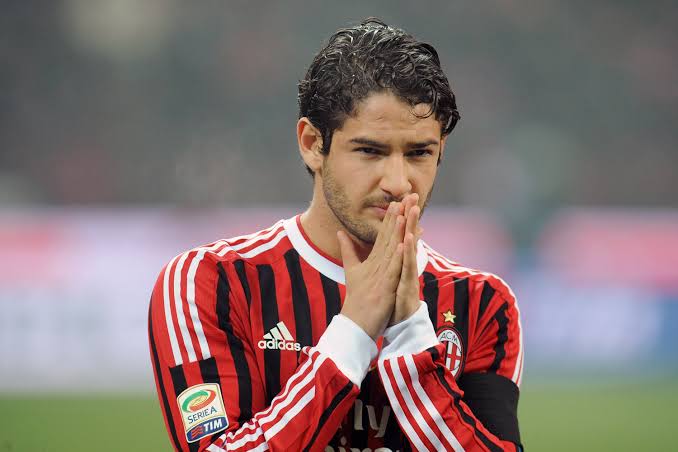
Could Meersseman have saved Pato from his injury curtailed career ?
Meersseman left Milan in 2010 and works as a consultant practitioner for clients but his work was revolutionary. One wonders that if Had Milan retained this great man would they have lost the Wunderkids like Alexander Pato and El Sharaawy to injuries and completed signing of Caldara and Conti for a combined €60 Million on paper.
Caldara only played 2 games for Milan after a €35M deal. Would Meersseman have approved the transfer ?
With Rangnick looking closer and closer to Milan, Milan’s ailing Lab would be something he would have to look into.
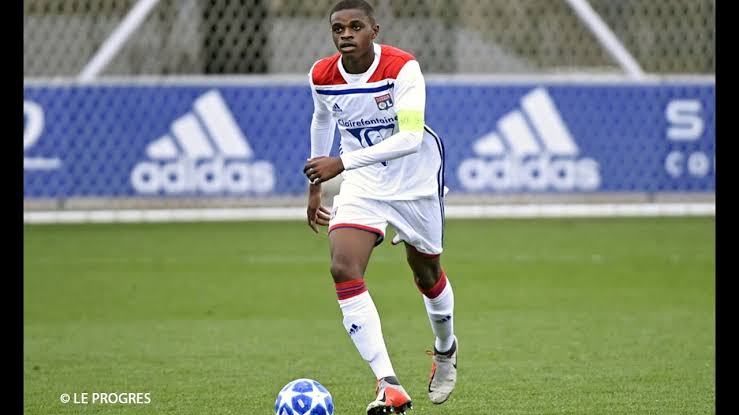
Kalulu has been used as a Centre back in Lyons last few matches
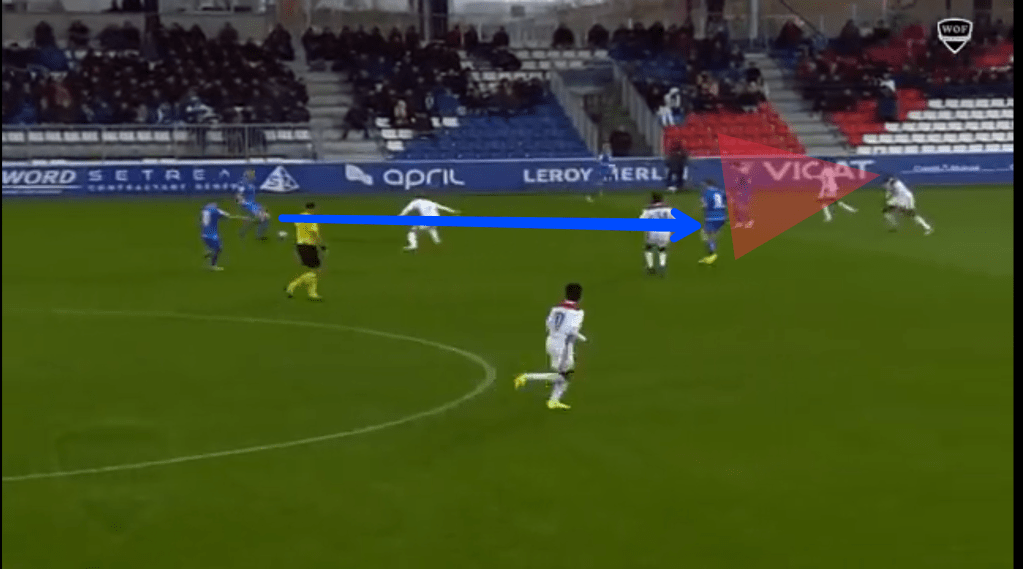
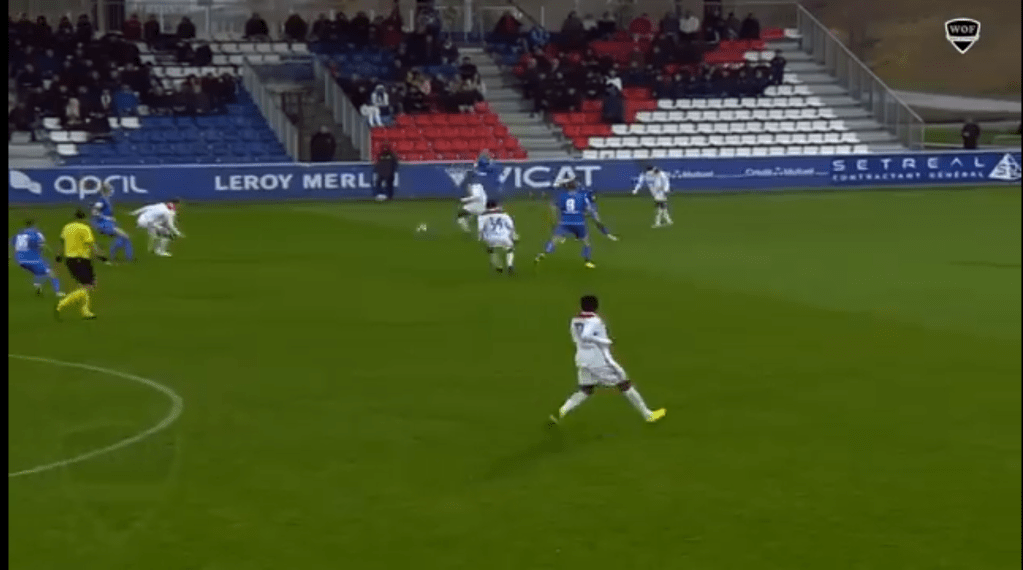
Kalulu has been deployed in both centre back and right back by the Lyon youth coach. Recently Lyon have been using a 3 at the back formation where Kalulu has been positioned at the centre of the defence. Kalulu has the versatility and pace which gives the coach multiple options
Kalulu is more of an attack minded full back who likes to drive forward with the ball. With his explosive pace alongwith his close control Kalulu has the ability to beat opposition players at will. He does not panic out of a situation when pressed by opponents and keeps the ball close to his feet and finds a teammate with a pass who comes to help him
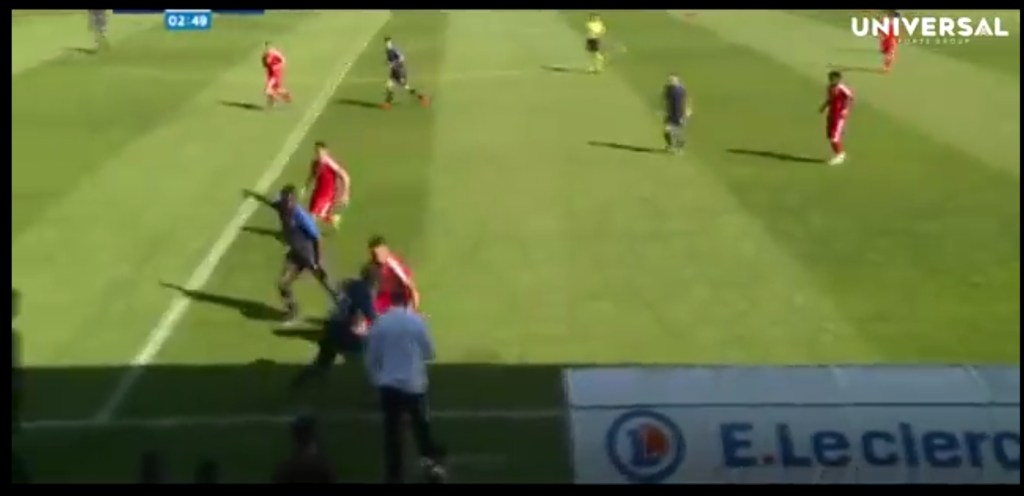
Kalulu takes on a defender and beats him
Kalulu always prefer to cut inside the opposite final third and find an opponent or swing a cross inside the box to find a teammate.
Kalulu spots a run by Lyons striker but notices that he is offside. So he checks his run before spotting a cross so as to give time for the striker to correct his run. It eventually became a goal for Lyon and an assist for Kalulu.
Although his distribution and passing isn’t the best he always has the eye to find a teammate a pass using long balls much similar to how bonucci finds players. This helps Lyon to launch quick counter attacks on opponents as well beat any low blocks when Lyon is in posession
Kalulu who played as a Centre back in this game spots the run of a full back and passes it to him.
Defending wise Kalulu always used intelligent positioning and reads moves off the opponent. Although he is always seen pressing forward with the ball, you can see him track back when the ball is lost on the counter attack. He relieshes 1v1 challenges with opposition wingers or fullbacks. With his pace and a huge frame Kalulu makes it difficult for opponents to bypass him easily. Being really muscular he does not back from using his physicality in taking opponents away from the ball. In the image below you can see how Kalulu reads his opponents’ play and dashes across using his pace to make an interception.
Kalulu reads his opponents’ move and is rushing across to intercept his opponents passKalulu intercepts the pass
Areas of Improvement
A player who is yet to get senior football experience under his belt would need some adjustment time to get used to a highly tactical and intense league like serie A.
Now while Kalulu is a pacy and tricky customer he often tries to beat too many opponents instead of going for passing to a nearby teammate and gives up posession.
Kalulu fails to release the ball on time and hence gets boxed out and has nowhere to go and gets disposessed
Kalulu also has very less spatial awareness when darting forward to join attacks and gets beaten on the counter. Against better opponents, Kalulu strugges to get back and teams may exploit this weakness
It is no doubt that coaches relish players who play in multiple positions. Being a right back who can play in the centre gives a coach multiple options when deciding upon the formation and style of play.
Modern footballers have increased in speed and that has forced even defenders to up the ante as they have to match the explosive wingers and strikers for pace. Kalulu would bring much more pace to currently a very slow backline.
If the rumours are true and Rangnick does come to Milan, Kalulu is tailor made to suit his style where he can be moulded into suiting his gegenpress along with ability to play in multiple positions as shown by Klostermaann in the current Leipzig team.
Ever since Bakayoko’s success in Milan and cult status in the red and black colours, Milan have been searching for a profile younger but similar to that of Bakayoko.
Milan found a player that was tailor made for their requirements in the club managed by an Old ally. The player ? Florentino luis. The club and the Ally ?- Benifica and Milan legend Rui Costa. Milan have been negotiating with Benifica since December and now talks have intensified in the last few days with Gazidis meeting Benifica’s hierarchy.
A player which has been compared to Kante seems to be yet another jewel from the estemeed Benifica academy. Known for players such as di Maria, Eusebio and Jao Felix recently Florentino Luis has come fort with a big reputation already. Let us a take a look at his features to see what he is all about
Physical Profile
Club: Benifica SC
Nationality: Portugal
Age: 20
Height: 183cm
Foot: Right
Position: CM, DM
Position and Pre-Benifica days
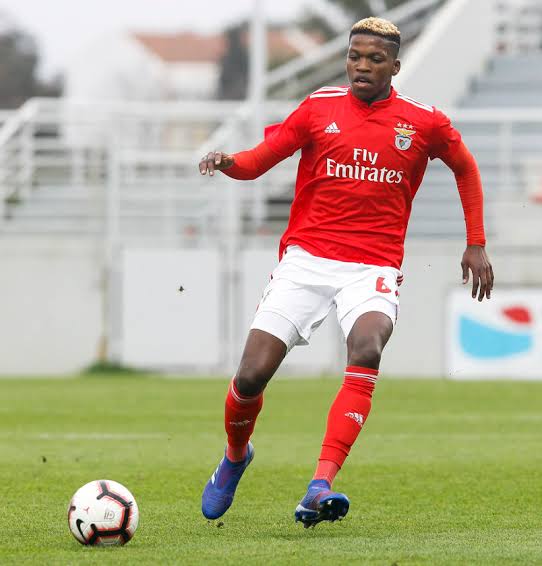
Florentino joined SC Benifica youth academy when he was 10 years old. But due to his intelligent reading of the game and defensive skills he saw a meteoric rise to the top. The then Benifica Youth Bruno Lage coach often deployed him in the Centre-Mid position. When Lage was promoted to be the coach of Benifica he brought Luis along to the senior squad.
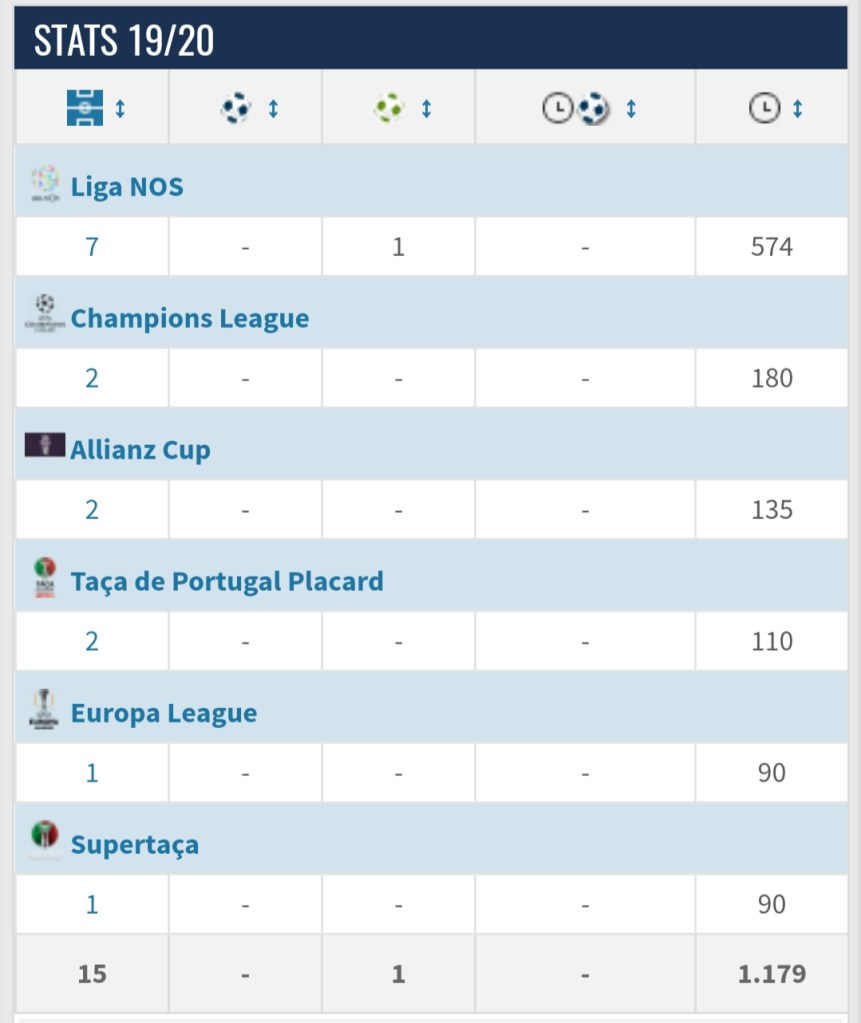
Florentino played his first game against Nacional in a 10-0 drubbing of Nacional. He impressed his coach so much in that match that Bruno Lage started using him more often in the Main XI.
Florentino Luis is very similar to players like Claudio makelele who is know for making the holding role or the anchor role very famous in football. Although Luis is taller and more agile than Makelele was.
Style Of Play
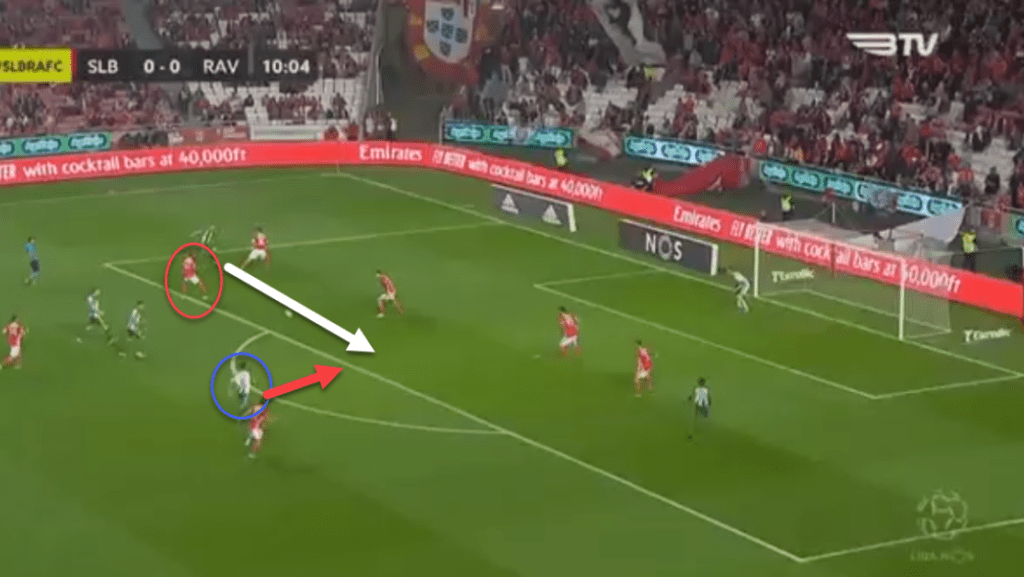
A key component to understand Luis’ style of play and positioning is understanding the system employed by Bruno Lage. He uses a modern adaptation of a 4-4-2 which sees high tempo and plays posession football. When in posession full backs push forward and wingers mover into the centre with one centre midfielder pushing football and Luis staying back. A forward drops back to create a passing option between the lines and this creates an overload in the centre.
Florentino Luis forming a triangle with the centr backs in Lage’s dynamic possession style
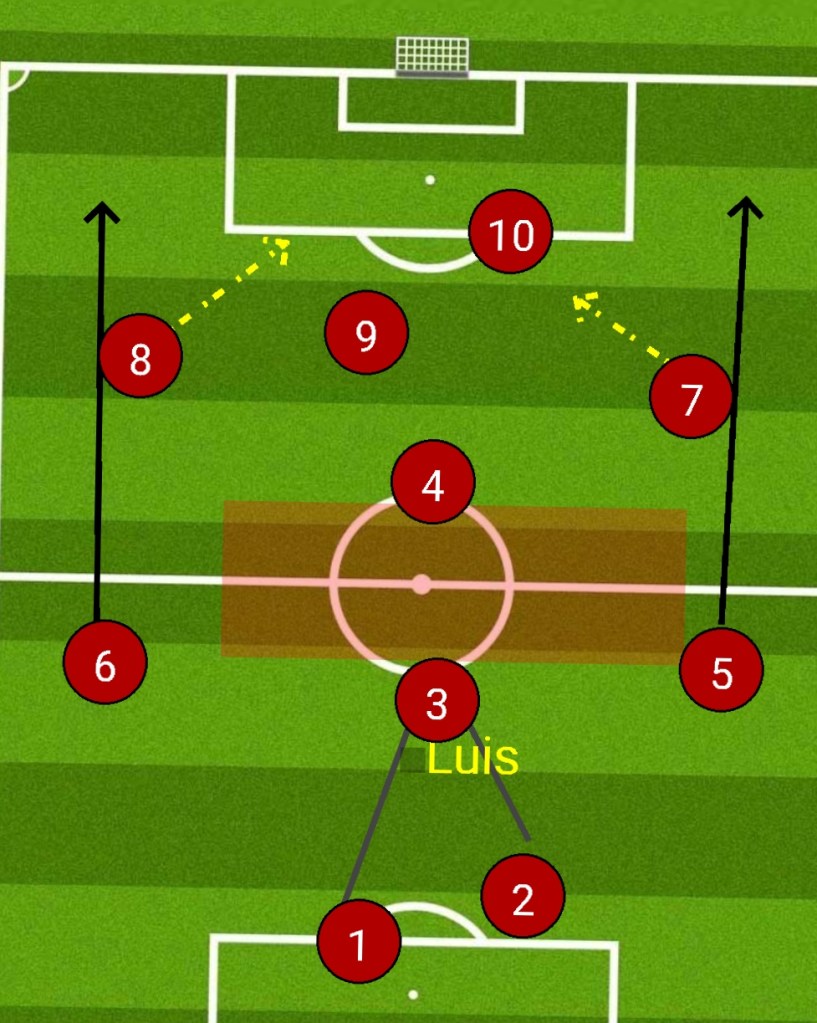
Florentino Luis sits deeper and forms a passing triangle which brings the ball out from the back. Luis tries to pick out a pass to more advanced players or a player between the lines while distributing the ball. Luis is tasked with stopping counter attacks when benifica lose the ball.
Defensive Abilities
Credits:Footballbh.net
The core of his talents lie in his defensive abilities and understanding of the game. In addition to his talents, Florentino’s high work rate makes him a force to reckon in the centre of midfield. Luis uses various techniques to study his opponents moves before deciding to challenge for the ball. He tries to read the opposite player’s body posture, the pressure he has on the ball and what passing lanes he has so as to cut them off before evenutally dispossesing them.
Florentino studying his opponent so as to find an apt way to dispossess him (Credits:Footballbh.net)
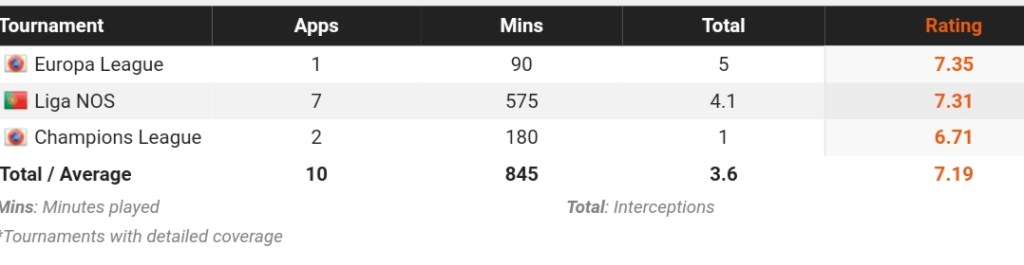
Florentino’s highly apt timing for all his tackles ensures he dispossess them cleanly not giving away too many fouls
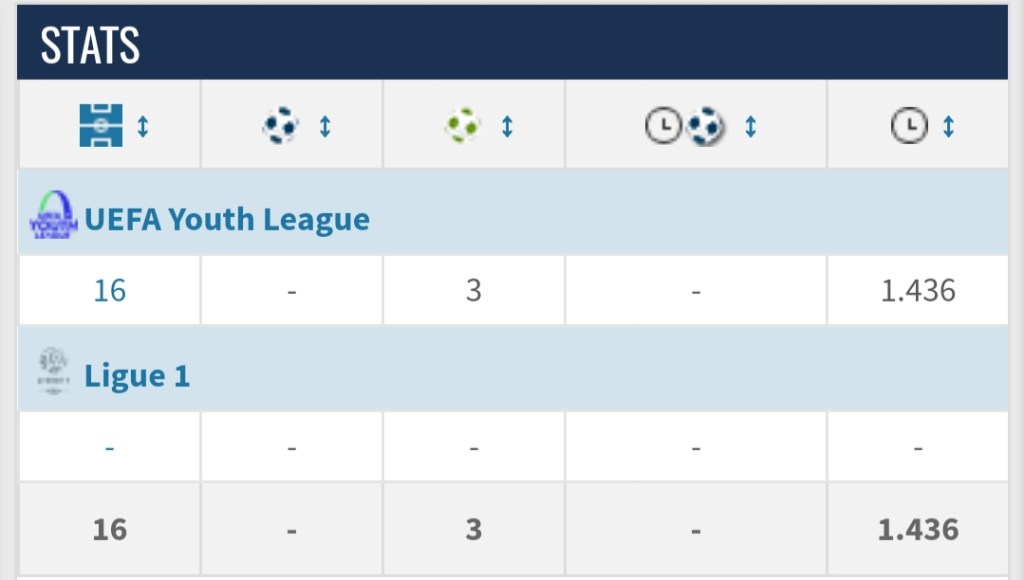
Tackling stats for Luis as per whoscoredInterception stats for Luis as per whoscored
Attacking Play
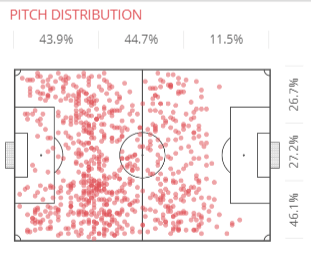
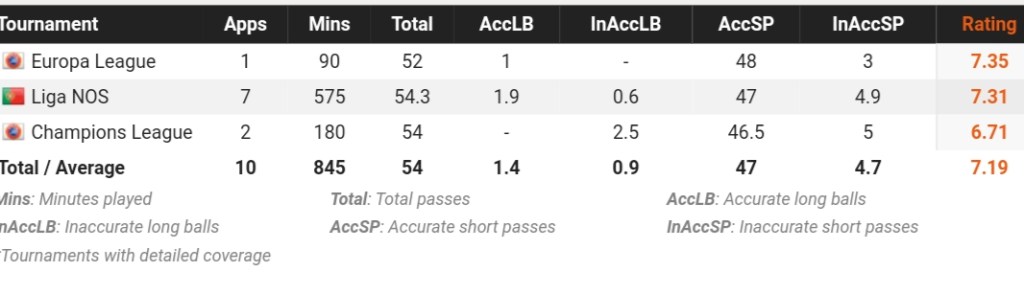
As explained earlier, Lage’s high intensity passing game is based on interchange in positiins and quick passing for the ball. Luis is a pivot in constructing the attack. He always looks for runs made by his teammates and picks them out. His uncanny ability in analysing passing options makes his passing completion stats at 93%.
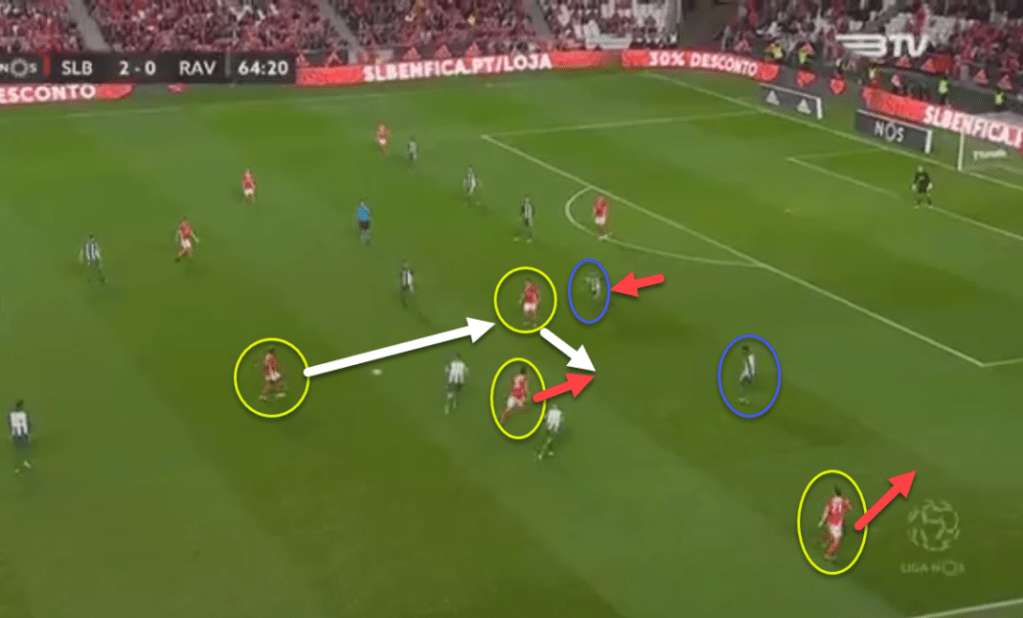
Luis passing stats as per whoscoredFloreninto Luis drawing the marker by making a pass to Almada who then passes to Chiquinho ho who is seen making a run (Credits:footballbh.net)
Weakness
Like all young players Luis needs to improve and gain experience in terms of positioning and tactical reading of the game. Often his aggressive nature comes as his undoing when he rushed into a challenge and gets dragged out of position creating space for opponents to pass. Florentino shoud learn to judge his surroundings also a bit better
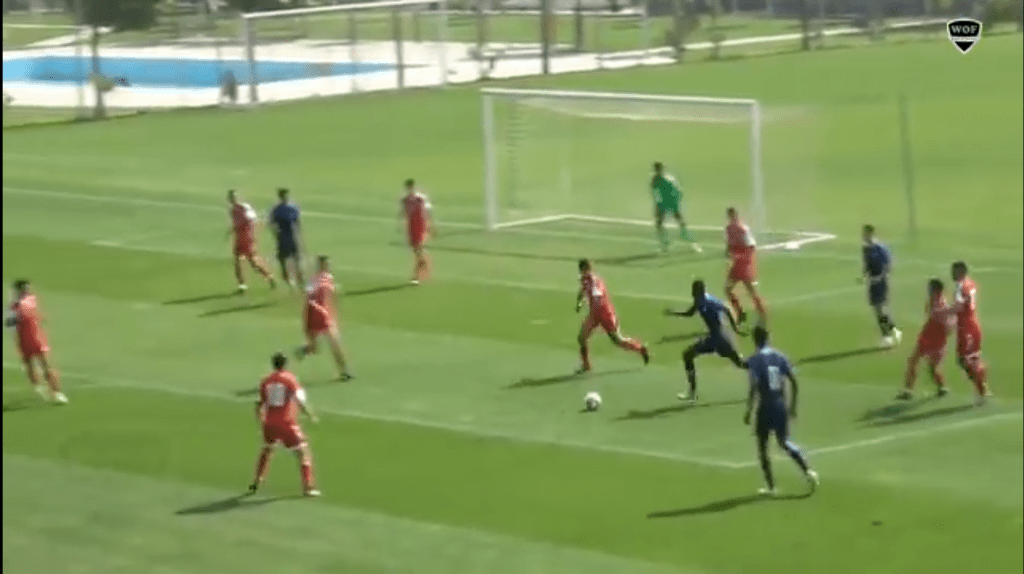
Luis makes a mis-judgment and tries to dispossess the person on the ball which leaves space for the opponent to run into space to recieve a pass. (Credits footballbh.net)
Due to his agreesive pressing nature he also tends to get side-stepped by opponents who are faster than him as seen in the image below
Florentino gets sidestepoed by his opponent and he loses him (Credits footballbh.net)
Conclusion
Portugal has a recently become a hotbed for talent and Florentino has become a player than could fit many systems due to his many special qualities. Although there are some mistakes which can be ironed out with more playtime it is worth nothing that so much progress has been made by Luis without him playing a full season.
With the corona pandemic having threatened to cancel the Serie A season 2019/20, football in Italy is once again going to resume with the coppa Italia semifinals on June 13th with Milan playing away to Juventus in the Allianz Stadium.
A 2 month break has created quite a gap in the memories of football fans this season. With a chronological structure we would like to recap the season for the fans
1. Formation of the new management
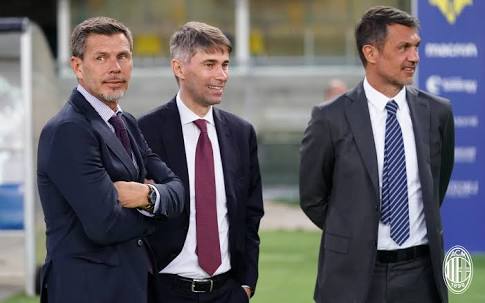
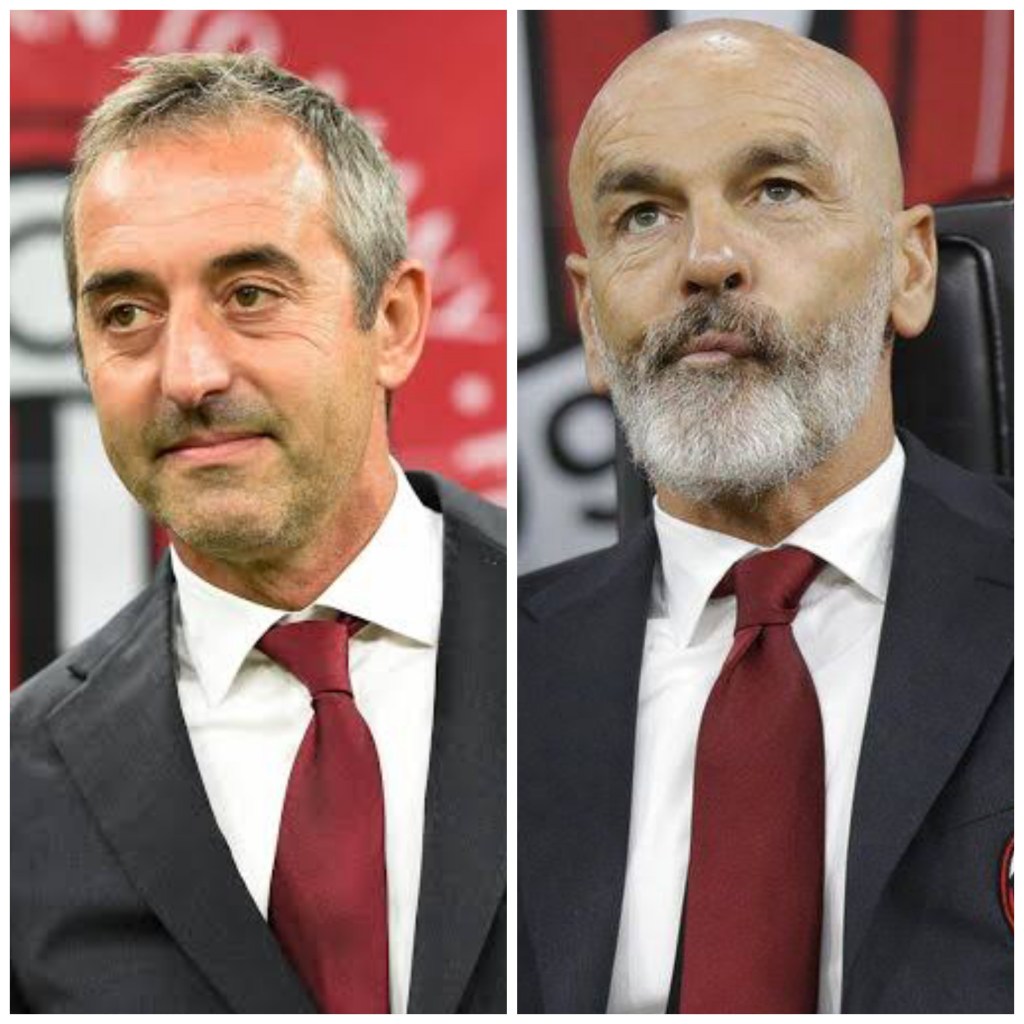
After quite a painful end to the 2018/19 season, Milan looked to a change in the management to lead a revolution. Gazidis and Elliot believed the best way to go about it is to entrust the project to none other than “Mr.Milan” Paolo Maldini. Maldini took his time to accept the role and went about recruiting to form his team of managers. He brought in, former teammate Zvonimir Boban as Chief of Football and ex-Roma director Frederico Massara as the Sporting Director. Perhaps the most important decision of them all that he took was appointing Marco Giampaolo as the new coach of Milan which drew mixed reactions but had the blessings of legendary coach Arrigo Sacchi.
The new sporting side of Milan’s top management
2. Good start, Stuttering journey and a complete catastrophe
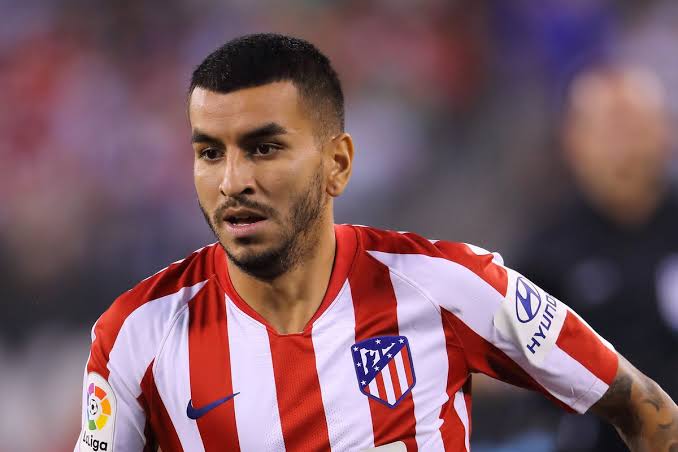
Milan sold Fan favourite Patrick Cutrone to much opposition to wolves for €22M. But they managed to bring a total of 6 players in the form of Theo Hernandez, Gabbia, Bennacer, Krunic, Leao and Rebic. Milan however missed out on prime targets such as Sensi who joined Inter and Angel Correa who decided to stay put at Atletico.
Angel Correa: A huge miss for Milan
Milan started well in the pre-season games playing the same fluid football played by Sampdoria but it all started off as a disaster in the first game of Serie A where Milan lost 1-0 to Udinese. Milan would go for 6 more games and Giampaolo would be sacked with a record of 3 wins and 4 losses in 7 games and only 111 days in charge. The shortest coaching stint in Milan. Maldini and Boban dipped their hand into the market and brought in Stefano Pioli despite “#PioliOut” trending worldwide on social media. Pioli would be in charge for rest of the season with a clause for an additional year if he qualifies for Europe.
Pioli In, Giampaolo Out. A failed expiriment with Giampaolo
3. Bad start under Pioli, resurgence and the beggining of the end
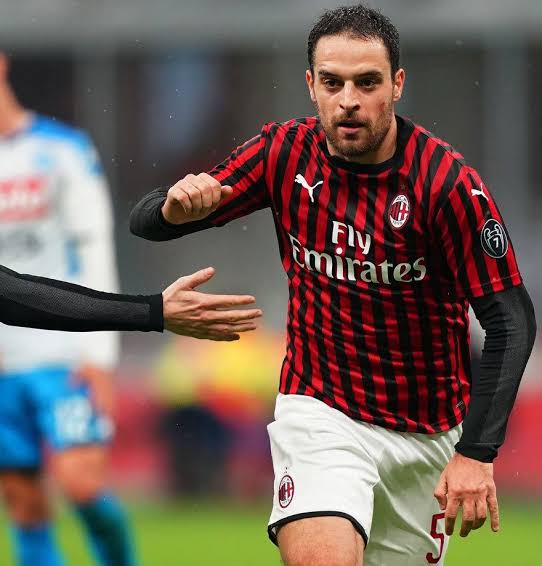
Pioli faced an uphill task of rejuvenation especially since he faced Juventus, Napoli, Lazio and Roma in the space of 7 matchdays . Draw against Lecce in his first match didn’t help and Milan lost to Roma and Lazio before grinding a win vs SPAL before losing to Juventus in a well fought battle and drawing to Napoli. Milan would then go onto be unbeaten in 4 games including Napoli before a scary trip to Bergamo beckoned.
Bonaventura scored a cracking goal to level the score vs Napoli.
4. The 5-0 loss to Atalanta, the loss of patience and a crucial return of a legend.
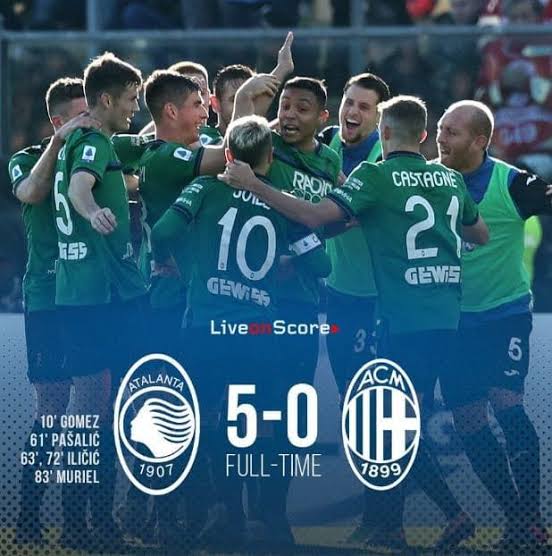
With Atalanta being a force to reckon in the recent seasons, a trip to Bergamo was always a daunting task. And boy, did Milan capitulate in style. 2 goals from illicic would complete a 5-0 rout of Milan making it Milan’s biggest loss since 23 years and a nadir for the clubs poor business of the last decade.
Lowest point of an already low season
The paparazzi had a field day. Questions were asked of Maldini and Boban. Critics were all over the poor performances of players who were lauded as the pillars of the club mainly Suso. The owners have seem to lost their patience, piolis sacking was mooted. All this for the big return of the big Swede.
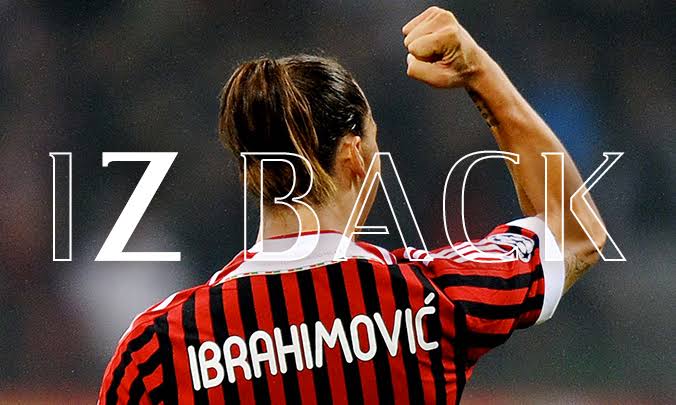
Zlatan is back
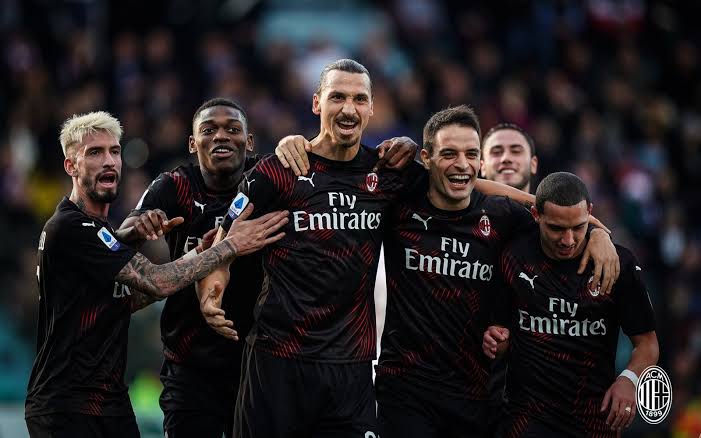
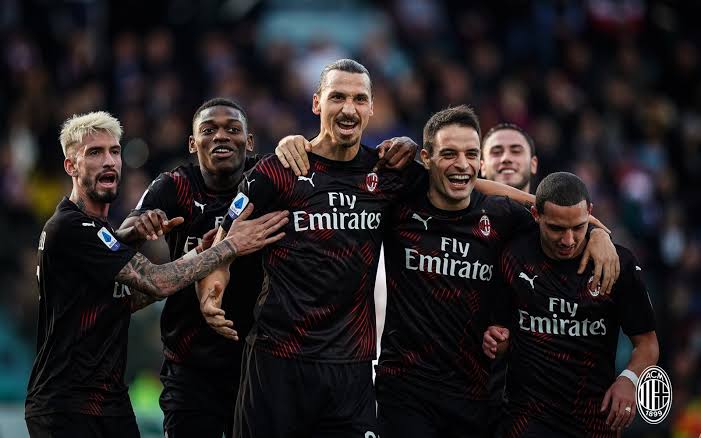
Milan finally brought back Zlatan Ibrahimoviç in a big ceremonious return and impact was instant with the swede netting a goal in a 2-0 win vs Cagilari in an away trip. The transfer led to an influx of confidence, experience and positive feelings into the clubs and led to the rise of other players such as Theo Hernandez, Ismail Bennacer and Ante Rebic.
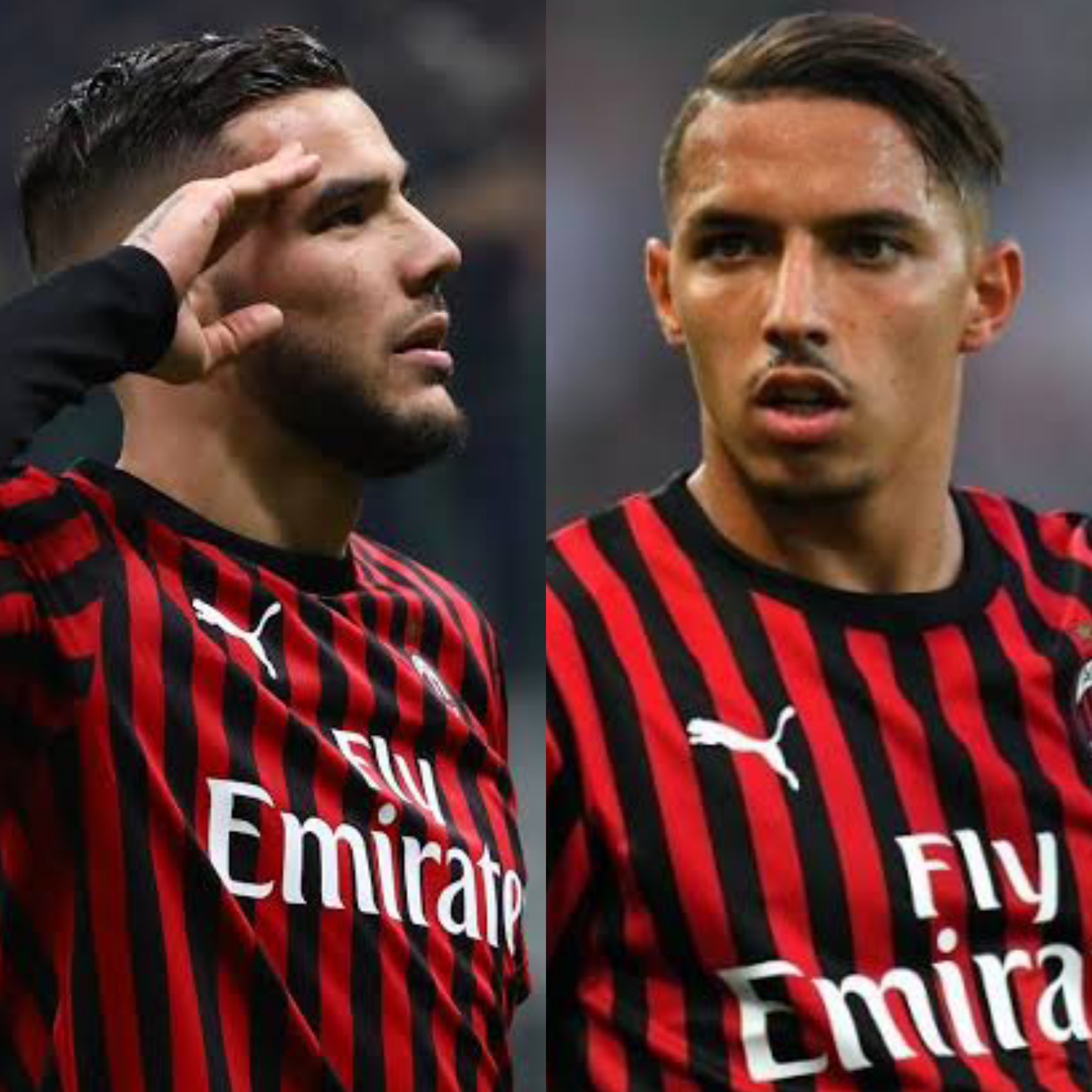
Theo Hernandez and Ismail Bennacer: Milan’s 2 gems
Theo established himself as the best left back of Serie A and was the top scorer for Milan in the league until he was overtaken by Ante Rebic who until the game against udinese had only started 1 game in the league. A change in formation to 4-4-2 and benching of Suso gave more chances to Samu Castillejo who took his chance with both hands.
Instant impact Zlatan scored on his first start since his returnRebic with a season changing performance with 2 goals against Udinrse
Milan also saw the emergence of Ismael Bennacer as one of the key players in new look Milan.
Milan brought in experienced CB Simon Kjær, Alexis Saelemaeckers, Asmir Begovic in the transfer window while re-calling Diego Laxalt from Torino.They sold Piatek to Hertha Berlin and loaned Suso, Caldara, Ricardo Rodriguez and Reina.
5. Progression in the Coppa Italia, controversial Semi-final, Dismissal of Key figure and Temporary Halt
Milan faced SPAL in the Round of 16 in its first appearence in the coppa Italia this season. One of the most easiest games Milan faced all season, Milan won the game 3-0 thanks a goal and assist from piatek (his last game for Milan before he left). Milan then won 4-2 against Torino in extra time thanks to a late surge from Hakan Çalhanoglu. Milan then progressed to the semi final and in controversial fashion against Juve Milan drew 1-1 where a handball was called against Calabria.
Boban was sacked by Elliot after his interview to Gazetta Dello Sport
In a completely unexpected outburst, Zvonimir Boban gave an unsanctioned interview to Gazetta Dello Sport and spoke about how he and Maldini were not consulted by Elliot and Gazidis for selecting Rangnick as the next coach of Milan. This resulted in termination of his contract with the club and left Milan into uncertainty again. Milan finished with a 2-1 loss to Genoa before the season was put to a halt due to pandemic.
Milan will resume their campaign on the 12th June with the away leg with no Zlatan, Samu and Theo Hernandez.















 The Milan Blog