Milan lined up in their usual 3-5-2 formation with star player Veronica Boquete making a return to the line-up. Juventus lined up in their usual 4-3-3 which would change to a 4-3-1-2 formation.
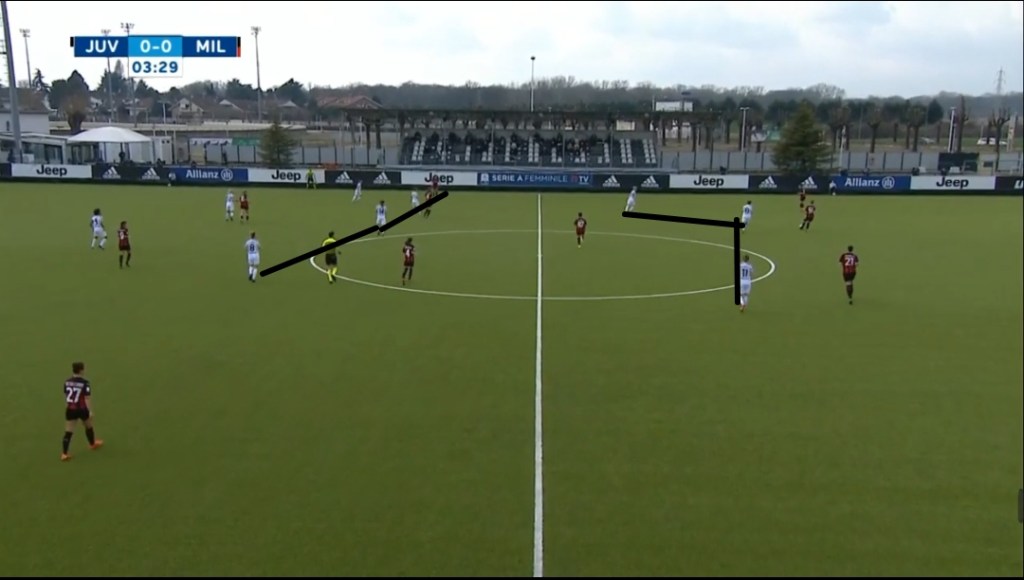
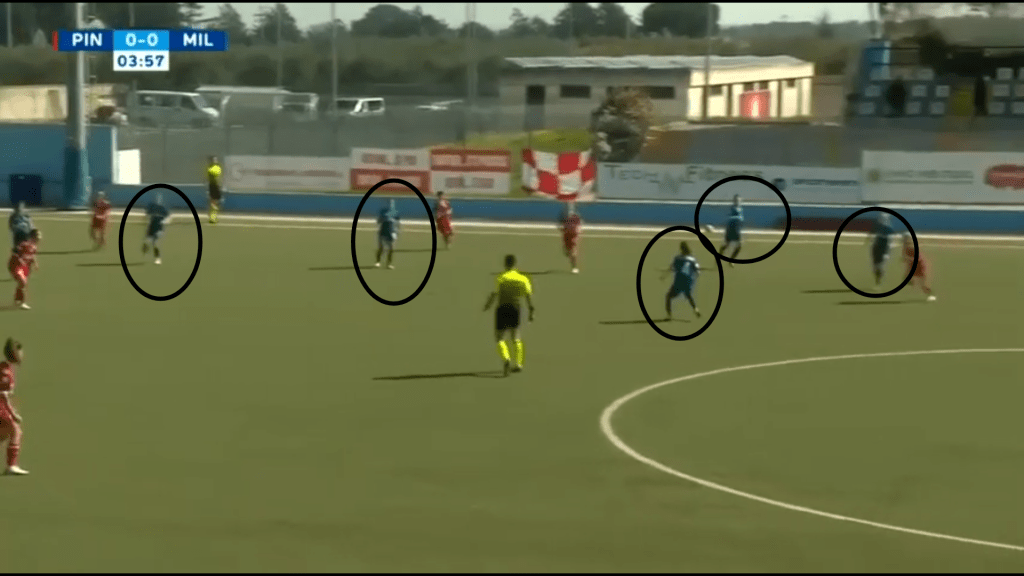
Juve unlike Pink Bari last time out, pressed Milan high up the field in an assymetric 3-4-3 formation off the ball using a man to man oriented press when Milan brought the ball out from the back. Boquete acted as a Deep Lying playmaker acting as the bridge between defense and offense with Grimshaw more of the attacking midfielder slotting in as a makeshift trequartsita and Hasegawa as the B2B. Bergamaschi played as a more attacking wingback while Tucceri was a more defensive wingback.
Juve’s High Press
FIRST GOAL
First goal came about as a result of Giacinti not being able to win her 1v1. Juve then made a vertical pass to Rosucci who pulled Tucceri away making space for Hyyrynen to make a deep cross to Hurtig and with no-one tracking the run of Bonansea Juve scored their first of the day.
SECOND GOAL
The second goal was a consequence of Milan playing a high line and Juve with a swift counter-attack, they were easily able to play a ball behind the defense and Juve’s left winger Hurtig was easily able to collect the pass and score the goal.
THIRD GOAL
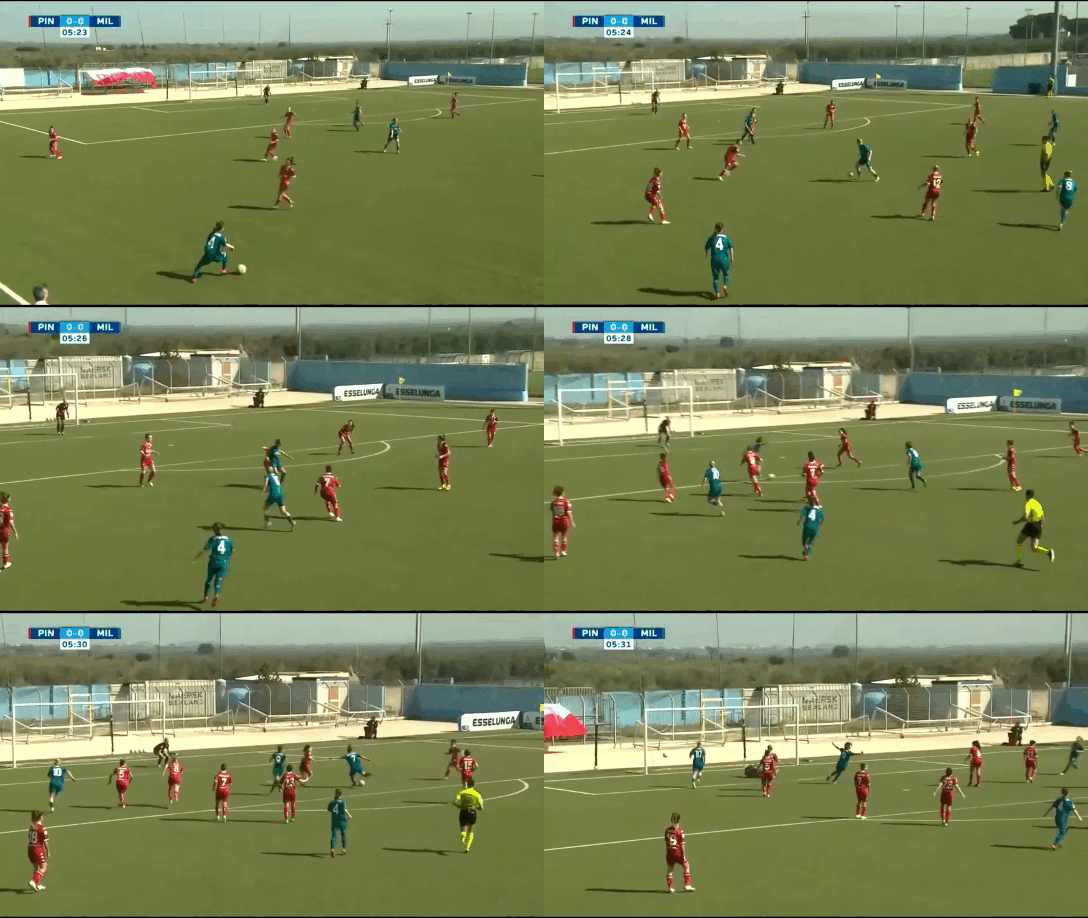
The Third goal came from Milan being unable to beat Juve’s midfield press. Grimshaw faced a real roadblock and passed back to Fusetti, a defender who is not the most comfortable player on the ball. A bad touch from Fusetti and Juve dispossessed her and started a counter attack creating a 2v1 situation against Agard and Staskova scored.
The Fourth Goal
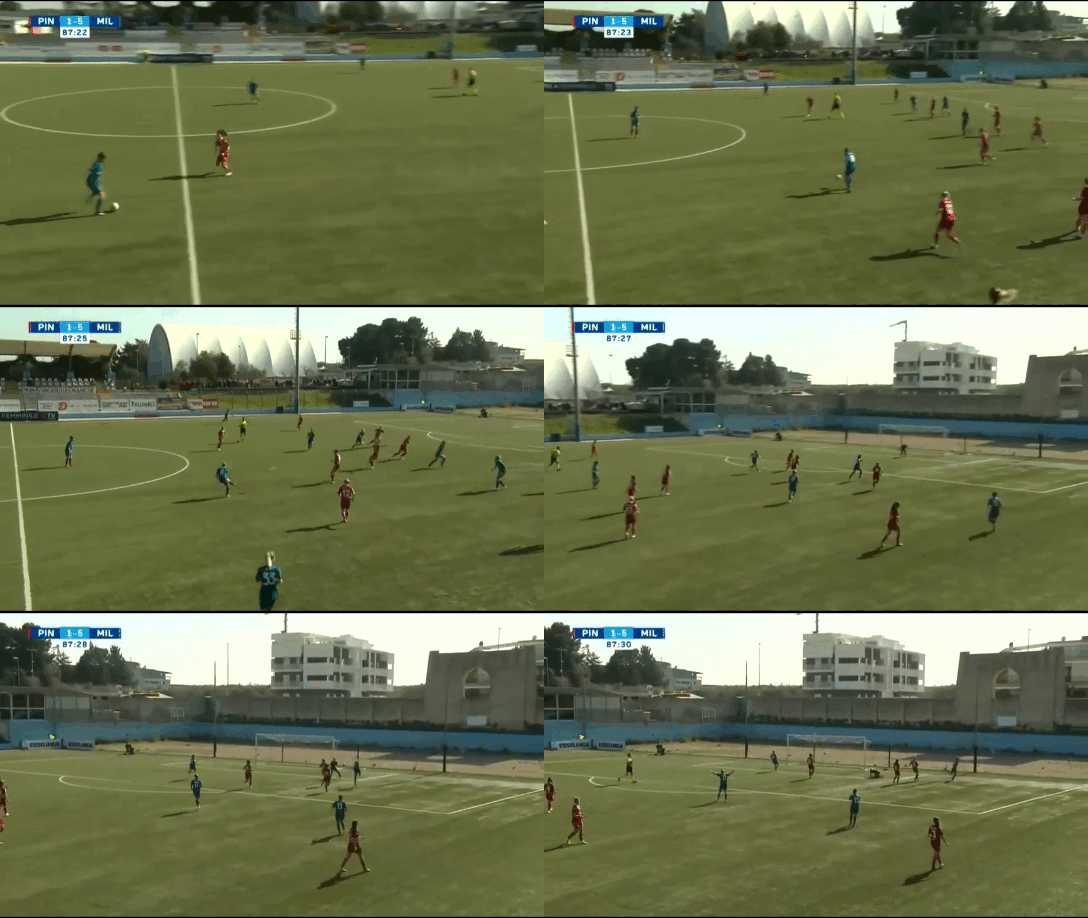
One of the main problems with a 3 at the back formation is that it exposes the wings to quick counter-attacks and if the center backs are not fast enough then the opposition attackers can easily progress the ball upfield. Once again Milan failed to beat Juve’s press and launched a counter attack but once they reached the edge of Milan’s box they switched play to Caruso whose deflected short spun above the keeper Koreniciova and crossed the line
The Milan Ladies team took on Bottom league Pink Bari team as their quest for Champions league football continued. Here is a tactical analysis of the their 6-1 win over Pink Bari team
LINE-UPS
Milan lined up in their recently revamped 3-5-2 with talismanic player Vero Boquete rested.
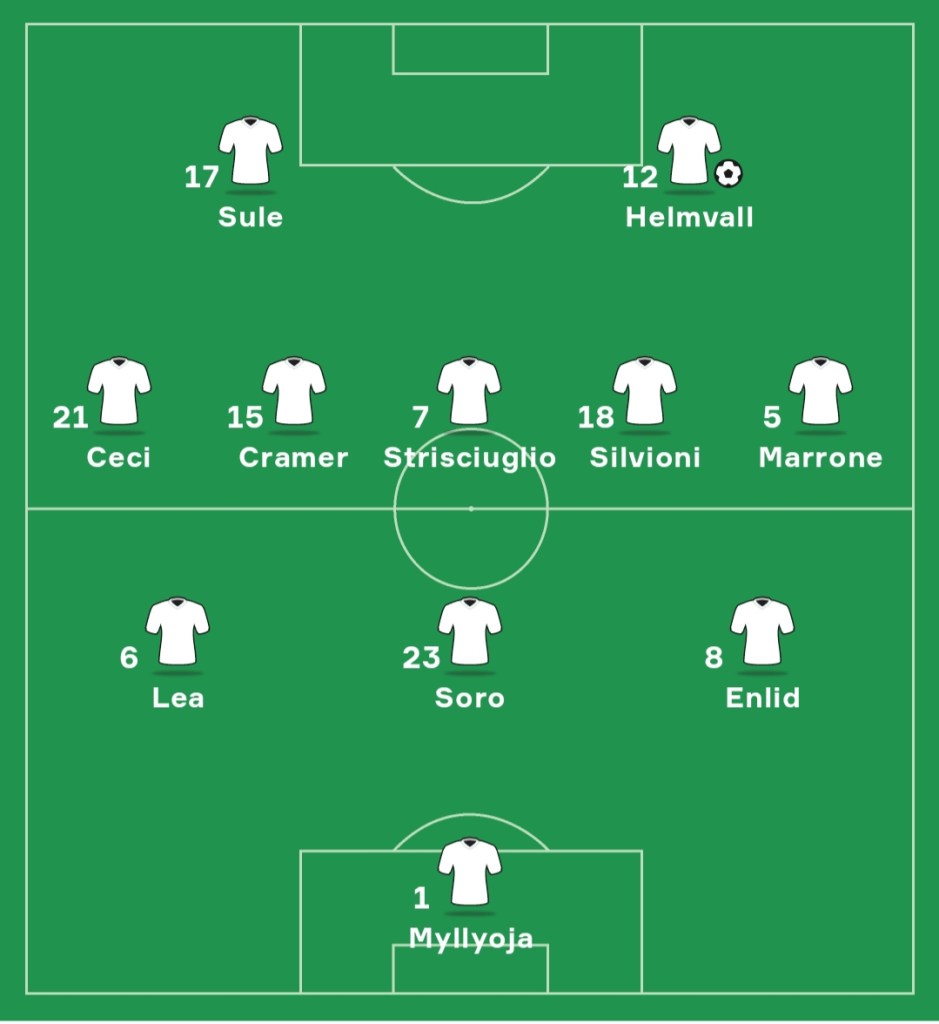
Formations courtesy OneFootball App
Pink Bari also lined up in a 3-5-2 formation.
MILAN BUILD UP
Milan like to Build out from the back with Agard tasked out bringing the ball out from the back and orchestrating the side from which Milan create their chances. Agard is usually flanked by Spinelli and Fusatti who act as overlapping Center-backs who press up high with the ball tasked at aiming chances and getting balls behind the opposition defense.
OFF THE BALL TACTICS
Milan off the ball defend in a narrow 4-4-2 formation with Rizza falling back into the defense and Bergamaschi acting as the wide left midfielder
Whenever Rask, Grimshaw and Fusatti participated in attack Hasegawa would sit back in the back 3 to prevent quick counters from Bari.
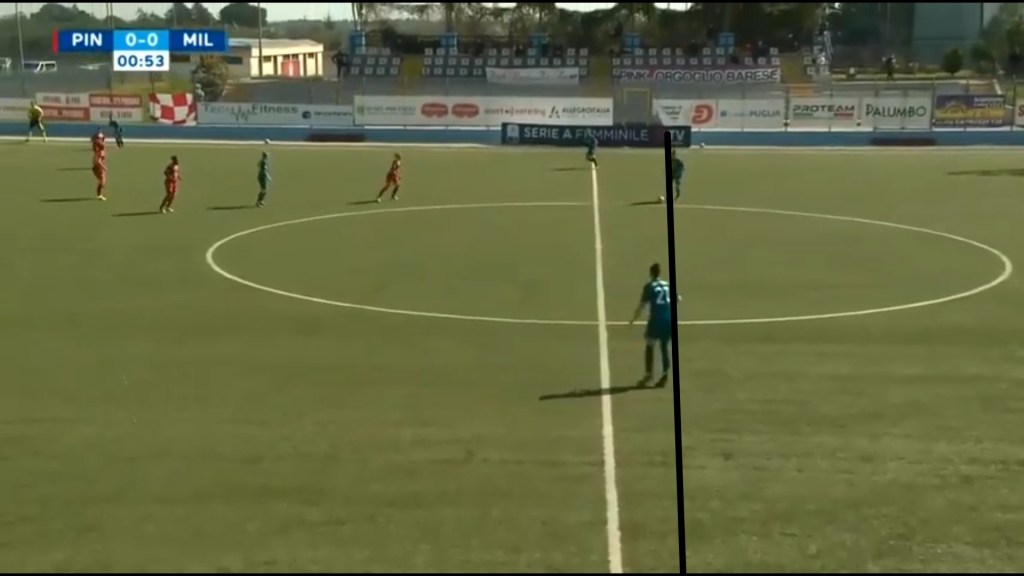
To press their opponents Milan maintained a very high line as Bari was not particular looking to press Milan’s backline deep into their own half.
Milan maintaining a High Line
Milan also used various pressing techniques. They would press Bari’s players deep into their own half whenever the ball reached the half spaces. Once the ball was won back they would try to spring the counter.
Milan’s high press
Another technique was to restrict Bari to the side by creating a numerical advantage and keeping them pinned to the wings.
Milan’s horizontal press
CHANCE CREATION TACTICS
Milan used a variety of chance creation techniques in this game. The most basic tactic of all was overlapping or underlapping wingbacks in Rizza and Bergamaschi with Milan mostly looking to create overloads on their right side.
Rask, Grimshaw, Fusetti and Rizza participate on the right side to have Rizza overlap and put in crosses from the flanks. One such exercise led to the goal of debutant Hasegawa who scored a wonderful goal.
Milan also have this wonderful ability to conjure up wonderful one-touch passes to open up Bari’s defense which gave birth to Bergamaschi’s first goal.
Milan’s passing combination to create Bergamaschi’s goal
Milan also tried to put in balls behind the Bari defense which is how Rask opened up Bari for Milan’s 6th goal.
Ball behind Bari’s defense to Giacinti
Milan’s rather physical pressing and their quick verticality gave way for Dowie’s goal.
Natasha Dowie’s goal with Milan’s agressive press to win the ball back and score
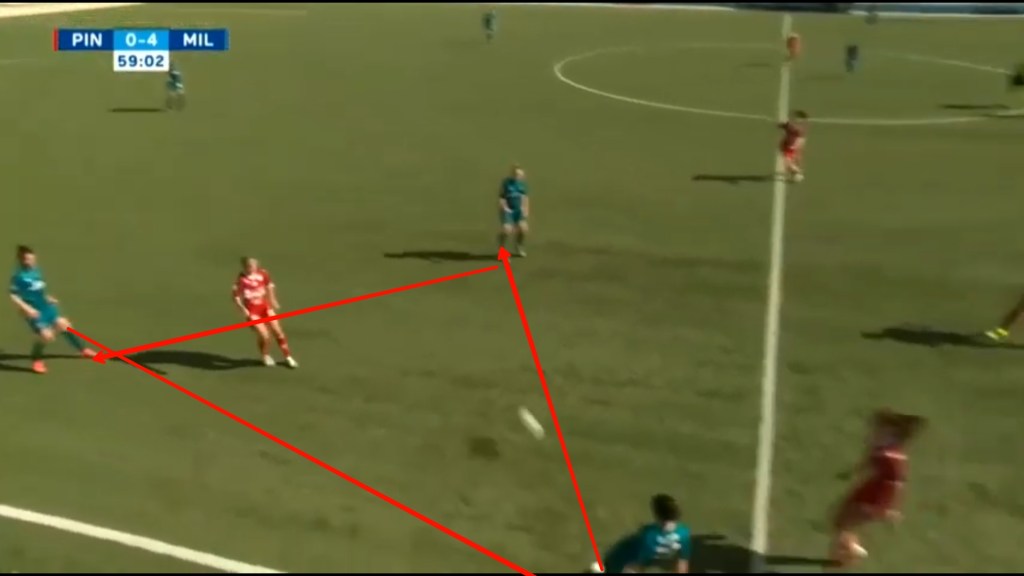
They also used quick passing triangles to play through Bari’s deep defense
Passing triangles created by Milan
BARI’S GAMEPLAN
Bari off the ball retreated into a 5-3-2 and tried to suffocate Milan with a very deep block. Once the ball was won back they would try to spring a counter attack with direct vertical balls to Sule or Helmvall.
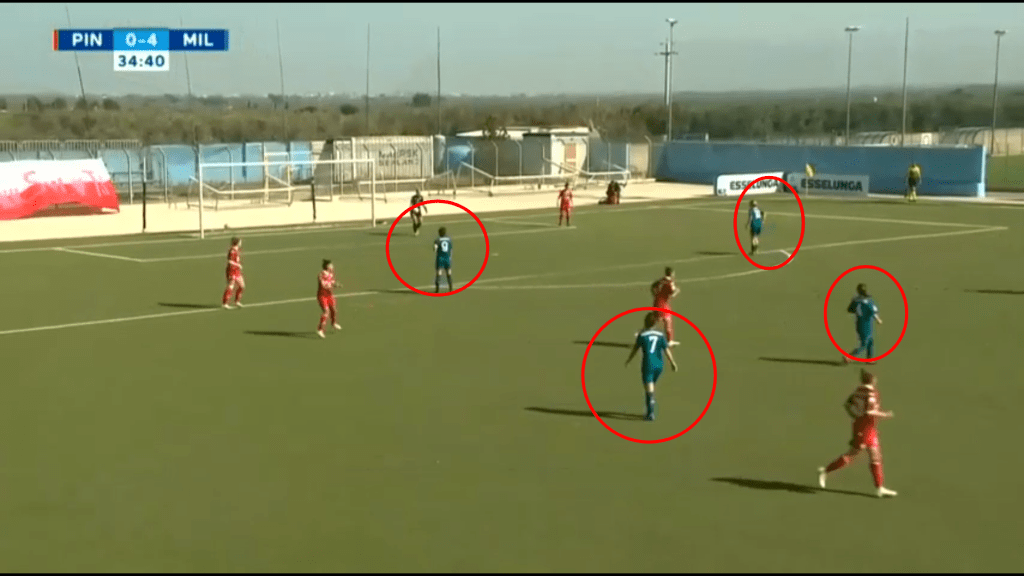
In the second half Bari was more adventurous and pressed Milan higher up the pitch but opened gaps in midfield and conceded 2 more goals in the second half.
After being winless in 4 games, the tension within Milan and its fan base was palpable. The losses to Spezia and Inter hung on people’s minds as Milan travelled to the Olympico, a place where Milan have only won 1 out of 6 games and are the only team not to lose at home this season in Serie A.
TEAMS AND FORMATIONS
The Big news for Milan was that after a huge out roar on social media captain Alessio Romagnoli was dropped for Englishman Fikayo Tomori. They lined up in the usual 4-2-3-1.
Roma meanwhile lost their talismanic striker Edin Dzeko to injury. Fonseca stuck with his strong 3-4-2-1 with Borja Mayoral playing as the #9. Roma also missed Smalling, Ibanez, Zaniolo and Kumbulla.
ROMA’S TRANSITION AND PRESSING
After the last few games it’s pretty clear that Milan’s kryptonite is that they failed to build out from the back if the opposition press their double pivot and cover their passing lanes.
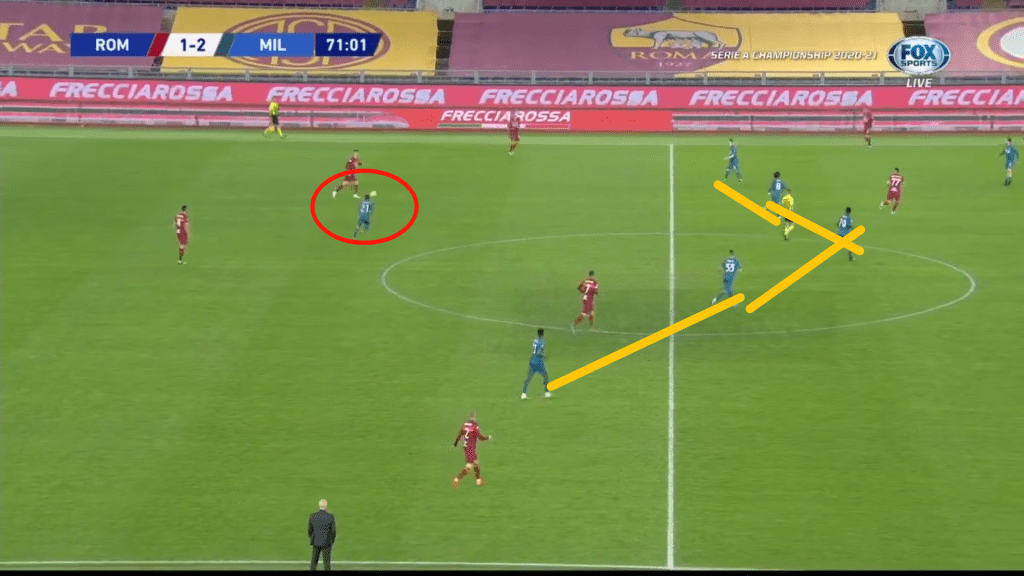
Roma pressed in a 5-2-3 formation off the ball. They packed the center of the pitch, cut off passing lanes to Tonali and Kessie and forced Milan to go wide. When Milan play wide they use their wingbacks to press our fullbacks
Roma’s 5-2-3 formation
In order to maintain the high press, Roma maintained a very compact shape not keeping more than 15-20 metres between their first and last line. This high line tactic was a risk-reward approach.
Compact line
In terms of chance creation Roma, often had one of their forwards drop deep and use one of the double pivot to form passing triangles with a Center back bringing the ball out from the back to break out of Milan’s rather good press. Once Roma have progressed into Milan’s half they use overlapping runs from their wingbacks, mainly Spinnazola and later Bruno Perez to hit on Milan’s narrow 4-4-2 formation off the ball.
MILAN- CHANCE CREATION, HIGH LINE AND SWITCHES OF PLAY
What has improved in this game has been Milan’s urgency, their pressing intensity and lightening quick counters. And the biggest sigh of relief was how Milan were able to execute passing combinations and create chances. The score line does not suggest how Milan were good in creating chances.
One of the main chance creations techniques was to take advantage of Roma’s high line. Once Milan won the ball back by pressing Vilar or Mkhitariyan they would try and spring balls in behind the defense of Roma for Ibrahimovic or Rebic.
Saelemaekers with a ball behind Roma’s defense
Another tactic to break out of Roma’s press was to suck Roma into a particular wing and use Kjaer or Kessie to switch play into the opposite wing. Quite often Milan would even use Calabria or Saelemaekers to carry out the deed.
A very important factor I would like to talk about how Milan were able to maintain a very high line, as high as some of the Premier League teams do, thanks to the pace of Milan’s backline. Adding Tomori to the backline helped Milan in multiple ways. For once it helped Milan to free Kjaer and Kessie to push and press Roma’s midfield pivot. Tomori would sweep up behind Theo, Kessi and Kjaer hence even though Roma tried to target Milan’s high line nothing came out of it. The Recovery pace shown by Fikayo Tomori has shown fans how even if you get beaten high up on the pitch you can make it back to your defensive positions.
SUBSTITUTIONS AND MILANS CHANGE IN FORMATION
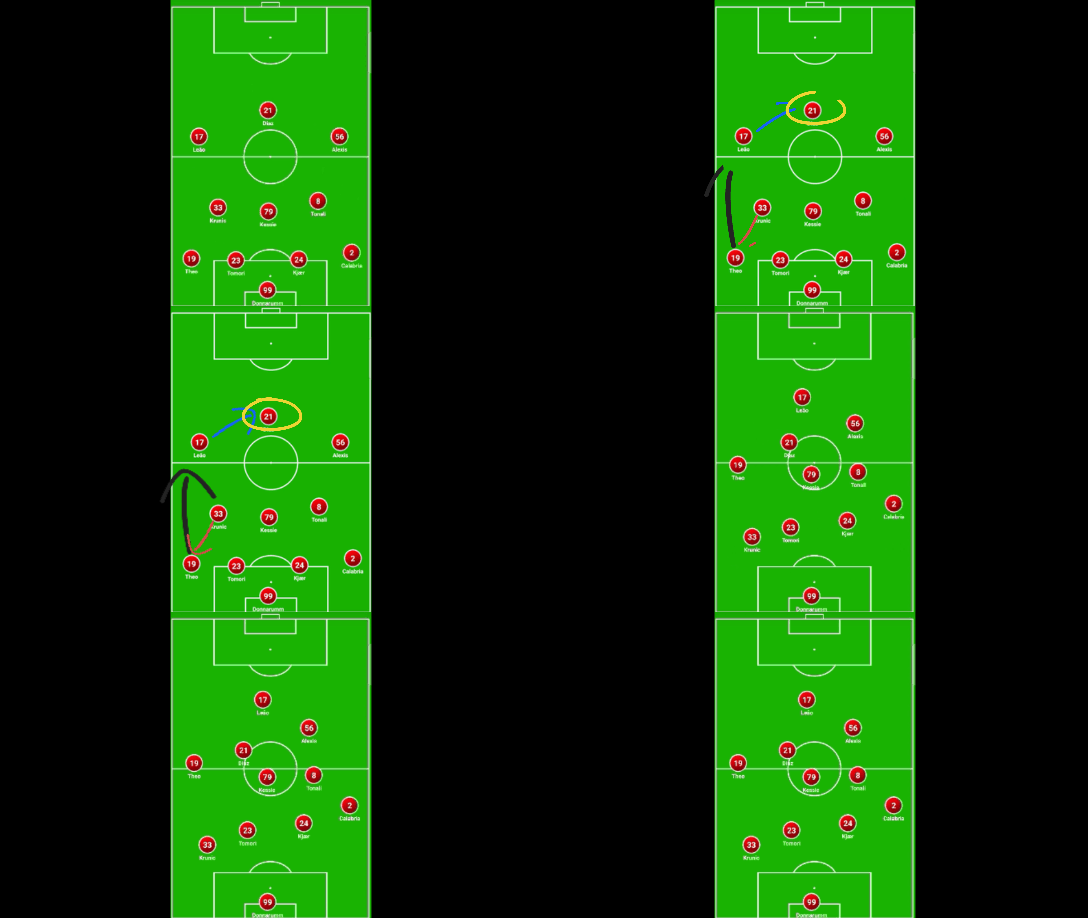
A rather confusing substitution for Milan fans was how Pioli brought in Krunic for Rebic instead of Hauge. This was because Pioli wanted to change the formation to the conventional 4-3-3 with no recognized striker.
The 4-3-3 goes into a 4-5-1 without the ball
Diaz acted as a false 9 giving Leao the space to drift in from the left wing. Krunic prevented any counter attacks Roma had planned on Milan’s left hand side incase theo lost the ball and Roma sprung the counter with Bruno Perez
Milan went ahead much of 2020 sailing through calm waters of the seas only for 2021 to come with turbulence and a threat to rock the boat and ultimately sink Milan. Pioli post-lockdown had created an enigmatic Milan which wove through opposition defenses and rarely succumbed to its opponents. However within the space of 45 days Milan have lost 3 games, being completely outplayed in 2 of these games while the Juventus game can be counted as a let off since Milan played without 7 of their main contributors.
So what are the chinks in Milan’s armor? How can they be rectified? Here is a prognosis of Milan’s issues.
RIGHT WING CREATIVITY
Starting off with the most obvious one, Milan’s dead right-wing has been a cause for concern for Milanista’s for over a year, but with Milan scoring almost 2 per game the problem did not blow up until Milan’s last few run of games.
With this pass-map of Milan first 14 games it is quite clear that Milan’s creative outlet on the right comes from Calabria and that Saelemaekers or Samu Castillejo does not provide anything much other than a passing option in the final third of the opposition half. While Saelemaekers does track back and cover Calabria if Milan lose the ball and the opposition counter-attack and contribute to pressing his creativity is not up to the standards of a modern creative right winger.
Another disturbing trend that popped up during the Atlanta match was how Atalanta were quite comfortable to leave Samu Castillejo unmarked while they were aggressively marking Milan’s other 2 front players. This trend popped up as Atlanta didn’t consider Samu an important threat.
Possible Solution: The only possible solution, in my opinion, would be to dip Milan’s hand in the transfer market come the summer. Milan have been linked to the likes of Florian Thauvin from Marseille and it’s time for Milan to finally address the issue that has been quite a gangrenous limb in Milan’s attack.
LEFT HALF SPACE
With the role of full back’s in modern football being redefined inducing full-backs to attack more due to their agility and physicality it has required coaches to re-adjust their tactics to make up for defensive shape and numbers at the back. Liverpool and Bayern have their best defenders push up and cover the space vacated by the left back. Milan until now do not have a clear plan and with Romagnoli not comfortable pushing to maintain a high line it creates a temporary space called has a half space.
The half space created on the flank has been duly noted and identified by team to create chance and score by teams. Juve scored 3 goals from this left half space, Illicic wreaked havoc from the left half space tormenting Kessie, even Crotone took advantage of this half-space to create chances taking the most amount of touches in Milan’s final third in this half space. Teams have started to identify this weak spot and started to align their chance creation tactics accordingly.
Possible Solution: 2 possible solutions for this conundrum. The first one would be to have Alessio push up and maintain a high line which would mean he could be beaten more as he is not the fastest defender and struggles in 1v1’s. The second conundrum would be for Theo to be a defensive full back and maintain shape but that would mean that Milan sacrifice the attacking impetus Theo provides.
THE DOUBLE PIVOT
Milan under Pioli have been using a double pivot since lockdown. The Double pivot brings defensive stability, hacks down opposition counters and allows Theo and Calabria to join the attack. With some individual brilliance of Bennacer or Tonali the double pivot helps in facilitating build up play from the back.
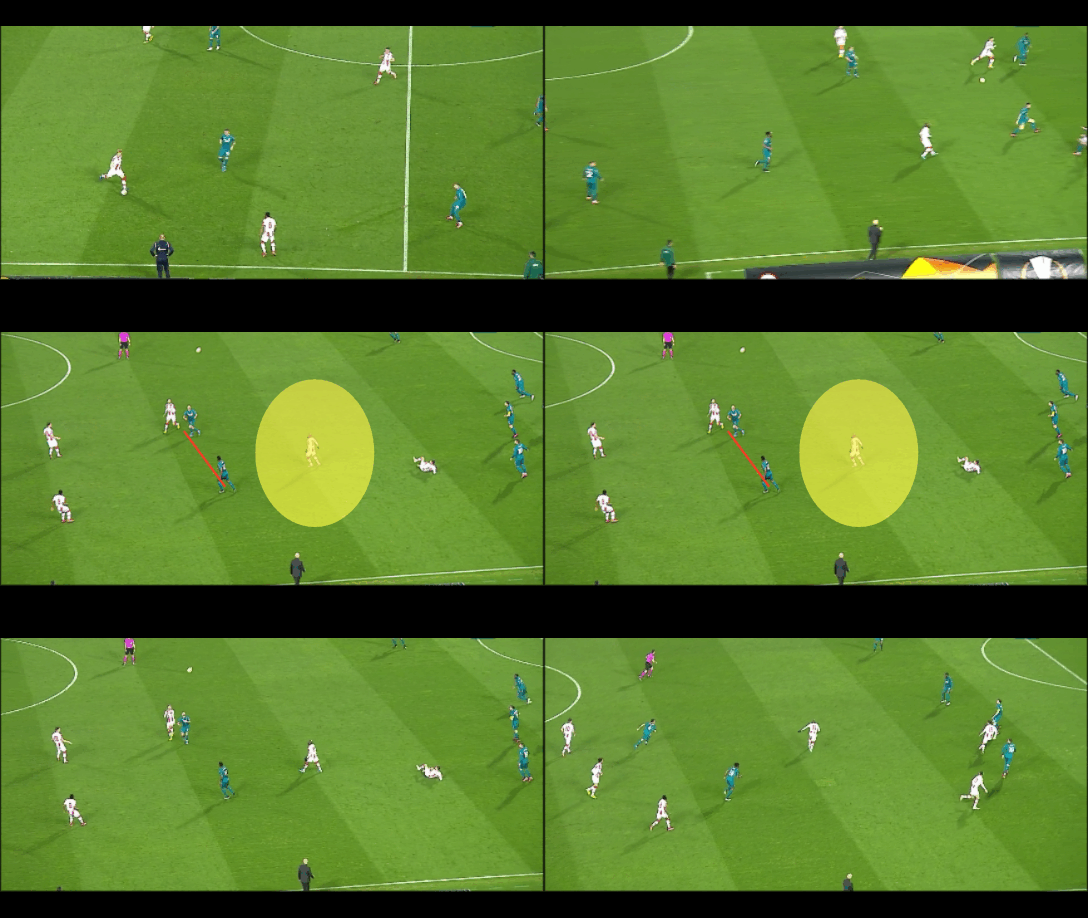
Pioli encourages his double pivot to stay very close to each other to facilitate pressing and not allow opponents to progress centrally. This comes both as a blessing and a curse as teams exploit this trait of the pivot. When Kessie and Bennacer press simuntaneously it creates a space between the last line of defense and the midfield. Intelligent teams with good attackers have been able to exploit this space by placing their attackers between the lines and have a creative player pick out a pass to find them. In Serie A this crack has not appeared much because teams in Serie A generally tend to sit back but against more attacking teams in the Europa League including against Bodo Glimt these mistakes tend to creep into Milan’s game.
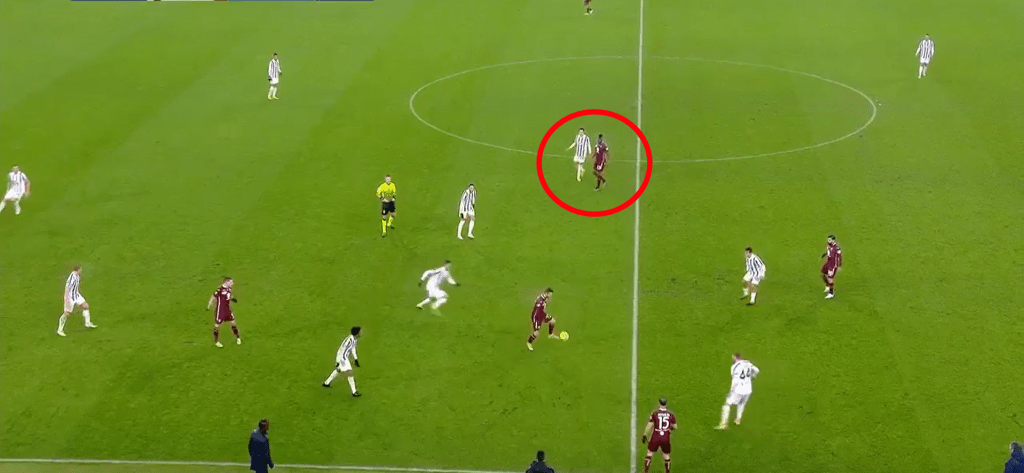
Notice how much space the Red Star player gets between the double pivot (marked in red) and the last line of defence. Teams more decisive in attack will easily use this space
Possible Solution: Milan need to have their last line of defense to push up and be compact like in the days of Arrigo Sacchi where Milan’s lines had no more distance of 15 meters between them. But playing a high line would be suidical given how Milan’s Center-back’s aside Tomori are not the quickest and would not be able to catch up to a fast striker or winger breaking through their line of defense.
BUILDING OUT FROM THE BACK
A common practice for teams in modern football is to pass the ball out from the back and build fluid attacks. However recently teams have figured out Milan’s pattern of play; Have Kjaer and Alessio spread to the half space with either of Theo or Calabria pushing up with Bennacer or Tonali dropping off to form passing triangles with the Center back and then farm it our wide to Theo or Calabria who would carry the ball forward.
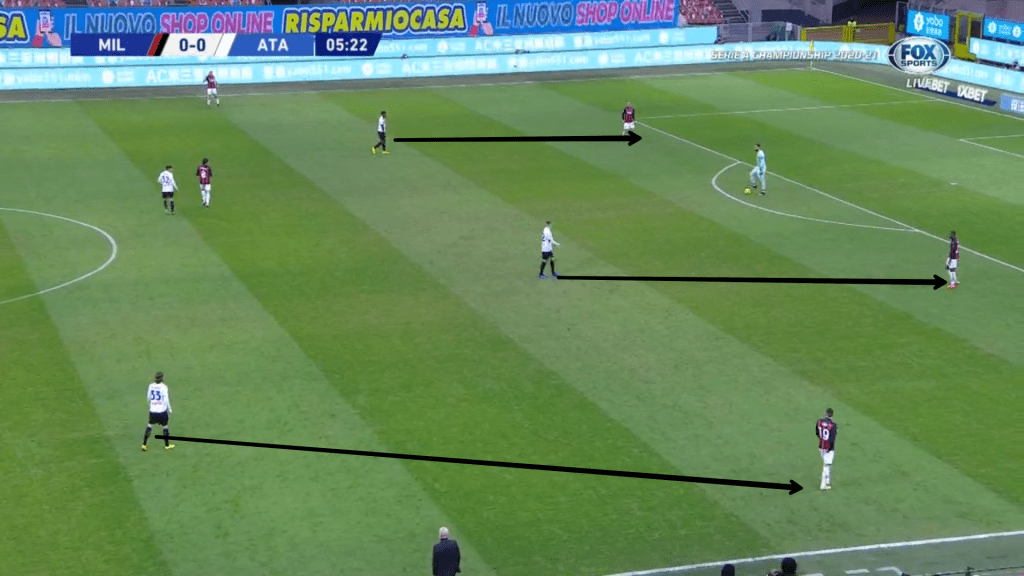
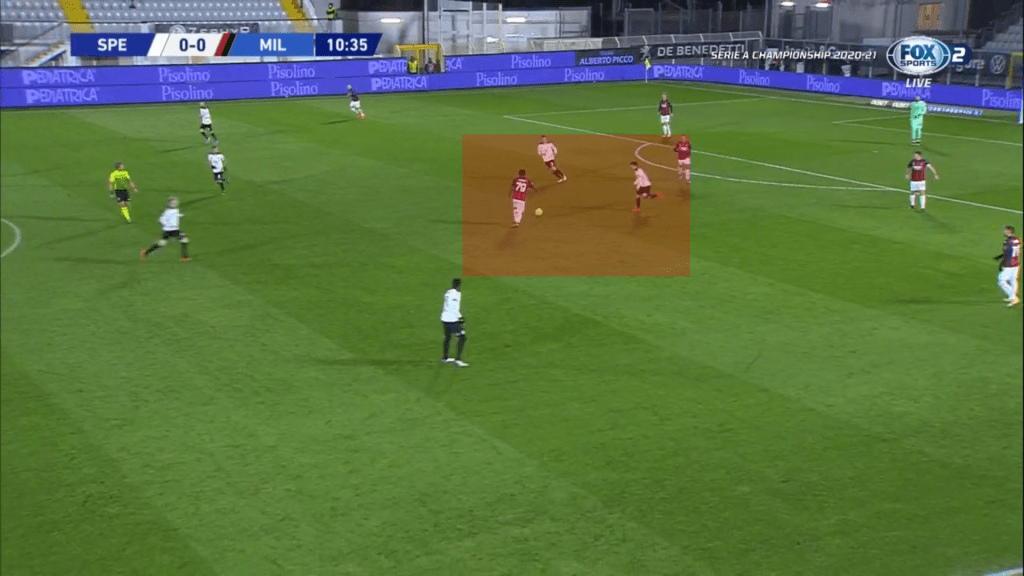
Atalanta, a team that employs intense man-oriented pressing broke Milan’s passing pattern and on that fateful day at San Siro outclassed Milan 3-0. A similar tactic was employed by Vincenzo Italiano with his Spezia team which stifled Milan’s passing by covering all of their passing options and blocking the center. Spezia however employed a more physical press often pressing in triangles targeting Milan’s double pivot. When Milan tried to be more direct towards Zlatan, Zlatan was doubled down by Atalanta/Spezia by having 2 phsyical center-back’s press him.
Atalanta’s man oriented press
Against Spezia what was even more painful to watch was how Hakan Calhanoglu was limited in making backpasses with the intense high press employed. Hakan’s lack of press resistance made sure that there is no link betweem defence to attack.
Spezia cover all of Bennacer’s passing lanes and leave Kessie open which is a clear trap since Kessie is not the most creative player with the ball Now Kessie is in trouble. He is getting Physically pressed by Italiano’s side
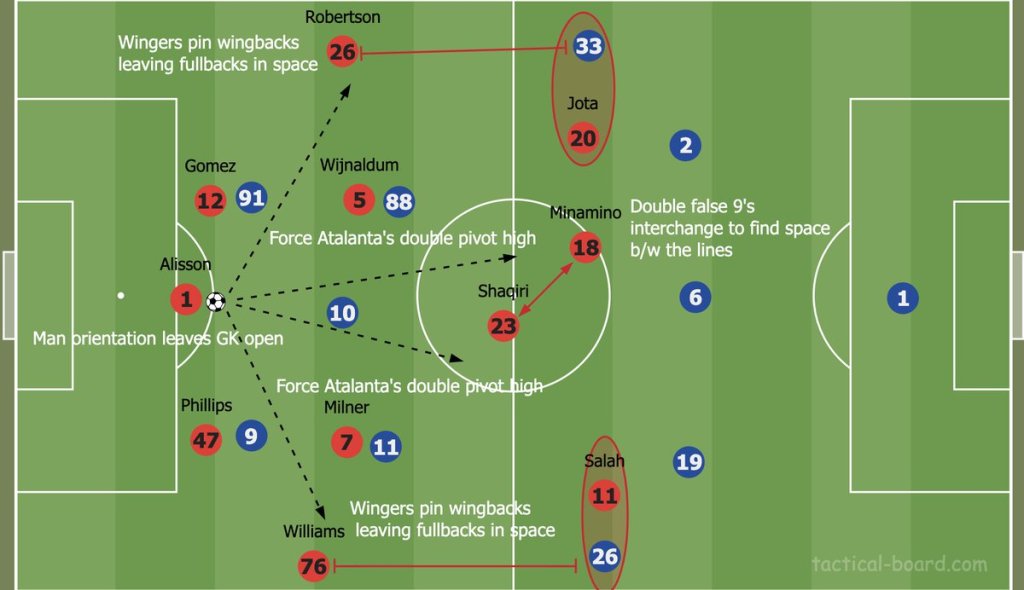
Possible Solution: A possible solution for breaking this man oriented pressing of Atalanta can be found in how Liverpool defeated Atalanta 5-0 at the Bergamo. A map of how to build out from the back can be drawn as shown below (thanks to @TyLevinsohn)
An apt analysis by @Tylevinsohn on how to beat Atalanta’s man oriented press with quick wingers and a #10.
Atlanta employ a 5 man midfield with 2 wingbacks, 2 central midfielders and a trequartista. It gives Atalanta the ability for a central overload and physically dominate the midfield which Pioli tried to negate by playing Meite. Milan need more creative wingers and have them pin Atalanta’s wingbacks giving room for Milan’s full backs to push up and have Milan’s Center back’s split. Milan need Hakan to take up the space between the opponents midfield and last line of defense, often interchange positions with Ibrahimovic.
Against Spezia’s more physical press Milan was too lethargic and casual while moving the ball and the backline was too cluttered to each other making it static and having no movements. The lack of Hakan’s press resistance made it harder for Milan to move the ball.
CORNER-KICKS
A thorn in Milan’s side since long the monster popped up its ugly head against Red Star when Milan conceded a last min goal to make it 2-2. Milan have conceded a majority of its goal in the first half of the season through set pieces and it doesn’t look like Milan has heard the last of it.
Milan look to have been employing a mix of Zonal marking and man marking having a tall player like Zlatan as its first line of defense. Milan’s lack of tall players except Zlatan and Kjaer makes it extremely difficult for Milan to out jump their opponents.
Possible Solution: The most obvious solution would be that Milan need taller players to better deal with corner kicks. Tactically Pioli needs to find the right balance with Zonal and man marking as there seems to be a bit of confusion in the box
LACK OF A CREATIVE FORCE AND BALL HOLDING MIDFIELDERS
Back in the day of Ancelotti’s Milan, Milan had a very elite level of players that won trophies after trophies. But what made Milan tick in Acelotti’s Milan was their elite midfield diamond in the form of Pirlo, Seedorf, Gattuso and Kaka. Pirlo would be tasked with bringing the ball out from the back, Kaka would find space between the lines and if pressed will dribble out of tight spots to either slide in a through ball or score himself.
Now they don’t make players like Kaka or Seedorf or Pirlo in world football anymore but it is obvious Milan lack players who can be orchestrate the play from midfield and find space between the lines. In the last few games Milan’s chance creation has largely been down to crosses or from individual piece of brilliance. Milan’s main attacing threat comes from their full backs Calabria or Theo or from Rafael Leao while Hakan has been largely underwhelming. While Kessie is seen as the more physical Defensive midfielder Tonali and Bennacer is seen as the more of the deep lying playmaker.
However if they are pressed as seen against Spezia and Atalanta they succumb and lose their rhythm especially Tonali since he is not used to playing in a double pivot and is more comfortable playing off with 2 midfielders flanking him and has reduced physical work rate. This creates a vaccum between the double pivot and the attack and does not favor when Milan want to transition from defense to attack. What makes it more difficult is that Hakan is not press resistant and if he is marked he does not have the technical skills with the ball to dribble the ball and find the space between the lines much like how a player like Kaka could do.
Milan’s wingers are technically more of runners or athletes who are comfortable of travelling with the ball and finding space and crossing but in terms of picking out passes or creating chances to break defenses they are yet to show their creative ideas other than spam crosses in the box for Ibrahimovic to head in.
Possible Solution: Possible solution? Get better players. But for the moment I think Milan could consider a formation change to a 4-4-2 or a 4-3-1-2 to better utilize Tonali who looks extremely uncomfortable playing in the double pivot. As for Hakan, playing in a 3 man midfield would make him more comfortable playing away from the press and a midfield 3 would need him to start from deeper positions and away from the clutter.
One of the main objectives of Milan’s new management has been Milan’s youth talent production and so far it has not been ideal.
Milan were relegated to Primavera 2 in the 2018/19 season after the Primavera format was revamped but shot back up to the first division thanks to performances from Daniel Maldini, Brescianni, Capanni and Lorenzo Colombo. But Milan’s lease of life in the first division hasn’t been good enough by the clubs high standards. On Tueday, Milan Primavera slumped to a 3-0 defeat against Bologna, this coming before already exited the Youth Coppa Italia after a 2-1 loss to Fiorentina 2 weeks back.
What are some of the problems plaguing the academy? Here are some factors that seem to be the reasons for Milan’s fall from grace.
Years of neglect: It’s no secret that Milan under Berlusconi reaped rewards of the academy but it is debatable that whether it came as a result of investments into the academy. Rather it was more of seedlings that were planted before the time of the former Italian Prime minister’s stint as owner where the club saw legends like Galli, Albertini, Maldini and Barest come through from the academy. But after this golden period, the effect of Milan Primavera on the XI was zero. Berlusconi bankrolled massive transfers and an influx of world class players meant very few chances for young players and hence they would try their luck elsewhere. The cracks finally showed after Milan’s last UEFA triumph when Berlusconi could no longer compete with the financial muscle of wealthy Arab owners. Milan did make an attempt to resurrect the Primavera towards the last stage of Berlusconi’s tenure and this saw talents like Calabria, Cutrone, Donnarumma, Mattia De Sciglio and Locatelli emerge. Most of these players are from Inzaghi’s Milan Primavera team.
Instability: Milan have changed their U-19 coaches as often as they have changed their senior team coach. Giovanni Stroppa, Aldo Dolcetti, Filippo Inzaghi, Cristian Brocchi, Stefano Nava, Gattuso, Alessandro Lupi and Frederico Giunti are the coaches Milan have employed over the last decade. The constant chopping and changing of coaches have failed to bring a lack of stability into the side and affects mentality in a young fragile dressing room
No modernization: It is no secret that some of the best academies in the world are borne from the best scouting system and recently a more modern approach to developing players. Data analysis and modern equipment to prepare players to fit the modern style of football where athleticism is combined with tactical knowledge, you can see how stars are breaking out into first teams at young ages more frequently than earlier. However at Milan other than Donnarumma and Calabria very few players seem to break out into top category of teams with most of them being mid-table players most of their careers.
CONCLUSION
Gazidis has reiterated that Milan’s focus is on a mix between experience and youth and to search for low cost options. The Primavera is a real goldmine of talent and Milan are yet to take out any benefit from this particular part of the club. If the club wishes to progress to a sustainable model then Milan needs a revamp in the Primavera area
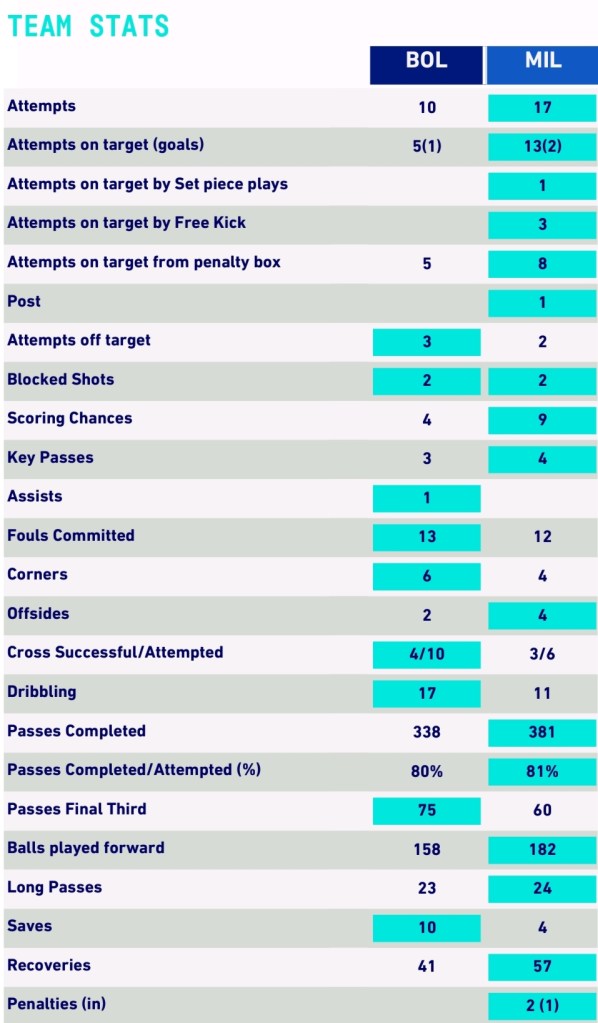
After 2 defeats in 2 games, Milan looked to bounce back against Bologna who were unlucky to lose against Juventus despite their spirited [performance. It was a game Milan was expected to win but it wasn’t for sure going to be an easy game. Here is a short match analysis of the game.
Line-Ups
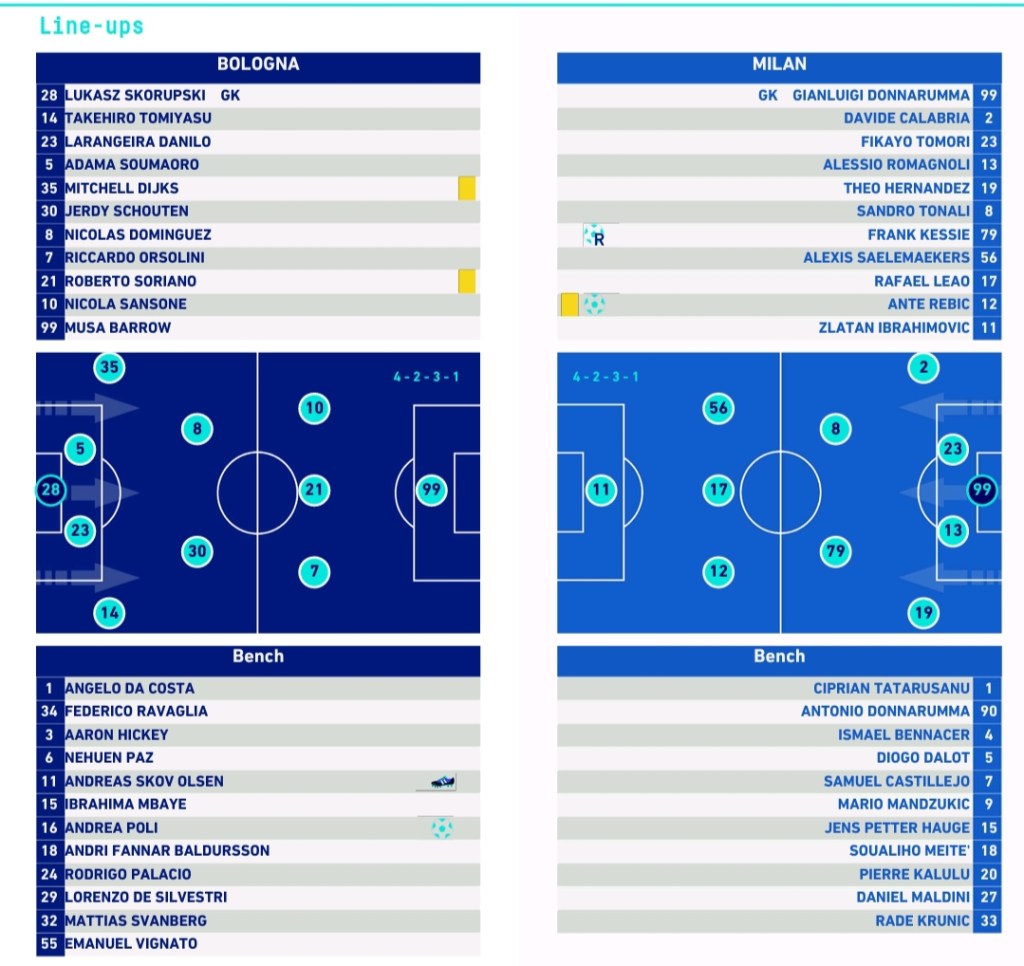
Both teams lined up in a 4-2-3-1 formation with Tonali back to the starting line up in the double pivot while Schouten benched Svanberg in Bologna’s 4-2-3-1 and Tomiyasu moving to the right with the club signing Soumaro on loan from Lille.
High Line and Aggressive Tomori
Milan since the inception of Pioli’s tenure looked to press the opposition playing a high line. But until the coming of Kjaer playing a high line turned suicidal for Pioli. But with Tomori, there seems to be an added gear in this particulat department. With Milan pressing their opponents in their own box, Tomori helped to cover the space between midfield and defence by aggressively pushing up, Tomori, in case he was by passed had the recovery pace to make it back and cover in case of a counter
How high Milan’s defence playedTomori maintaining the high line and pressing Musa Barrow
Horizontal Press and overlapping full backs
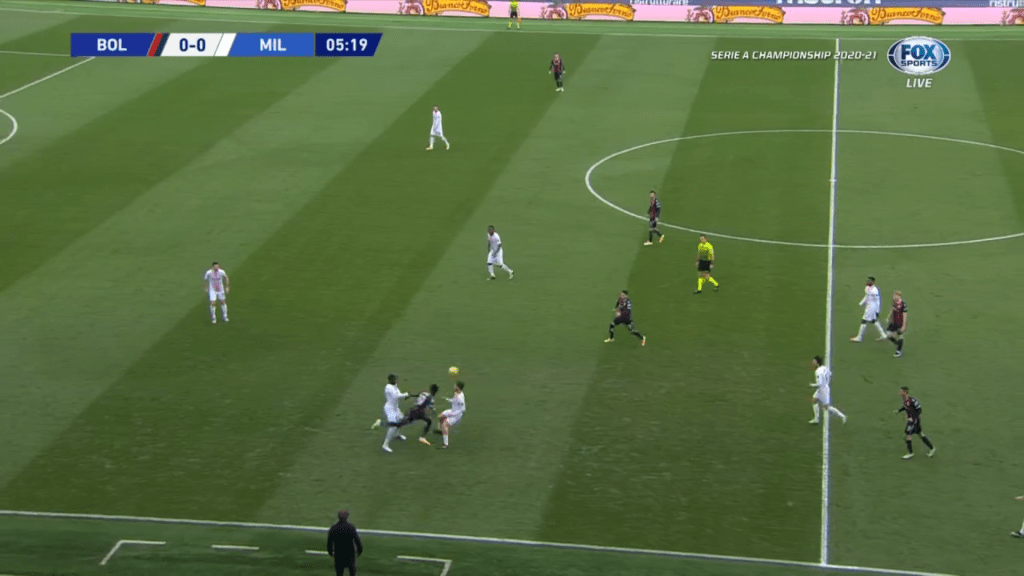
Bologna are a team drilled well by Sinisia Mihaljovic to press their opponents despite their less fortunate squad. Their man tactic was to push their opponent to the by-line and then out-number the player in possession. Once they win the ball back they switch play either through Sansone or through Dominguez to orsolini who along with Tomiyasu overload on Theo Hernandez and then cross the ball in for Barrow or Soriano.
Bologna trying to push Milan to their Right Wing
Tomori’s Passing and Pioli’s tactical adjustment
While Tomori is an excellent defender he still lacks in terms of passing. Roundabout the 15th min mark Pioli solved this crisis by Tonali dropping deeper, closer to Tomori and then bring the ball out from the back.
Tonali drops off into a 3rd CB role to compensate for Tomori Most of Milan’s build up happened through Tomori and Tonali. Once the ball went into the opposition half Leão carried the ball from defense to attack. Hence you can see maximum touched in these areas
The extra-dimension of Ibrahimovic
With Ibrahimovic (and later Mandzukic) Milan have a tall striker giving Milan an extra dimension to by-pass the different lines of Bologna’s press. As soon as the ball is hoisted to Ibrahimovic, Rebic and Leao start making runs expecting knockdowns from the striker. One such knockdown resulted in Calbria’s chance which ended in a tame shot.
Mihaljovic’s substitution and change to 3-5-2
With Bologna chasing the game, Mihaljovic brought in Palacios for Dijks and changed to a back with Palacios playing the perfect foil to Musa Barrow. And this worked with Palacios’ workrate helping to dispossess Theo and the resulting counter attack end in Bologna’s goal
Football academies, in its own right, has been an El Dorado (the mythical lost city of gold) in football. For years, clubs were ambiguous to the potential that lay within their own club but with the globalization and commercialization of sport, managers within the club have been forced to seek innovative ways to cut corners while remaining competitive.
And this led to teams focusing on their Youth academies. Clubs have learned that with the right mix of training, patience and opportunities players can be successfully mitigated from a bucket of potential to a finished product.
And Milan is no alien to this concept. Famous for producing legends and even generational players the Milan Primavera (academy in Italian) were once touted as one of the best academy in the world and even to this day revered for its past.
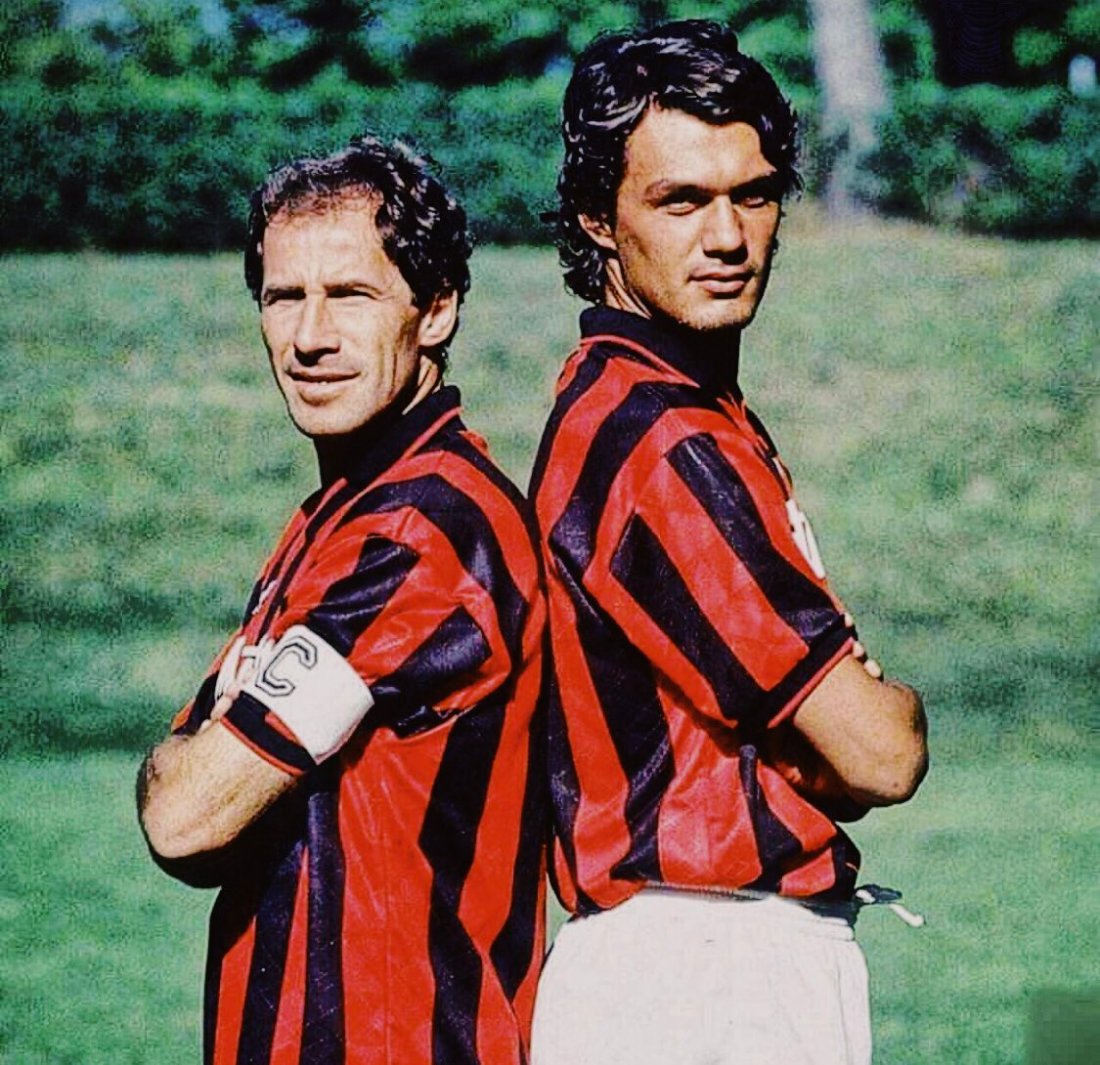
Milan’s 2 most famous academy products:Baresi and Maldini
But recently, the Primavera has been going through a dark time. The breaking point was breached when Milan were relegated into the second division of the Italian Youth League and alarm bells started ringing which perhaps was congruent to the situation that the senior team was also facing.
Here we take a look at the benefits of academy, How Milan could revamp their Primavera and enlist practices of some of the best modern day academies.
ADVANTAGES OF THE ACADEMY
So why have teams shifted their attention to Youth academies? Here is a list of advantages that come with focus on the academy
Financial benefits: Benefits under this category can be branched out into 2. Benefit in terms of costs and advantages towards Financial Fair play calculation. While there is an initial cost to set up the right facilities to nurture the talent it is a one-time investment when considering investing millions on the transfer market and player salaries are riskier and more expensive. While smaller clubs cannot compete with the likes of the traditional clubs or with rich owner’s academy prospects help to keep them afloat.
For FFP Calculation UEFA encourages spending on Youth and academies and hence does not consider for FFP. Hence every player’s cost is considered 0. When selling players like how Milan sold Cutrone, the money that comes in to the clubs coffers is treated as pure profit and gives leeway for FFP and help the club out of the red.
Passion for the club: Players who have been nurtured from the academy are associated with the club since their childhood and hence know the values of the club. While technical deficiency cannot be always present, fans can expect these players to stay loyal and give 100% of their efforts to the club during crunch fixtures.
REVAMPING THE PRIMAVERA
As mentioned earlier, Milan’s primavera has been doing rather poorly ever since its productive days in the 80’s and 90’s. A lot of it can be attributed to the fact that in these times Milan had an ultra-competitive team enjoying one of the best periods in its 121 year history. The fact that Aubameyang was a Milan academy product who failed to even get a run of games at Milan thanks to us having pato, Zlatan, Cassano and Inzaghi around the same period can prove it.
Milan however did churn out Gianluigi Donnarumma, Patrick Cutrone, Mattia De Sciglio, Gabbia, Davide Calabria and Manuel Locatelli in the subsequent season. However only Donnarumma and Calabria were able to make an impact at Milan while Locatelli doing well at Sassuolo after failing to impress at Milan.
However Milan Primavera hit rock bottom when they got relegated from the Primavera first division. Even though they rushed back into the top division next season thanks to Capanni, Maldini and Colombo none of these players have been able to make an impact in the senior team.
While Milan do have promising talents in the form of Roback, Coli Saco and Bjorklund results still continue to fluctuate.
Here are a few ideas that could help Milan primavera
Align the primavera team to play with the same style and formation as the senior team so that making the transition from Junior to senior team is easier. If Milan play the same brand of football in the youth division it is easier for the young players to get used to the senior team
Get the team to participate in UEFA Youth League: UEFA organized a youth league, in 2013, to pit youth academies of European clubs against each other and sadly no team from Italy has gone past the QF group. Chelsea have won the most titles (2) of the league where Tomori was a part of both campaigns while Kalulu was part of the Lyon academy that went on to the latter stages of the League last season. Playing the league helps players gain maturity and removes any stage fright or nervousness that players may face. You could see how Kalulu who was called upon against Parma fearlessly slotted in to the playing XI and held his own against Immobile and Sassuolo.
Facilities upgradation: Milan have a top end scouting system which makes sure the best players play in Primavera. But a upgradation of equipment like the ones used in more advanced academies are needed. It helps player at their young age build physical and mental resilience at their tender age and this can go a long way when they progress to their careers. Equipment like th Soccerbot or the Footbonaut help players even gain experience, something that was unthinkable a few years back.
HOW SOME OF THE BIG ACADEMIES DO IT
Here are stories of 2 top academies and their secret to success
Ajax Academy
The Ajax academy is one of the world’s best academy. They put down their success to 2 factors. One is training the players using the same module as the senior team i.e 4-3-3 formation. The second factor is their unique T.I.P.S model for recruiting players
The famous TIPS model
Each player is evaluated using the various points listed under each heading and the final score helps the youth coaches the make a final decision on the player
2. Salzburg Academy
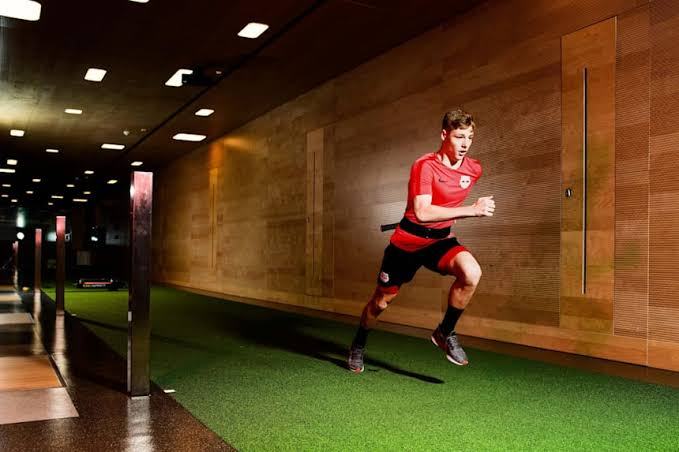
RasenBall Sport Salzburg and its sister concern has been a thorn in Milan’s recruitment plans. They raked away Dani Olmo, Dominik Szoboszlai and if the rumours are true Mohammed Simakan as well. Why do youth players all over the world seem to prefer RB Salzburg as a means to advance in their careers before making the step to a big club? The answer lies in Salzburg’s state of the art academy near the Salzburg River. The academy houses over 200 players from 7 different countries. Hi-tech equipment such as Soccerbot, a circular devise that helps players re-play moments from gone by games in-order to analyze their mistakes made.
SoccerbotAnti-Gravity running track
Salzburg academy have an anti-gravity running track which was a technology used by astronauts to recover from injuries faster and hi-tech gymnasiums with machine-instructed diets tailor made to suit each player.
CONCLUSION
With Milan caught in a web of FFP and woeful finances it remains to be seen whether Elliot will invest in youth. Heinrik Almdstadt, Gazidis trusted man who successfully upgraded the Arsenal academy which has produced players like bennacer, Saka, Emil Smith Rowe, Milan have the requisite knowledge on how to approach this particular conundrum. With Elliot already said to have invested 500M into the club and more expenses upcoming in the form of a stadium whether the needful will be done is to be seen.
But as I have explained earlier investing on youth system is a onetime investment which can reap rewards in the long term. It all depends on what is Elliot’s goal for Milan
After a long drawn saga, Mila got their man Fikayo Tomori from Chelsea for a 6 month loan with an option to buy at £25M . Here is the reason why Milan went after the player.
BACKGROUND
Oluwafikayomi Oluwadamilola Tomori was born in Calgary (Canada) to Nigerian parents before they headed to England when he was a toddler. A defender by profession, Tomori is a product of the famous Cobham Academy (Chelsea youth team). Tomori, alongwith fellow graduates Mason Mount, Tammy Abraham, Loftus Cheek, Andreas Christensen were part of the success that Chelsea Youth academy has enjoyed in the start of the decade. Chelsea in his tenure in the youth set up, won 2 Youth F.A. Cup’s and the recently formed UEFA Youth League twice making Chelsea the most successful team in the short history of the cup. They won the 2014-15 edition beating Shaktaar Donetsk in which Tomori did not feature in the final but was an integral part of Chelsea’s triumph in the 2015-16. Another personal milestone was achieved in the 2015-16 season when he came on vs then champions Leicester City in the Premier League making his full senior team debut.
Tomori with his second UEFA Youth League Medal
One of the most competitive squad in the PL that is known to make or break players’ careers (Lukaku, KDB, Salah), the management was wise to the situation that Tomori would not even get a sniff in the team if he stayed. In 2017 January Tomori was loaned to Brighton for 6 months and Hully City in 2017/18 racking up a total of 36 games combined for both clubs
His big break came when Lampard was appointed the coach of Derby County. Lampard used his relations with Chelsea to loan Tomori, Tammy Abraham and Mason Mount. Tomori played 55 times for Derby in the 2018/19 season, took Derby to play-off finals and was rightfully named Derby’s player of the season.
Good news beckoned for Tomori when lampard was appointed the coach of Chelsea after Chelsea were handed a transfer ban by FIFA. Tomori got his chance as early as against Liverpool coming on after Chriseten and Rudiger were injured. His performace against Salah keeping a tight check on one of the best players in Europe earned plaudits for the youngster. However in a bizarre turn of events Tomori has only played 45 mins this season in the Premier League with the Center-back being relegated to a 5th choice CB with no rhyme or reason from ex-Chelsea manager Frank Lampard.
STYLE OF PLAY
Lampard had used a variety of formations for Chelsea last season alternating between a back 3 and back 4 formation. Tomori often slot into the team partnering Kourt Zouma and Cesar Azpilicueta in a back 3 formation.
Recovery pace
In modern football, Recovery pace is the prime requisite for a top defender. With teams always looking to press high, managers need their backline to maintain a high line and this makes them susceptible to counter-attacks. Tomori’s prime strength is his pace which could make one thing that Tomori could even play as a full back or a winger. This attribute enables him to track the runs of even the quickest wingers and forward players and get to loose balls first before the opposition player
Tomori coming across and now allowing Serginho Dest to further the attack
Aggressive Defending and Pressing
Tomori’s natural instinct is to be pro-active in defending which is to stop attacks at its embryonic stages before the opposition can get the ball into dangerous areas. Often he leaves his station and challenges the player in possession which manifests into 2 advantages if a turnover occues. Advantage 1 being that the attack gets killed before it advances and Advantage 2 being that it helps to start a possible counter-attack
Tomori pressing Alexis Sanchez for the ball
1v1 Defending
A legend of the game himself, Maldini in an interview spoke about how modern defenders need to be good in 1v1 against their attackers along with physical ability as this is a skill that cannot be taught but is in-born talent. Tomori with quick feet has a good 1v1 success ratio, not shy going into challenges and often coming out with the ball against some elite attackers
Tomori win his 1v1 against Ziyech
Positioning and Interceptions
A very important skill for defenders, if attacks advance, is to position themselves in the right areas to stifle any shots or any runs the opposition can muster. For this anticipation is a virtue that defenders need. Tomori tho has a very good knack of getting into good positons as we saw against the Coppa italia game against Inter where he was in the right place at the right time clearing off the line and later stopping a goal bound shot from Lukaku.
Tomori has the ability to read contextual clues such as body orientation of the passer, reading passing moves and has great tactical awareness to guess what the next move of the opposition will be.
AREAS TO IMPROVE
Like every prospect Tomori has a few creases to iron out on in his game.
Aerials Duals
Tomori is built at 185 centimeters height and therefore is not aerially dominant in there which is a deficit to his repertoire. While he has a good leap and heads the ball away he is not the tallest when defending set-pieces or while attacking the ball during a corner kick won. Pioli and Murelli will need to work with Tomori in the training field.
Timing
Tomori’s aggressiveness comes at a cost. If he does not win the ball back from the player he is pressing then it compromises the shape and structure of his defense and leaves space behind which can be attacked with an expert #10 or a good winger. Tomori needs to time his aggressive press better and not expose his backline. I believe playing alongside a more experienced Center-back like Alessio or Kjaer can help Tomori work on this flaw. But first Tomori needs to bridge the communication gap.
Tomori’s aggressiveness comes at a cost. GIF credits: YT Channel “Let’s Analyze Chelsea”
Passing out from the back
Modern defenders are expected to be good passers along with being a good defender. This is because modern tactics involve playing out from the back which requires shifting the ball quickly before the opponents closes down the defender which can lead to a very straight chance for the opposition. Tomori is not the best passer of the ball and makes errors when he is put under pressure by the opponent. At Chelsea Lampard would have Jorginho or Kovacic to play closer to Tomori and have the Deep lying playmaker bring the ball out from the back rather than cause a turnover by having Tomori play a risky pass.
Tomori is not comfortable under pressure with the ball.
DEAL OR NO DEAL
Ever since Milan signed Romagnoli as a young prospective center-back Milan have tried a variety of player to partner with him until Simon Kjaer settled in. However with Kjaer into his 30’s Milan have been actively searching for a young center-back. Milan were out priced for Fofana, pulled out of the Simakan race for unknown reasons and showed interest in Loic Bade and Ozan Kabak. However, as Maldini mentioned later Milan had been tracking Tomori’s progress for a year and while a deal was not easy to conclude Milan finally got their man on favorable terms.
Tomori, as revealed to Milan TV, jumped at the opportunity to work under Maldini and for Milan who have been doing very well in the league. Tomori fit Maldini’s description in what he wants in a defender. Fast, direct, aggressive, good on 1v1, the perfect player.
With Milan taking a 6 month loan with a 25M option to buy Milan always have the option of sending him back if he does not fall within the plans of Pioli.
A full year after Ibrahimovic’s full debut against Cagliari, Milan go to Sardinia once against a struggling Eusebio Di Francesco side and picked up a 2-0 win in a De ja Vu scorline of the last game. Here is a post-match analysis of the game.
LINE-UPS
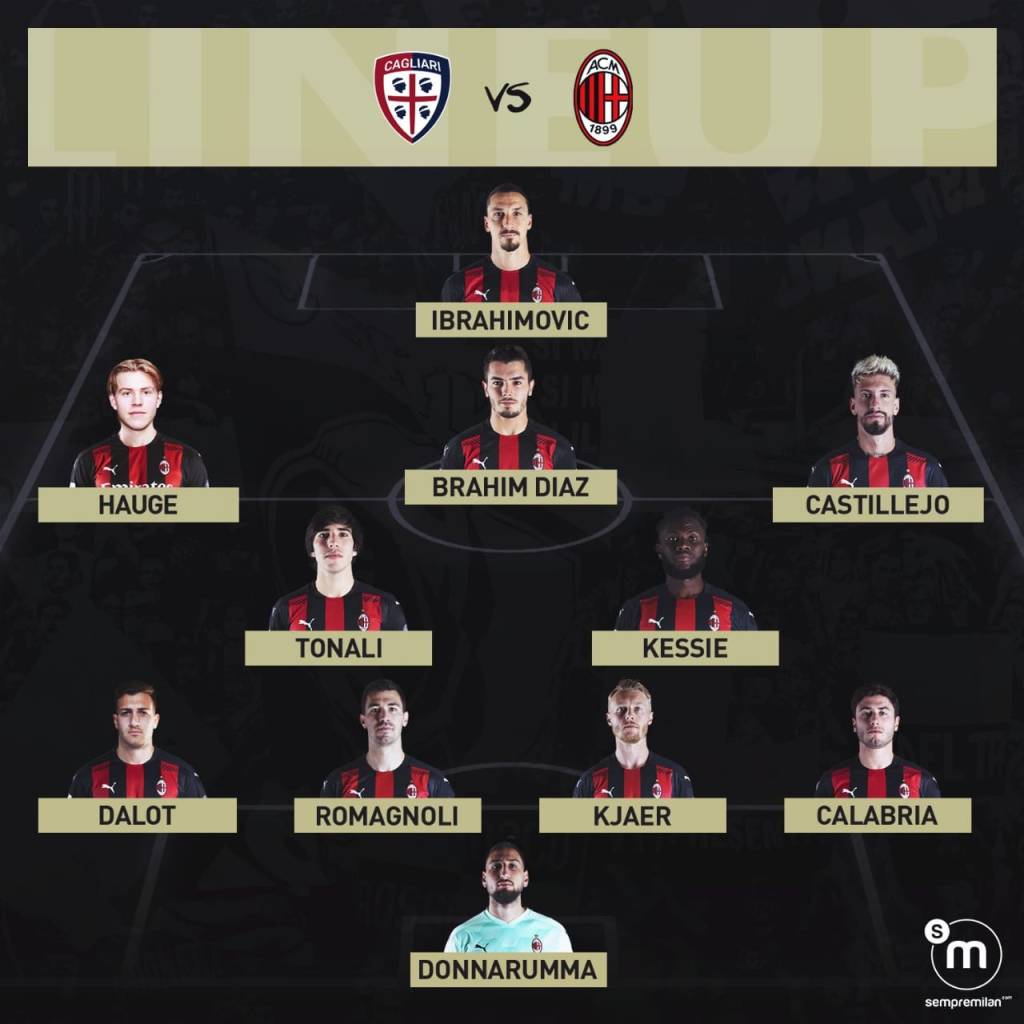
Milan lined up in their usual 4-2-3-1 formation albeit a slew of injuries depleting Milan’s bench strength. Dalot came in place of Theo and Diaz retained his place in the XI after Hakan contacted the corona
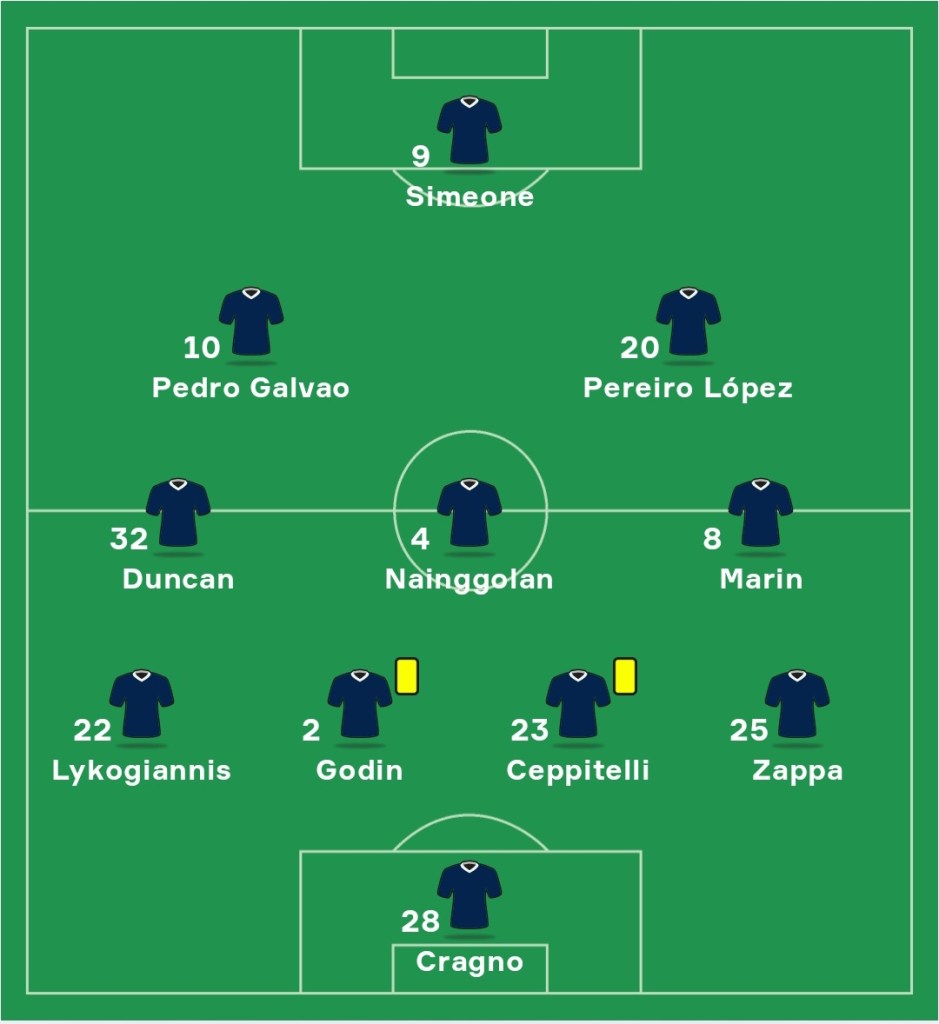
For Cagliari, they started with a 4-3-2-1 moving away from their back 3 formation under Rolando Maran. EDF went with his favored 4-3-2-1/4-3-3 formation with Niangollan acting as an anchor plus playmaker and Jao Pedro and Gaston Perreiro acting as inside forwards
Image taken from OneScored App
EARLY PRESSING TACTICS
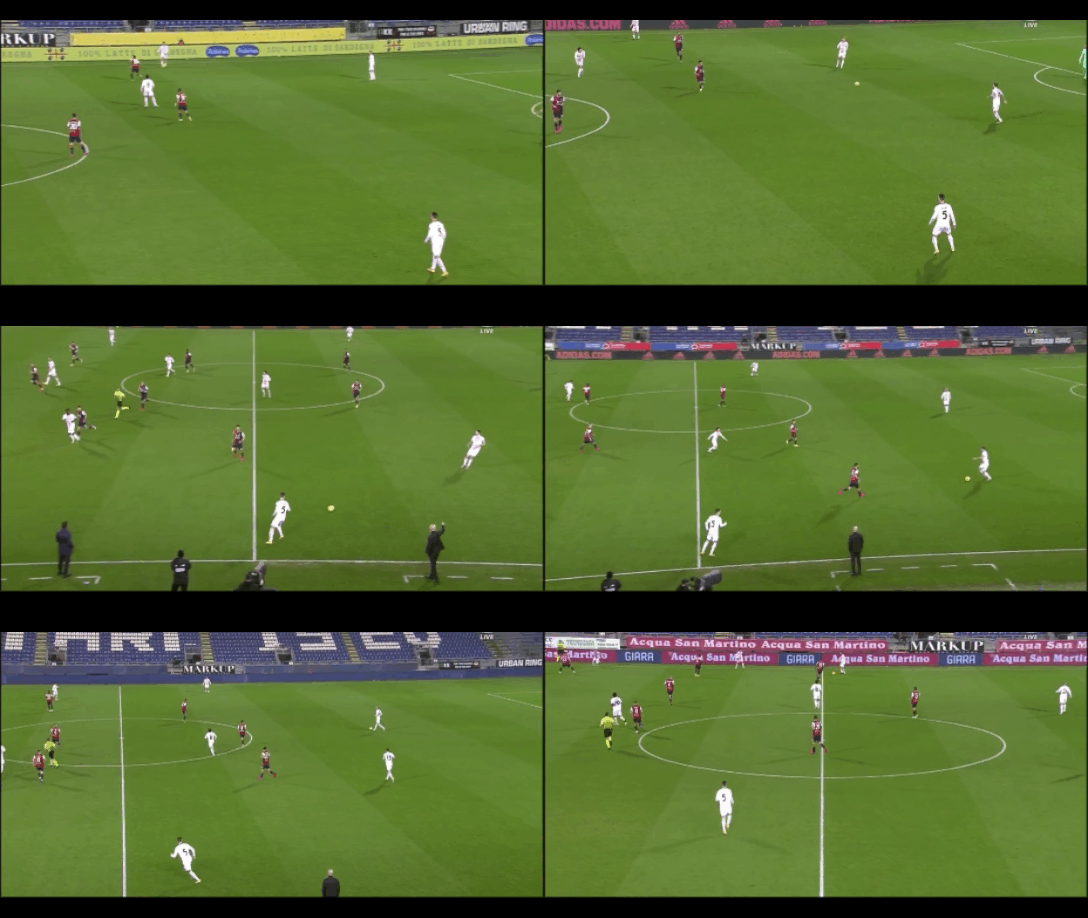
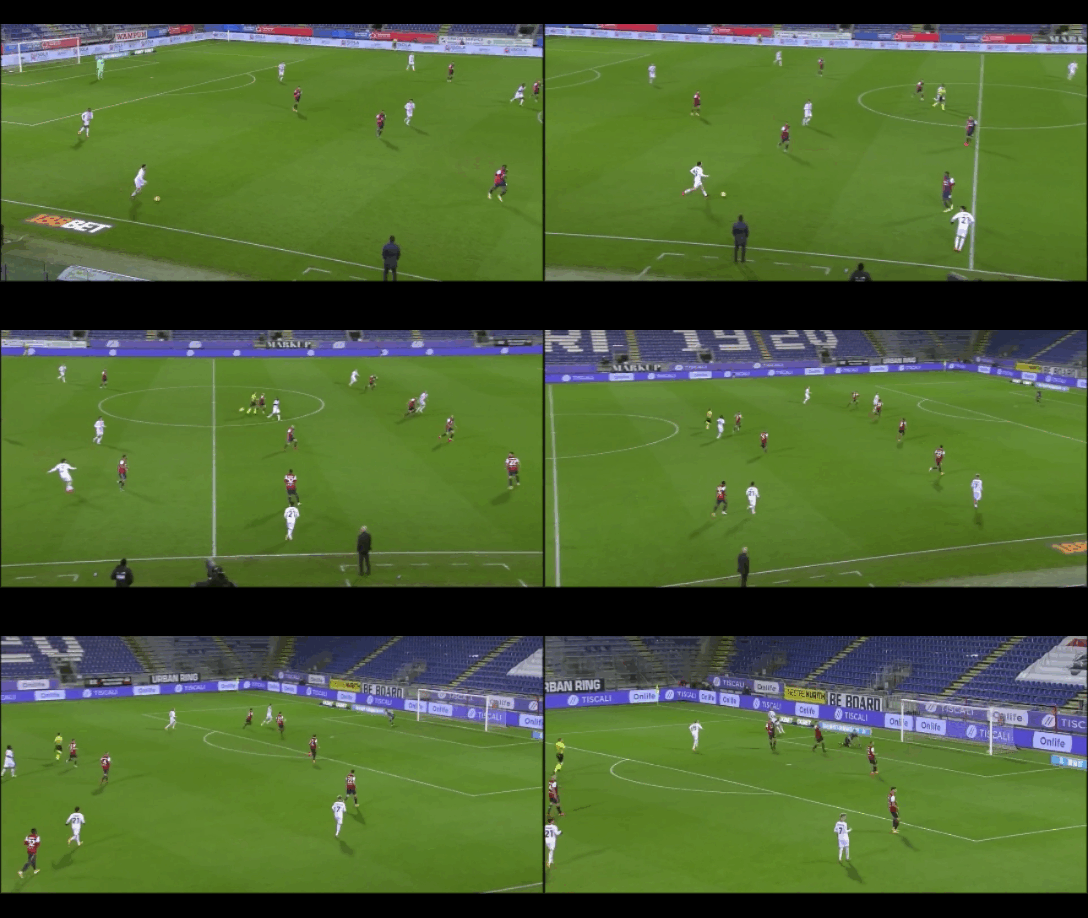
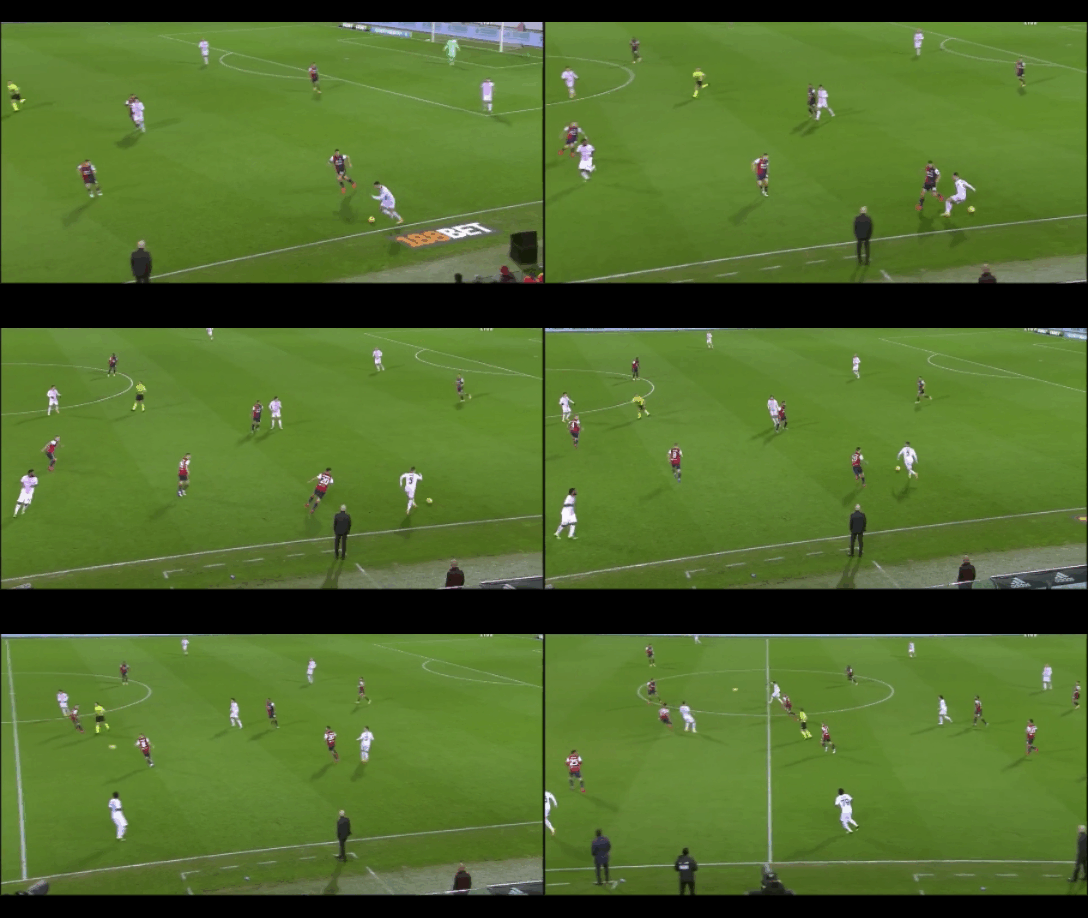
Cagliari’s basic gamplan was to press in a 4-3-3 structure when Milan try building out from the back. Taking a look at the last few matches it is evident that Milan’s deep lying playmaker is Tonali. Tonali sits back, forms a passing triangle with Kjaer and Alessio and creates passing lanes to either launch attacks or quickly pass back to Kjaer to switch play.
Watch how Cagilari press our players and suffocate (GIF)
EDF had Simeone cover Tonali, Gaston Perreiro covered Kessie and Jao Pedro covered Calabria. The idea was to induce Milan into a pressing trap whereby they let Dalot get the ball and then Marin, Perreiro and Niangollan would shift to their right and press Milan against the Byline and suffocate them for space.
Milan used various tactics to escape this press such as passing back to Kjaer and switching play out to the wings and fund our attackers against the isolated Cagliari defenders whereas midfielders are still engaged in pressing. Another tactic Milan used is Kessie pushing up and engaging Niangollan while Tonali got closer to Dalot and acted as an outlet to pass.
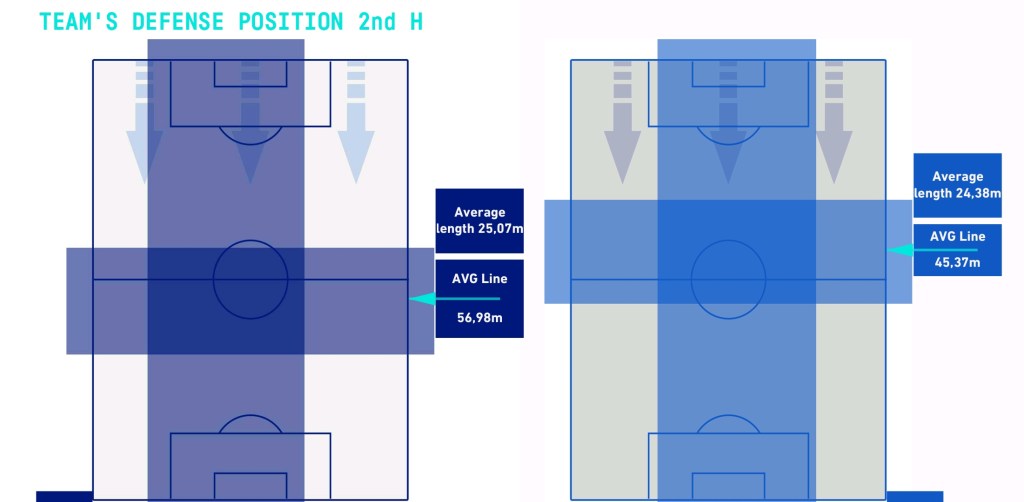
CAGILARI’S HIGH DEFENSIVE LINE
To maintain Cagliari’s high press, they maintain a high defensive line
Check out how high Cagliari’s line (left) seems to be in the first half Cagliari still maintaining a high line and paid the price
Milan tried taking advantage of this with a few long balls from Kjaer and Calabira. One of them resulted in a scuffed pass to Ibra from Samu Castillejo. The other was a goal for Zlatan
Calabria finds Ibrahimoviç with a straightforward pass (GIF)
BRAHIM DROPPING DEEP AND DALOT’S LINE SPLITTING PASS
With Cagliari pressing Milan through the center, Diaz was getting isolated. To make up for this Diaz would drop into the double pivot and collect the ball and spinning his marker usually Cagliari midfielder Duncan and weave into space to play a pass for Ibra or pass it wide to Castillejo
Dalot drops between the lines and creates space (GIF)
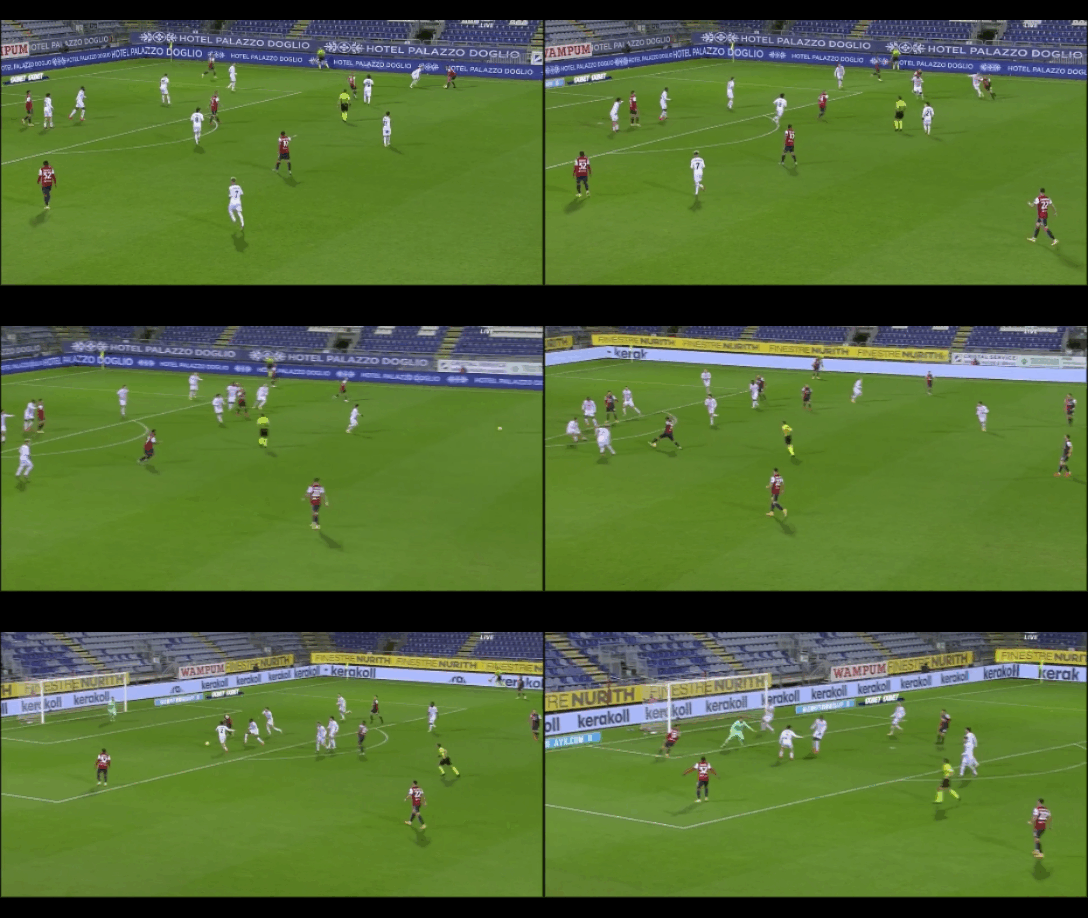
Often in games some individual brilliance always helps. With Milan playing out from the back, Romagnoli spreads the play to Dalot. Dalot, who uses Ibrahimovic as a point of reference in attack esp for hold up play, makes a line splitting pass which wove through 2 lines of Cagliari players and resulted in Calabria hitting the frame of the goal.
Dalot’s pass that results in Calabria hitting the bar (GIF)
SPACE BETWEEN OUR LINES AND JAO PEDRO
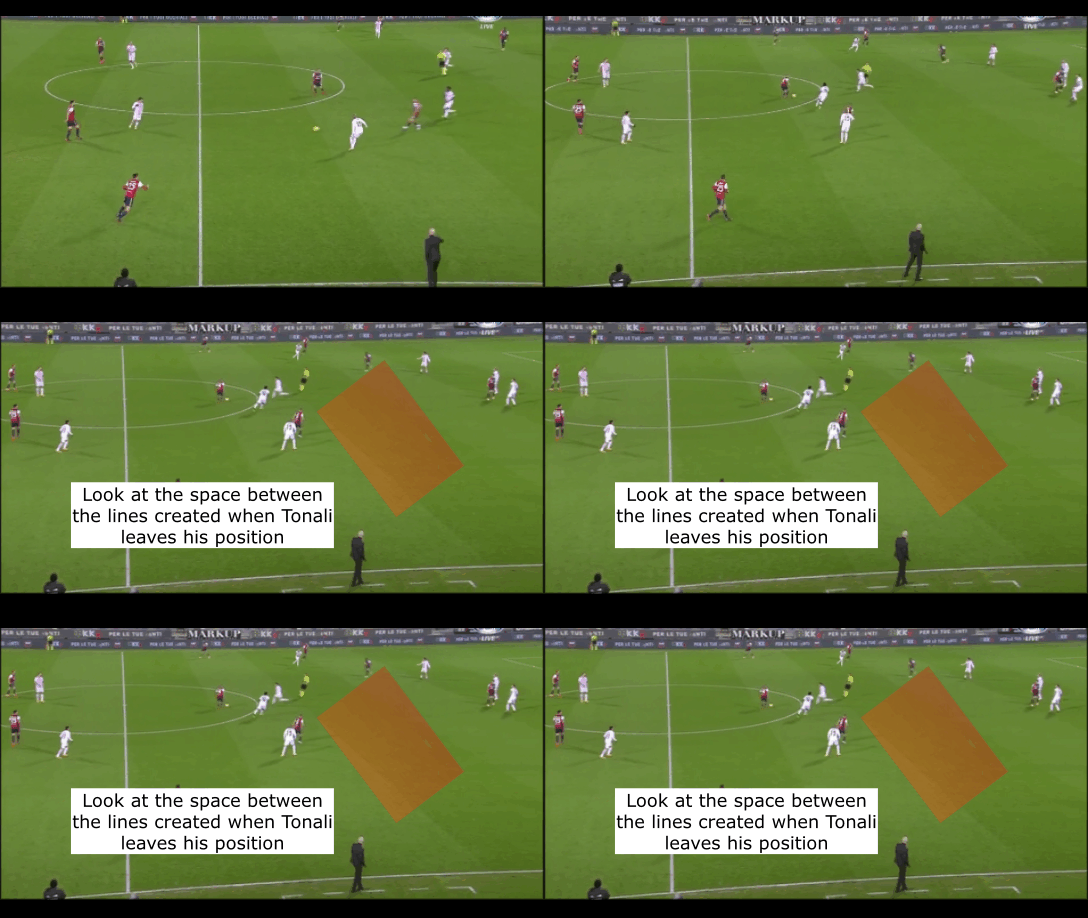
A certain flaw of Milan’s double pivot combined with a pressing tactic is that it creates space between the last defensive line and the midfield line. Jao Pedro was tasked to find the space between the lines and slot himself and make chances for Cagliari.
Space that gets created when our Double pivot presses (GIF)
Cagliari’s best chance came in the same fashion with Tonali and Kessie occupied to keeping Cagliari pinned to their Right wing but Cagliari switched play quite easily and Donna was forced into a save
Donnarumma saves…space between lines again. (GIF)
CAGLIARI’S CHANCE CREATION
Cagliari’s basic idea was to press Milan win the ball back and use a series of inward and outward movement from their inside forwards, midfielders and full backs to either cross the ball in or put the ball into the box. They tried to create overloads and trap Dalot on the left flank. Cagliari tried a series of early balls into the box as service to Simeone as well. Most of their overlapping underlapping run came via their right flank with Gaston Perreiro peeling away to allow Marin to run inside the box. Another chance creation method as I discussed earlier was Jao Pedro’s ability to find space between the lines.
ATTACKING PLAYS
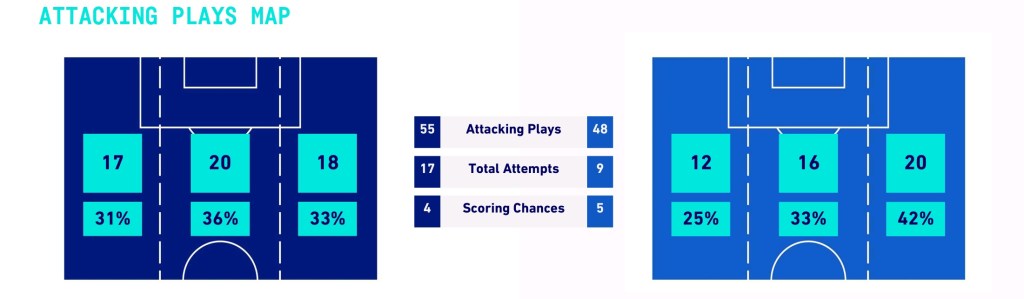
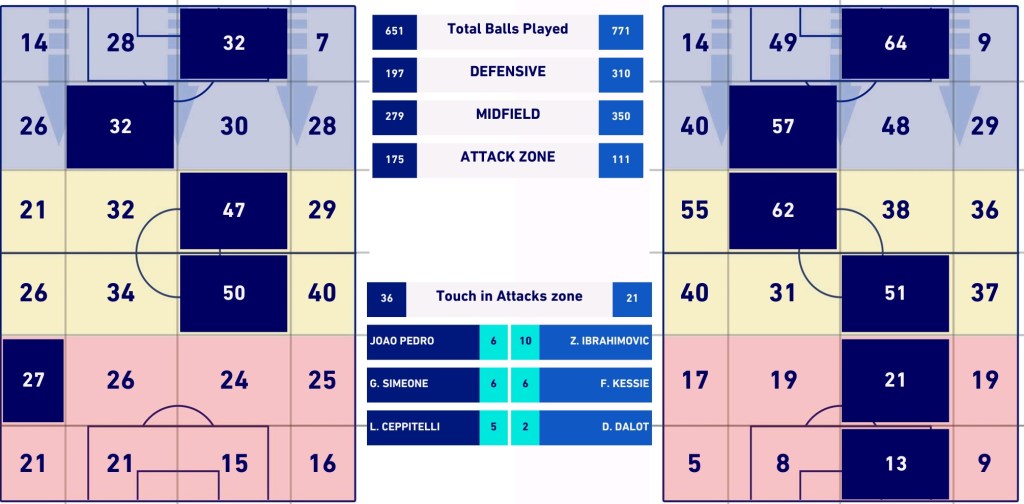
While Milan were pushed were rarely allowed to play through the center, Milan often used Dalot as the outlet to build up hence a lot of Milan’s touches and points of chance creation were from left flank of the field. Milan, especially Ibrahimovic targeted Diego Godin as he is not the quickest on the field and given how Cagliari play a high line he was the weak spot.
Attacking plays: Cagliari left and Milan right
However major of Milan’s chances in the final 3rd came via the center of zone.
For Cagliari, as I explained earlier about gaston perreiro they tried to exploit Diogo Dalot and overloaded him on the flanks. You can see below how 42% of chances came via their right flank.
Attacking plays: Cagliari left and Milan right
CONCLUSION
With Milan missing 4 starters it was always difficult to Milan to play the brand of attacking football they used to post lockdown last season.However the ability to close down games of Milan has risen and this is a bracing aspect given how in the previous season we were prone to conceding after scoring. As for the penalties, Milan often ask too much from the opposition defenders and they just can’t handle the slick movements of our players.
A story that started in the suburbs of Paris, Soualiho Meite was born on March 17th, 1994. His initial career started off with FC Gobelins before he signed for AJ Auxerre’s youth academy as a 13 year old in 2007. Meite spend the next 4 years playing for the Auxerre B team and the academy before the arrival of Bernard Casoni in 2012 who promoted Meite to the senior side. 22 appearences later he started catching eyeballs of bigger teams and finally Lille paid 2.7M to Auxerre to part ways with him. However following failing to impress the bigwigs at Lille he was farmed out to Belgian team Zulte-Waregem where he found his Mojo once again. And in the summer where Monaco had a huge exodus of incomings and outgoings a virtually unknown Meite was signed by Monaco from Lille after being impressed with him in Zulte for 8M. However given the depth of talent at Monaco he couldn’t break into the main XI and was send to loan to Bordeaux for playtime. A move to Serie A beckoned in the form of Torino who paid Monaco 11.5M for his services in 2018.
PLAYING STYLE
Playing under Giampaolo this season Meite’s role has been redefined under Giampaolo. Torino play a 3-5-2 with a 3 man midfield of Rincon, Meite and Linetty with Belotti and Zaza/Verdi up top.
In the 3-5-2 Meite is used as a wide midfielder whose main job is to combine with Singo, recycle possession and cover the defense.
Here are some aspects of Meite’s game observed
Pressing
For Milan pressing has been the soul of their game. Milan use cover shadows, play a high compact line (unless down to 10 men like Benevento). At Torino, against Giampaolo used a basic version of the pressing by restricting the opposition the byline and cover passing lanes thereby cutting off all passing option to the player in possession.
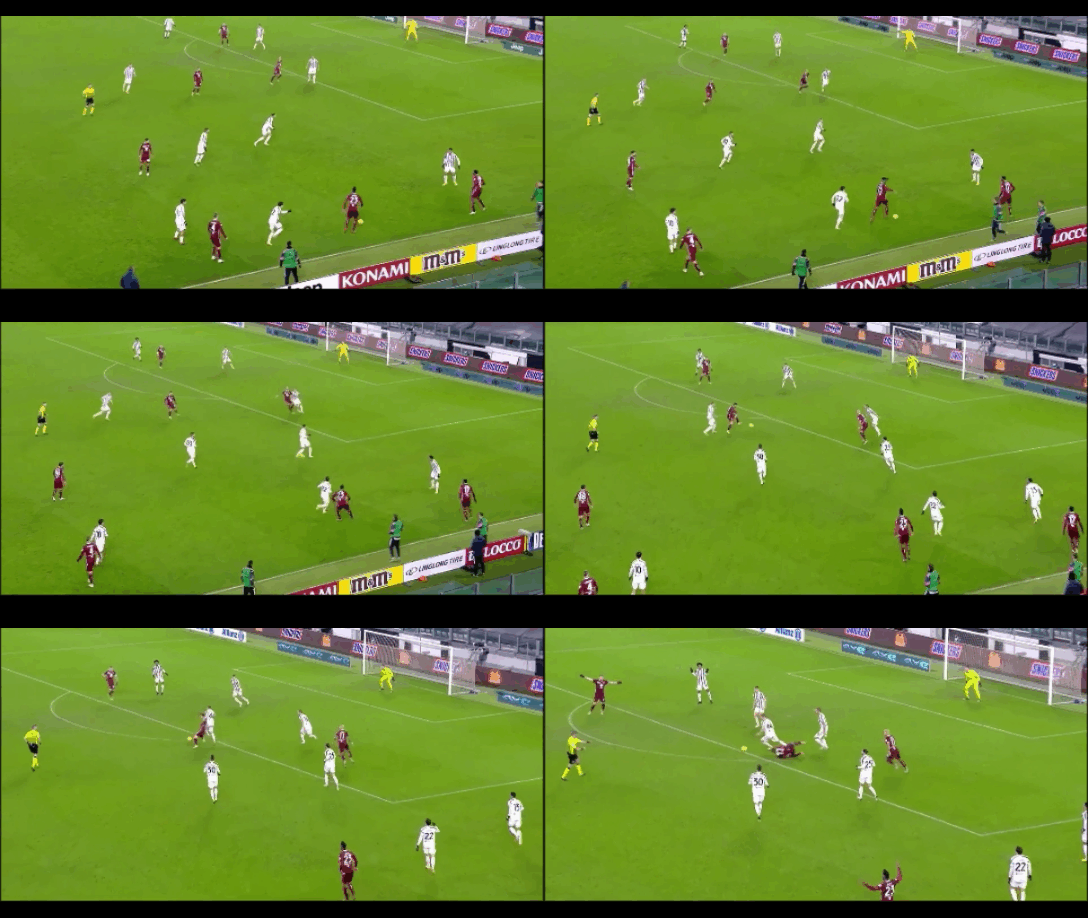
Meite covering the passing lanes of Juve player in posession when Belotti won the ball back from Juventus.
Passing and Deft Touches
Meite’s passing is usually restricted to short ground passes keeping in mind that his main role is to win the ball back and pass it to the more creative player. Retaining possession, recycling possession and acting as a passing option to form a passing triangle (an intricate part of buildup play in Giampaolo’s style of play).
Meite acting as a passing option to form a passing triangle. (GIF)
Now this is not to exclude some deft touches Meite pulls out of the hand including his assist for Zaza against Inter.
Meite’s assist for Zaza (GIF)
He is also capable of finding players between the lines albeit he is very inconsistent with his passing and rarely tries to play long balls
Meite’s pass to pierce Juve’s defense (GIF)
Making space for the overlapping fullback while covering his tracks in case of a counter
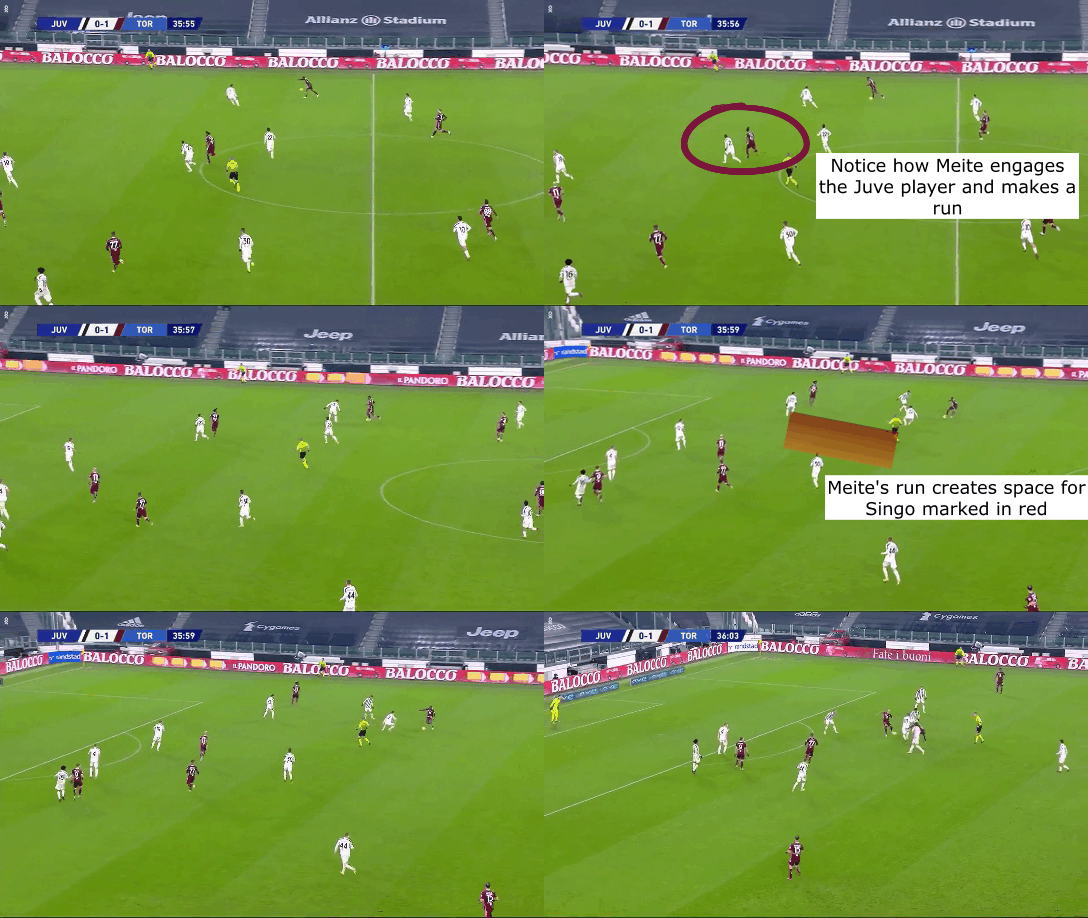
Being a wide midfielder in a 3 man midfield, Meite is also tasked with creating space for Singo, the wingback. He occupies defenders and makes runs leading defenders and creating space for Singo to bomb forward. If Torino lose the ball then Meite will cover the tracks of the Singo and prevent exposing the 3 man defense to attack from the wide areas.
Meite creating space for Singo (GIF)
Aerial Ability
Standing at 187 centimeters (6ft2), which is the same size as Milan Skriniar, Meite brings an aerial threat during set-pieces. With Milan struggling to defend corners, Meite’s huge frame can help Milan to clear more balls or even distract defenders during a corner at the other end of the pitch. His solitary goal this season came via a headed goal
(GIF)
Physical presence
Standing at 187 centimeters Meite’s huge frame and his fairly built muscular body gives him an edge to win challenges. His strong physique and upper body strength gives him the power to wrestle opposition players off the ball and his long legs gives him an edge to cleanly tackle players without giving away much fouls
AREAS TO IMPROVE
As adept he is as at some areas there is a large area of the game Meite has to improve.
Defending Corners
In terms of defending corners, Meite’s positioning is lacking as he is often away from the thick of things given his size and aerial ability. A more palpable explanation for this could be that Giampaolo uses a zonal marking system and therefore he wants Meite’s tall frame to distract the path of the corner as much as possible.
Workrate
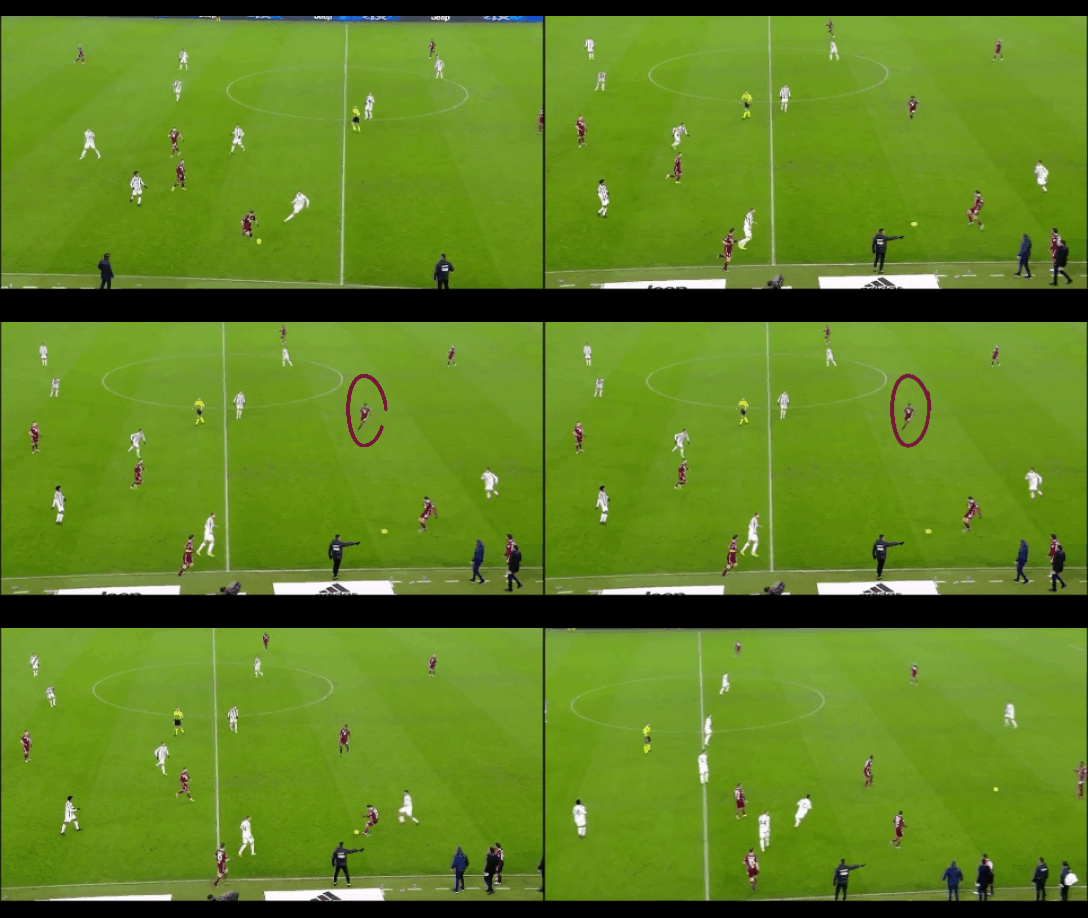
Another area for improvement is his workrate. In this picture below you can see that while Chiesa is engaged in a duel with Singo there is a lot of space between Singo and Meite. Ideally Meite should position himself a bit harder and close the gap because in this sequence of play Chiesa beats Singo and goes on to shoot which luckily went wide.
Meite should get close to Chiesa to close down the space
Involvement in play and Passing
Meite is at times too far away from the point of where the play takes place and hence cannot influence play. His passing also has to improve if infact he wants to challenge Kessie for the starting role at Milan.
However we could also debate that Giampaolo’s style of football has not suited to Meite’s strengths and he would be more home to the idea of playing as a DM in a 4-2-3-1.
STATISTICAL COMPARISON
Thanks to @ViziFootball for this statistical comparison between Frank Kessie and Soualiho Meite.
Kessie, one of the most complete midfielders in Serie A today excels over Meite in every department. While Meite averages 0.98 interceptions per game, Kessie has 1.18 interceptions per game. Now Kessie averages 1.84 tackles per game Meite only has 0.98 tackles per game.
In terms of assists, Kessie has 3 assists this season while Meite has only registered a single assist.
DEAL OR NO DEAL
With Injuries piling up, it came to a point where Milan had to play a Right back out of position as a crisis in midfield. Krunic, even though he was injured, was a square peg in a round hole as he was not suited to Milan’s style of play as he was brought in to play Giampaolo’s 4-3-1-2 style of play. It was clear for Milan fans a Defensive midfielder with the properties of Kessie was needed and Milan didn’t have much of a budget given how corona has shrunk the pockets of even the cash rich Premier league. A loan move for a player who is used to the Serie A for as cheap as 500,000 with an option to buy at 8M is a welcome move for Milan who are chasing Champions league football maybe even the Scudetto.






















 The Milan Blog